Keep this page and the separate key away from learner cards until the first response is saved. The new drawings and design account below have not appeared in teaching pages. Adult reads all rich text and describes each image neutrally, once or on a recorded request for a repeat. Allow a broad tactile-card, spoken, signed, AAC, point, drawing, dictated or written response. Save the first independent words, mode and exact adult prompt before feedback. A pause/pass is allowed. Neither short check is an achievement-standard judgment or a diagnosis.
Day 165 · unseen drawn-plant information page
Fresh source, fictional drawing cards: R shows two separate straight stems and four round leaf outlines in a triangular pot. S shows one visible straight stem and three pointed leaf outlines in a rectangular pot. No roots, flowers, insects, water, colour-based feature, scale, species name, locality or growth sequence is drawn. These are invented pictures, not observations of local living things. The teacher may put the shapes on broad tactile cards but must not arrange them to signal a scored count.
Adult read once: “These are drawings called R and S. You may use only what their lines show. They do not tell us whether the plants are real, what they need or where they grow.”
Ask, in order, using a blank information-page mat:
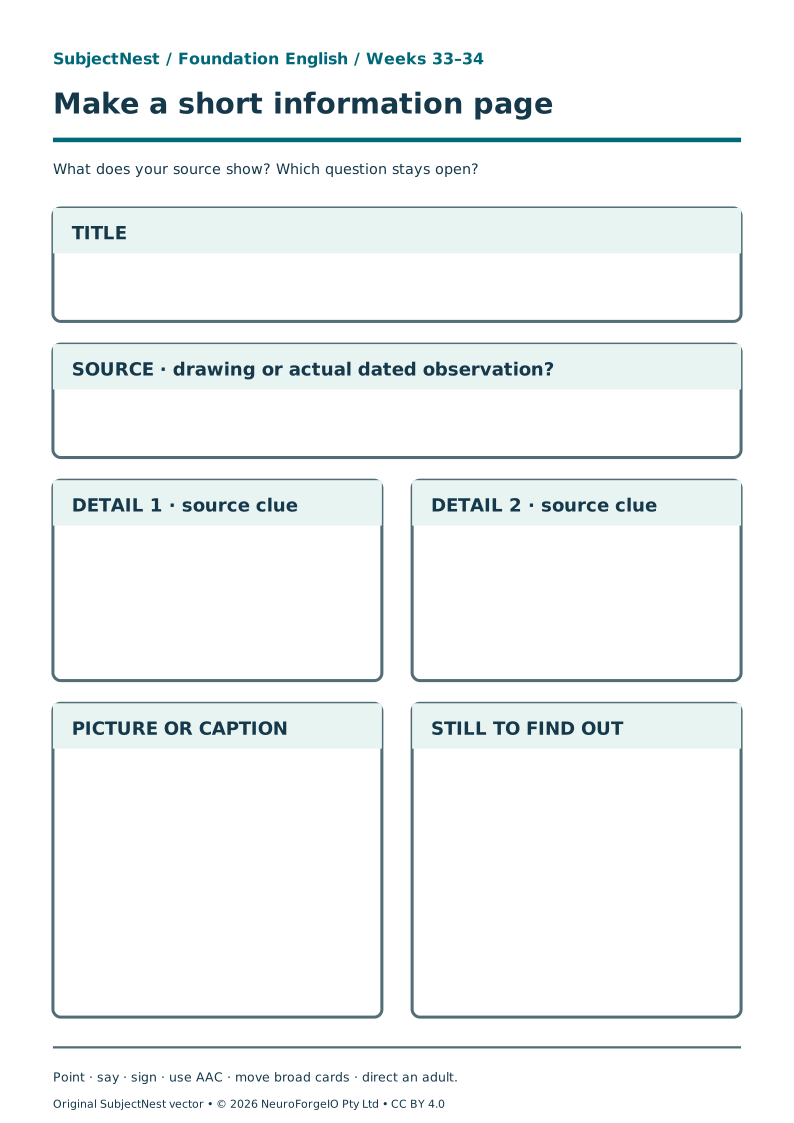
- “Choose R or S. Tell two details you can point to or hear in the neutral description.” Record exact feature and source card.
- “What is one difference between R and S that the drawing actually shows?”
- “Make a tiny information page: a title, source ‘drawing R’ or ‘drawing S’, and one short true sentence or caption.” Adult writes only exact dictated words and marks adult spelling; a child can choose a capital/stop.
- “Someone says ‘R is older because it has more leaves.’ Does this drawing tell us R's age? What would we still need to find out?” Do not present “older” as a fact.
- Optional taught-point print, separate: show cab then tan with no image; invite one blend, hide print and ask for one sound-to-letter attempt using child-selected tiles, marks or a scribe under exact direction. If any grapheme–sound link is untaught or item locally familiar, mark not administered or document a different equally new taught-point CVC. Do not count this as plant comprehension.
Day 170 · unseen paper-pocket explanations
Fresh adult-read fictional report:
Malo made two little paper pockets for the same large paper star. In this report a pocket made from thin wrapping paper opened when Malo placed the star inside. A pocket made from folded card stayed closed for five slow counts with that same star. Malo did not try a heavier star or another pocket shape.
Neutral diagram description: two empty pocket outlines labelled THIN PAPER and FOLDED CARD, one separate broad star outline. No tick, arrow, tear or result symbol is shown. Read the diagram description to a text-route learner and do not reveal an answer by placement.
Explanation A: “Folded card always keeps every object safe because it looks thicker.”
Explanation B: “With this one paper star in Malo's report, the thin-paper pocket opened and the folded-card pocket stayed closed for five counts. We do not know what a heavier star would do.”
Ask, in order, using a blank claim/evidence/question mat:
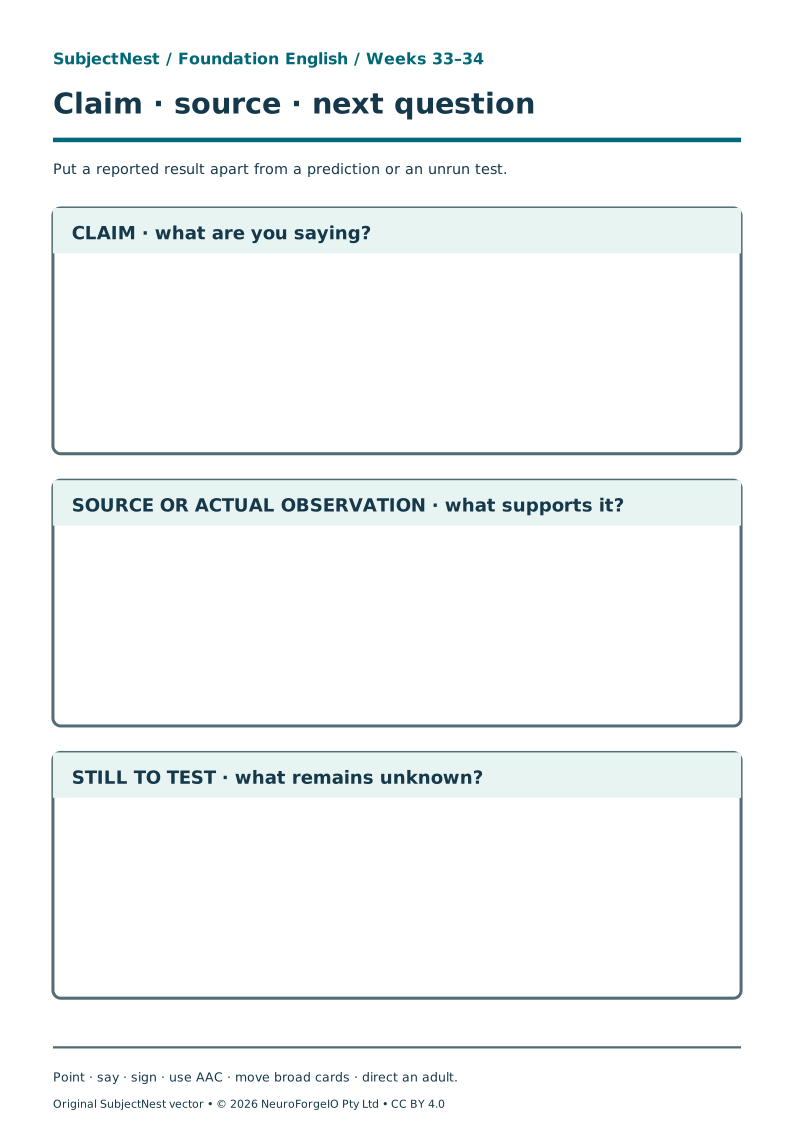
- “What was the same in the two reported tries? What changed?”
- “What happened to each pocket in this one described report?”
- “Which explanation stays closest to the reported evidence? Say or show the exact clue.”
- “What would we still need to test before saying a pocket works for a heavier star or every object?”
- “Make one short explanation sentence from the report. You may speak, sign, select AAC, draw/dictate, use tiles or write.” Save first child-selected content, punctuation/spelling and adult supply separately.
- Optional taught-point print, separate: show hog then fib without pictures; ask for a blend and one print-hidden sound-to-letter choice. If locally untaught/familiar, mark not administered or document an equally new taught-point item.
The source is fictional and does not claim real pocket strength. After the first record, use a different practice example for feedback. Do not repeat the held source as if it were a second independent attempt.
Recording grid
| Day/component | First exact response and mode | Adult read/repeat/prompt/scribe | Source feature or taught print link actually observed | Next 3–5 minute teaching move and date |
|---|---|---|---|---|
| 165 visible features and difference | ||||
| 165 page/caption and age unknown | ||||
| 165 optional CVC | ||||
| 170 same/change and reported result | ||||
| 170 explanation/evidence/question/sentence | ||||
| 170 optional CVC |
Original SubjectNest checks and fictional sources © 2026 NeuroForgeIO Pty Ltd, CC BY 4.0. Human educator, access and local assessment review remain pending.