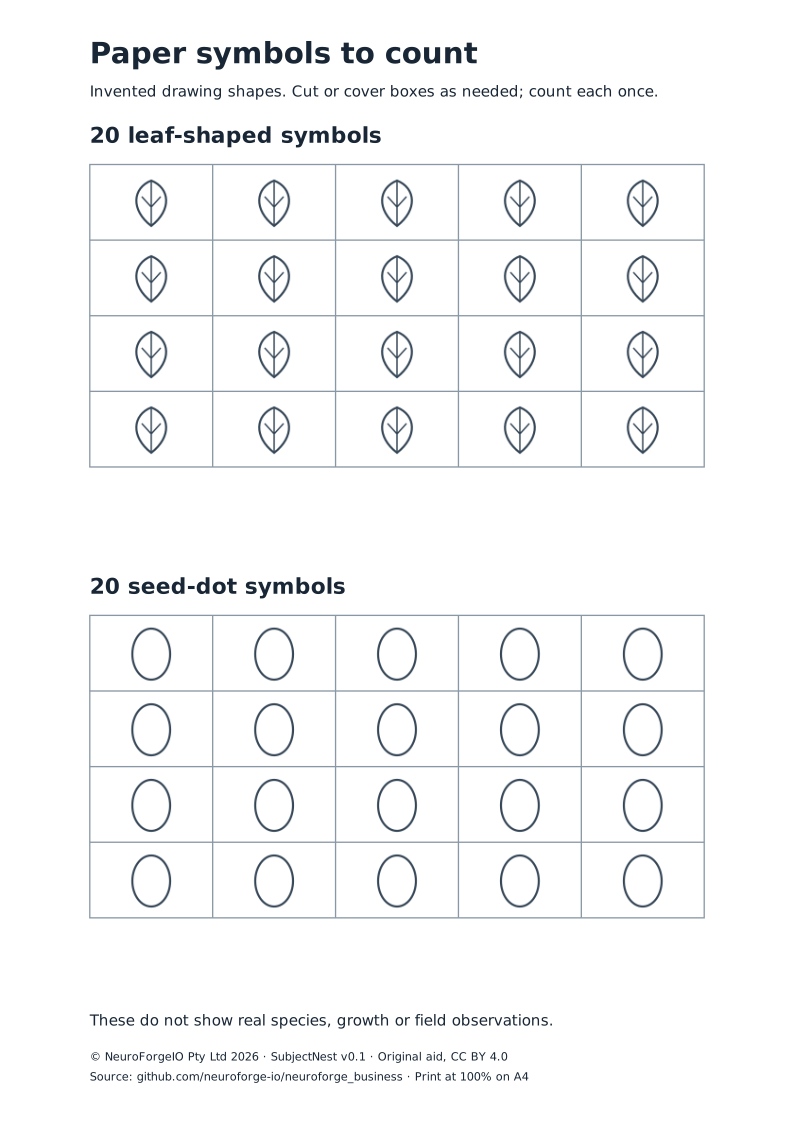
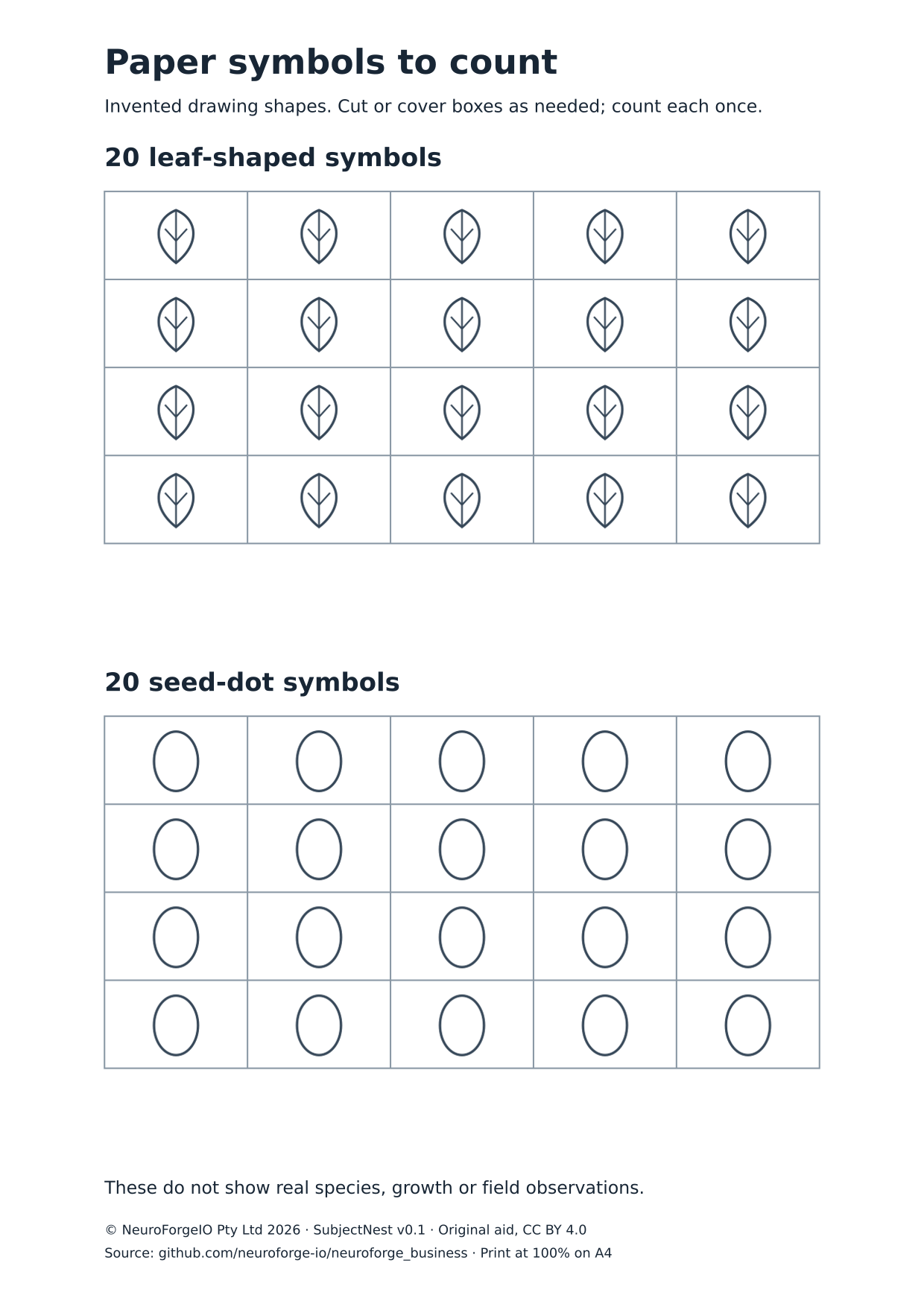
Original SubjectNest draft · educator and accessibility review pending. © NeuroForgeIO Pty Ltd 2026, CC BY 4.0. Use the child prompt strips below. The teacher privately prepares the A/B quantities in the key; do not show the keyed table during the check. Each context is imaginary. Use the comparison page or PNG for counted sets. The original paper leaf/seed symbols and PNG can be cut or copied for Week 14. Print enough copies for both sets: one sheet has twenty of each symbol, so two leaf sets of 12 and 14 need two sheets. Pre-cut for pupils who do not use scissors. These are stylised marks, not scientific illustrations or observations.
Copyable no-picture route
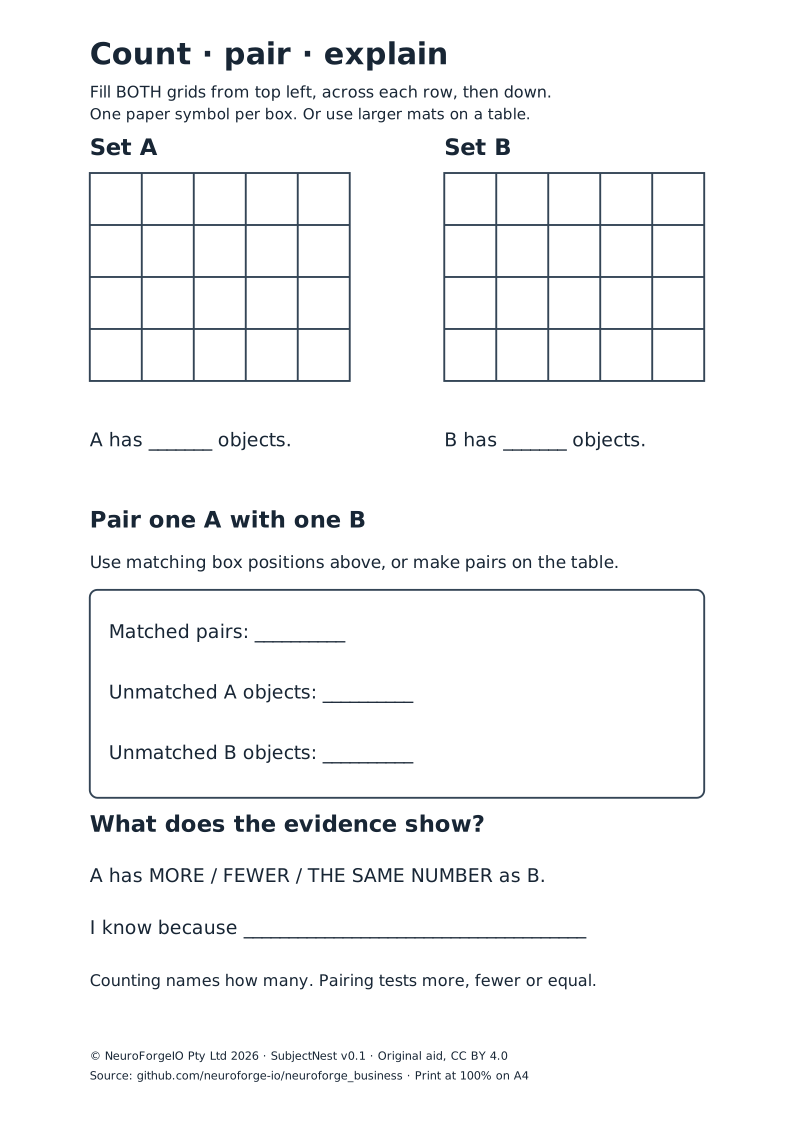
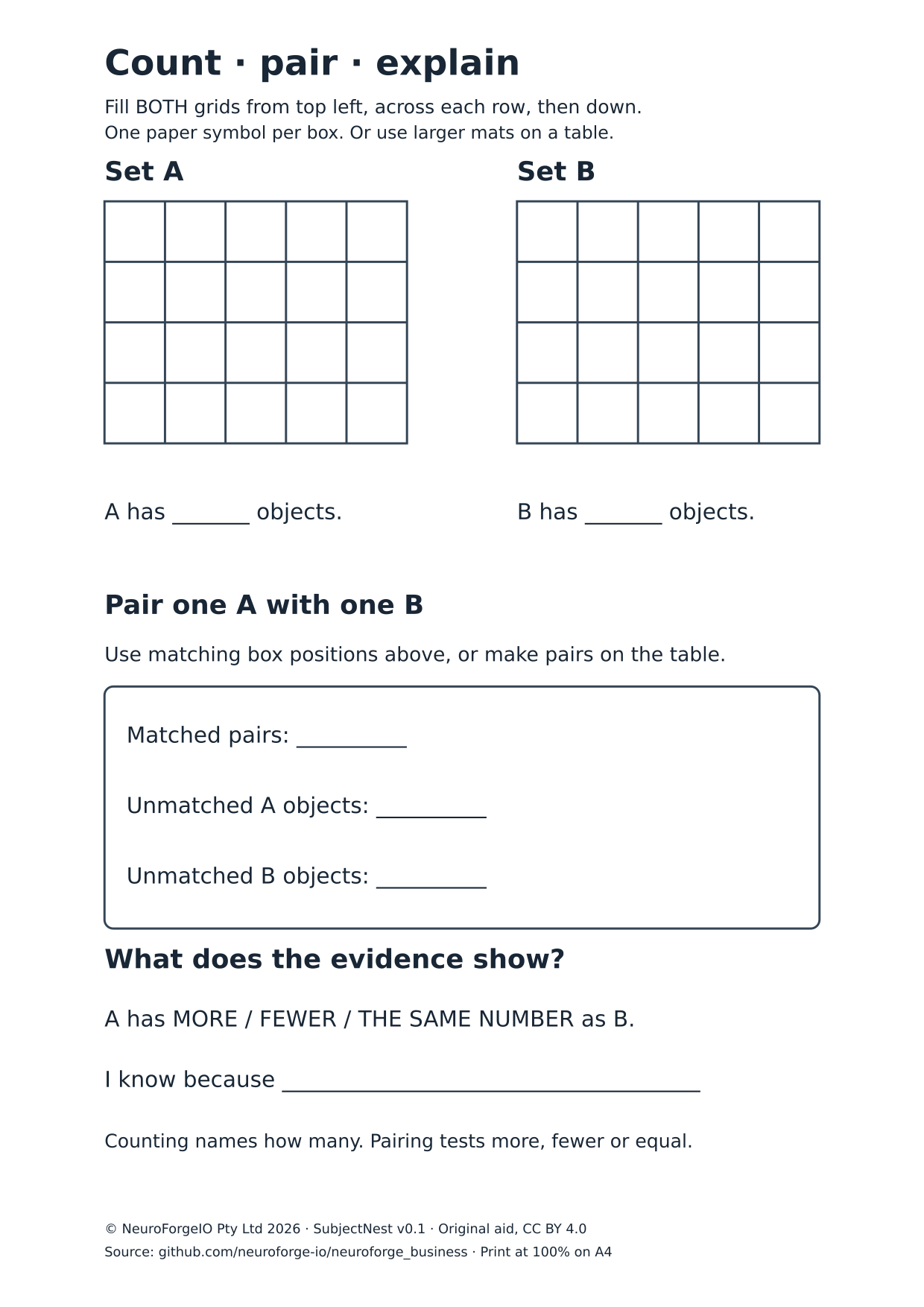
SET A [                              ]
SET B [                              ]

Move each object once to count: A has ____; B has ____.
Pair one from A with one from B: matched pairs ____.
Unpaired objects: A ____; B ____.
Conclusion: A has MORE / FEWER / THE SAME NUMBER as B.
My evidence: I counted / I paired / I used both.
For counting, move objects from an uncounted region into a counted region, one move per number word. For pairing, set one A beside one B and leave unmatched pieces visible. If using matching positions on the grids, fill both from top left across each row before comparing cells; otherwise use separate pairing lanes on the table. Pairing alone tells the relation, not necessarily the exact total. A final count can name each quantity. A spread-out row is not proof of more. Use tactile trays/strips, enlarged or plain-text prompts, sign/AAC, and adult movement directed by the learner where needed. Large safe counters are a better option than tiny paper pieces for learners who need a grippable object.
Child prompt strips: varied everyday places
Print or read one line at a time. Each is a pretend counter task, not a claim about an actual school, service or household.
| ID | Child-facing prompt |
|---|---|
| C01 | Two library trolleys have return-slip counters. Which has more? Show how you know. |
| C02 | Two art tables have paper-shape counters. Are the amounts equal? |
| C03 | Two map routes have dot counters. Which has fewer? |
| C04 | Two tool trays have label counters. Which has more? |
| C05 | Two theatre desks have seat-slip counters. Which has more? |
| C06 | Two parcel shelves have label counters. What if one shelf is empty? |
| C07 | Two music stands have beat counters. Are the amounts equal? |
| C08 | Two sports kits have cone-picture counters. Which has fewer? |
| C09 | Two community-map boards have square counters. Which has more? |
| C10 | Two bike-repair drawings have clip counters. Are they equal? |
| C11 | Two museum display boards have title-card counters. Which has fewer? |
| C12 | Two recycling posters have token counters. Which has more? |
Child prompt strips: fictional paper drawings of living things
The drawings are imagined. They are useful for counting and comparison only; do not infer real plant or animal facts. Use symbols cut from paper-symbols.svg, teacher-drawn marks, or equivalent accessible tactile pieces. On cards naming a different living thing, neutral paper counters can stand for those imagined picture marks if the teacher says so; no detailed animal art is required. Change the artwork but preserve the teacher's A/B quantities.
| ID | Child-facing prompt |
|---|---|
| L01 | Compare leaf-shaped paper pieces on Sheet A and Sheet B. Which has more? |
| L02 | Compare seed-dot drawings on two pretend garden sheets. Which has fewer? |
| L03 | Compare leaf-shaped paper symbols on A with seed-dot symbols on B. Are they equal? |
| L04 | Compare paper symbols on two imaginary plant display pages. Which has more? |
| L05 | Imagine bird-picture marks on two invented paper pages. Which has fewer? |
| L06 | Compare fish-outline paper tokens on two drawing pages. Are they equal? |
| L07 | Compare paper marks on two pretend maps about saplings. Which has more? |
| L08 | Imagine insect-picture tokens on two invented paper posters. Which has fewer? |
| L09 | Compare leaf-shaped paper symbols on A with seed-dot symbols on B. Are they equal? |
| L10 | Compare fruit-picture marks on two imaginary plant pages. Which has more? |
| L11 | Compare petal-shaped paper pieces on two art pages. Which has fewer? |
| L12 | Compare pod-outline drawings on two pretend sheets. What if A is empty? |
Private teacher setup and answer key
Make A and B sets from the indicated counts. Set B spread out and A close together on C04 and L02, and reverse the layout on C09 and L07, so appearance cannot answer the task. Move/pair without adding or removing items. = means every object can have one partner; for unequal sets, the larger set has the remaining unmatched objects. Differences below count unmatched objects after maximum one-to-one pairing.
| Card | A | B | Relation | Unmatched after pairing |
|---|---|---|---|---|
| C01 | 12 | 14 | A fewer; B more | B 2 |
| C02 | 13 | 13 | equal | 0 |
| C03 | 16 | 18 | A fewer; B more | B 2 |
| C04 | 10 | 17 | A fewer; B more | B 7 |
| C05 | 19 | 20 | A fewer; B more | B 1 |
| C06 | 0 | 8 | A fewer; B more | B 8 |
| C07 | 14 | 14 | equal | 0 |
| C08 | 15 | 12 | A more; B fewer | A 3 |
| C09 | 18 | 16 | A more; B fewer | A 2 |
| C10 | 17 | 17 | equal | 0 |
| C11 | 20 | 19 | A more; B fewer | A 1 |
| C12 | 11 | 15 | A fewer; B more | B 4 |
| L01 | 12 | 14 | A fewer; B more | B 2 |
| L02 | 15 | 16 | A fewer; B more | B 1 |
| L03 | 18 | 18 | equal | 0 |
| L04 | 17 | 20 | A fewer; B more | B 3 |
| L05 | 13 | 16 | A fewer; B more | B 3 |
| L06 | 20 | 20 | equal | 0 |
| L07 | 19 | 20 | A fewer; B more | B 1 |
| L08 | 14 | 12 | A more; B fewer | A 2 |
| L09 | 11 | 11 | equal | 0 |
| L10 | 18 | 15 | A more; B fewer | A 3 |
| L11 | 16 | 19 | A fewer; B more | B 3 |
| L12 | 0 | 10 | A fewer; B more | B 10 |
Four fresh teacher checks
Do not rehearse these exact sets before checking. Prepare counters or paper symbols without numeral labels in the child's view.
| Check | Setup | Key |
|---|---|---|
| F1 | A 16, B 16; B widely spaced. | Equal; both 16; no unmatched objects. |
| F2 | A 18, B 20; A and B arranged differently. | B more, A fewer; B has 2 unmatched after 18 pairs. |
| F3 | A 20, B 19; use fictional paper leaf symbols. | A more, B fewer; A has 1 unmatched after 19 pairs. |
| F4 | A 0, B 13; use fictional paper plant picture symbols. | B more, A fewer; 0 pairs, B has 13 unmatched. |
If a fresh set is changed, recalculate and write the actual key. Keep the child's mathematical record separate from any science observation. No real plant, seed, animal or child photograph is required.