25 minutes · AC9MFST01; AC9MFN03 counting/comparison sample · educator review pending
Success: The child transfers a sorted card set to a picture display with one mark per card, checks the same counts and explains a tie by counting rather than appearance.
Prepare: shuffled fictional P2 C2/W4/P4, three mats, blank display page, large matching stamp/mark tiles, numeral cards 0–10. Keep answer key out of view.
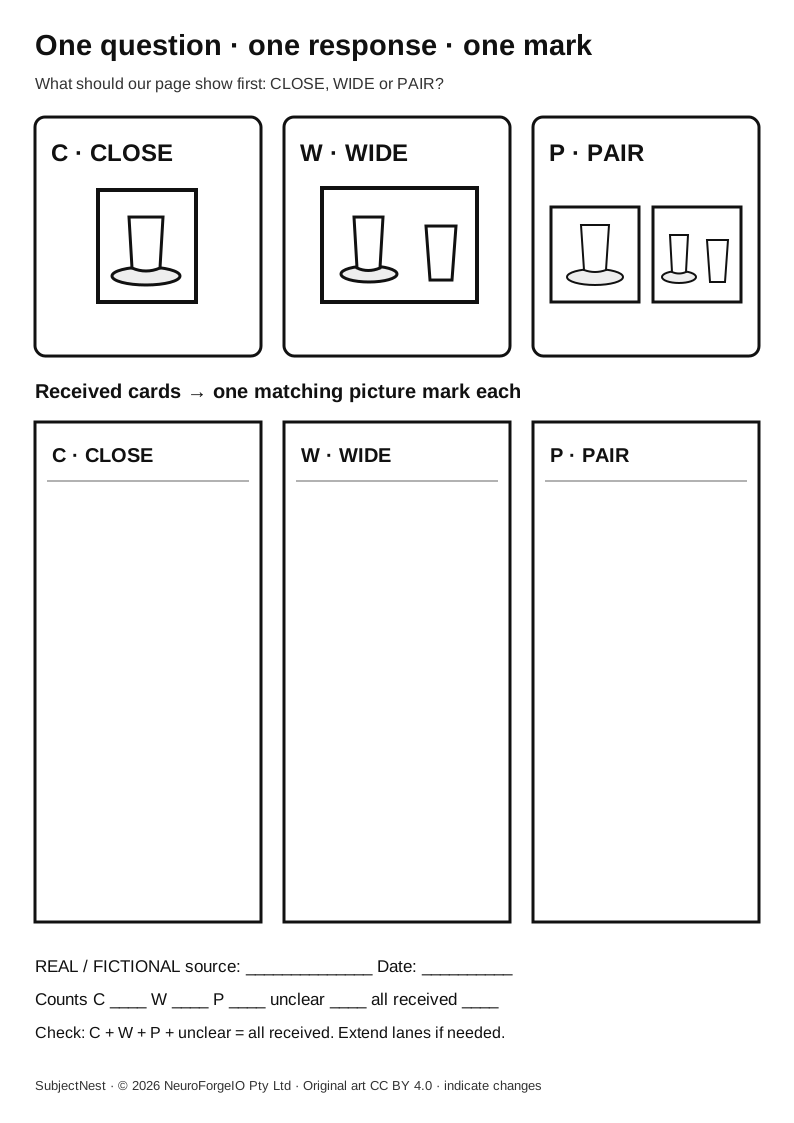
- Retrieve, 3 min. Show one C card and two drawn C marks. Ask whether that is an honest one-card display. Expect no, because one response should have one mark. Remove the extra mark.
- Model, 5 min. State the same page-view question. Sort the first two P2 cards and put one matching mark for each in its lane, moving a card beside its mark. Say, “I changed how the response is shown, not how many responses there are.” Do not reveal P2 totals.
- Guided transfer, 9 min. Pairs collect and sort the remaining P2 cards, then move each card to exactly one picture mark on the display. Count every lane and compare with its object pile; correct a mismatch by pairing. Ask whether W or P is more. Both have four; neither is more. Count classified total ten.
- Fresh independent try, 5 min. Give a new small fictional set C2/W1/P1. Child sorts and places four marks, then says which count is largest and whether W/P are tied. Key: C2 largest; W and P tie at one; total four.
- Close, 3 min. Ask, “If I accidentally mark one P twice, how would I find the mistake?” Expect pair every card to one mark, then recount. P2 key: C2, W4, P4 tied for most, total10.
If a visually longer lane is assumed larger: Align marks and count one-to-one. Access and record: raised lanes, grippable identical tokens, spoken/text descriptions and digital drag placement are valid. Note whether counting was one-to-one, prompted or independent; a tactile count is recorded as such, not labelled visual subitising.