25 minutes · AC9MFSP02 partial practice · educator review pending
Success: The child locates a real classroom object relative to a named reference and, when accessible, describes their own actual position relative to a familiar object; a tabletop marker can provide a separate object-position route.
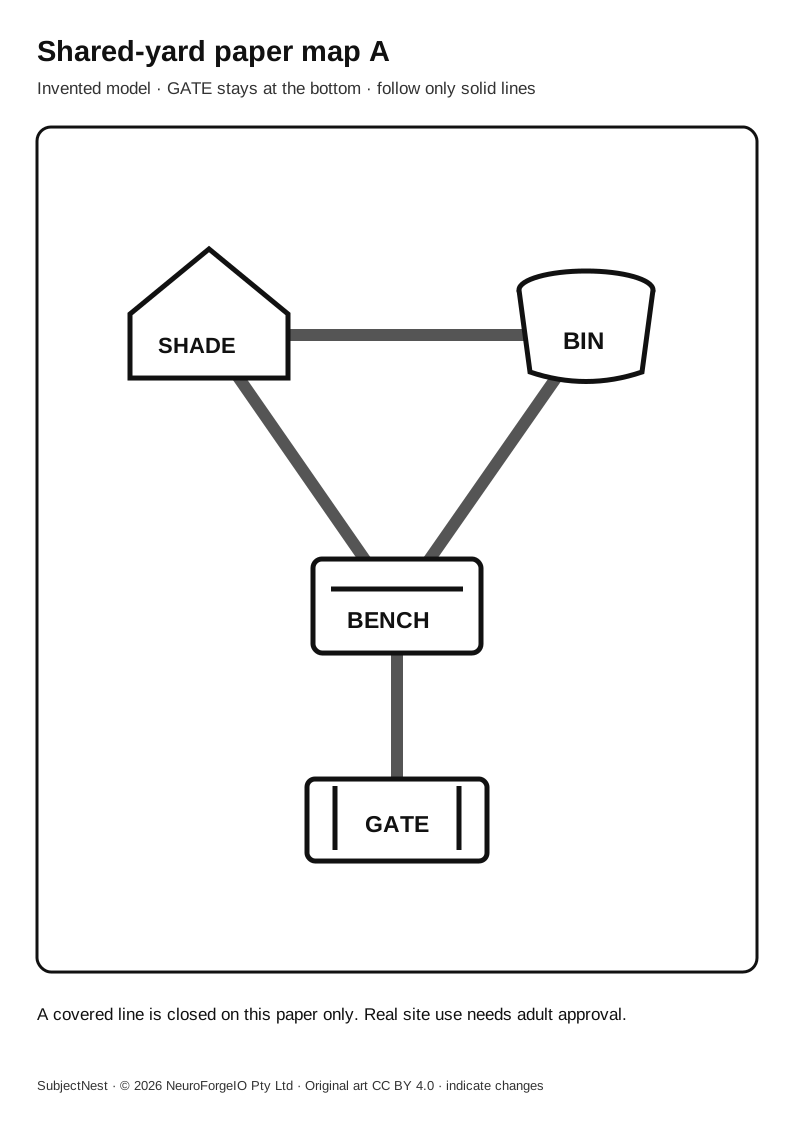
Prepare: an adult-checked stable classroom table/mat, two large safe object markers, a raised or flat A4 mat, teacher note of where each item actually is, optional paper map A face down. Do not move a learner, photograph them or rely on an assumed room layout.
- Retrieve, 3 min. Show two counters in different places on a mat. Ask, “If I say this one is beside, what must I also name?” Expect beside what. Counting yesterday's data does not answer position.
- Model with a true reference, 5 min. Put a large marker beside a class mat; say, “The marker is beside the mat.” Move it inside the mat's outline and restate. Point to the actual classroom desk and say where you truly stand or sit relative to it, after checking; do not script a location that is false in the room.
- Guided position game, 9 min. Children place or direct an adult to place a marker inside, outside, beside the mat and explain each relative to that named mat. Ask a willing learner to describe where they actually are relative to an approved nearby object, without moving or disclosing any private location. If self-location is inaccessible or inappropriate, record object-position evidence and mark own-body item not observed.
- Fresh independent try, 5 min. Move a second marker to a new position without verbal cue. Ask, “Where is the second marker in relation to the mat?” Accept a correct word plus named reference, gesture/AAC or tactile demonstration. Then ask the child to create a new relation for a peer/adult to describe.
- Close, 3 min. Ask, “Can the same marker be beside one object and far from another?” Yes; the reference changes. Record the exact actual placements and response, not just a remembered word. Introduce tomorrow's map as a model of a shared space, not a real route.
If a child says only “there”: Ask “Where, compared with which object?” and recheck a fresh placement after modelling. Access and record: large/raised mat and markers, precise spoken description, child-directed adult placement, AAC/sign/pointing, quiet station. Do not count a proxy avatar as proof of the child's own physical position.