25 minutes · AC9MFSP02 partial practice · educator review pending
Success: The child traces a two-link paper path in order, names the intermediate place and gives a usable two-step direction that a willing user can follow.
Prepare: map A with gate at bottom, large marker, two moveable arrow/step cards, one willing adult or partner user, exact path key. No real outdoor route is assumed.
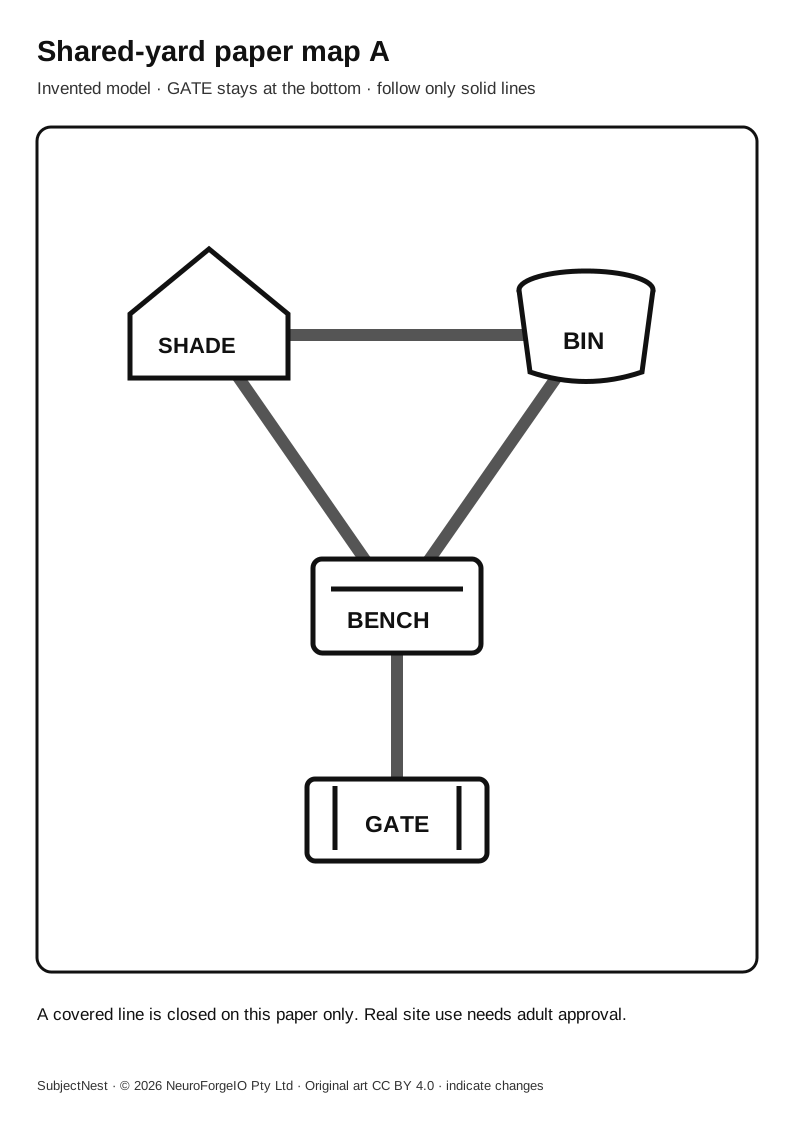
- Retrieve, 3 min. On map A, ask for GATE→BENCH as one drawn link and for BIN's position relative to BENCH. Reset the marker at GATE before modelling.
- Model two links, 5 min. Trace GATE→BENCH→BIN along both solid links, pausing at BENCH. Say, “First follow the line from gate to bench. Next follow the line from bench to bin. The bench is the middle place on this route.” Put one arrow/step card on each link; do not claim the drawing measures real distance.
- Guided route and user, 9 min. Children build GATE→BENCH→BIN with step cards, then direct a willing user without pointing ahead. User traces only the spoken/selected steps; child checks whether the user reached BIN and revises an omitted intermediate place. Record the actual user's action, not “success” by default. If no user is available, mark user trial not observed and keep route reasoning.
- Fresh independent try, 5 min. Reset at GATE. Ask, “Reach SHADE on drawn paths in two links. Tell me both places in order.” Key: GATE→BENCH→SHADE. A straight GATE→SHADE shortcut has no drawn line. Ask what is between start and destination along this chosen route: BENCH.
- Close, 3 min. Ask what a new user needs to know to begin: start place, next named place and destination. Say the fictional map does not decide whether a real yard path is safe or accessible.
If the child skips BENCH: Place the marker at gate and require each move to follow a raised/solid link, then recheck to SHADE. Access and record: raised paths, large pointer, exact text route, AAC/sign/pointing/digital arrows and child-directed adult user. A child can give directions without physically walking them.