25 minutes · AC9MFSP02 partial practice · educator review pending
Success: The child identifies a covered link on the fictional map, chooses a connected alternate path and checks whether a real willing paper-map user can follow the revised directions. No actual site closure is inferred.
Prepare: map A, removable wide strip to cover only BENCH—BIN, large marker, route cards, willing adult user and paper path key. Keep all materials on a tabletop.
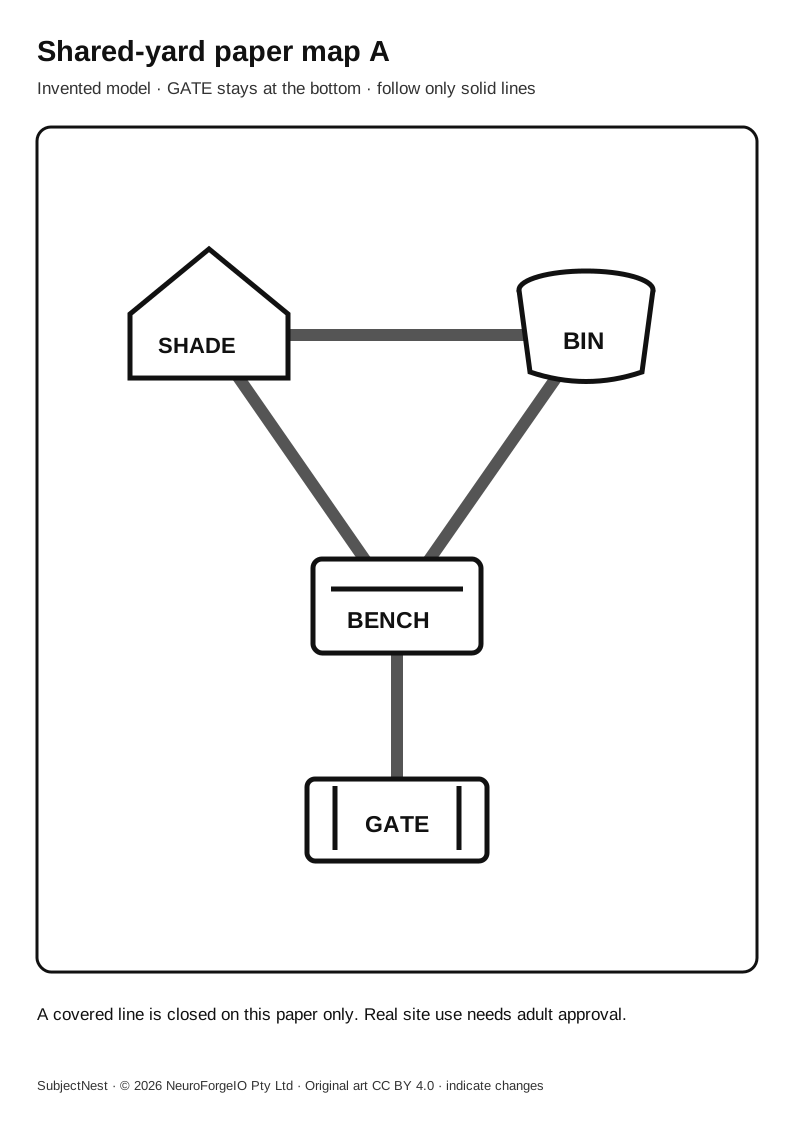
- Retrieve, 3 min. Ask for yesterday's direct paper route GATE→BENCH→BIN. Trace its two solid links; reset marker at gate.
- Model one paper change, 5 min. Cover only BENCH—BIN with a broad strip. Say, “On this model, that link is closed. Our old two-link route cannot use it. This is a paper change, not a report about a real place.” Trace GATE→BENCH and stop; leave the rest for learners to solve.
- Guided alternate route, 9 min. Children inspect/feel remaining links and plan GATE→BENCH→SHADE→BIN. Ask for each named place and three connected moves. A willing user follows the child's spoken, signed, AAC or placed route cards. Record the user's actual destination and any child repair; do not supply SHADE before the learner's first try.
- Fresh independent check, 5 min. With BENCH—BIN still covered, start at BENCH and ask for a route to BIN. Key: BENCH→SHADE→BIN, two links. Ask where SHADE is compared with BENCH with GATE at bottom: above-left. If the child proposes a route without a solid link, ask them to show it on the map.
- Close, 3 min. Ask, “Can this paper closure tell us a real school path is closed?” No. A real outing needs a current approved site, adult check and access plan. Record connected path and user feedback as separate evidence.
If no alternate line is noticed: Raise/trace the BENCH—SHADE and SHADE—BIN links one at a time, then give a new start-to-bin item after teaching. Access and record: tactile strip/paths, high-contrast map, text route, child-directed adult marker, quiet user, AAC/sign/pointing. No unknown litter, outdoor travel, local Country/Place fact or personal location is required.