The A4 visual mat is a blank reusable tool, not a story, word card or answer sheet. On light paper it uses dark outlines and a large writable area. The same sequence works on a screen, with raised boundaries/tactile objects, in braille, via AAC or with an adult describing and moving cards at the child's direction. It is not needed to access any assessed word; those remain in the separate secure check.
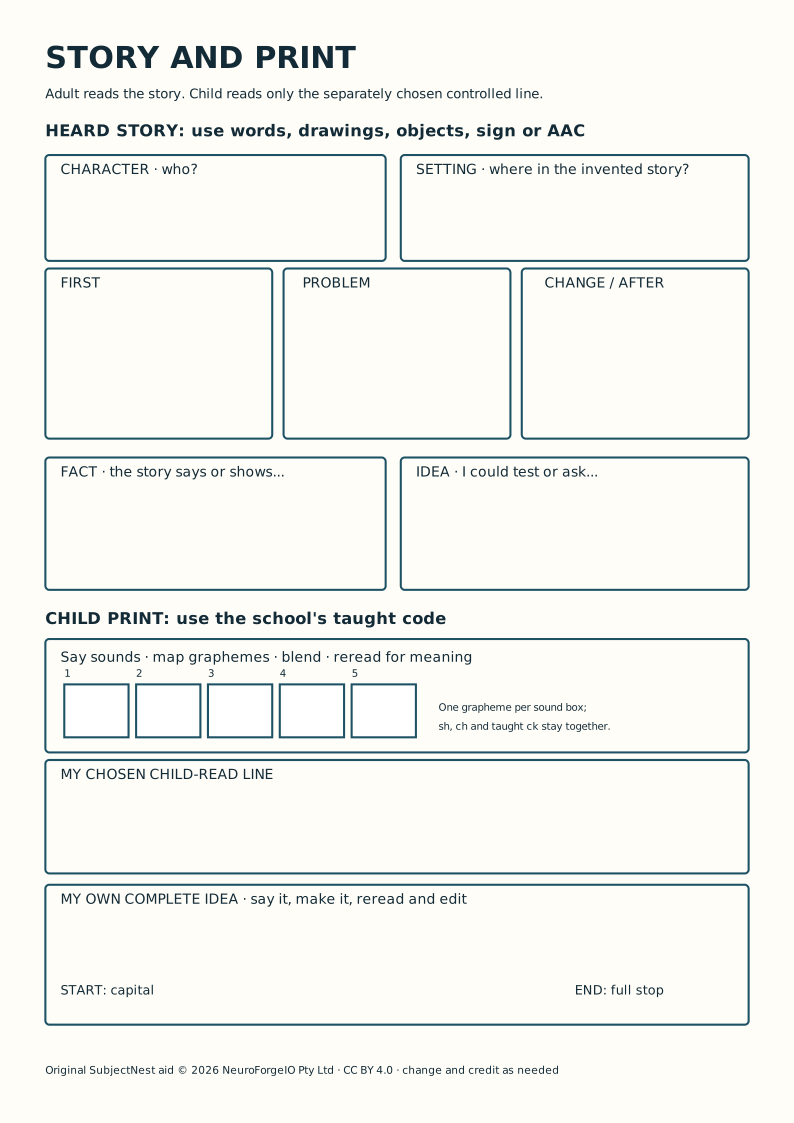
- Heard story: adult reads. Two blank boxes: “CHARACTER · who?” and “SETTING · where in the invented story?” Put a tactile person token in the first and place token in the second if helpful.
- Three blank boxes: “FIRST”, “PROBLEM”, “CHANGE / AFTER”. Arrange three objects left to right or use three numbered AAC choices. A child can describe a different split if supported by story evidence.
- Two blank boxes: “FACT · the story says or shows...” and “IDEA · I could test or ask...” Keep a claim from the source separate from an untested proposal. No real home, address or community route is required.
- Child print: “Say sounds · map graphemes · blend · reread for meaning.” Five blank sound boxes labelled 1–5. Place one grapheme per sound box.
sh,ch, and school-taught finalckeach occupy one box;standndeach need two. Unused boxes stay empty. An adult can point or place tactile tiles at the child's direction; record help. - One blank box: “MY CHOSEN CHILD-READ LINE.” Copy the selected controlled line here only after checking that its graphemes match the learner's school route. The richer teacher-read story is never copied here as a decoding task.
- One blank box: “MY OWN COMPLETE IDEA · say it, make it, reread and edit.” Beneath it: “START: capital” and “END: full stop.” Child may write, type, sign, select AAC, use braille or direct a scribe. Keep a before/after version to see the child's edit, not merely an adult-corrected result.
Print use: A4 portrait, actual size, grayscale safe. The five sound boxes deliberately accommodate a word such as stand; they are not five required sounds in every word. The mat carries no images of real cultural signs and no claims about a child's preferred “learning style.”
Original description and aid © 2026 NeuroForgeIO Pty Ltd, CC BY 4.0. Credit, link and indicate changes.