The original stand planner and choice planner are blank, low-ink visual forms. An adult reads every prompt; the learner can point, sign, use AAC, describe, type, draw or direct adult marks. No source-card answer, test result, learner name or actual school plan is printed. These text forms carry every meaningful label and writing space on the pages.
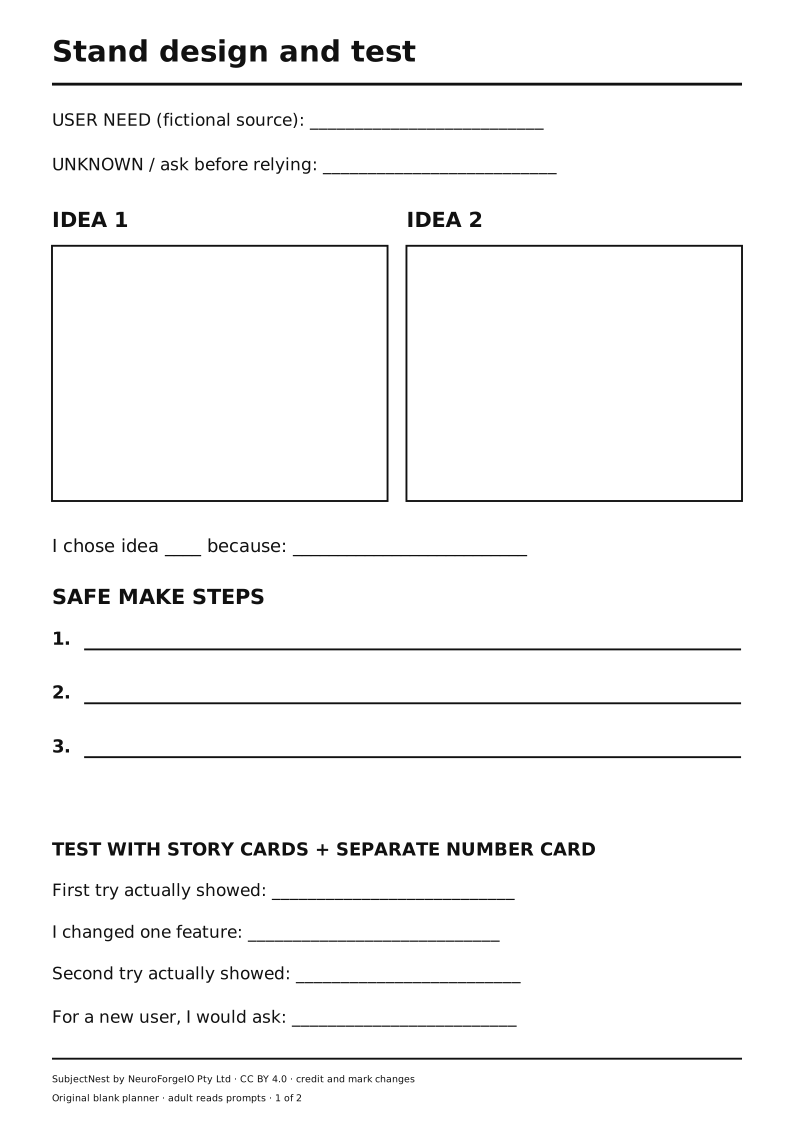
Stand design and test
- User need from the explicitly fictional source: _. Unknown / ask before relying: ___.
- Idea 1: draw/model/describe _. Idea 2: draw/model/describe . I chose idea __ because _____.
- Safe make steps: 1 _; 2 ; 3 __. An adult pre-cuts or handles a tool when the class safety plan requires it.
- Test with three story cards and a separate number card. First try actually showed _. I changed one feature . Second try actually showed __. If no physical test occurred, mark
not yet observedrather than inventing an outcome. - For a new user I would ask: _____. A fictional user's quote is a brief, not real peer feedback.
Tactile route: two separate trays/panels can hold the two ideas; three raised numbered strips mark steps; distinct first/second test cards record what happened. Use large card outlines, easy-grip paper and child-directed adult movement. A flat layout can show design reasoning when building a stand is not safe or accessible; record physical making separately.
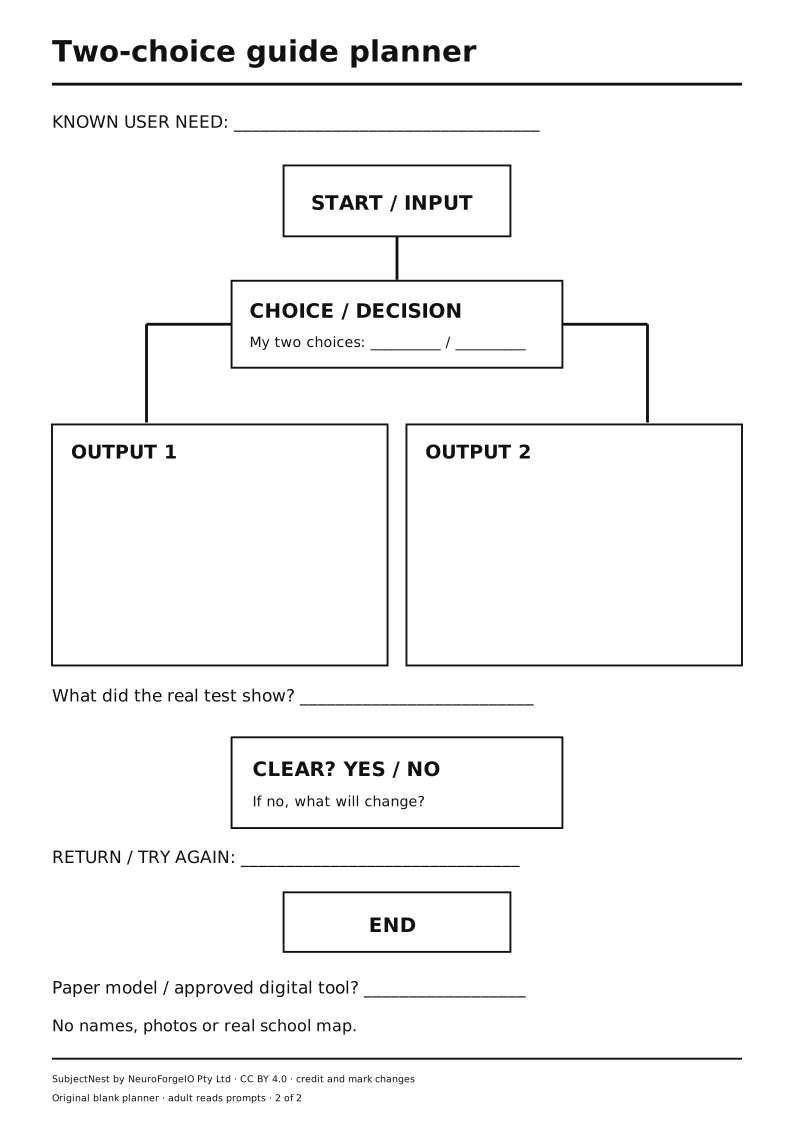
Two-choice guide planner
- Known fictional user need: _. START / INPUT: ___.
- CHOICE / DECISION: My two choices are _ and ___. Move a token left or right, or select by speech, sign or AAC.
- OUTPUT 1: blank panel for an original picture/symbol/word/number design _. OUTPUT 2: separate blank panel ___. Ask whether each matches the selected choice.
- What did the real test show? _. CLEAR? YES / NO: . If no, what will change? __. RETURN / TRY AGAIN: _. END: ___. Trace both branch choices and one return with a token before claiming the algorithm works.
- Mode used: paper model / approved digital tool? _____. No names, photos or real school map. Paper models show a plan; mark basic digital-tool operation only after an actual approved tool interaction.
Tactile route: raised START and END cards, a Y-shaped string for the choice, one differently textured output panel per branch and a return string to the choice point. A learner may direct an adult operator. Never make a real child act as a proxy for a disability group; ask a real user before applying the design outside this fictional brief.
Rights: Original SubjectNest planners and text © NeuroForgeIO Pty Ltd 2026, CC BY 4.0. Credit source and mark changes. PDFs embed a separately licensed font; see font notice.