All content of each original mat is stated here in reading order. The SVG/PDF is optional. Use this text in large type or a screen reader; for tactile work, use folded or raised paper strips. Colour is never needed to tell one result from another. Blank lines on the pages are writing space only.
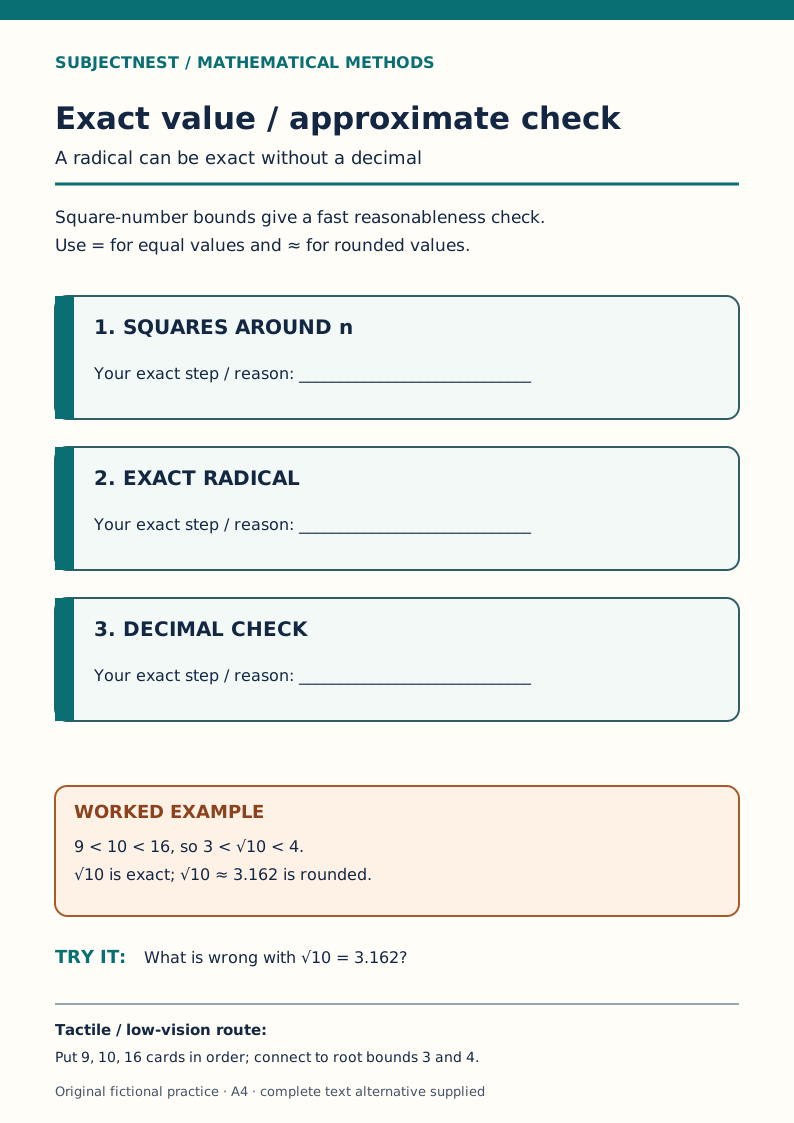
Exact value / approximate check
SVG · PDF. Subtitle: A radical can be exact without a decimal. “Square-number bounds give a fast reasonableness check. Use = for equal values and ≈ for rounded values.” Three boxes: (1) squares around n; (2) exact radical; (3) decimal check. Worked example: 9<10<16, so 3<sqrt(10)<4. sqrt(10) is exact; sqrt(10)≈3.162 is rounded. Try it: What is wrong with sqrt(10)=3.162? Tactile: put 9, 10, 16 cards in order; connect them to root bounds 3 and 4.
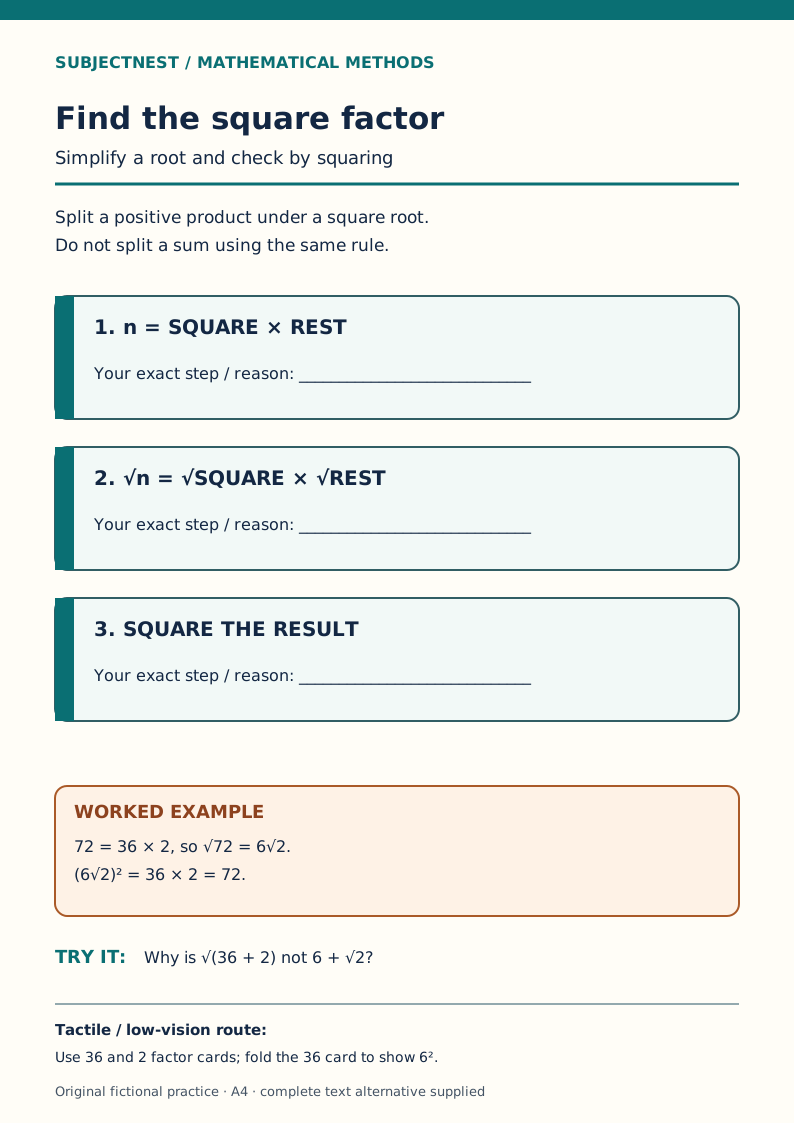
Find the square factor
SVG · PDF. Subtitle: Simplify a root and check by squaring. “Split a positive product under a square root. Do not split a sum using the same rule.” Three boxes: (1) n = square × rest; (2) √n = √square × √rest; (3) square the result. Worked example: 72=36×2, so sqrt(72)=6sqrt(2); (6sqrt(2))²=36×2=72. Try it: Why is sqrt(36+2) not 6+sqrt(2)? Tactile: use 36 and 2 factor cards; fold the 36 card to show 6².
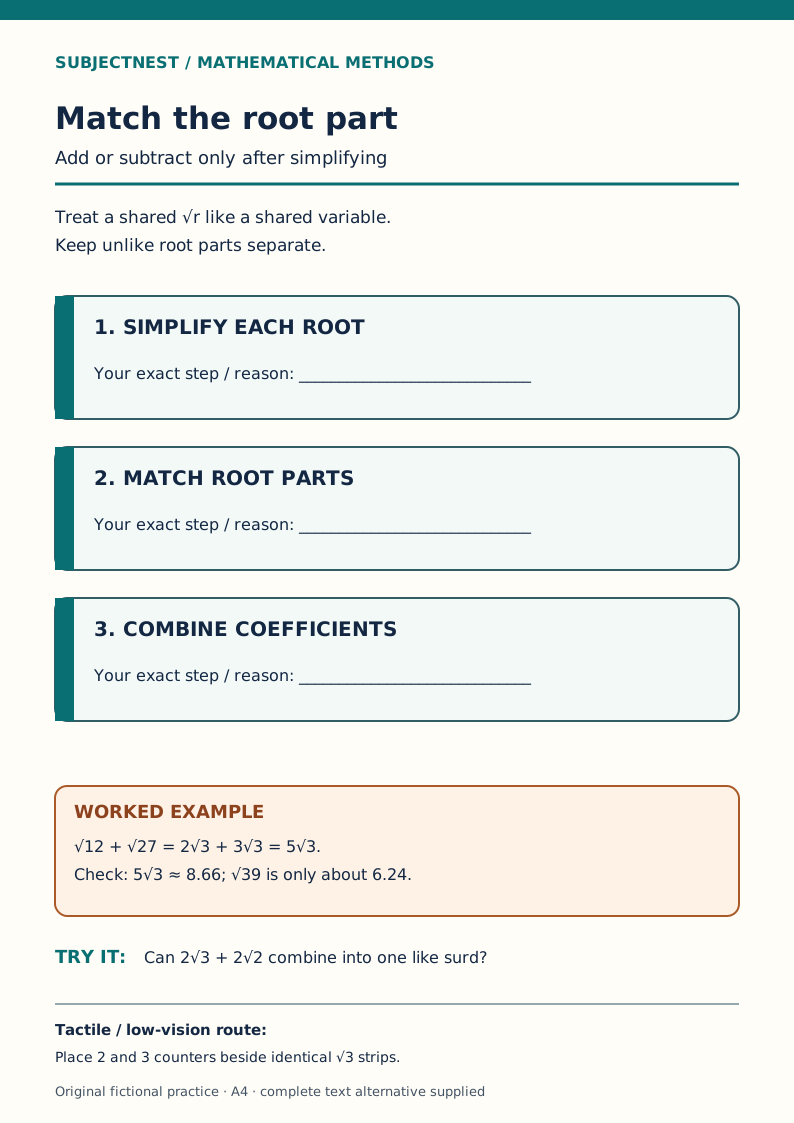
Match the root part
SVG · PDF. Subtitle: Add or subtract only after simplifying. “Treat a shared √r like a shared variable. Keep unlike root parts separate.” Three boxes: (1) simplify each root; (2) match root parts; (3) combine coefficients. Worked example: sqrt(12)+sqrt(27)=2sqrt(3)+3sqrt(3)=5sqrt(3); 5sqrt(3)≈8.66, while sqrt(39) is only about 6.24. Try it: Can 2sqrt(3)+2sqrt(2) combine into one like surd? Tactile: place 2 and 3 counters beside identical √3 strips.
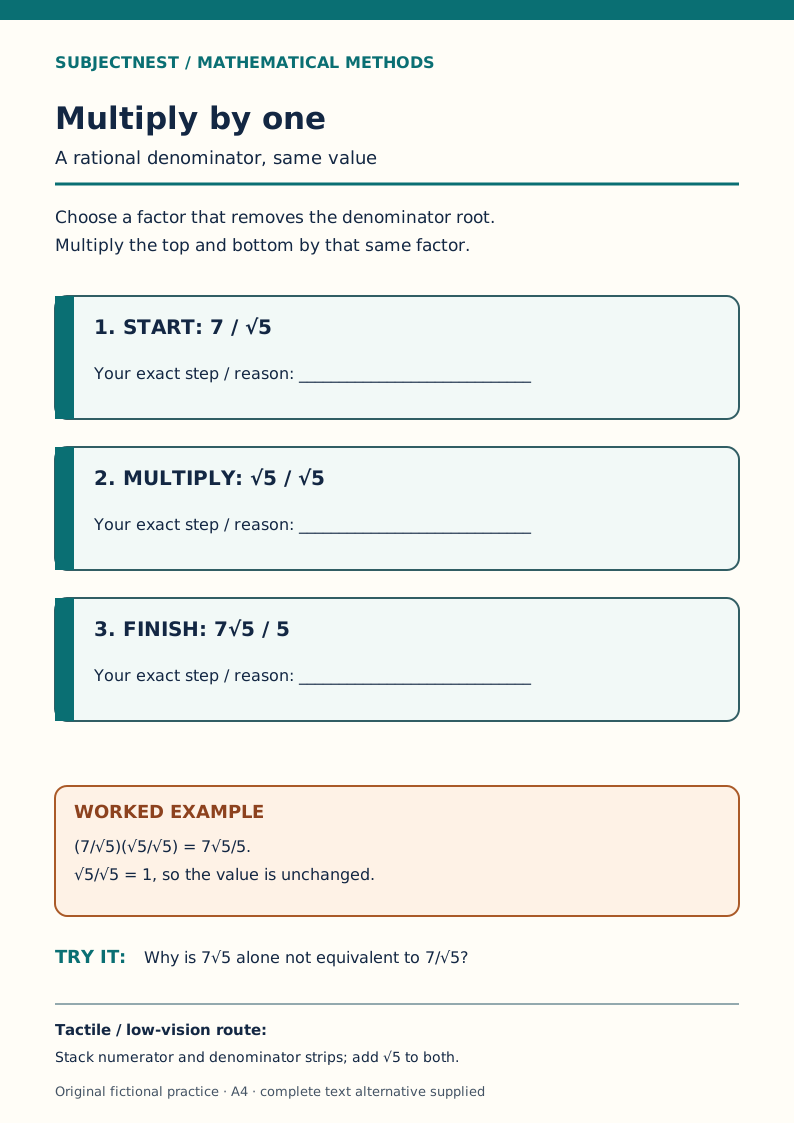
Multiply by one
SVG · PDF. Subtitle: A rational denominator, same value. “Choose a factor that removes the denominator root. Multiply the top and bottom by that same factor.” Three boxes: (1) start 7/sqrt(5); (2) multiply by sqrt(5)/sqrt(5); (3) finish 7sqrt(5)/5. Worked example: (7/sqrt(5))(sqrt(5)/sqrt(5))=7sqrt(5)/5; the multiplier equals 1. Try it: Why is 7sqrt(5) alone not equivalent to 7/sqrt(5)? Tactile: stack numerator and denominator strips; add √5 to both.
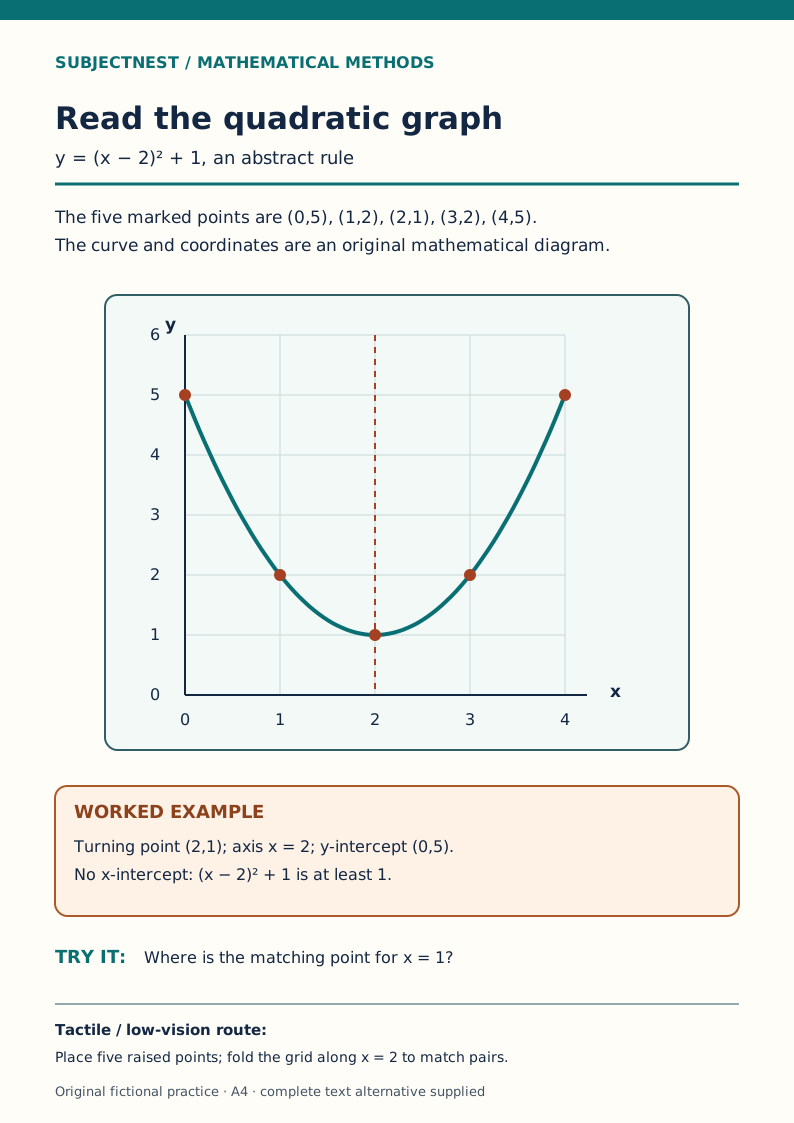
Read the quadratic graph
SVG · PDF. Subtitle: y=(x−2)²+1, an abstract rule. Five plotted points on axes x=0–4, y=0–6: (0,5), (1,2), (2,1), (3,2), (4,5). A solid upward parabola connects them and a dashed line shows the axis x=2; coloured point markers are decorative, with coordinates given here. Worked example: turning point (2,1), axis x=2, y-intercept (0,5); no x-intercept because (x−2)²+1≥1. Try it: Where is the matching point for x=1? Tactile: place five raised points on a grid and fold along x=2 to match pairs.