The five-place number builder SVG (A4 PDF) and evidence board SVG (A4 PDF) use black lines on white and no colour coding. Print at actual A4 size or enlarge. SVG/PDF text extraction and screen-reader exposure vary by software, so this page is the authoritative plain-text alternative. The drawings are simple labelled boxes; no meaning depends on recognising an icon or hearing audio.
Five-place number builder
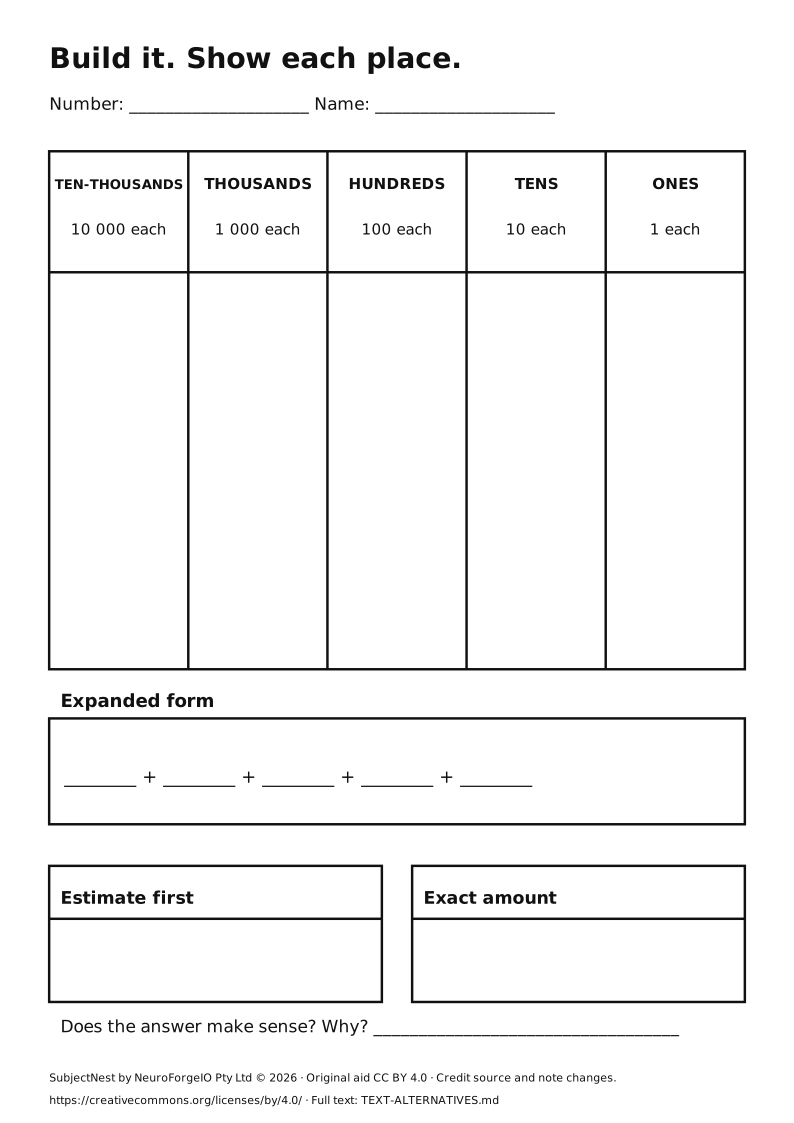
Visual description: portrait sheet; a large five-column grid, left to right ten-thousands, thousands, hundreds, tens, ones, with the unit value in each heading. Below are boxes for expanded form, estimate, exact amount and a reasonableness sentence.
Copyable layout:
Build a number. Check what each place means.
Number: ___ Name:
TEN-THOUSANDS (10 000 each):
THOUSANDS (1 000 each):
HUNDREDS (100 each):
TENS (10 each):
ONES (1 each):
Expanded form: ___ + ___ + ___ + ___ +
Estimate first: ___ Exact amount:
Does the answer make sense? Why? ___
Tactile route: five trays in left-to-right order with a raised printed/Braille label as appropriate; ten-thousands card, thousands card, hundred card, ten strip and one counter are different physical sizes/textures and spoken labels. Empty places remain with an “empty” marker. A learner may direct another person to place and exchange cards.
Evidence board
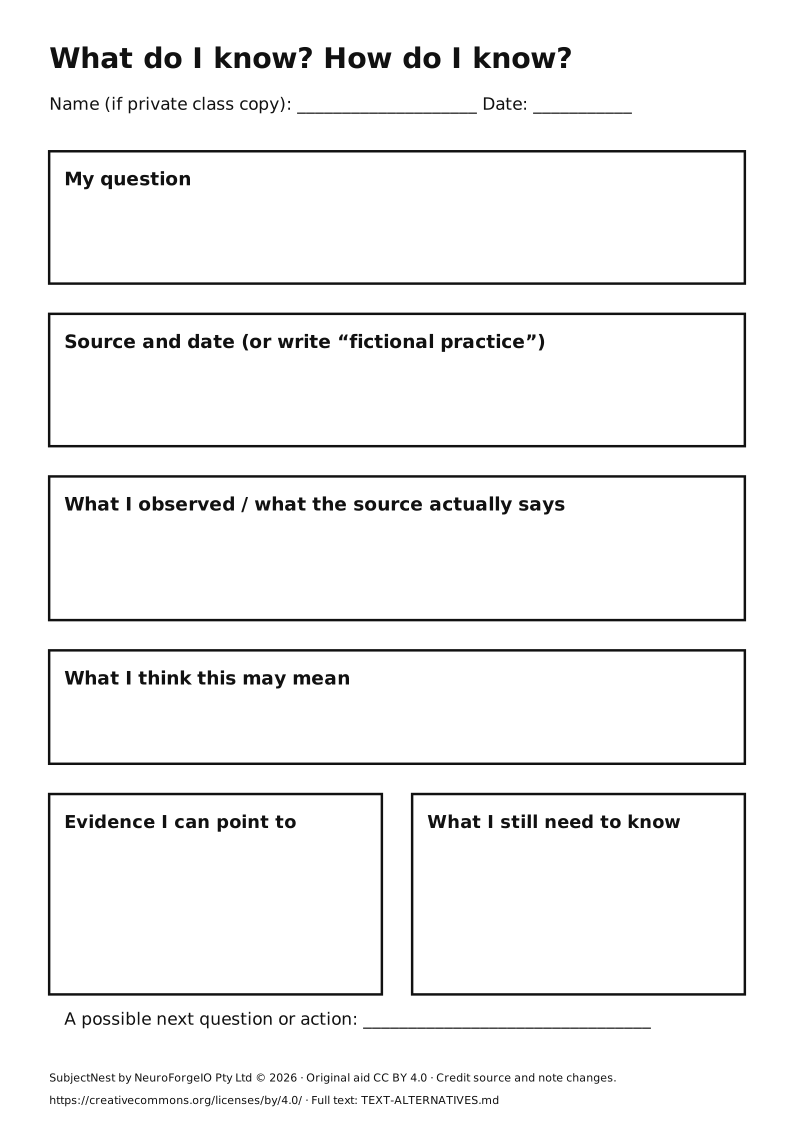
Visual description: portrait sheet of large bordered spaces. Top to bottom: My question, Source and date (or fictional practice), What I observed / what the source actually says, What I think this may mean. Side-by-side lower boxes: Evidence I can point to and What I still need to know. Bottom line: A possible next question or action. No pre-filled claim is printed.
Copyable layout:
What do I know? How do I know?
Name (if private class copy): ___ Date:
My question:
Source and date (or “fictional practice”):
What I observed / what the source actually says:
What I think this may mean:
Evidence I can point to:
What I still need to know: ___
A possible next question or action: ___
Tactile/voice route: make seven raised-line cards with the same heading words. Read each heading aloud; a learner chooses an object or dictate/AAC message for its field. Move a statement from “observed” to “think” when evidence is missing. Record whether the content came from the learner, a teacher prompt, a shared text, an observed sample or a fictional model.
Rights: Original graphics and text © NeuroForgeIO Pty Ltd 2026, SubjectNest, CC BY 4.0. Credit the original file/source and licence, and identify changes. No third-party teaching image or icon is included. PDF exports embed DejaVu font subsets; those font rights and notices are recorded separately in FONT-RIGHTS.md.