These alternatives reproduce the meaning and response spaces of the original source-purpose sorter and model-evidence planner, rather than merely naming the image. A user can work without colour, image, printer or screen. Do not make a child identify colour as evidence. Read aloud or render in large print, Braille through local production, screen reader, AAC, raised line or ordinary objects as needed. A teacher checks the final accessible format with the learner.
Source and purpose sorter · linear reading order
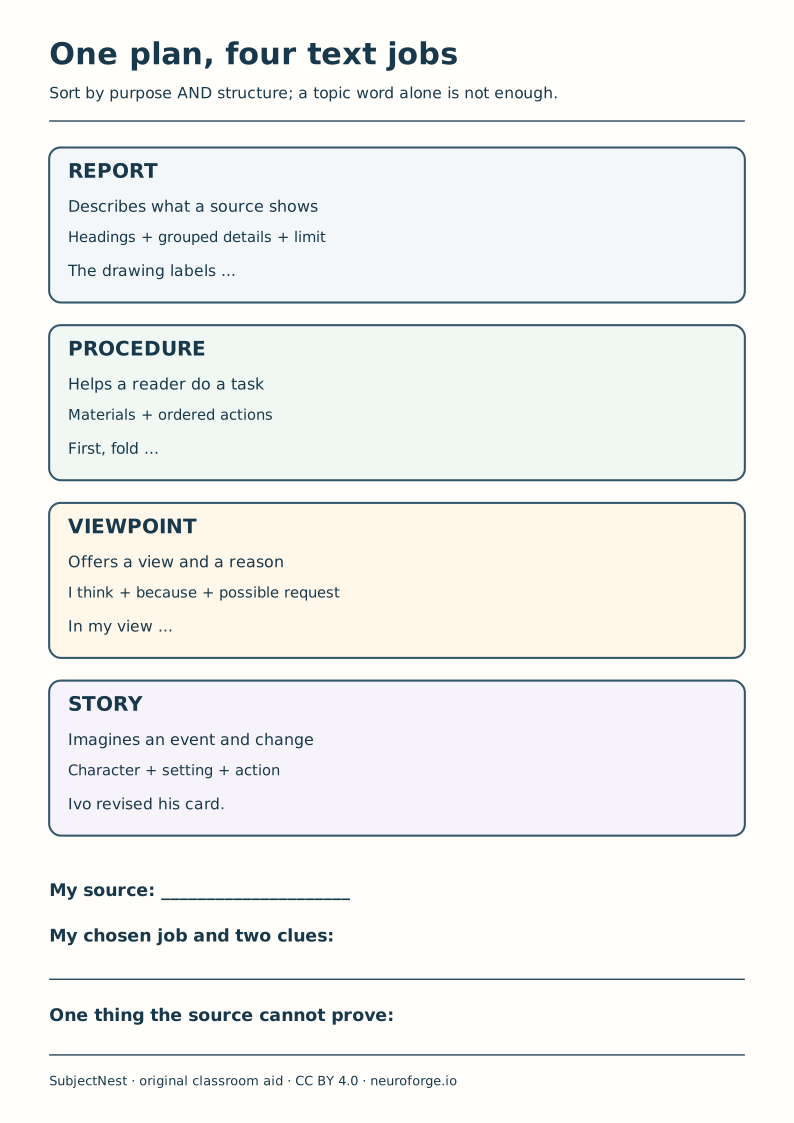
Title: One plan, four text jobs. Instruction: Sort by purpose and structure; a topic word alone is not enough.
- REPORT — Purpose: describes what a source shows. Structure: headings, grouped details and a limit. Example beginning: “The drawing labels ...”
- PROCEDURE — Purpose: helps a reader do a task. Structure: materials and ordered actions. Example beginning: “First, fold ...”
- VIEWPOINT — Purpose: offers a view and a reason. Structure: “I think”, “because” and possibly a request. Example beginning: “In my view ...”
- STORY — Purpose: imagines an event and change. Structure: character, setting and action. Example: “Ivo revised his card.”
Response fields: My source: [name or point]. My chosen job and two clues: [child words/selection]. One thing the source cannot prove: [child words/selection]. These are blank; no answer is printed on the aid.
Tactile build: Put four large cards in a vertical row. Give each a different word label and corner cut—REPORT one cut, PROCEDURE two, VIEWPOINT three, STORY four—so position and texture support the words. Put a separate sample sentence strip under each. A child selects a card and places two small counters on the structural clues they identify. Put a closed ring or blank card at the bottom for “not shown.” Explain cuts verbally; never require touch alone.
Model evidence planner · linear reading order
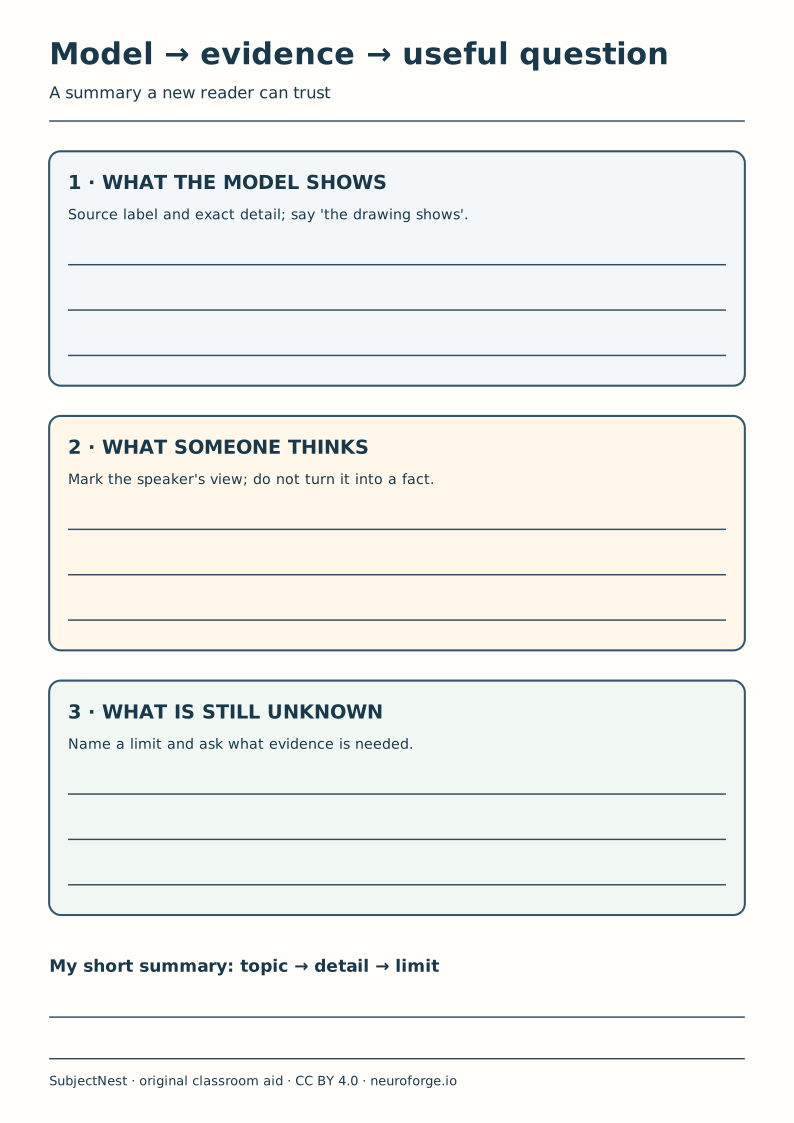
Title: Model → evidence → useful question. Subtitle: A summary a new reader can trust.
- WHAT THE MODEL SHOWS — Name the source and an exact labelled detail. Use “The drawing shows...” Three blank lines follow.
- WHAT SOMEONE THINKS — Mark whose view it is; do not turn it into a fact. Three blank lines follow.
- WHAT IS STILL UNKNOWN — Name a limit and ask what evidence is needed. Three blank lines follow.
Response field: My short summary: topic → detail → limit. Two blank lines follow. Children may place sentence cards, select AAC phrases, dictate or draw a labelled sequence; retain their wording and source links.
Tactile build: Arrange three trays or textured paper rectangles left to right and number them 1, 2, 3 with raised numerals or Braille prepared by the school. Put a paper-source card in tray 1, a speech-bubble token in tray 2 and a question-mark token in tray 3. A child moves their own word/object cards into each tray, then follows the row to compose the summary. Keep numbered/word labels present for anyone who does not use tactile cues. The arrangement is a language organiser, not a test of fine motor speed.
Original resource rights: © NeuroForgeIO Pty Ltd 2026, SubjectNest, CC BY 4.0. Credit, link and indicate changes. The associated PDF font licence is recorded in FONT-RIGHTS.md.