The five editable originals are science, HASS, HPE, Technologies and The Arts, with same-name PDFs beside them. These alternatives give all prompts, labels and spatial relations, not an image caption. A teacher can read them aloud, enlarge them, prepare Braille locally, select AAC words or make raised/tactile cards. Colour is never the only cue. Ask the learner whether the resulting access format works; none has yet been validated with every assistive technology.
Science aid
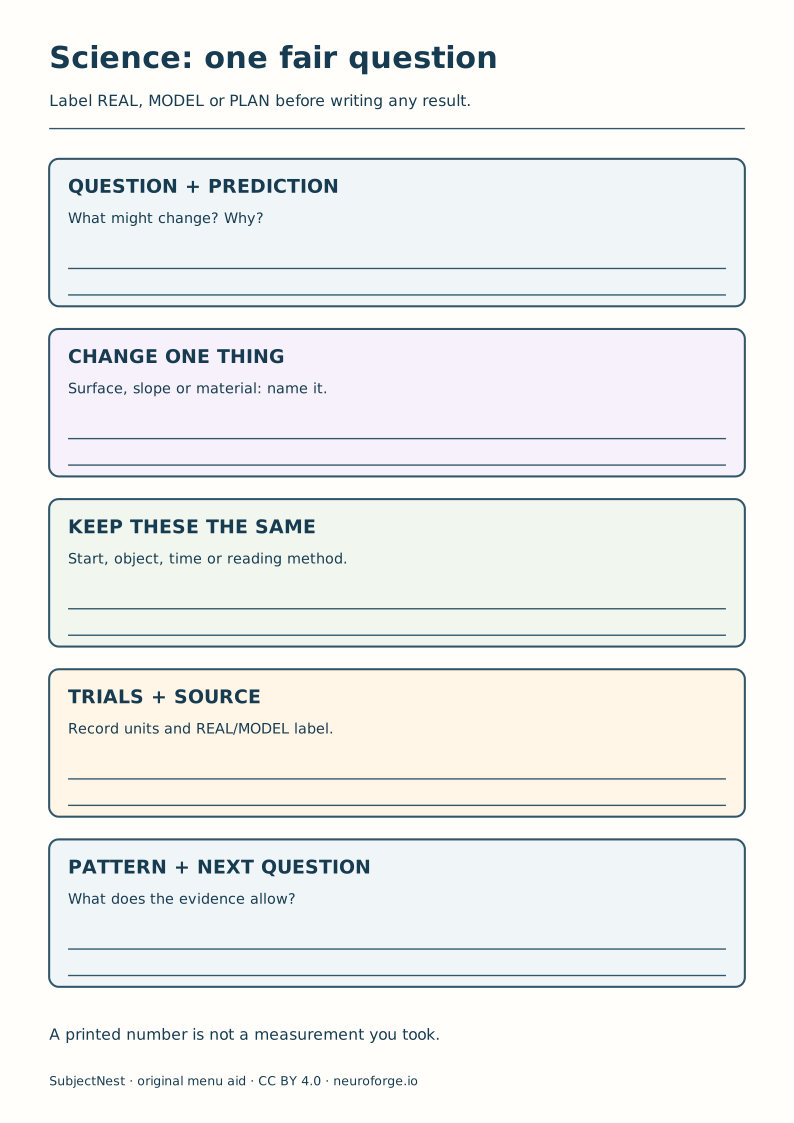
Title: Science: one fair question. Instruction: Label REAL, MODEL or PLAN before writing any result. Five boxes in top-to-bottom order:
- QUESTION + PREDICTION: What might change? Why? Two blank lines.
- CHANGE ONE THING: Surface, slope or material; name it. Two blank lines.
- KEEP THESE THE SAME: Start, object, time or reading method. Two blank lines.
- TRIALS + SOURCE: Record units and REAL/MODEL label. Two blank lines.
- PATTERN + NEXT QUESTION: What does the evidence allow? Two blank lines.
Footer: A printed number is not a measurement you took.
Tactile build: Five numbered cards in a vertical stack. Put a single raised circle beside CHANGED THING and two raised squares beside THINGS HELD THE SAME. Use distinct word/tactile labels REAL, MODEL and PLAN at the top. A child can direct a partner to place measurements; actual ruler use remains separately recorded.
HASS aid
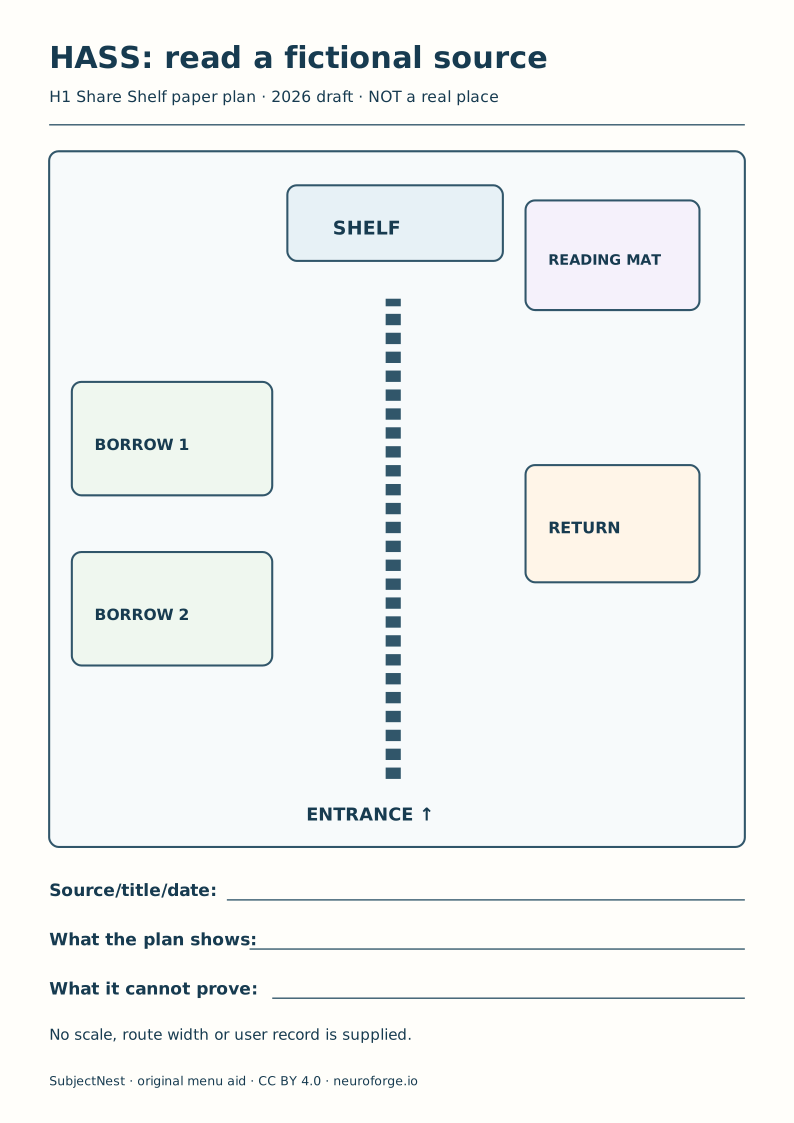
Title: HASS: read a fictional source. Source line: H1 Share Shelf paper plan · 2026 draft · NOT a real place. This is a top-view rectangular invented plan, with ENTRANCE at bottom centre, a dotted path running upwards, one SHELF at top centre, a READING MAT beside the shelf at top right, two BORROW baskets left of the path (one above the other), and one RETURN basket right of the path. The drawing is not to scale. It provides no path width, real address or visitor record.
Three response lines below the plan: Source/title/date [blank]; What the plan shows [blank]; What it cannot prove [blank]. Footer: No scale, route width or user record is supplied. This textual arrangement is the full source H1, so a non-visual reader can do the same source questions without the SVG/PDF.
Tactile build: Raised rectangle for the boundary; a thick string path from a bottom ENTRANCE label to a top SHELF label; two left BORROW cards, one right RETURN card, and a top-right READING MAT. Keep these word labels alongside textures. A child can trace the path while the teacher reads its lack of scale aloud; do not imply actual accessibility.
HPE aid
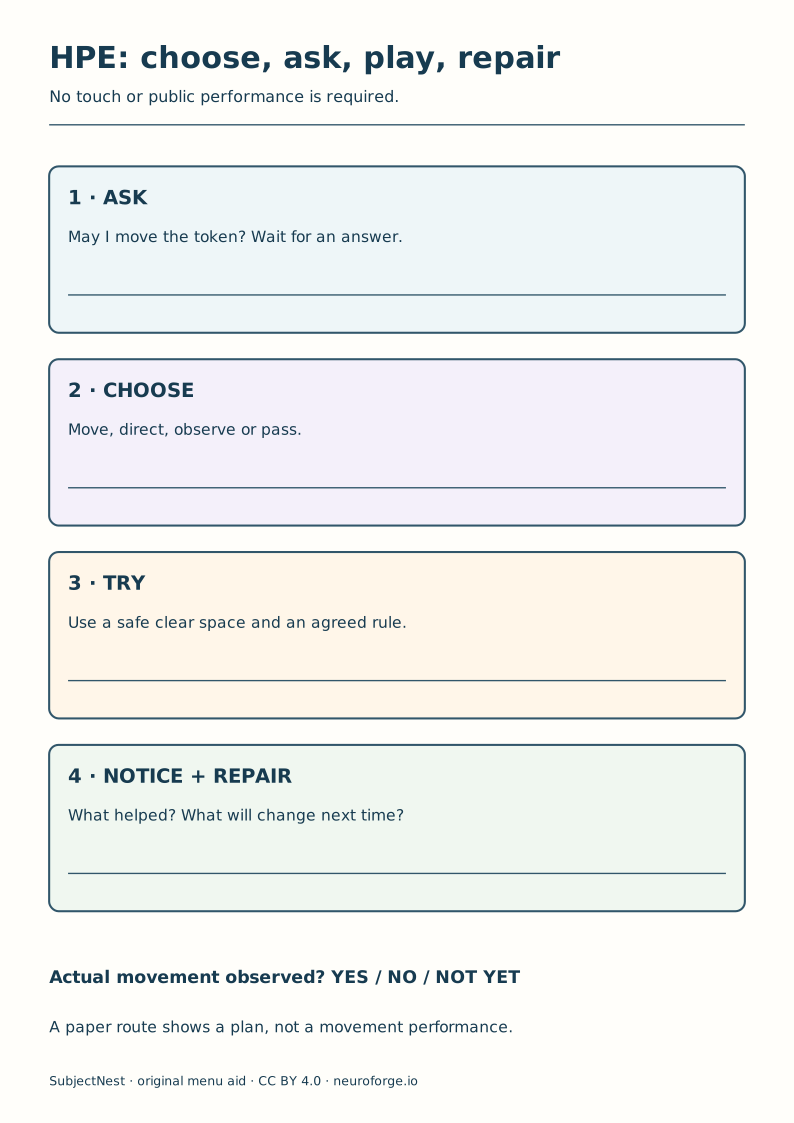
Title: HPE: choose, ask, play, repair. Instruction: No touch or public performance is required. Four numbered top-to-bottom boxes:
- ASK: “May I move the token?” Wait for an answer.
- CHOOSE: Move, direct, observe or pass.
- TRY: Use a safe clear space and an agreed rule.
- NOTICE + REPAIR: What helped? What will change next time?
Field: Actual movement observed? YES / NO / NOT YET. Footer: A paper route shows a plan, not a movement performance.
Tactile build: Four large word cards in order with one raised corner, two raised corners, three and four, plus a separate STOP card a child can place at any step. Roles are printed/spoken, so anyone may choose without relying on touch. A paper figure can represent a plan; a teacher records actual voluntary movement separately.
Technologies aid
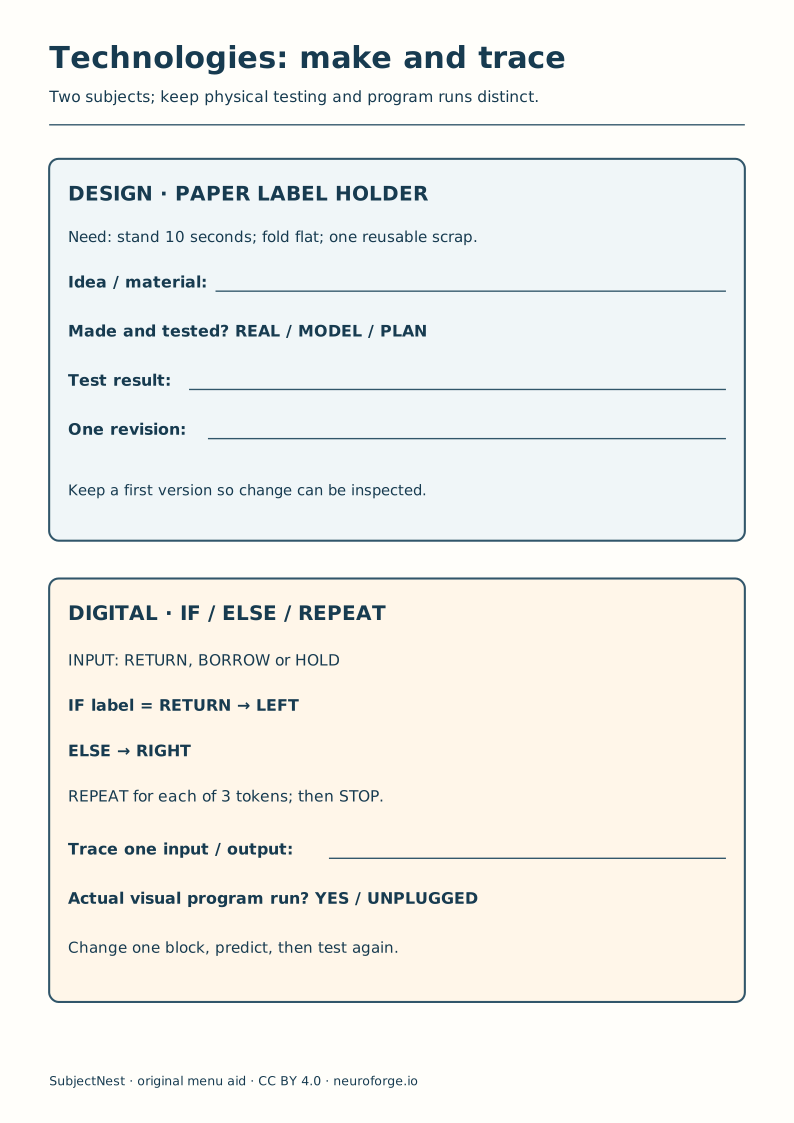
Title: Technologies: make and trace. Instruction: Two subjects; keep physical testing and program runs distinct.
Top half: DESIGN · PAPER LABEL HOLDER. Need: stand ten seconds, fold flat, use one reusable scrap. Blank fields: Idea/material; Made and tested? REAL / MODEL / PLAN; Test result; One revision. Reminder: Keep a first version so change can be inspected.
Bottom half: DIGITAL · IF / ELSE / REPEAT. Input states: RETURN, BORROW or HOLD. Printed model: IF label = RETURN → LEFT; ELSE → RIGHT; REPEAT for each of 3 tokens; then STOP. Blank field: Trace one input/output. Check: Actual visual program run? YES / UNPLUGGED. Reminder: Change one block, predict, then test again. This printed rule supports tracing only; the original offline Rule Lab allows a real visual-program run when school-approved access exists.
Tactile build: For Design, two labelled folded-paper samples and a medium label; a child tests them or directs a maker. For Digital, one labelled branch card IF with two paths LEFT/RIGHT and three numbered input tokens. Move one input at a time; a separate physical token marked PROGRAM RUN is used only after actual device execution. Do not count paper movement as software implementation.
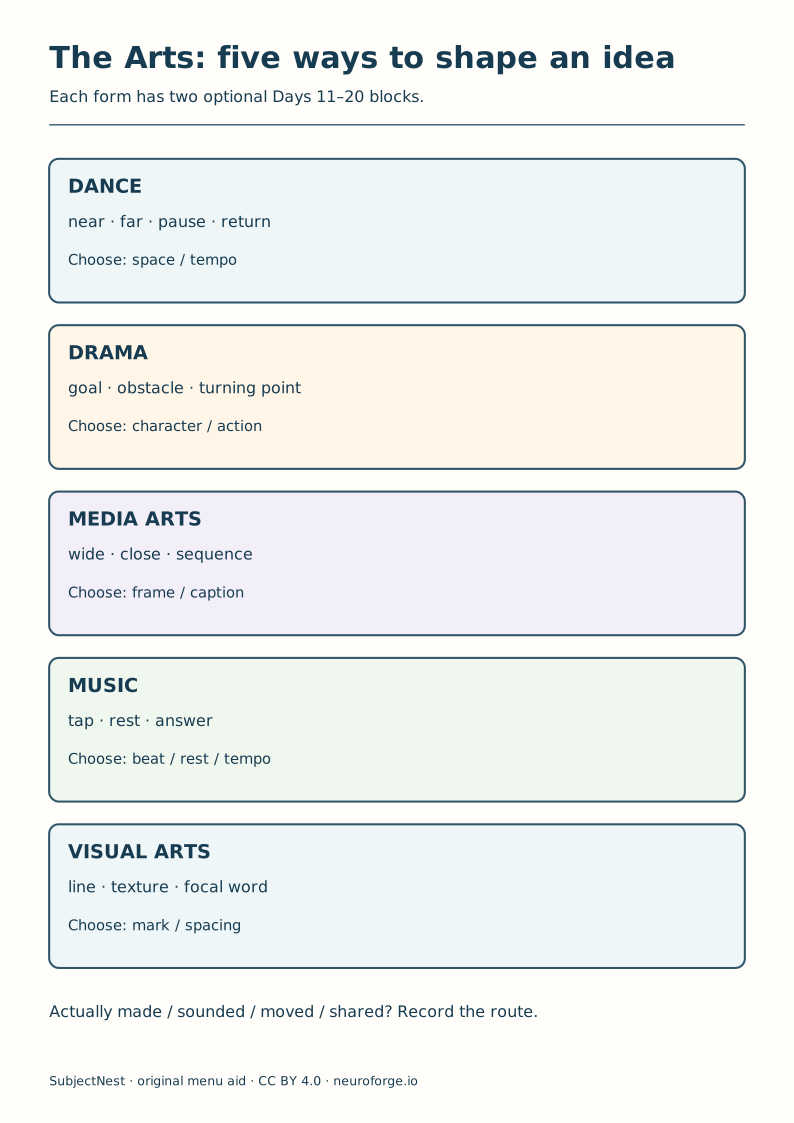
Arts aid
Title: The Arts: five ways to shape an idea. Instruction: Each form has two optional Days 11–20 blocks. Five top-to-bottom rows:
- DANCE: near · far · pause · return. Choose space or tempo.
- DRAMA: goal · obstacle · turning point. Choose character or action.
- MEDIA ARTS: wide · close · sequence. Choose frame or caption.
- MUSIC: tap · rest · answer. Choose beat, rest or tempo.
- VISUAL ARTS: line · texture · focal word. Choose mark or spacing.
Footer: Actually made / sounded / moved / shared? Record the route. These are original prompts, not reproduced cultural forms.
Tactile build: Five large form-name cards in a vertical row, each with its prompt in raised text/Braille if locally prepared. Use a paper arrow for Dance, two character tokens for Drama, three framed paper windows for Media Arts, four beat counters for Music and three different pencil-mark sample cards for Visual Arts. A child can compose/direct without each activity becoming a performance. The teacher records the action actually observed.
Original resource rights: © NeuroForgeIO Pty Ltd 2026, SubjectNest, CC BY 4.0. Credit, source and changes. See font rights for the PDFs' separately licensed embedded font.