Everything in this packet is invented for Year 6 reading and writing practice. The people, club, items, dates, numbers, comments and places are fictional. The packet is a model of how different texts can frame one event; it is not a report of an Australian program, a recommendation to bring items to school, a repair or safety guide, a real person's testimony or a source on First Nations Country/Place. All source labels below must stay attached when a learner quotes or paraphrases. The Day 15 and Day 20 check sources are elsewhere and remain unseen until those checks.
Source A · public poster from the invented Dockside Fix Club
Invented creator and context: The club's organiser made this poster on 18 September 2026, after a one-session trial, to invite interest in another session. The audience is potential visitors. It selects from the club's own tally, Source B; it is not independent confirmation of B. The original A4 poster, SVG and complete text/layout description show the full source copy and hierarchy.
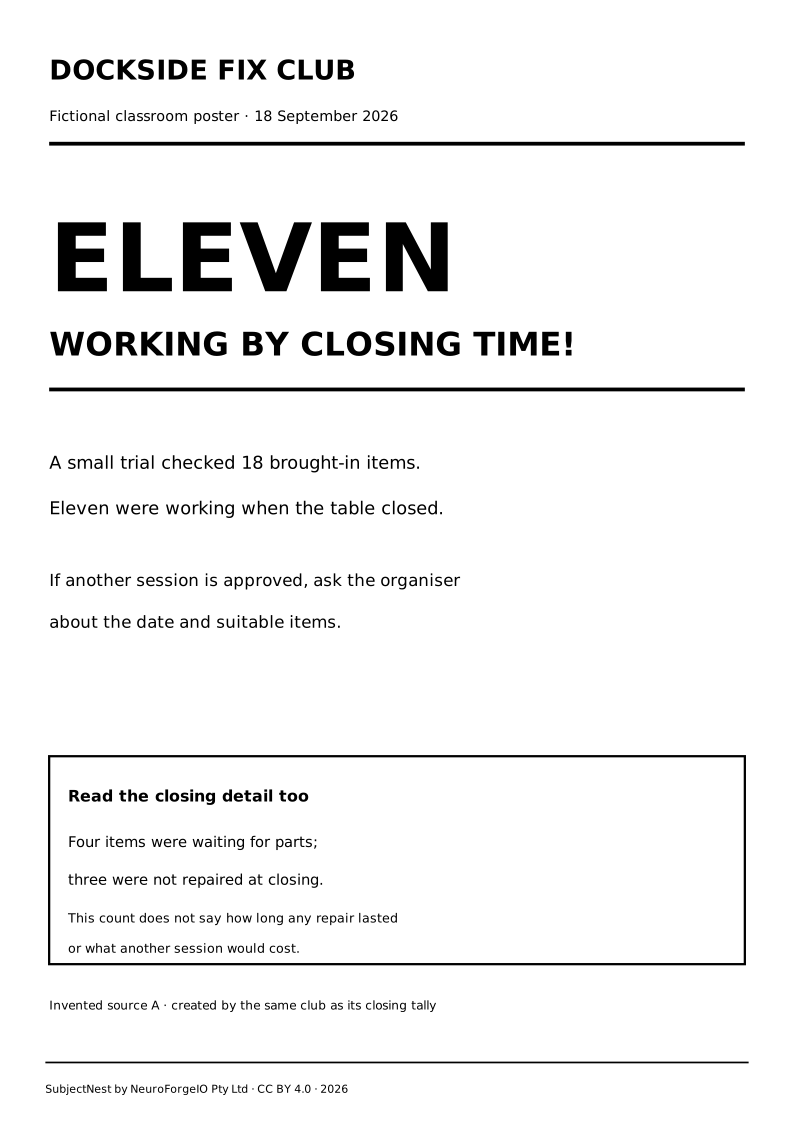
ELEVEN WORKING BY CLOSING TIME!
A small trial checked 18 brought-in items. Eleven were working when the table closed. If another session is approved, ask the organiser about the date and suitable items.
Read the closing detail too. Four items were waiting for parts; three were not repaired at closing. This count does not say how long any repair lasted or what another session would cost.
Dockside Fix Club · fictional classroom poster · 18 September 2026.
Notice the design, not just the words: “ELEVEN” is the largest text; the smaller four/three detail is lower on the page. That changes what a reader meets first. It does not change the arithmetic or prove the result lasted. A learner using the text route receives the same hierarchy description.
Source B · same invented club's closing tally
Invented creator and context: The organiser wrote this internal tally at the end of the same 18 September trial to keep an account of the items. It has a narrower record-keeping purpose than Poster A. It is from the same club and same event.
| Category at closing | Items |
|---|---|
| Working when the table closed | 11 |
| Waiting for parts | 4 |
| Not repaired at closing | 3 |
| Total brought in | 18 |
The categories are mutually exclusive in this invented tally and add to 18. The club did not record a one-week follow-up, price, volunteer time, visitor access needs or how many items were still used later. “Working at closing” is the recorded condition; it is not the same claim as “every item was saved permanently.” This tally could contain mistakes because no independent check is supplied.
Source C · two selected fictional comment slips
Invented context: These two slips were selected from unknown possible comments. They are not a survey, a random sample or testimony from real people. The readers are told neither how many visitors attended nor how the slips were chosen.
- C1, invented Jo: “I liked being able to ask what the volunteer was doing.”
- C2, invented Ren: “I wanted a quieter way to hear the explanation.”
Jo's preference and Ren's request can inform a question for a later session. Neither proves that everyone liked, disliked, could access or wanted the service. Do not assign either speaker an identity, diagnosis or community role that the slip does not state.
Source D · organiser's draft decision note
Invented creator and context: The same club organiser wrote this proposal, not an approved policy, after seeing the tally and two slips. The intended reader is a fictional room manager.
“A small second trial could be useful because 11 of the 18 items were working at the first closing. Before we set a date, we should ask whether volunteers, parts, space and a quieter explanation option are available. We should record how repairs hold up later and invite more than two feedback responses. These first records are promising for a test, but do not show that every item can be fixed or that a larger program is ready.”
The note is an argument built from the club's own sources. Its question about a quiet option responds to Ren's selected slip. It does not create new outcome data.
Mini-case E · invented zine shelf
Invented source: Hall Editors' public sign says, “Our zines are the town's most loved reads!” Its small closing table says 30 original zines were set out at a trial shelf, 18 were taken and 12 remained. The editor made both sign and table on the same day to invite another shelf trial. The numbers support the narrower sentence “18 of 30 were taken at closing”; they do not measure love, town-wide preference or later reading. The zines are fictional original booklets, with no actual titles copied.
Mini-case F · invented sports-kit return desk
Invented source: A recreation desk's end-of-day log says 20 soft practice discs were lent, 16 returns were logged before closing and 4 were not yet logged. A desk sign says, “Every disc safely home!” The log does not establish whether the four were still in approved use, returned later or missing. A careful writer can say “four returns were not yet recorded at closing” without blaming anyone. No real child, team or sports club is described.
Mini-case G · invented garden-label trial
Invented source: A garden team's note records a one-day indoor table test of 40 paper labels: 32 readable at the end, 8 not readable. Its poster headline says “Weatherproof labels for every garden!” The indoor, one-day test gives no evidence about rain, sun, long-term performance or every garden. A careful proposal would seek an approved, relevant test before making a durability claim. No real garden, climate or Country/Place knowledge is represented.
Reading rule: Source A/B/D share one organisation's underlying trial; C is two selected fictional views; E/F/G are separate mini-cases. A number in a fictional source may be accurately copied from that source while still lacking real-world verification. Use words such as records, says, suggests, unknown, and if according to the strength of evidence. Keep reading access mode visible: independent reading and reasoning after an adult read-aloud are different observations.
All original sources, names, data and wording © NeuroForgeIO Pty Ltd 2026, CC BY 4.0. Credit, link and indicate changes. No endorsement by any real club, agency or person is implied.