The original law/non-law mat, quotient/domain ladder and variable-power map each have a same-name PDF. This page includes all printed prompts, examples, units, blank fields and meaningful order, not a short image label. Enlarge, read exactly, convert locally to Braille, use AAC labels or build the tactile routes. Colour groups sections but carries no unique rule. Confirm the actual format with the learner; no assistive-technology certification is claimed.
Law boundary mat
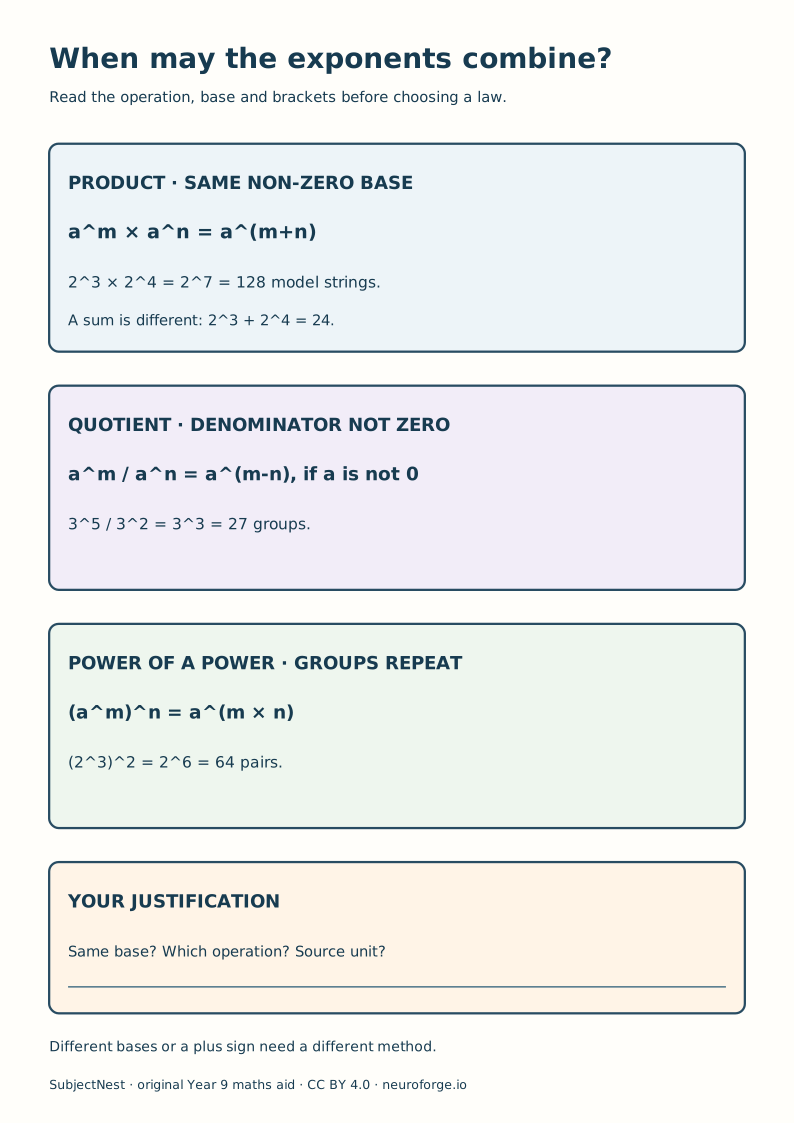
Title: When may the exponents combine? Instruction: Read the operation, base and brackets before choosing a law. Three boxes and a final blank field run top to bottom:
- PRODUCT — SAME NON-ZERO BASE:
a^m × a^n = a^(m+n). Example2^3×2^4=2^7=128model strings. A sum is different:2^3+2^4=24. The sheet states a non-zero base because its shared general integer-exponent rules include negative values; a positive-exponent product alone also permits zero. - QUOTIENT — DENOMINATOR NOT ZERO:
a^m/a^n=a^(m−n)if a is not zero. Example3^5/3^2=3^3=27groups. - POWER OF A POWER — GROUPS REPEAT:
(a^m)^n=a^(mn). Example(2^3)^2=2^6=64model pairs. - YOUR JUSTIFICATION: blank line under “Same base? Which operation? Source unit?” Footer: Different bases or a plus sign need a different method.
Tactile build: Use separate PRODUCT, QUOTIENT, POWER OF POWER and SUM cards. For product, put three base-2 tokens alongside four base-2 tokens and count seven. For quotient, physically cancel two base-3 tokens from five while leaving three. For power-of-power, duplicate an entire three-token group. Place a raised boundary between SUM and PRODUCT, with a learner-chosen rule card only after they name the operation.
Quotient domain ladder
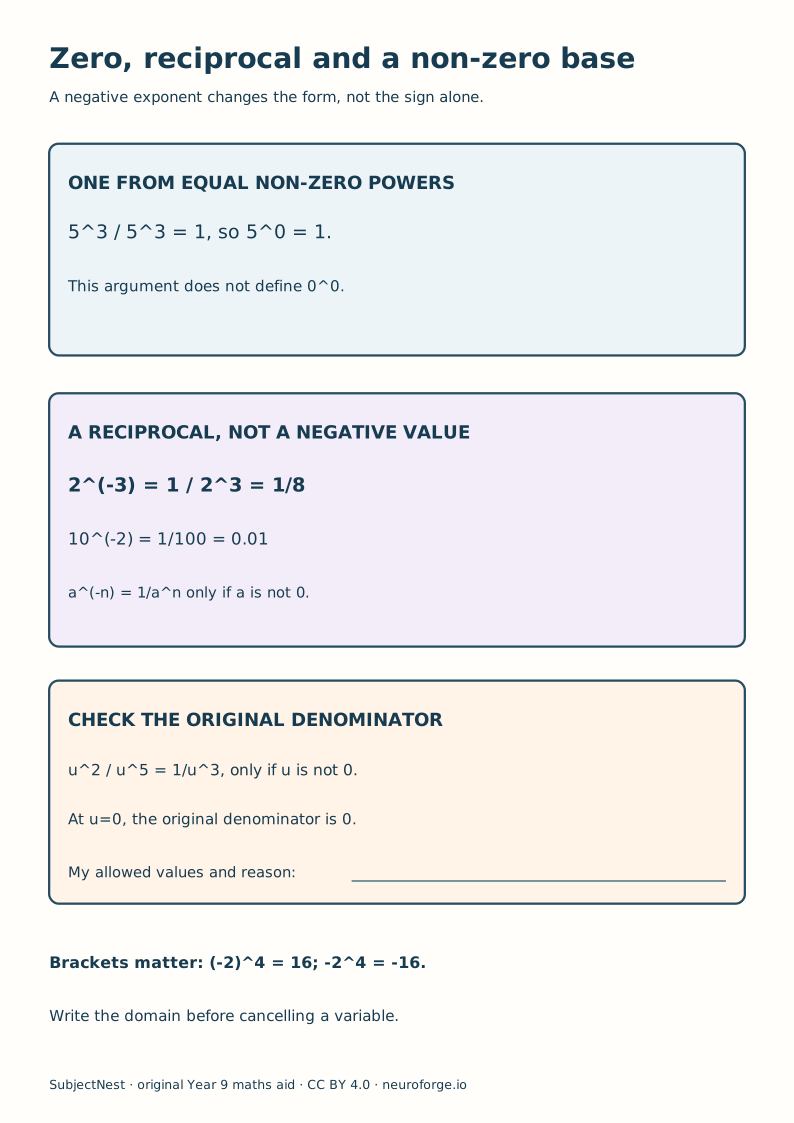
Title: Zero, reciprocal and a non-zero base. Instruction: A negative exponent changes the form, not the sign alone. Three boxes top to bottom:
- ONE FROM EQUAL NON-ZERO POWERS:
5^3/5^3=1, so5^0=1. This argument does not define0^0. - A RECIPROCAL, NOT A NEGATIVE VALUE:
2^(−3)=1/2^3=1/8;10^(−2)=1/100=0.01;a^(−n)=1/a^nonly if a is not zero. - CHECK THE ORIGINAL DENOMINATOR:
u^2/u^5=1/u^3, only if u is not zero; at u0 the original denominator is zero. Blank line headed My allowed values and reason.
Footer: Brackets matter: (-2)^4=16; -2^4=-16. Write the domain before cancelling a variable.
Tactile build: On a vertical strip, put a 5³ over 5³ card at the top, then move to a 1 card. Below, put 1 over an eight-token group to show 2^(−3). For a variable quotient, put an empty-denominator warning card at u=0; do not move a cancelled-u card across the warning. Bracketed negative-base and leading-minus cards are separate, tactile-marked forms.
Variable power map
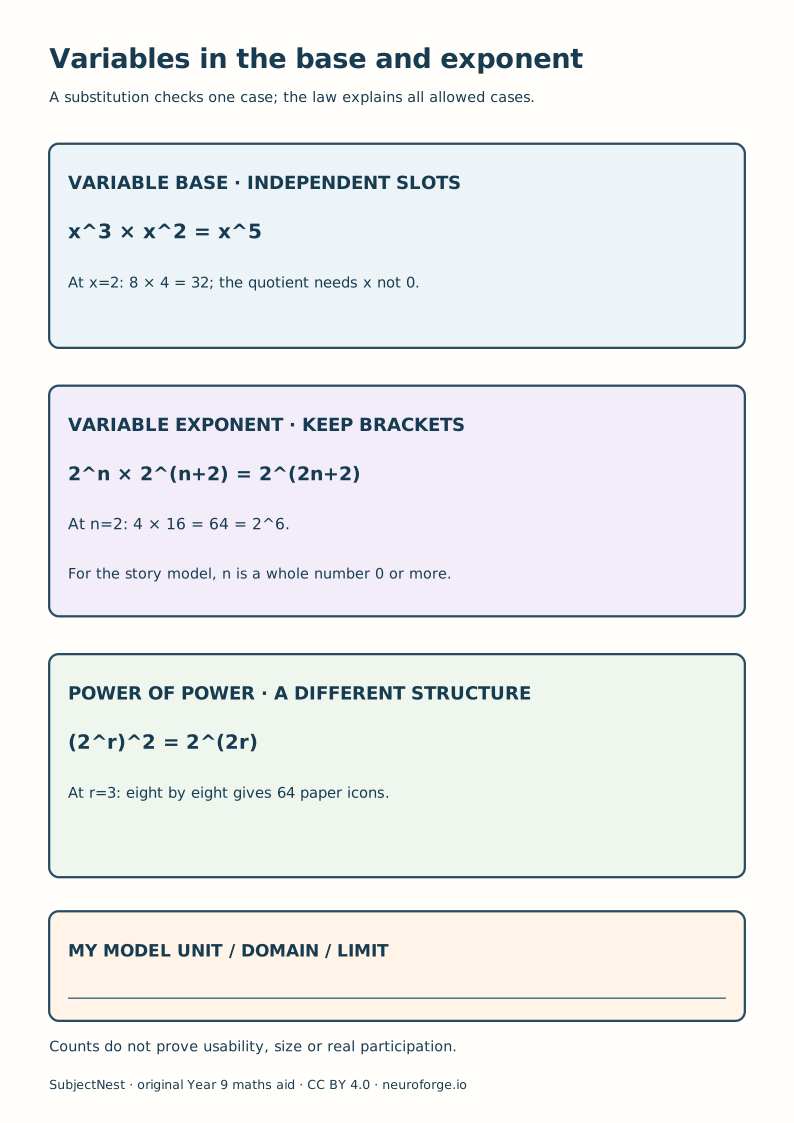
Title: Variables in the base and exponent. Instruction: A substitution checks one case; the law explains all allowed cases. Three example boxes and a final blank field:
- VARIABLE BASE — INDEPENDENT SLOTS:
x^3×x^2=x^5. At x2,8×4=32. The quotient needs x not zero. - VARIABLE EXPONENT — KEEP BRACKETS:
2^n×2^(n+2)=2^(2n+2). At n2,4×16=64=2^6. For the fictional story model, n is a whole number at least zero. - POWER OF POWER — A DIFFERENT STRUCTURE:
(2^r)^2=2^(2r). At r3, eight by eight gives 64 paper icons. - MY MODEL UNIT / DOMAIN / LIMIT: blank line. Footer: Counts do not prove usability, size or real participation.
Tactile build: Use five x-labelled independent slot cards (three then two), then a second row with n binary cards and n+2 binary cards. Keep n+2 tied with a band or bracket. For the icon grid, make a small 2^r-by-2^r raised checkerboard or just labelled row/column count cards; learners direct placement and describe the model count. Give separate cards for MODEL UNIT, ALLOWED VALUES and STILL UNKNOWN.
Original resource rights: © NeuroForgeIO Pty Ltd 2026, SubjectNest, CC BY 4.0. Credit author, source, licence and changes. PDF font subsets retain separate rights.