Version: v0.1, 29 September 2026. Five 35-minute sessions. Year 9 Civics and Citizenship draft for educator, wellbeing, accessibility and local-syllabus review. The English fictional source packet supplies shared text, but this guide asks a civic question: how media wording can shape attitudes to a group and how a fair, evidence-seeking community process might respond. Neither proposal nor post is real. No class vote decides a policy, and no learner speaks for an identity group. Do not grade English paragraph form here.
National links: AC9HC9K06 covers the influence of media, including social media, in shaping identity and attitudes to diversity. AC9HC9S01 concerns investigable civic questions; AC9HC9S02 locating/selecting/comparing information; AC9HC9S03 analysing perspectives; AC9HC9S04 evaluating participation/decision strategies; AC9HC9S05 evidence-based civic explanation. These are partial applications of exact Year 9 content descriptions checked against ACARA v9 downloads, retrieved 29 September 2026; workbook SHA-256 db446882d2c00cf7c085a03e250e2442fda6c44011fc114680c46c1dc7a822c3. Australia's eSafety Commissioner advises checking source and facts before sharing potentially misleading online material. The eSafety advice supports our source-check routine; it does not certify this invented scenario or imply a real post is illegal.
Prepare/safety/access: Print Cards A–C and visual/text alternative. Provide a source-status board: stated / inferred / unknown / question. Teacher reads the fictional unsupported stereotype once as a source, then consistently says “the mock post claims”. Do not ask a teenager, disabled learner or any child to reveal experiences to confirm/refute a claim. If real harassment emerges, follow school processes. Offer large text, screen reader/teacher reading, tactile evidence slots, AAC/sign, keyboard, opt-in small-group or individual response. An evidence-based quiet response is as valid as public speaking.
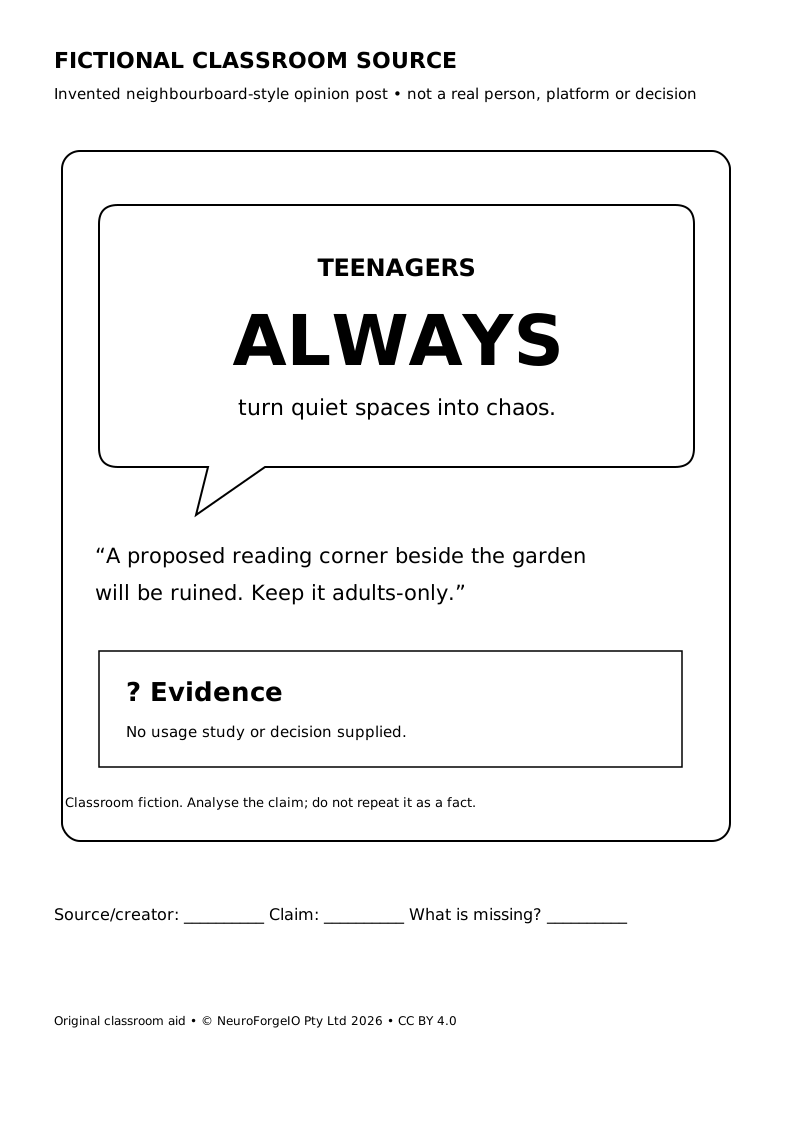
Day 1 — A post is an action in a civic space
Question: What might a sweeping mock post invite readers to think or do? 35 = 5 launch + 7 model + 12 analyse + 8 discuss + 3 check.
- Launch, 5: Show the fiction label before the headline. Ask for source type and proposed action. Key: invented opinion post; it urges exclusion from a proposed reading corner.
- Model, 7: Say “
Alwaystreats a varied group as one. A reader might accept the stereotype or challenge it. We can evaluate the wording without asking anyone here to defend the group.” Write source → message → possible audience response. - Analyse, 12: Groups mark exact words, target group, proposed action and absent evidence on Card A. They sort each into
statedversusassumed; no invented incident examples. - Discuss, 8: Ask how the same post could shape attitudes to age diversity. Accept: it may normalise a stereotype or exclusion; actual impact cannot be measured from our card. Peer must cite wording.
- Check, 3: “Can this card tell us what every teenager does?” Key: no. Next: examine a counter-source rather than repeating an unsupported universal.
Day 2 — What does the proposal actually say?
Question: Which information could support a decision and what is still unknown? 35 = 5 retrieve + 7 model + 12 source-sort + 8 compare + 3 check.
- Retrieve, 5: Recall Card A claim and its status as opinion. Put a boundary line under
not evidence of group behaviour. - Model, 7: Read Card B: possible shade, seating, signs and step-free route; no approval or access audit. “A concept is not a completed place or a legal compliance certificate.”
- Source-sort, 12: Learners create four columns
source / what stated / limit / what to ask. Put Cards A and B in columns; propose a non-leading question about users, design or opening times. - Compare, 8: Teams exchange boards. Check whether they treated a mock post as a usage study or a draft as an approved council plan.
- Check, 3: “What evidence would help test a quiet-use prediction?” Accept: appropriate usage/consultation plan or comparable verified evidence, with privacy and consent. Next: formulate a narrower question.
Day 3 — Perspectives are more than two camps
Question: How can a process hear different needs without making a child a spokesperson? 35 = 5 entry + 7 model + 12 questions + 8 perspective audit + 3 check.
- Entry, 5: Read invented Ari and Lee voices on Card C, clearly attributed. Key: preferences and questions, not a survey.
- Model, 7: Teacher says “Ari asks about times; Lee asks about path and signs. Both are relevant. I cannot infer the views of all young/adult people.” Add unknowns: actual site plan, use expectations, access review.
- Questions, 12: Learners select a fictional role (designer, potential user, access reviewer, gardener, nearby resident) and write one respectful information question; do not roleplay a real marginalised identity or invent testimony.
- Perspective audit, 8: Class checks whether proposed questions are answerable and non-leading. “What do different users need?” is better than “Why do teens make noise?”
- Check, 3: “Does one invented quote represent a whole age group?” Key: no. Next: attribute and qualify before using it in an argument.
Day 4 — Evaluate ways to decide and participate
Question: Which civic process would supply fairer information? 35 = 5 review + 7 model + 12 design + 8 critique + 3 check.
- Review, 5: List options: share post, ask for site plan, accessible consultation, observe another site with consent, invite verified design expertise. No actual outreach is sent.
- Model, 7: Teacher compares “repost Card A” (fast reach, no validation, possible stereotype spread) with “ask for draft, consultation and access audit” (slower, better reasons). Avoid treating any single process as perfect.
- Design, 12: Groups choose two methods for a fictional decision pathway, state who could participate, privacy/access safeguards, what evidence each yields and one limit.
- Critique, 8: Peers test a pathway with a new constraint: some users cannot attend a meeting. Accept: offer written, online, AAC or other accessible route without claiming a legal requirement from this card.
- Check, 3: “Why might a high-engagement post still be weak evidence?” Key: shares/reactions do not verify the claim or represent everyone. Next: source-check before weighing popularity.
Day 5 — Evidence-based civic response
Question: Can we communicate a fair next step without pretending the case is real? 35 = 5 plan + 7 model + 12 create + 8 peer audit + 3 exit.
- Plan, 5: Success criteria: label fiction, quote/attribute Card A, state Card B's limited status, include a respectful information question, propose a participation method.
- Model, 7: “The invented post makes an unsupported universal claim about teenagers. The draft instead describes a possible shared corner without approval or usage evidence. A fair next step is to request the site plan and accessible consultation before deciding.”
- Create, 12: Student prepares a 60-second spoken/AAC/typed statement, four-box card or short written note for an imaginary project group. Do not collect signatures or publish it as a real campaign.
- Peer audit, 8: Partner checks source status, group respect, evidence limit and practical participation route. Revise one overclaim; no peer grades a classmate's identity or public speaking.
- Exit, 3: “Name one fact this pack does not establish.” Keys: actual site approval, usage, accessibility compliance or community opinion. Next: reteach source status if these are asserted.
Original civic decision slip and formative rubric
FICTIONAL ISSUE: ________________________________________
POST'S EXACT CLAIM (attributed): ________________________
DRAFT NOTE ACTUALLY SAYS: _______________________________
PERSPECTIVE / WHO IS NOT YET HEARD: _____________________
QUESTION TO VERIFY: _____________________________________
FAIR PARTICIPATION METHOD AND LIMIT: ____________________
PROVISIONAL NEXT STEP: __________________________________
RESPONSE ROUTE / CONTENT PROMPT: ________________________
Score each of source status, perspective respect, evidence question, decision route as 0 = not yet with access, 1 = after content cue, 2 = independent and specific. /8 is only a formative prompt, not a civics achievement grade. If source status is weak, compare Card A/B origins; if respect is weak, replace a sweeping noun with attributed precise wording; if question is weak, identify one missing fact; if route is weak, compare participation methods and accessibility. Fresh recheck: fictional “Every resident supports a skate-area change” post versus a draft note with no consultation counts; key: cannot infer universal support, request accessible consultation and source data. No real local skate claim is made.
Rights: Original guide/slip © NeuroForgeIO Pty Ltd 2026, CC BY 4.0. Credit SubjectNest Year 9 Australian-first opening pack, v0.1, source, licence and changes. ACARA/eSafety retain separate rights; no third-party work embedded. Integrated file hashes. Local/educator review pending.