Ten short, original invitations for children in the year before Prep. Each card takes roughly 10–20 minutes; a child can stay with an idea longer or stop earlier. A parent, carer or educator can use these with cheap things already around them. Begin with the child's interests, language and ideas.
This is a draft for local educator review, not a kindergarten program, assessment instrument or list of milestones. Queensland's QKLG 2024 is a guideline for planning, observing and responding to learning through play; the EYLF V2.0 outcomes are broad. The five areas here are Identity, Connectedness, Wellbeing, Active learning and Communicating. These activities are pre-Prep and do not use Foundation Australian Curriculum standards as targets. Source notes give the official framework links and scope.
Pick a card
| Card | Child's invitation | QKLG area | EYLF V2.0 outcome |
|---|---|---|---|
| 01 — My place book | “Show me a place that matters to you.” | Identity | 1 |
| 02 — The choice museum | “What would you put in a tiny museum?” | Identity | 1 |
| 03 — Welcome bridge | “How can someone join the game?” | Connectedness | 2 |
| 04 — Make a helpful town | “What would help people get around?” | Connectedness | 2 |
| 05 — Move and rest trail | “What kind of movement feels good today?” | Wellbeing | 3 |
| 06 — Comfort kit inventor | “What helps you feel ready to play?” | Wellbeing | 3 |
| 07 — Shadow lab | “Can you change a shadow?” | Active learning | 4 |
| 08 — Sort it your way | “How could these go together?” | Active learning | 4 |
| 09 — Three-thing story | “What could happen to these three things?” | Communicating | 5 |
| 10 — Kitchen beat chat | “Can we answer each other's beats?” | Communicating | 5 |
The area and outcome show a planning connection, not an exclusive mapping or a promise of a result. A single play experience can cross several areas. Local educators should review the activities against their children's interests, service policies, cultural context and QKLG planning cycle.
What to have ready
Scrap paper, crayons, a few books or toys, cushions, safe cardboard, blocks, containers and fabric are enough for most cards. Choose pieces large enough for the children present, including younger children nearby. An adult checks objects for sharp edges and choking risk. Keep batteries, magnets, glass, medicines, hot objects and electrical cords out of the play. For the shadow card, use ordinary daylight or an adult-held torch; never shine light into eyes. Adapt to the setting's safety policy.
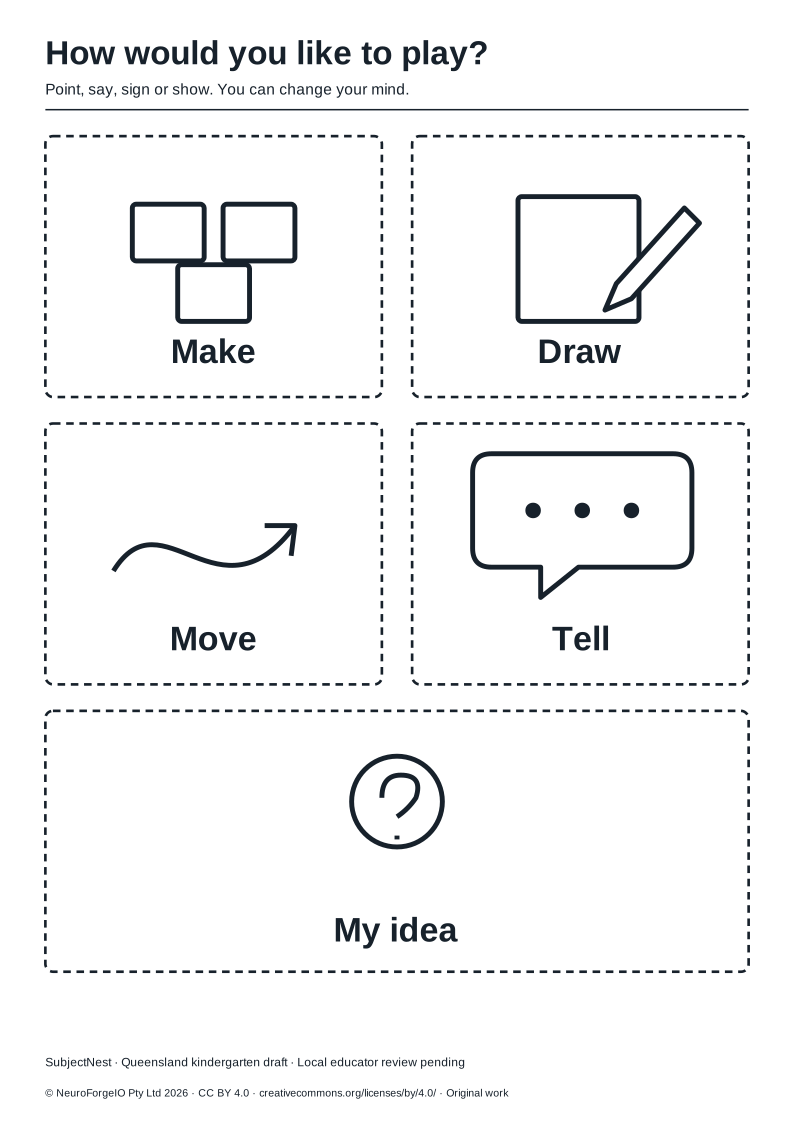
Print the choice cards if it helps a child point to how they want to join in: make, draw, move, tell, or my idea. The words can also be spoken, signed or represented with real objects. The text alternative describes the printout. A screen is not needed. Each activity offers a small optional screen route that adds to the play, with adult control and no account, upload or child profile.
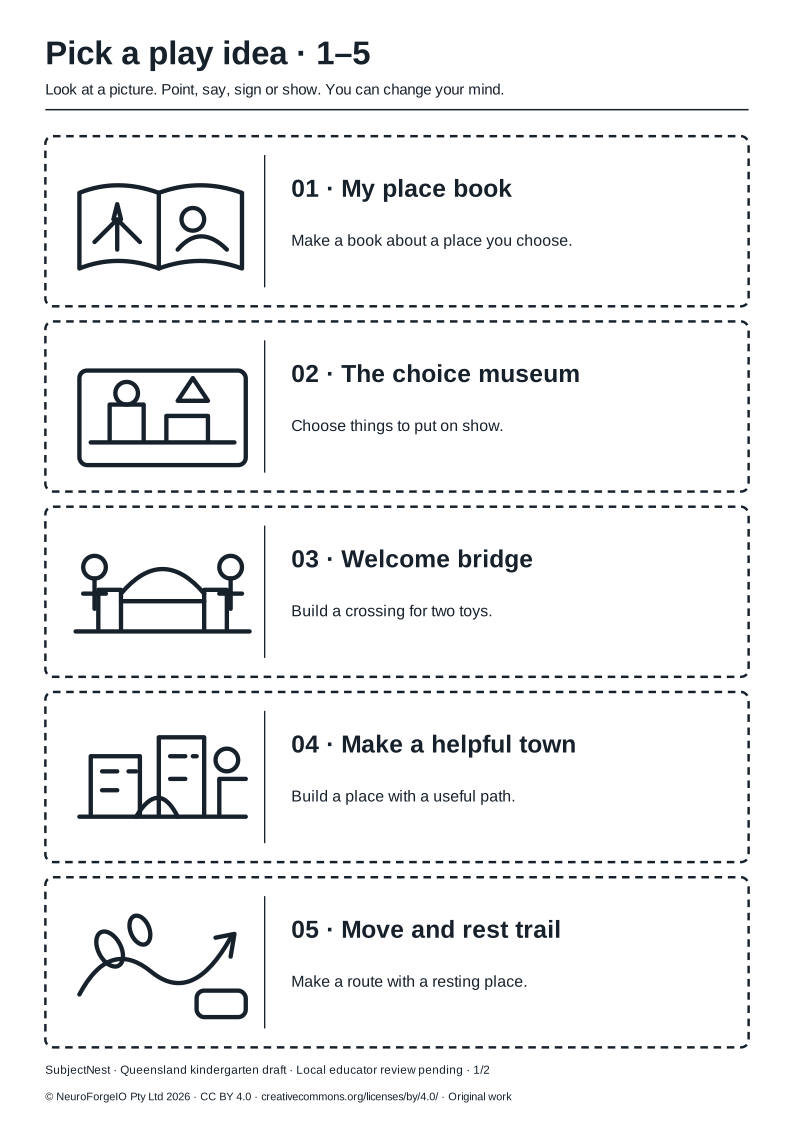
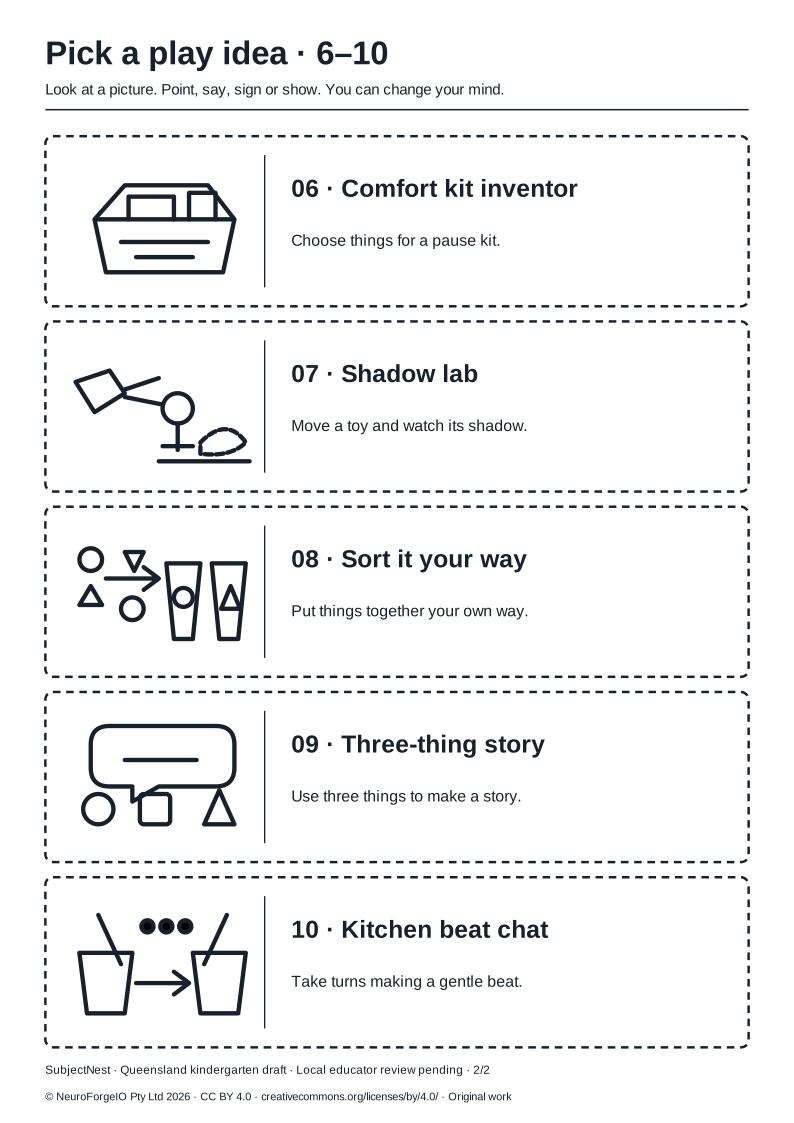
The ten picture invitations are on sheet 1, activities
01–05 and sheet 2, activities
06–10, with matching sheet 1
PDF and sheet 2 PDF for
printing. Their large original line drawings use
dark outlines on white paper and no colour key or sound. Cut along the dashed
lines, or leave each sheet whole. The short captions are for adults; a child
can pick by picture or by touching a matching real object. The full picture
descriptions are the digital text alternative.
Run python build_invitation_cards.py to rebuild the two SVGs and PDFs.
The ten-page print booklet puts one activity on each A4
page. Its source is the ten Markdown cards; run python build_print_pack.py
to rebuild it with Pandoc and XeLaTeX. The PDF is an untagged print copy, so
use the Markdown cards for a digital text route.
A useful way to observe
Notice what the child chose, tried, changed, shared or said. Write a brief neutral note such as “Moved the ramp three times until the block car rolled” and ask the child what they thought. Do not score the child or compare them with a checklist. Ask families about words, interests and everyday practices that matter to them; accept speech, home languages, signed languages, gesture, drawing and communication devices. Do not ask a child to disclose private family details to take part.
Rights and current status
The original activity cards, visual aids and text alternatives are © NeuroForgeIO Pty Ltd 2026 and licensed CC BY 4.0. Commercial reuse is allowed with attribution, a licence link and a notice of changes. The two build scripts are licensed Apache-2.0. See the item-level rights note and asset and source metadata. No QCAA or EYLF artwork or passages are copied into the cards, and their source rights remain separate. Queensland Curriculum and Assessment Authority and the Australian Government have not endorsed this pack. Local educator review is still pending.