Both print sheets are black on white with dark outlines, no colour key and no sound. The PDF copies are for print and are not tagged screen-reader PDFs. Use this page and the individual Markdown cards for a digital text route.
Five flexible weeks
The A4 week map has five horizontal rows. Each row has a week label on the left and four small numbered boxes on the right. The boxes are invitations, not tasks to tick off. The page says, “Choose any day. Repeat, change or rest. There is no catch-up.”
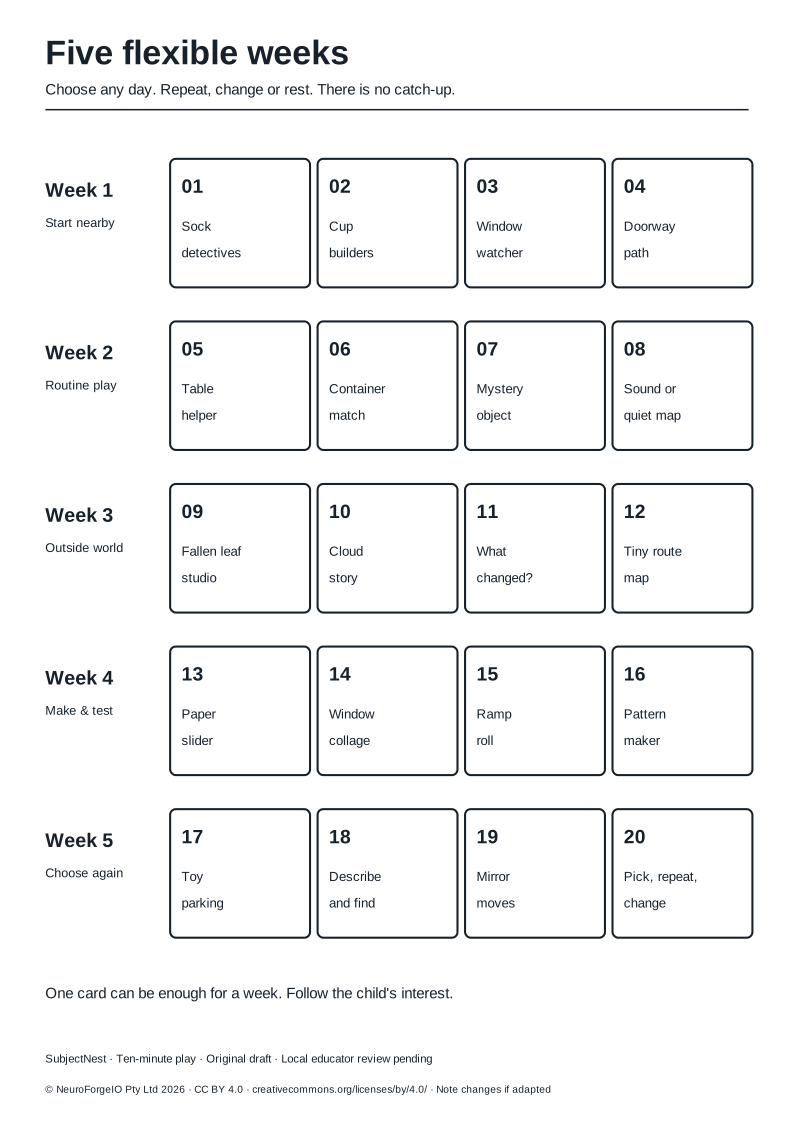
- Week 1, Start nearby: 01 Sock detectives; 02 Cup builders; 03 Window watcher; 04 Doorway path.
- Week 2, Routine play: 05 Table helper; 06 Container match; 07 Mystery object; 08 Sound or quiet map.
- Week 3, Outside world: 09 Fallen leaf studio; 10 Cloud story; 11 What changed?; 12 Tiny route map.
- Week 4, Make and test: 13 Paper slider; 14 Window collage; 15 Ramp roll; 16 Pattern maker.
- Week 5, Choose again: 17 Toy parking; 18 Describe and find; 19 Mirror moves; 20 Pick, repeat, change.
The closing line says, “One card can be enough for a week. Follow the child's interest.” The README table links to the full source cards. Nothing on the map records attendance, achievement or progress.
How shall we play?
The A4 play-mode sheet has six cut-out cards in two columns and three rows. Each card has a large line drawing and a label:
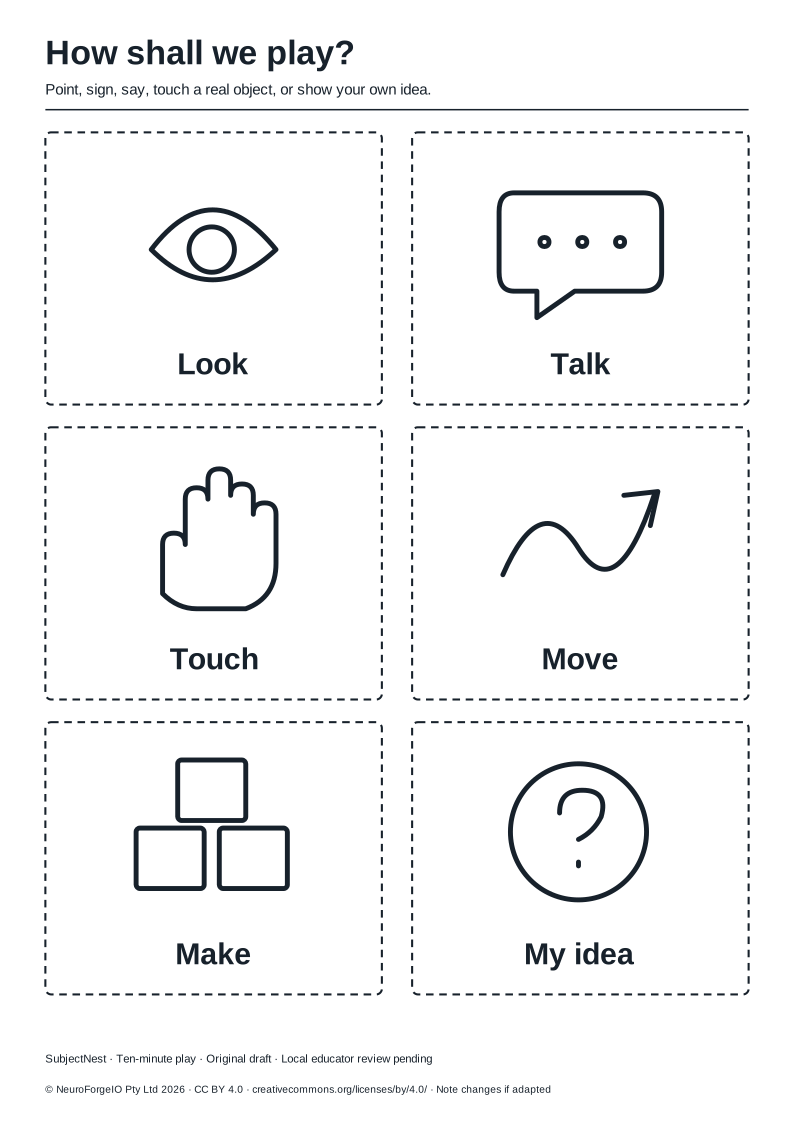
- Look: an outlined eye with a round pupil. The child may watch or direct another person to show something.
- Talk: a speech bubble with three dots. Talking also includes signed language, AAC, gesture, home language and an adult speaking at the child's direction.
- Touch: an open palm with five short fingers. Offer safe real objects; do not require a child to touch an unwanted material.
- Move: a winding route ending in an arrow. Movement can be a finger, toy, gaze, body or adult-assisted motion.
- Make: three large blocks arranged as a small build. Making can mean choosing and directing placement, not only handling objects.
- My idea: an open circle with a small question mark. The child can propose a different way or no planned activity.
The instruction says, “Point, sign, say, touch a real object, or show your own idea.” These cards offer choice, not fixed “learning styles.” A child can combine modes or change their mind. An adult can put a matching real object beside each card for a tactile choice.
© NeuroForgeIO Pty Ltd 2026 · CC BY 4.0 · Original. Credit the author, link the licence and note changes if adapted. See rights and source boundaries.