Twenty small play invitations for busy Australian families and early childhood educators. Start with a sock, a cup, a bit of paper or something you can see from a window. Each idea takes about ten minutes: a minute to set up, several minutes to play, then a short “what shall we try next?” The child can stop, repeat or change the plan. No device, purchase, worksheet or score is needed.
This is a play starter pack, not a formal syllabus, developmental test or school-readiness promise. The Early Years Learning Framework V2.0 informs the broad approach to child agency, play, communication and observation. The Queensland QKLG 2024 is additional inspiration for Queensland settings; it is not asserted as the rule for all Australia. Local educator review is pending.
A five-week path that fits real life
Choose up to four days each week. A fifth day can be a repeat, a child's own idea or no planned activity. The order is a suggestion. If a week is busy, pick one; there is no catch-up. Keep the materials in a small box only if that makes life easier. The week map can go on a fridge or noticeboard without becoming a reward chart.
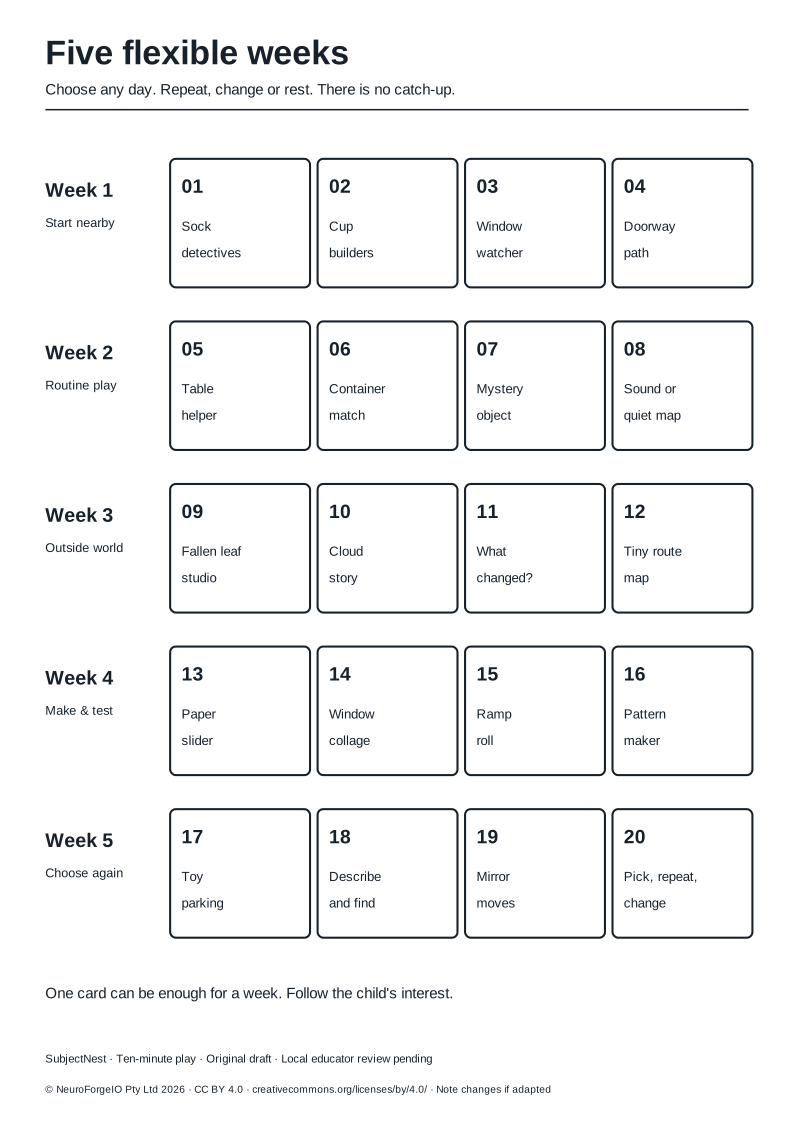
| Week | Focus | Four ten-minute invitations |
|---|---|---|
| 1 | Start with what is nearby | 01 Sock detectives · 02 Cup builders · 03 Window watcher · 04 Doorway path |
| 2 | Let routines become play | 05 Table helper · 06 Container match · 07 Mystery object · 08 Sound or quiet map |
| 3 | Notice the outside world | 09 Fallen leaf studio · 10 Cloud story · 11 What changed? · 12 Tiny route map |
| 4 | Make, test, change | 13 Paper slider · 14 Window collage · 15 Ramp roll · 16 Pattern maker |
| 5 | Share an idea, then choose again | 17 Toy parking · 18 Describe and find · 19 Mirror moves · 20 Pick, repeat, change |
Make the ten minutes easy
- Put out only what you need. Choose large, safe, familiar things. Keep small pieces away from younger children nearby. Check for sharp edges, loose batteries or magnets, breakable glass, hot items and choking hazards.
- Give the child a real choice. The play-mode cards offer “look, talk, touch, move, make, or my idea.” Speech, home language, signed language, gesture, AAC and directing an adult are all ways to take part. There are no translated instructions in this pack; any future translation needs a fluent human review.
- Keep it screen-free by default. A few cards mention an optional local photo or recording to revisit an idea. Do not upload children's images or create an account for this pack.
- Notice, then respond. A useful note is concrete: “She tried two ramps and kept the slower one.” Ask what the child noticed. Do not score the activity or compare children.
- Stay with the child. Outdoor and household activities need the adult's usual supervision. Adapt every idea to family, setting, weather, mobility and sensory comfort. Choose a window view or indoor version when outside is unavailable.
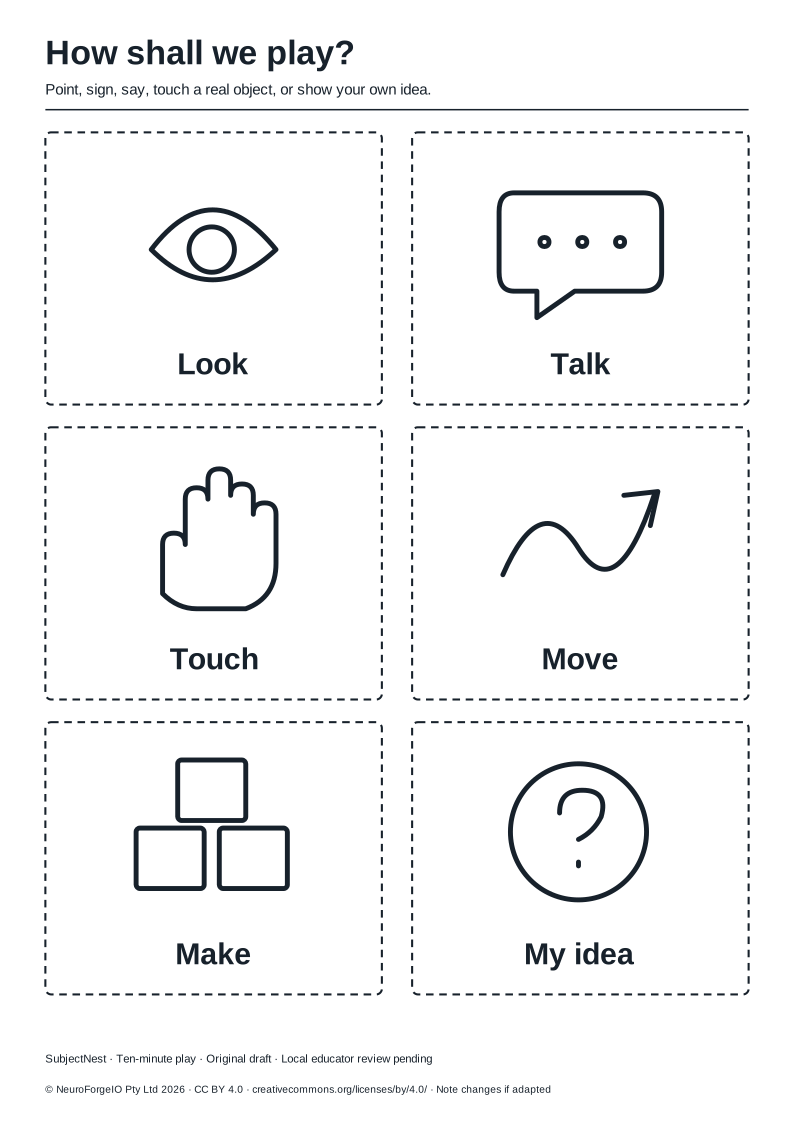
The two visual aids have full text alternatives. Both are original, black on white, low-ink A4 SVGs with printable PDFs. The source cards are Markdown for an accessible text route.
Reuse and review
Original cards, visual aids and text are © NeuroForgeIO Pty Ltd 2026, CC BY 4.0. You may share or adapt them, including commercially, with attribution, a link to the licence and a notice of changes. The visual build code is Apache-2.0. See rights, source boundaries and the item-level manifest. The pack needs local educator and accessibility review before a classroom-ready claim. No government authority endorses it.