Keep this page and the key away from learner cards until the first response is recorded. Adult reads all rich words and describes neutral paper shapes. Offer point, sign, AAC, broad tactile cards, private speech, drawing or child-directed scribing. Save the first independent response, exact adult reading/reread/prompt and mode; feedback and revisions follow. A pause/pass is permitted. These short checks are not whole-standard school judgments.
Day 175 · unseen shared-place dialogue
Fresh original fictional source: A pretend museum has one wide paper shelf. Nell wants to lay out four broad paper fossil cards on it. Orin wants to lay out one wide paper map on the same shelf. Nell asks, “Could we put both on it?” Orin replies, “I hear you, but the map needs the full width. Could your cards go first, then the map?” Nell says, “Let's try that and ask whether each display was seen.” The account ends before either display is tried. No real museum, fossils, children or audience is involved.
Neutral picture description: one empty broad shelf outline, four plain small-card outlines and one wide rectangle labelled MAP. No smile, tick, sequence arrow or outcome is drawn. An adult reads the same description in a nonvisual route.
Ask in order with a blank fair-plan mat:
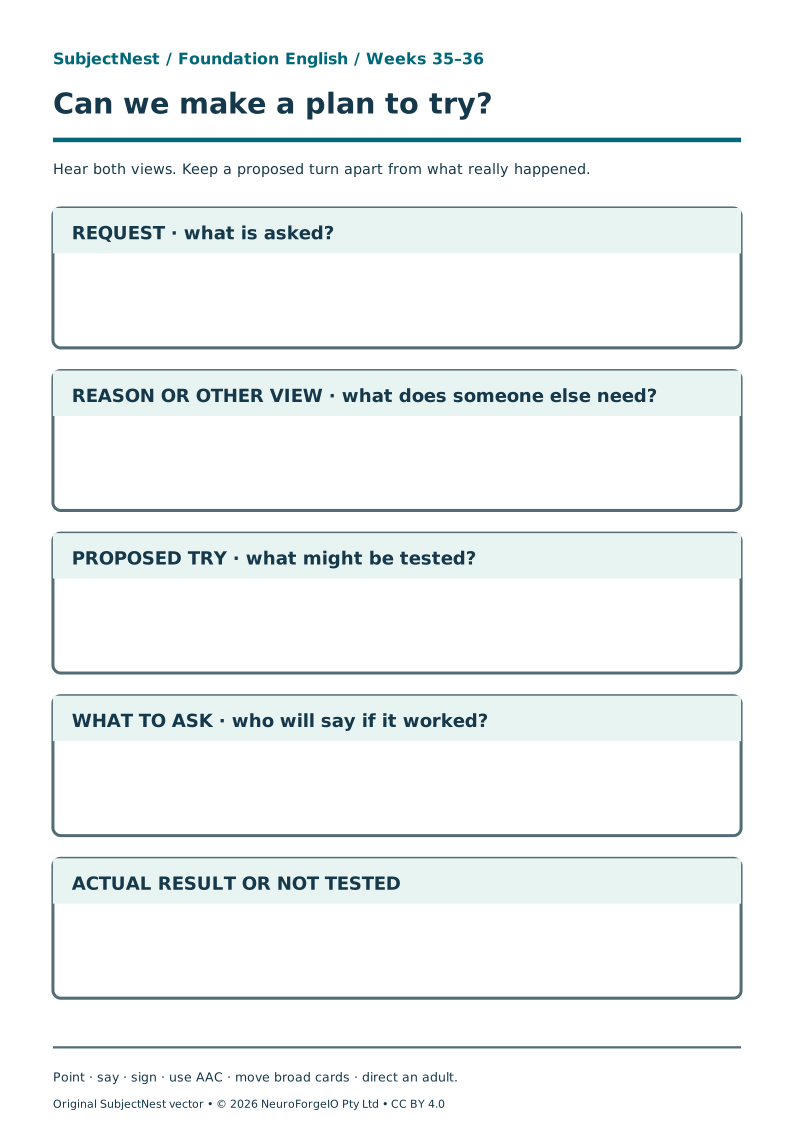
- “What did Nell want? What did Orin want?” Require both source views, not the teacher's judgment of who deserves it.
- “Which words show Nell's request? Which words in Orin's answer give a reason and another plan?”
- “What is the proposed try? Did the story say it worked?”
- “Make a respectful reply that could be said if the first plan still did not work. What could the people ask after trying?” Accept child-directed AAC/sign/point; no child has to role-play a real conflict.
- Optional taught-point print, separate: show ban and dab individually without pictures. Invite one blend; hide print and ask for one sound-to-letter choice via tiles, marks or exact child-directed scribe. If any link is untaught or the local class has used an item already, mark not administered and document a different equally new taught-point CVC later.
No answer depends on body language, an inferred emotion, accepting an unsafe proposal or a public spoken performance. Keep adult-read comprehension distinct from independent reading.
Day 180 · unseen pattern and instruction repair
Fresh original pattern strip: six broad outlined tiles in this exact order:
SQUARE · TRIANGLE · TRIANGLE · SQUARE · TRIANGLE · TRIANGLE
All tiles have written shape labels, and the adult reads them in order. No colour, sound, size variation or hidden animation carries meaning. A tactile route uses one broad square-edged tile and two broad triangular tiles twice, placed by a child-directed adult if needed.
Instruction A: “Start with one square. Put two triangles next. Repeat those three shapes once.”
Instruction B: “Put a circle near a square.” This is unclear: there are two squares, and “near” allows several places. A child may repair it as “Put one circle below the first square” on an upright paper sheet, or another equally specific location with a named square.
Ask in order with a blank instruction strip or tactile labels:
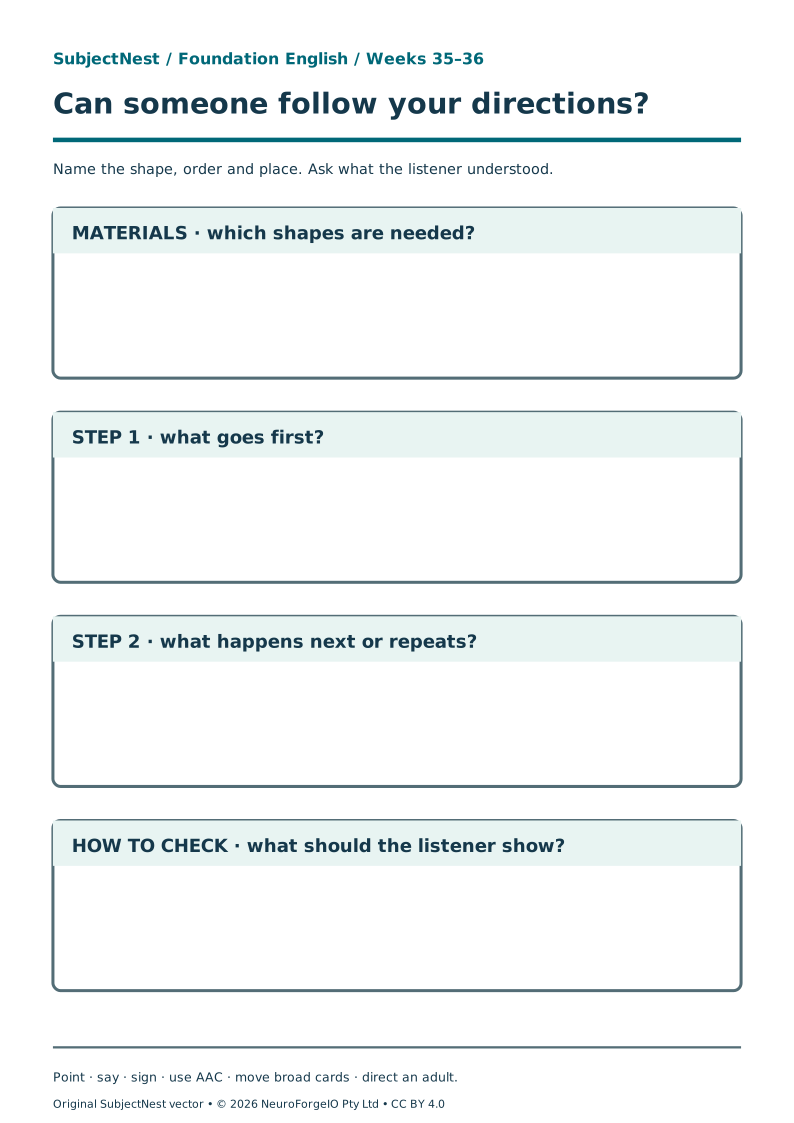
- “Which three-shape part repeats? Point to or name the next three shapes.”
- “Could a listener build all six tiles from Instruction A? Show the steps or tell why.”
- “What would a listener still need to know to follow Instruction B?”
- “Give a clear replacement for Instruction B and show how a listener would check it.” If a chosen listener participates, capture their actual action; otherwise record the child’s planned direction only.
- Optional taught-point print, separate: show bid and pop without pictures; ask for a blend and one print-hidden sound-to-letter attempt. If untaught or locally familiar, mark not administered and record an equally new taught-point substitute.
No child has to move shapes quickly, hear an audio cue or speak publicly. After saving first evidence, use a different shape order and instruction for feedback; later integrated activities are not independent retests.
Recording grid
| Day/component | First exact response and mode | Adult read/repeat/prompt/scribe | Source detail / child-selected print actually observed | Next 3–5 minute teaching move and date |
|---|---|---|---|---|
| 175 both views and reasons | ||||
| 175 proposal, unknown result and reply | ||||
| 175 optional CVC | ||||
| 180 repeating part and A's steps | ||||
| 180 B's missing detail and repair | ||||
| 180 optional CVC |
Original SubjectNest held checks and fictional stimuli © 2026 NeuroForgeIO Pty Ltd, CC BY 4.0. Human educator/access/local assessment review remains pending.