Adult reads all rich text. Paper people, places and tasks here are fictional and low-stakes. A real classroom agreement is made with actual children under local practice; one story proposal is not a rule for every child or proof that everyone felt included. No child needs to disclose a home situation, disability or preference in order to complete the English task.
A · The wide paper mat · four-scene original adult-read story
Ready-to-print story SVG · A4 PDF. The four large original text panels are numbered so a child can direct an adult through them. Use one broad rectangle and two neutral markers as optional paper props; no marker signals gender or identity.
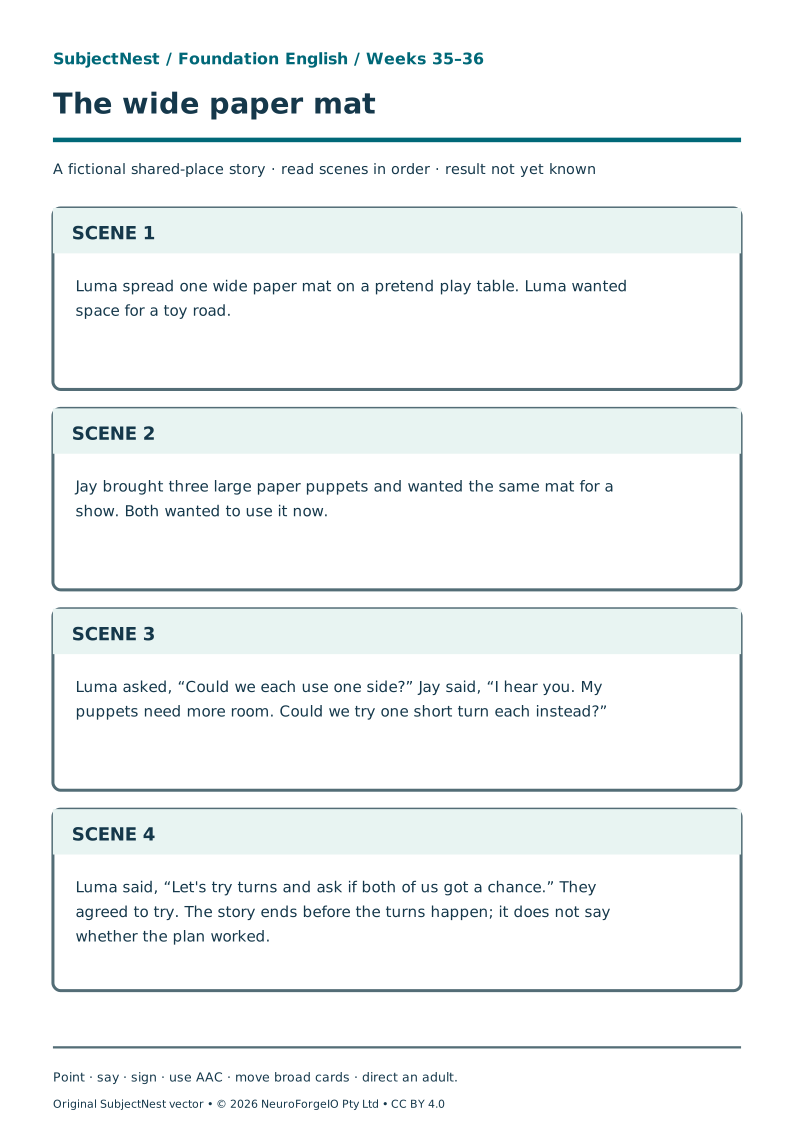
- Luma spread one wide paper mat on a pretend play table. Luma wanted space for a toy road.
- Jay brought three large paper puppets and wanted the same mat for a show. Both wanted to use it now.
- Luma asked, “Could we each use one side?” Jay said, “I hear you. My puppets need more room. Could we try one short turn each instead?”
- Luma said, “Let's try turns and ask if both of us got a chance.” They agreed to try. The story ends before the turns happen. It does not tell us whether the plan worked or how either child felt afterwards.
Read requests without caricature. Neither child's need is described as less important. A “fair” plan requires trying and hearing responses; sometimes dividing space will work, sometimes turns, sometimes another option. Adults retain responsibility for real classroom safety and access.
B · Two ways to ask and disagree · original dialogue comparison
First draft: “Move. I need the mat.” This says what the speaker wants, but does not ask or hear the other view.
More useful draft: “Could I use the mat after your turn? I need room for my road.” Reply: “I hear you. I need the whole mat for my puppets. Could we try turns?” The words could, after your turn and I hear you help a listener locate a request, reason and response. This is a model, not a command to agree or accept an unsafe plan. A child may communicate the same meaning through AAC, sign, picture cards or an adult-directed script.
C · A proposed fair plan · original report frame
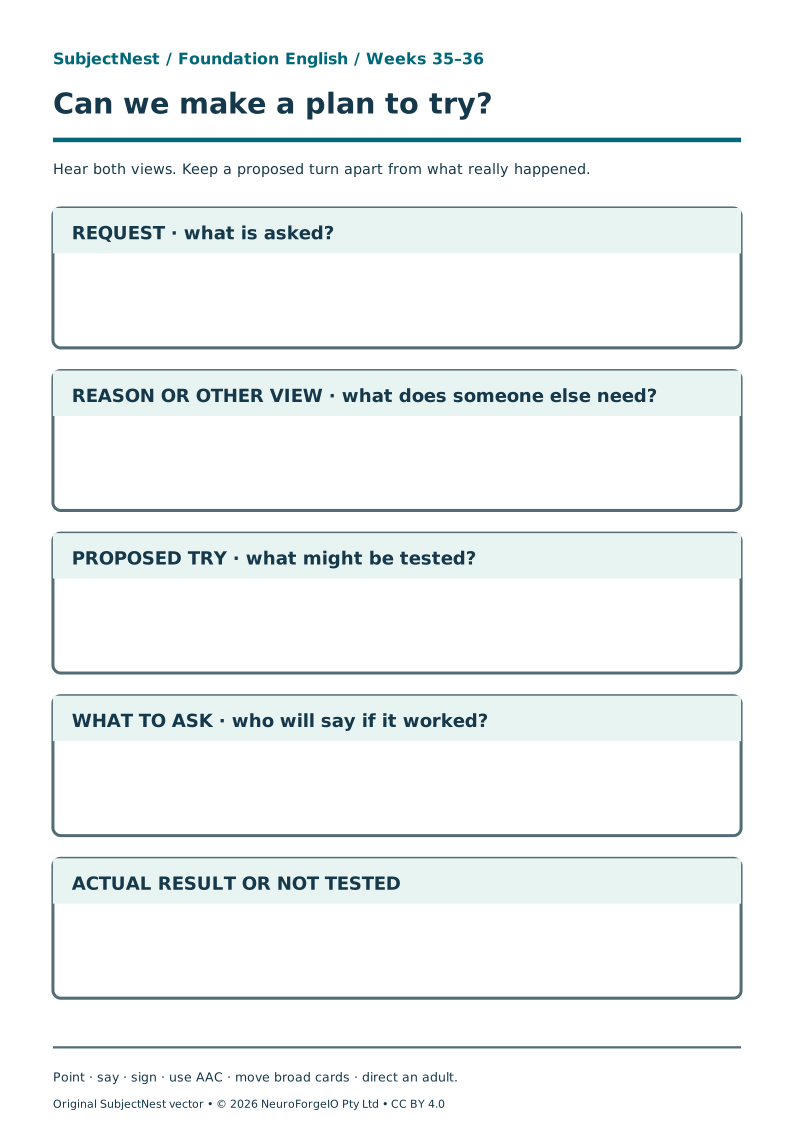
Request: Luma asks to share the mat. Other view: Jay says the puppets need more room. Proposal: try one short turn each. Check: ask each child whether they had a chance and whether the arrangement met the stated purpose. Result: not known in source A because no turn was described. A trial should be changed if someone says it did not work; a smiling drawing is not evidence of consent or fairness.
Fair-plan A4 SVG · A4 PDF keeps these fields blank for a different source or an actual school-approved conversation. Use source A as a modelling example only.
D · A pattern to teach · original visual/tactile source
Pattern and shapes SVG · A4 PDF. Six broad outlined tiles appear in this exact order, with one extra labelled triangle below for Source E:
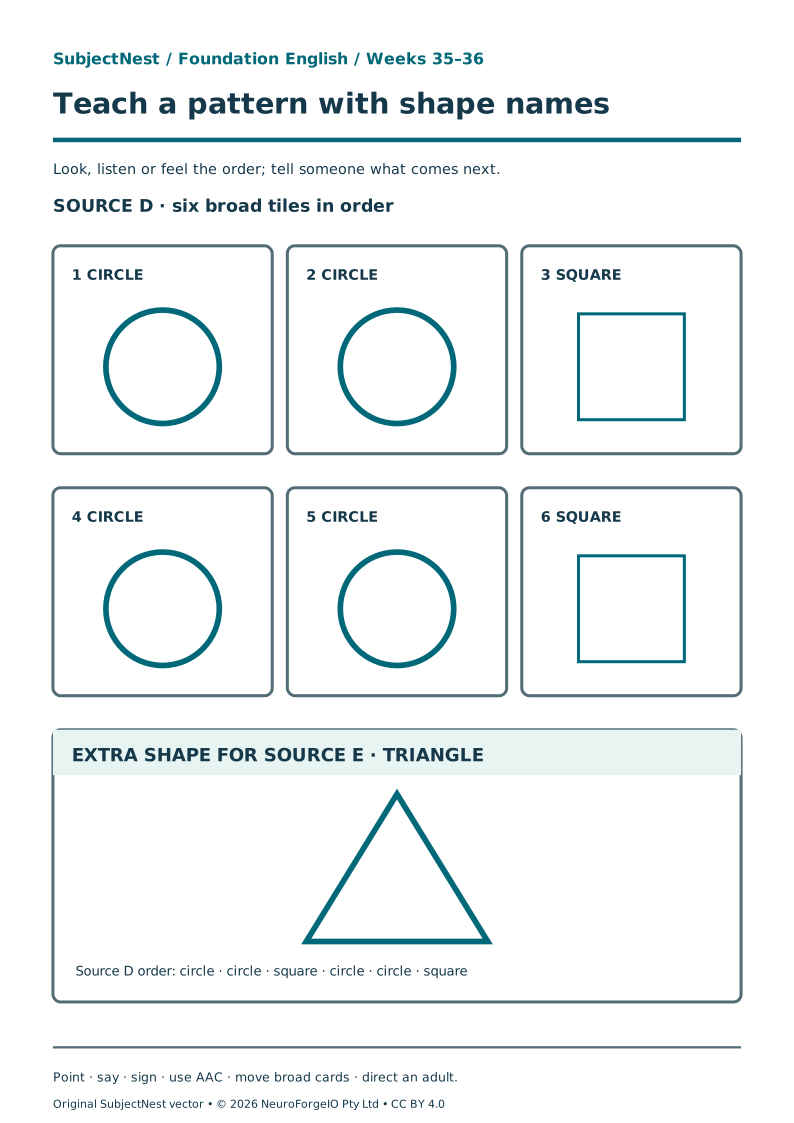
CIRCLE · CIRCLE · SQUARE · CIRCLE · CIRCLE · SQUARE
The repeating three-shape part is circle, circle, square. No colour carries the pattern. Text route: adult reads those six shape names in order with a short pause after each third tile. Tactile route: two broad smooth circular cards and one broad square-edged card repeated once, all within easy reach or moved by a child-directed adult. The child may say, sign, AAC-select, point or direct placement; physical manipulation is not required.
Original clear instruction: “Start with two circles. Put one square next. Repeat those three shapes once.” A listener could build all six tiles. Ambiguous version: “Put those there again.” It does not identify which shapes, order or position. A source card alone is not proof another person followed the directions; conduct a consensual listener try if available.
E · A shape-location instruction pair · original paper model
Use the same broad source tiles and a blank mat. Unclear: “Put it by that one.” The listener cannot know which shape or which side. Clearer: “Put the large triangle above the square. Put the circle to the right of the square.” In this English-language page, above/right refer to the sheet viewed upright; adapt spatial language and orientation for a learner's access route. For tactile use, place a square-edged tile at the centre, a triangle tile touching the upper edge and a round tile touching the right edge; child can direct the adult. The goal is a sufficiently specific instruction, not speed or fine-motor placement.
Child print and oral routine
Optional narrow printed pool: a, an, at, can, cap, cup, i, in, is, it, map, mat, on, red, see, sit, tap, ten, tin. It is not a national phonics sequence. Check the individual's explicitly taught correspondences/high-frequency words before display; adult reads any untaught strip. Rich source words share, request, reason, agree, turn, fair, circle, square, triangle, repeat, above, right, revise are adult-read. A short oral routine can compare /m/ /a/ /t/ and /t/ /a/ /p/ before any print; score oral sounds and print separately.
Exact text, quiet and tactile alternatives for the five aids
- Shared-mat story: Read scenes 1–4 above in order, with labels FIRST / BOTH WANT / REQUEST AND REPLY / PROPOSED TRY. Two broad character markers can sit beside one wide rectangular mat card. The markers are generic; do not require a child to role-play, touch or identify with either character.
- Fair-plan mat: Five broad areas in order: REQUEST / REASON OR OTHER VIEW / PROPOSED TRY / WHAT TO ASK / ACTUAL RESULT OR NOT TESTED. Adult reads each label; a child directs a large card or dictates exact words. If the story alone is the source, the final area says not tested, never “fair to everyone”.
- Pattern/shape source: The six tiles are spelled out in D. Use spoken shape names and large tactile outlines; no colour, audio cue or shape recognition by sight alone is required. A text-only learner can direct placement from the linear sequence and explain the repeated part.
- Instruction strip: Four areas in order: MATERIALS / STEP 1 / STEP 2 / HOW TO CHECK. For D, materials are two circle cards and one square card used twice, step 1 place two circles, step 2 place a square and repeat, check whether the listener's six-card sequence matches the source. Adult supplies print/shape vocabulary not taught for decoding.
- Listener/repair record: Five areas in order: FIRST WORDS / WHAT LISTENER DID OR UNDERSTOOD / DIFFERENCE / REVISED WORDS / STILL TO CHECK. A real listener is optional; where none is available, teacher models a fictional listener action and labels it as a model, not child-peer delivery evidence.
No device, purchase, recording, upload, photograph, small loose object or personal disclosure is required. A child can pass on touch or public sharing. Original SubjectNest sources, scripts and printables © 2026 NeuroForgeIO Pty Ltd, CC BY 4.0.