Source A · drawing
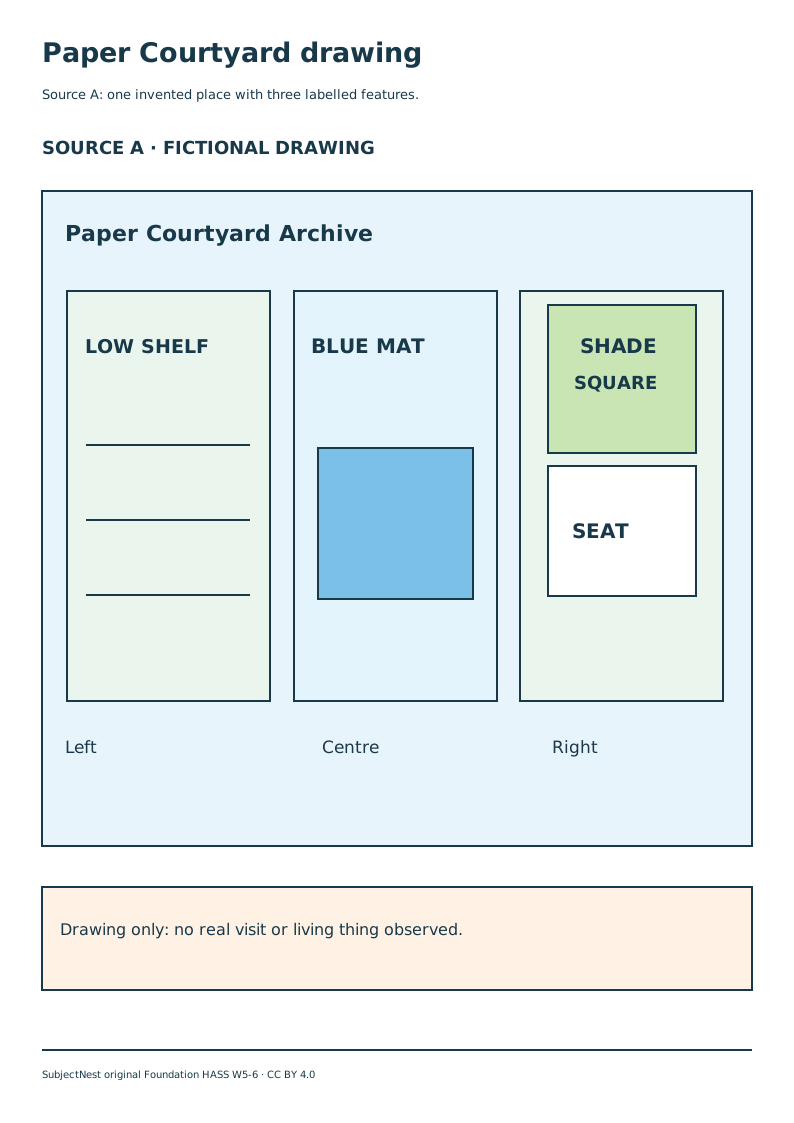
In an invented Paper Courtyard drawing, the LOW SHELF is left, BLUE MAT centre, and SHADE SQUARE above a SEAT at right.
 A picture of a pretend place, not a real visit or result.
SubjectNest / Foundation HASS / Weeks 5–6
Explore four make-believe source cards. Pick the card that can answer a question, then choose a sentence that stays close to its evidence. An adult can read every line aloud. Pointing, AAC, a broad paper card, or a pass work too.
All of this is fiction. The Paper Courtyard is not a real school place. No family, home, special place or Country/Place story is requested. No response leaves this page, and nothing is saved. This practice cannot replace a school-approved local source.
In an invented Paper Courtyard drawing, the LOW SHELF is left, BLUE MAT centre, and SHADE SQUARE above a SEAT at right.
A picture of a pretend place, not a real visit or result.
Bea, a pretend caretaker, writes: “Return large picture cards to the LOW SHELF after use.”
An instruction does not show that anyone followed it.Ari says: “I like the shade square for looking at cards.”
One invented speaker's preference, not everyone's view.Ren says: “I like the blue mat for laying out cards.”
Another invented speaker's preference, not a survey.Use Tab to reach a button, then Enter or Space. Choose any question. You can change your mind. A teacher can use these exact same source cards without a screen.
Careful conclusions made: 0 of 5. This is practice, not a grade.
Choose a source card, or choose “No source yet”.
Choose a sentence.
Print or read the four exact source descriptions. Put five broad headings on paper: A drawing, B notice, C Ari, D Ren and NO SOURCE YET. Ask one of the five questions above. The learner points, says, signs, draws or directs an adult to a heading, then makes a careful sentence. Compare it with the printed source words and ask what remains unknown. The original A4 question trail and full linear and tactile directions work without a device or printer-specific task.
A teacher records a child's first response privately under school policy. This open practice is separate from the fresh Day 25 and 30 formative checks. It does not demonstrate a real familiar place, real observation or whole-year HASS achievement.