School safeguarding and physical access gate
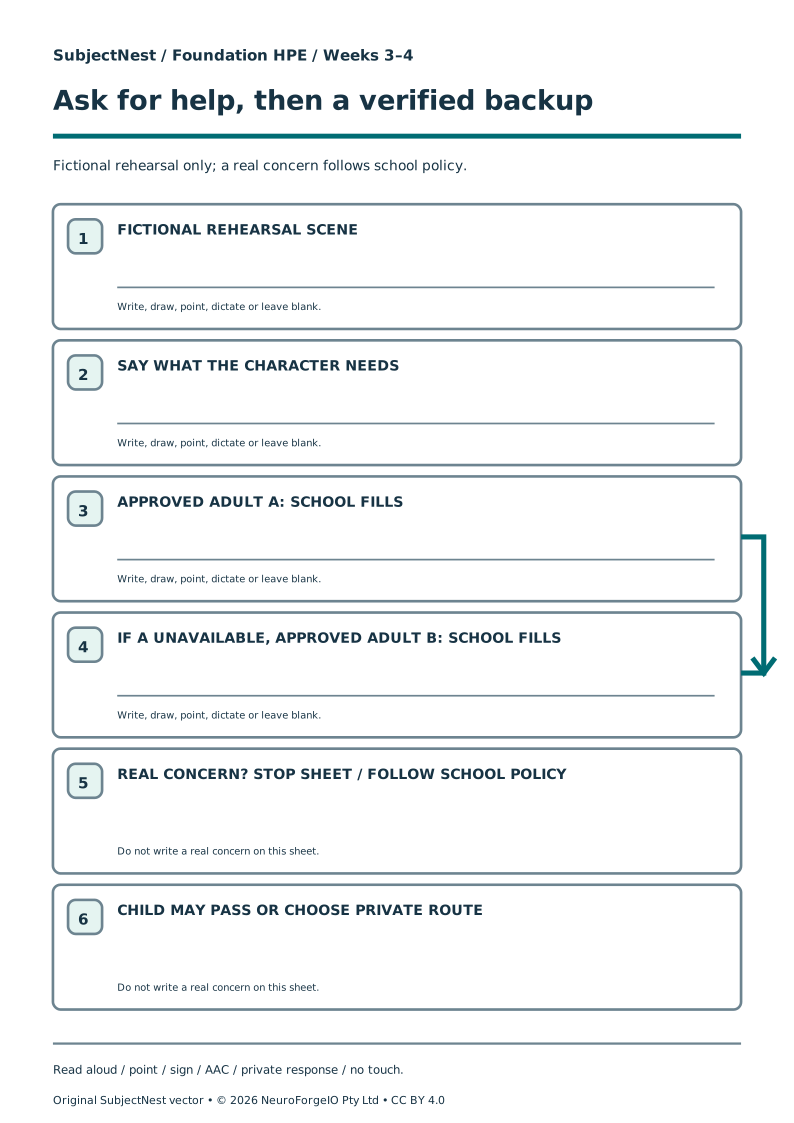
Before Week 3, an educator privately writes the school's current APPROVED ADULT A and APPROVED ADULT B roles/routes into their own copy of help-route, following local safeguarding policy. Use roles a child can actually access during the planned session; check what to do if A is unavailable and what immediate response the school requires for an urgent concern. These public files leave the fields blank. No invented school staff member, home contact, address or private safe place is supplied. A child's real help request is met, not assessed or displayed. Do not promise confidentiality about harm; follow school reporting procedures. Adults model with class-owned cards and fictional puppets. No personal belongings, forced lending, touch, personal disclosure or explanation of “no.” Record a roleplay as REHEARSAL, not actual help-seeking success. A child can decline any roleplay and use a source-reading or private route.
Before Week 4, check local movement/play safety and individual access with the learner and relevant school staff. Use a broad stable floor or tabletop START → STOP A → STOP B route, wide enough for the chosen action, and one large clean soft class-owned object with no small parts. Adult checks slip/trip hazards, hearing/visual stop cue access, mobility equipment boundaries, body comfort, fatigue and rest. No throwing, racing, high speed, balancing demand or peer contact. Ask before moving a child's equipment or body; “no” ends a proposed action. A safe actual seated reach, gentle guide, slow travel or other suitable action may count as physical participation when truly performed and observed. A paper marker, adult demo, eye-gaze direction or spoken plan can evidence planning and communication but cannot be recorded as the child's actual movement skill or physical fair-play conduct. If no suitable actual activity occurs, write PHYSICAL ACTIVITY NOT OBSERVED, not child failure. Stop on the learner's signal or adult safety concern.
Complete original fictional sources for teaching
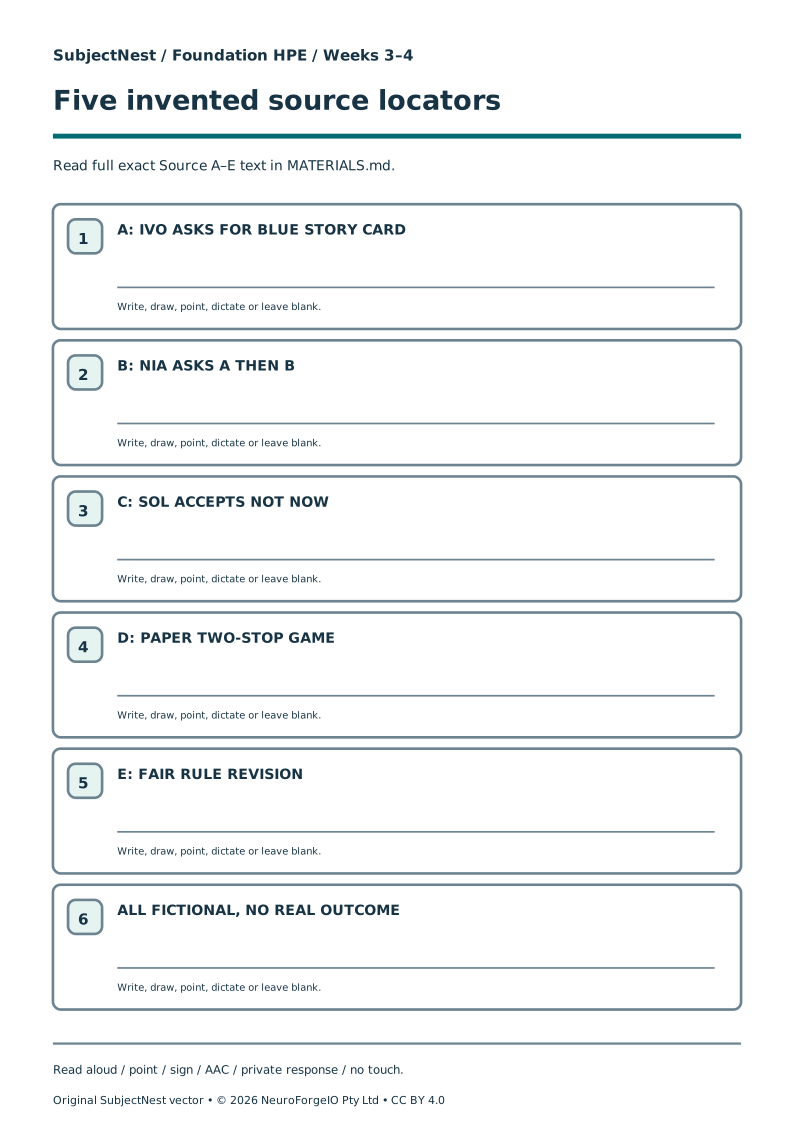
Source A · a clear request. “In an invented classroom, Ivo cannot find the large blue story card. Ivo says to an adult, ‘Could you help me find the blue story card?’ The adult says, ‘I can show you the class card box.’ Ivo listens and chooses whether to look with the adult. This is a low-stakes fictional request, not a real child needing help.” The help was offered in the story; no actual listener response happened in our classroom.
Source B · the first adult is unavailable. “In an invented school room, Nia asks Adult A, ‘Could you help me find the class picture book?’ Adult A says, ‘I cannot help right now.’ Nia says, ‘Okay. I will ask Adult B.’ The story does not name real adults or tell a child to leave supervision. A real educator must fill A/B from their own school's approved route before using the idea.” Asking again is not arguing with a refusal about a possession.
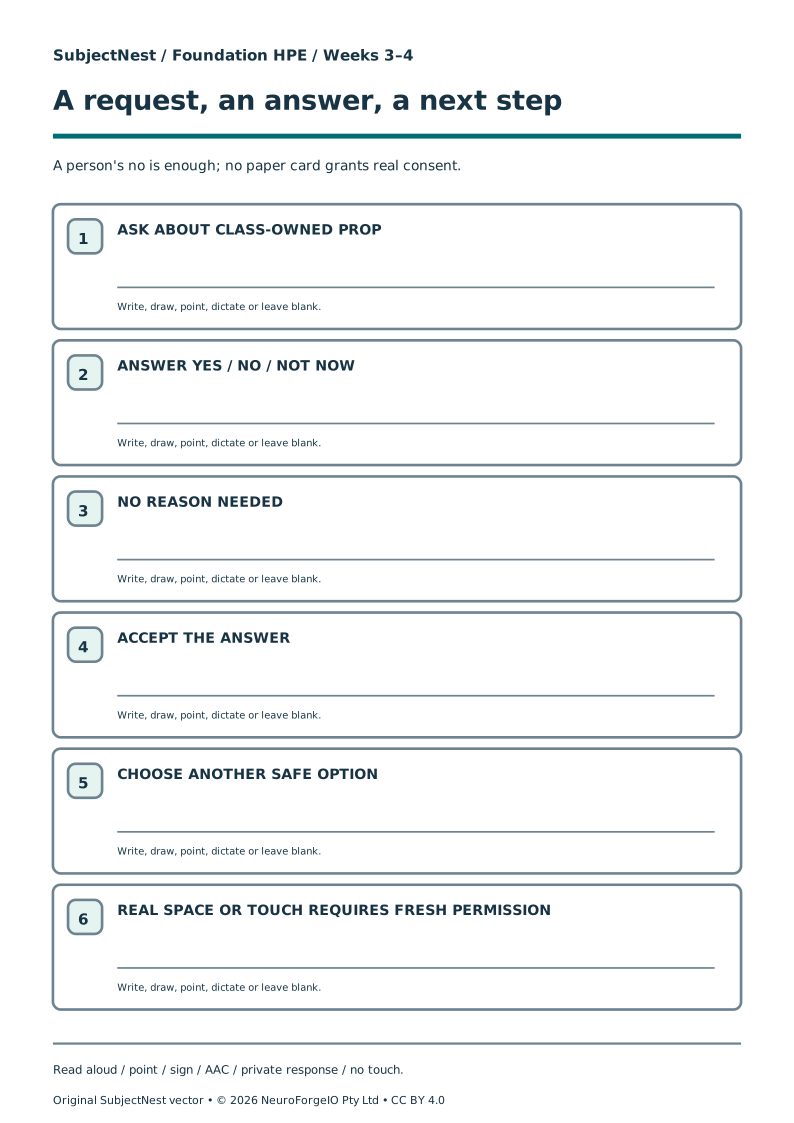
Source C · permission is a separate answer. “In an invented art space, Sol asks, ‘May I use the class-owned large drawing board?’ A puppet adult answers, ‘Not now; someone is using it.’ Sol says, ‘Okay. I can choose a different class board or ask an approved adult for another option.’ Sol does not take the board, insist on a reason or use a peer's personal object.” A request for help about another option does not cancel the first person's no.
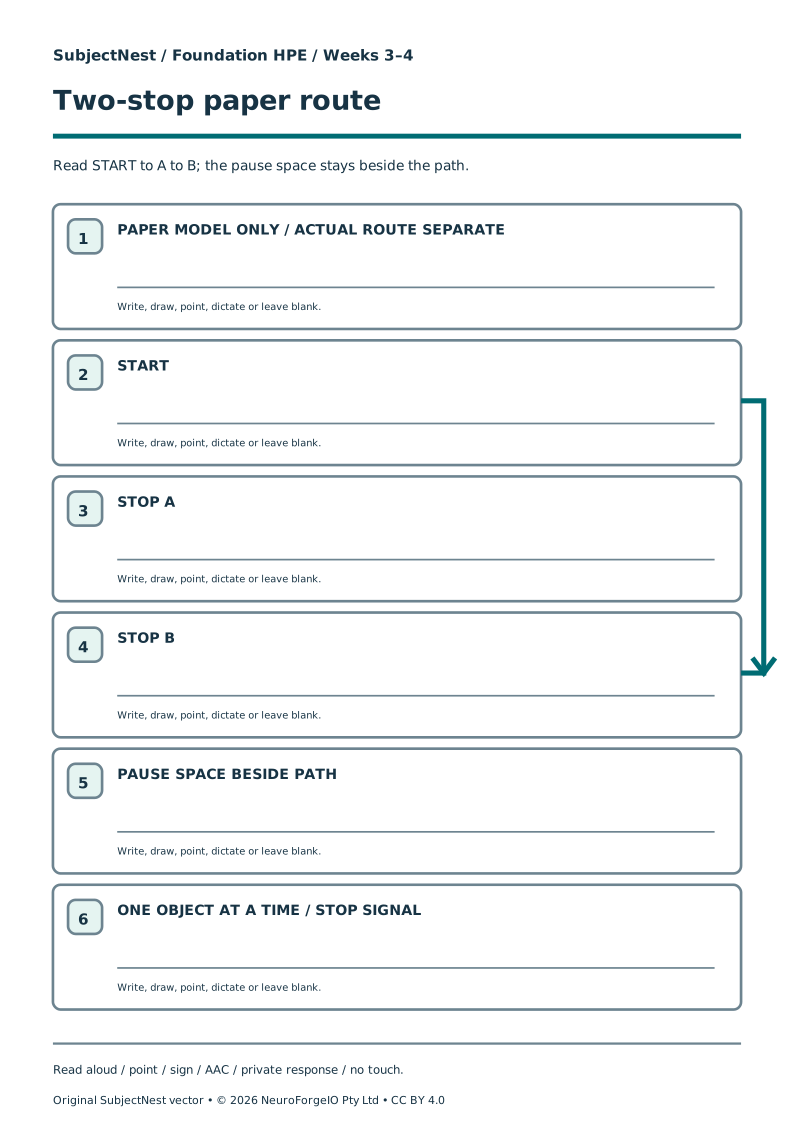
Source D · two-stop paper game. “On an invented paper mat, a large marker begins at START, goes to STOP A and then STOP B. There is a wide PAUSE SPACE beside, not on, the path. The paper rule says: ‘One object moves at a time. Pause at the agreed signal. Check the path is clear before the next turn.’ A pretend participant chooses a gentle reach/guide action; another participant chooses a different safe action. This is a diagram and scripted choice, not a report of children moving.” In a real activity, the teacher checks space and access; no diagram replaces that check.
Source E · revise the fair rule. “In an invented version of the two-stop game, one participant needs more time at STOP A. A puppet says, ‘Go faster so I can have a turn.’ Another puppet suggests, ‘Keep the path clear and let each person finish safely; choose a waiting action.’ The second suggestion changes the rule without ranking people's bodies or speed. No real child said these words, and whether a revised rule works in actual play is unobserved.”
These complete texts support read-aloud, large print, braille, secure broad tactile labels and AAC. Do not supply real child names, feelings, diagnoses or family scenarios to make them seem relevant. The fresh assessment sources have different cases and stay teacher-held until the first response.
Six A4 aids: exact words and tactile/linear equivalents
Use these ordered labels in large print, braille, plain text or six secured broad horizontal fields. A child may decline touch. If a visual line connects boxes, read its direction aloud; do not rely on colour alone. Any locally filled adult role stays in a private school copy, never the public pack.
- Help route: FICTIONAL REHEARSAL SCENE; SAY WHAT THE CHARACTER NEEDS; APPROVED ADULT A: SCHOOL FILLS; IF A UNAVAILABLE, APPROVED ADULT B: SCHOOL FILLS; REAL CONCERN? STOP SHEET / FOLLOW SCHOOL POLICY; CHILD MAY PASS OR CHOOSE PRIVATE ROUTE. Six fields. The printed A → B branch is a rehearsal cue, not an emergency procedure; read “ask A; if unavailable, ask B under school policy.” The last two panels have no writing line and say not to write a real concern on the sheet. Respond under school policy instead.
- Permission choice: ASK ABOUT CLASS-OWNED PROP; ANSWER YES / NO / NOT NOW; NO REASON NEEDED; ACCEPT THE ANSWER; CHOOSE ANOTHER SAFE OPTION; REAL SPACE OR TOUCH REQUIRES FRESH PERMISSION. Six fields. Secure broad YES/NO/NOT NOW choice strips; “no” never needs justification.
- Fictional cards: A: IVO ASKS FOR BLUE STORY CARD; B: NIA ASKS A THEN B; C: SOL ACCEPTS NOT NOW; D: PAPER TWO-STOP GAME; E: FAIR RULE REVISION; ALL FICTIONAL, NO REAL OUTCOME. Six fields. The full exact stories are above; each printed line is a locator, not a substitute for the full read-aloud.
- Two-stop path: PAPER MODEL ONLY / ACTUAL ROUTE SEPARATE; START; STOP A; STOP B; PAUSE SPACE BESIDE PATH; ONE OBJECT AT A TIME / STOP SIGNAL. Six fields. A large connected START → A → B schematic is printed. For tactile use a secured wide raised line with three large fixed endpoint labels and a separate PAUSE SPACE border; the raised line is still only a paper model.
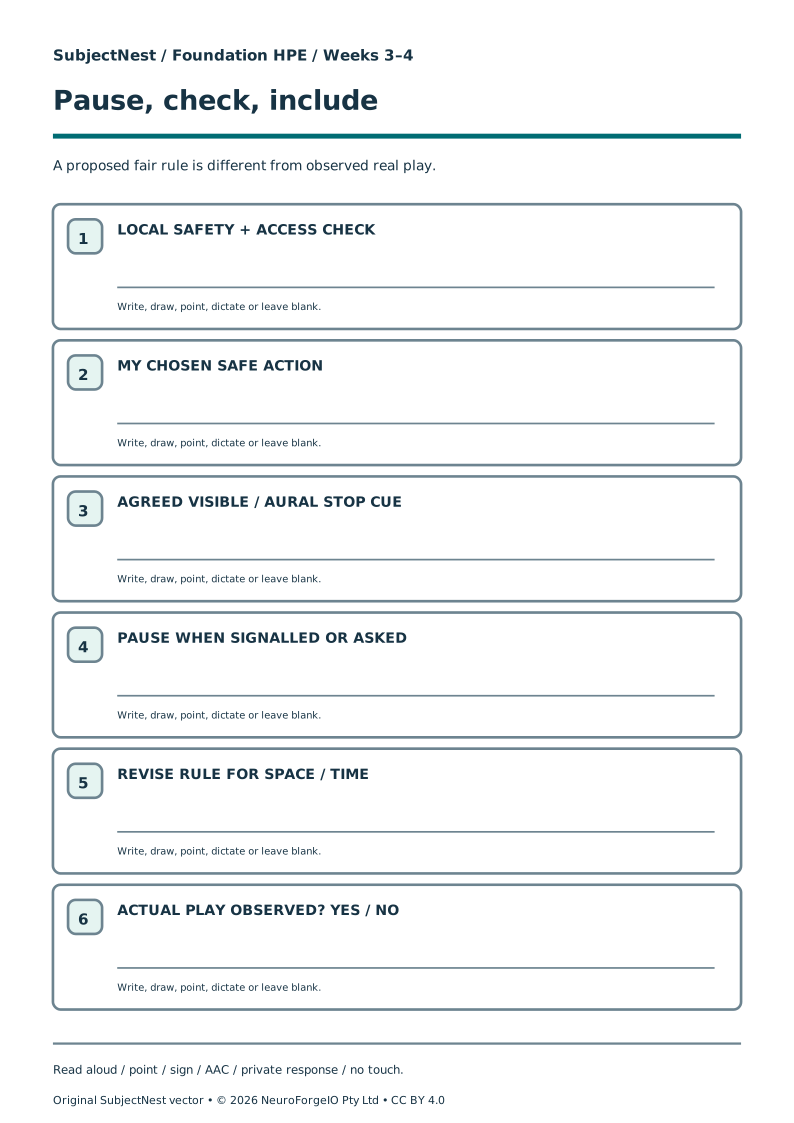
- Pause and fair rule: LOCAL SAFETY + ACCESS CHECK; MY CHOSEN SAFE ACTION; AGREED VISIBLE / AURAL STOP CUE; PAUSE WHEN SIGNALLED OR ASKED; REVISE RULE FOR SPACE / TIME; ACTUAL PLAY OBSERVED? YES / NO. Six fields. Read the cue options; use an accessible cue agreed with the individual, not one sensory mode imposed on everyone.
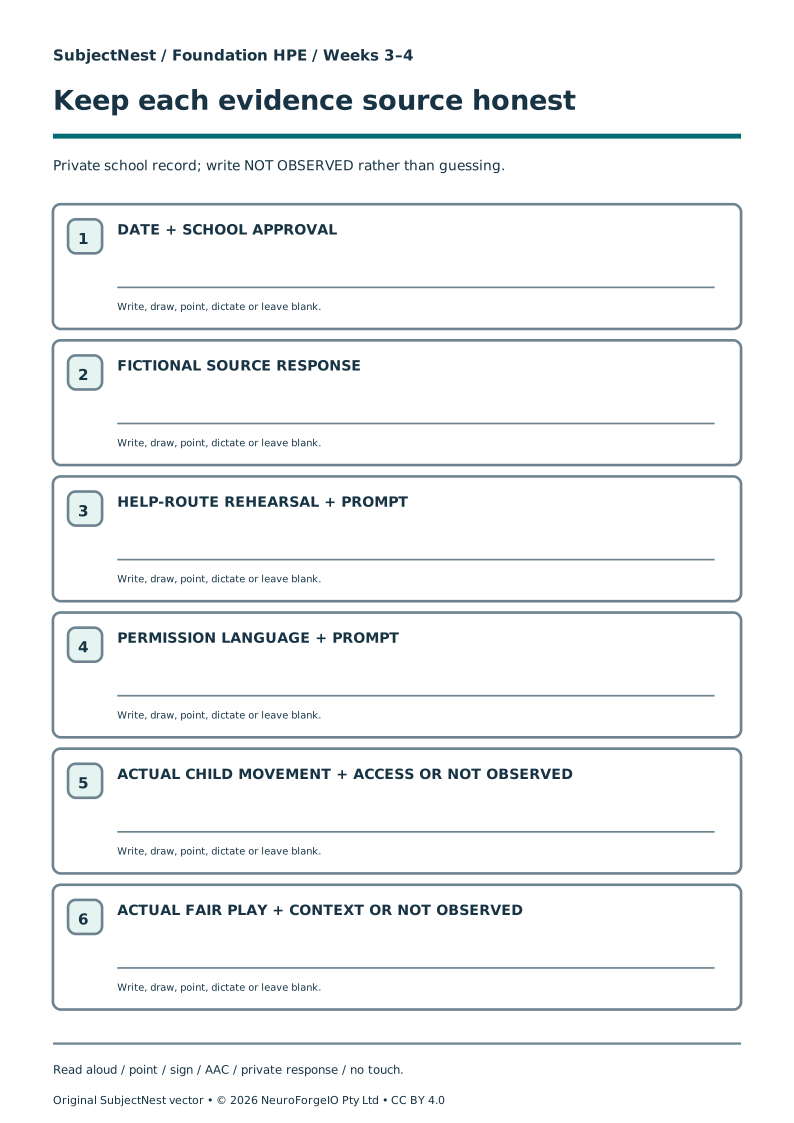
- Evidence split: DATE + SCHOOL APPROVAL; FICTIONAL SOURCE RESPONSE; HELP-ROUTE REHEARSAL + PROMPT; PERMISSION LANGUAGE + PROMPT; ACTUAL CHILD MOVEMENT + ACCESS OR NOT OBSERVED; ACTUAL FAIR PLAY + CONTEXT OR NOT OBSERVED. Six fields. Private teacher record only; no public child data.
The SVG/PDF pages are selectable text with original vector shapes. A paper case may show a safe plan and respectful words. It cannot verify a real adult helped, a real child felt safe, a physical skill occurred, or a fair rule was followed in actual play.