25 minutes · AC9MFN01 (name, represent and order 0–20), AC9MFN03 (count to verify); partial practice · educator review pending
Success: The child links a numeral to a collection and its place in the 0–20 order, including zero and a teen number.
Prepare per pair: equal-sized cards 0–20, number path, two ten-frames and 20 counters. A printable path is in the Weeks 3–4 visual aid; plain text is in print-aids.md.
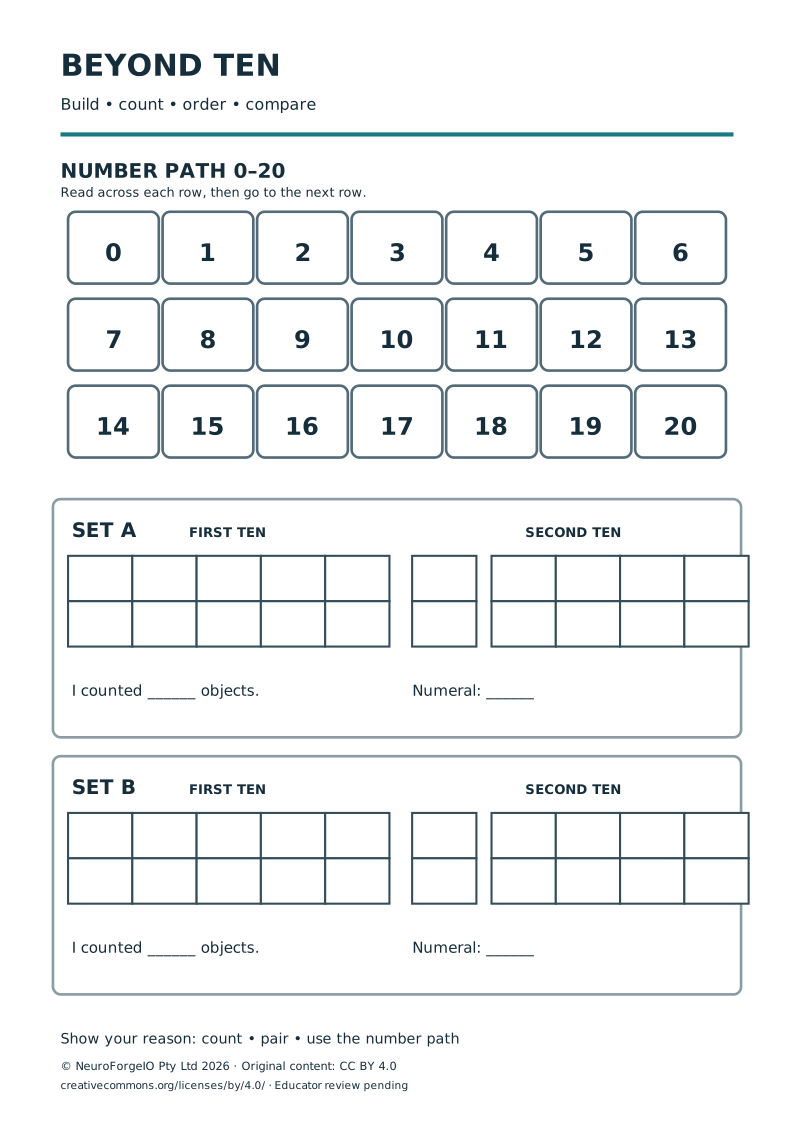
- Retrieve, 3 min. Show an empty mat, eight counters and a full ten-frame. Ask for 0, 8 and 10; accept demonstration rather than spoken English.
- Model, 6 min. Build 17 as a checked ten and seven. Place whole numeral
17on the path between16and18. Say, “The card names all seventeen objects, not just the seven in the second frame.” Count all to confirm. - Guided game, 9 min. Partner A draws
11,15or20and builds it. Partner B finds its path place, removes a neighbouring card and asks which is missing. Swap. Variants: numbered museum shelves, bus-stop markers or a garden row. A smaller route uses 0–10. - Fresh try, 4 min. Mix
16, 18, 17, 19, 20. Ask for order. Then show 12 objects and ask for its numeral from11/12/13. - Check, 3 min. Hide
19from the 16–20 path. “What is missing, and what is just after it?” Key: order16, 17, 18, 19, 20; 12 objects match12; missing 19, after it 20.
If the child uses the last digit alone: Pair the whole numeral with its checked collection, cover the final digit and reveal the whole card again. If the full path is overwhelming, expose only three to six neighbouring positions and expand after success.
Access and record: Large/tactile whole-numeral labels, raised position markers, spoken path or partner placement under direction are available. Record numeral–quantity links, order, missing-number explanation, range and cue level.