Original SubjectNest draft · review pending. © NeuroForgeIO Pty Ltd 2026, CC BY 4.0. See README.md for attribution and separate ACARA terms. Enlarge or convert this text for a learner's access needs. For raised versions, add tactile borders and actual moveable objects; a flat print is not a tactile aid.
Use the original A4 vector part-whole mat or PNG preview if a large printed layout helps. The plain-text mat below carries the same labels for reading, translation review and accessible adaptation.
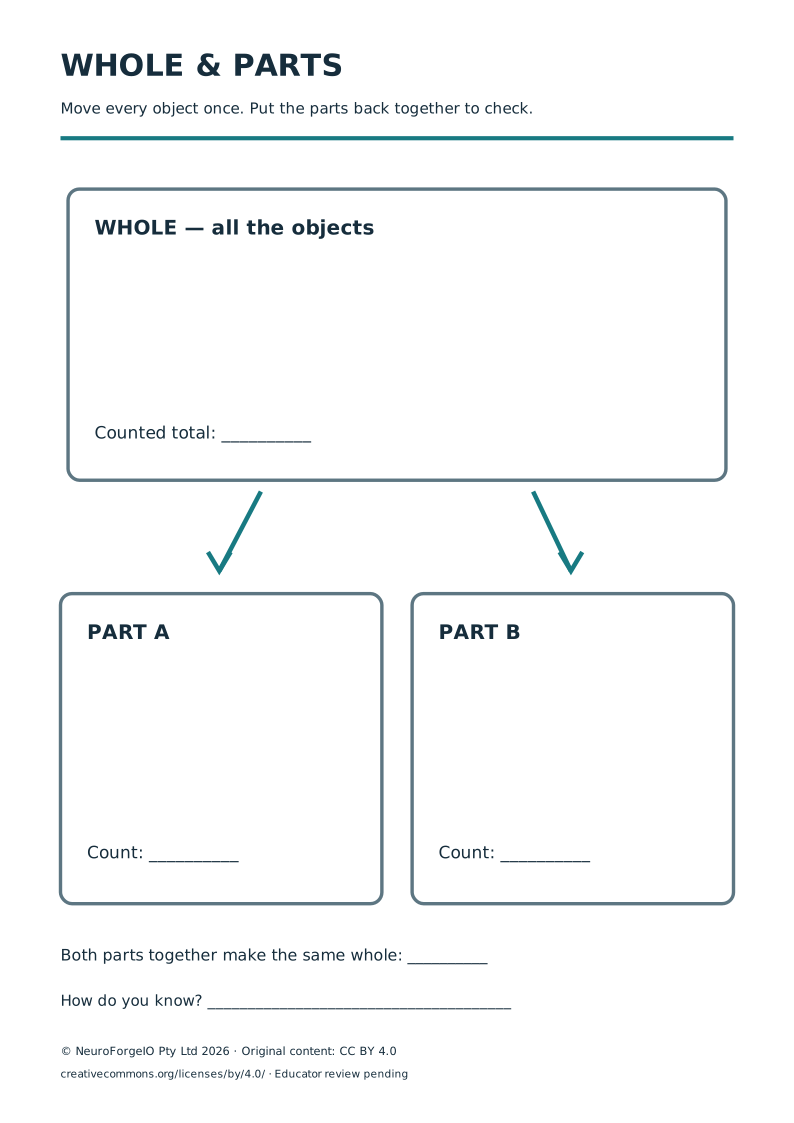
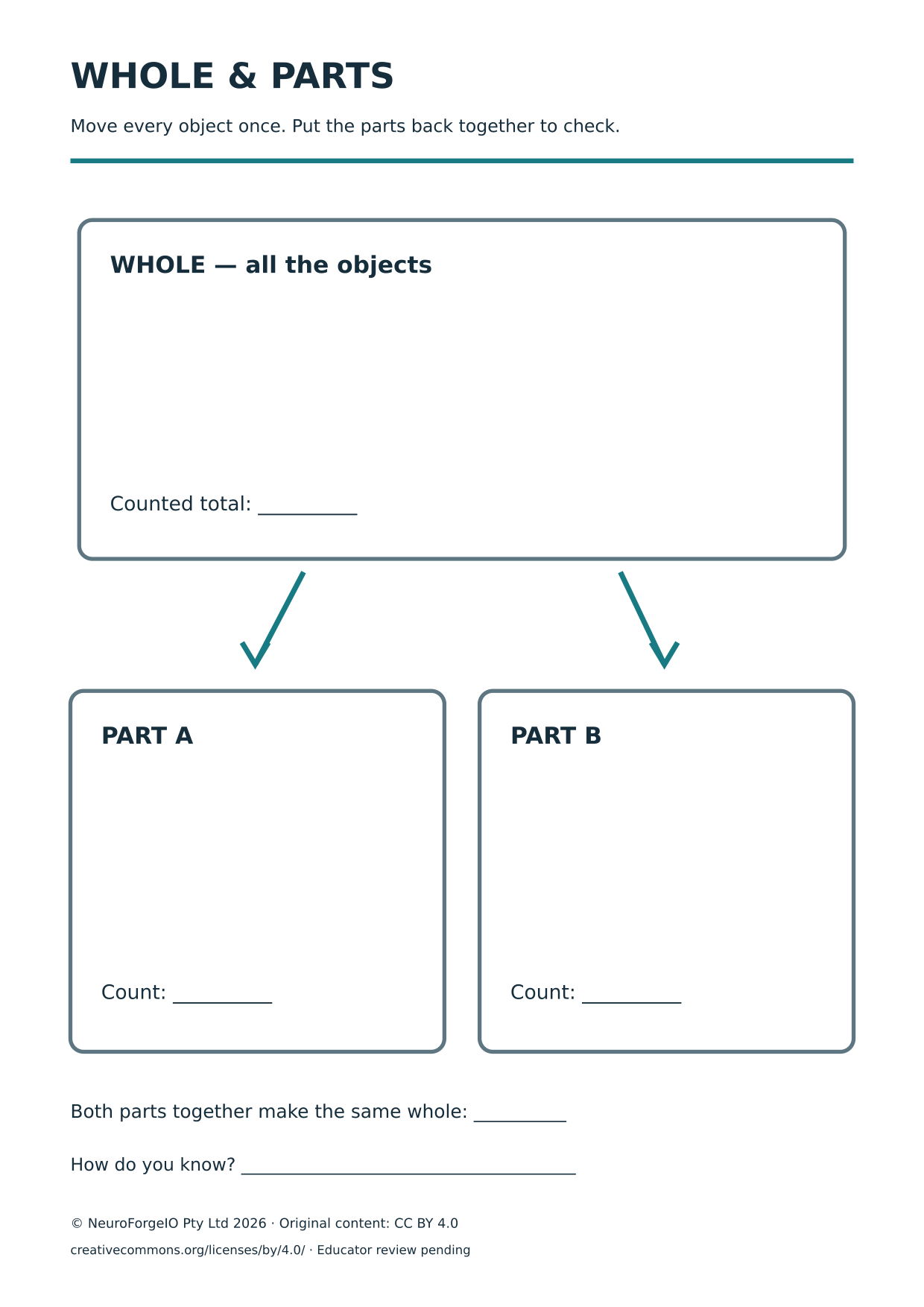
Part-whole mat
Place every object from the whole into exactly one of the two parts. Move both parts back to the whole to verify the total. A child may direct an adult to do the moving.
WHOLE — all the objects together: [                              ]
                         TOTAL: ______

PART A — one group:             [                ]  COUNT: ______
PART B — the other group:       [                ]  COUNT: ______

I checked by putting both parts back together: TOTAL ______
I can show another split of the same whole: _____________________
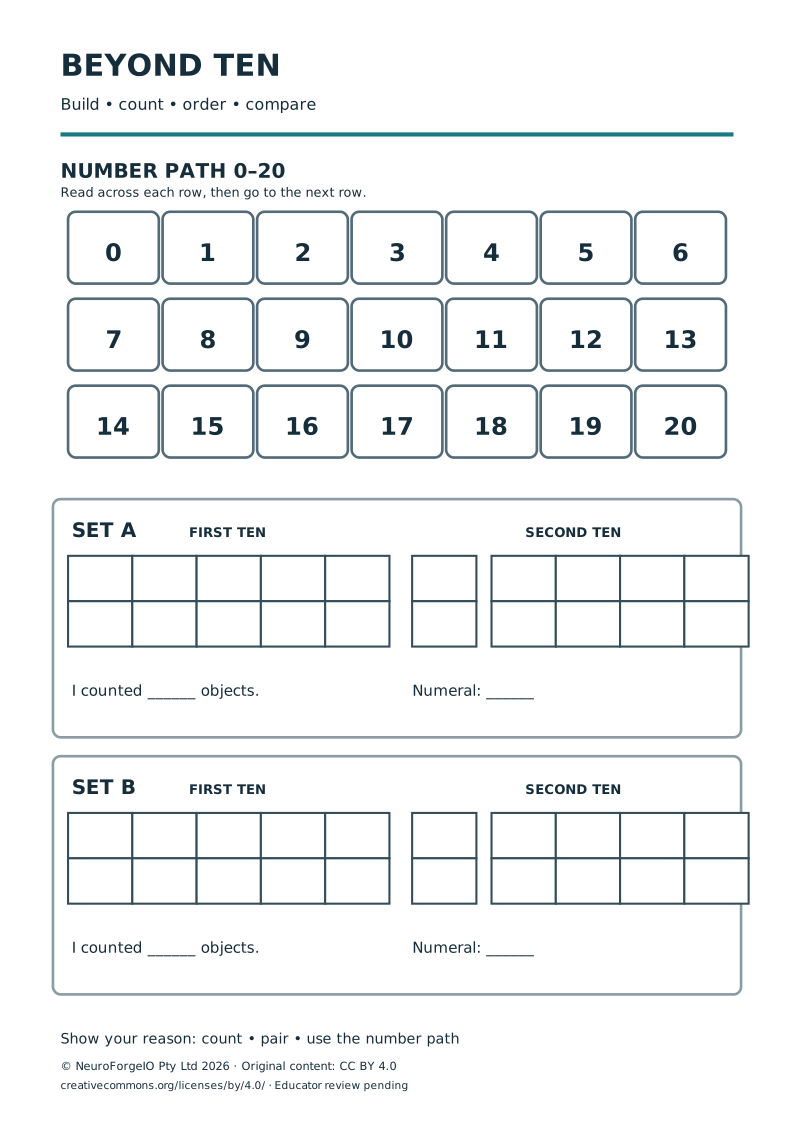
Count and comparison strip
SCENE: __________________________  DATE: __________
SET A: ______ objects.   SET B: ______ objects.
A has MORE / FEWER / THE SAME number as B.
I know because I counted / paired / used a number path / showed: ______
Plain-text number path
0 — 1 — 2 — 3 — 4 — 5 — 6 — 7 — 8 — 9 — 10 — 11 — 12 — 13 — 14 — 15 — 16 — 17 — 18 — 19 — 20
Read from left to right. Cover all but a short range when the whole path is visually or cognitively crowded. The Weeks 3–4 vector page is an original printable alternative.
Small-group dot cards
Print each pattern on a separate card and cover it between reveals. These original layouts can be enlarged or made with actual objects. Vary the orientation in later teaching so a correct response is not just memory of this one picture. A described or tactile pattern can show quantity knowledge but does not establish the same visual subitising evidence.
THREE           FOUR           FIVE
  ●             ● ●           ● ● ●
●   ●           ● ●            ● ●
Scene cards for varied practice
All counts below are pretend orders to make with safe counters or drawings. Do not infer a biological fact or a family's possessions from the scene. The child can choose a new meaningful context. Part-split cards specify a whole; the listed example is one correct answer, not the only split. For a fixed whole, all objects must appear in exactly one part.
| Card | Scene and teacher prompt | Check |
|---|---|---|
| 1 | School library: “Make 16 pretend return-book markers.” | total 16 |
| 2 | Community garden: “Make 19 plant-label markers.” | total 19 |
| 3 | Animal shelter: “Make 12 blanket cards.” | total 12 |
| 4 | Weather desk: “Make 20 cloud-observation marks.” | total 20 |
| 5 | Art room: “Make 14 paper-frame markers.” | total 14 |
| 6 | Bus station: “Make 18 paper ticket markers.” | total 18 |
| 7 | Playground: “Make 13 chalk-circle markers.” | total 13 |
| 8 | Music room: “Make 17 beat cards.” | total 17 |
| 9 | Bike workshop: “Make 15 job cards.” | total 15 |
| 10 | Museum: “Make 11 display labels.” | total 11 |
| 11 | Seed trays: “Make 14 tray markers and 18 pot markers. Which has more?” | pots, 18 > 14 |
| 12 | Sports shed: “Make 20 cone cards and 19 ball cards. Which has fewer?” | balls, 19 < 20 |
| 13 | Cinema: “Make 16 seat cards and 16 ticket cards. Same or different count?” | same, 16 = 16 |
| 14 | Recycling station: “Make 12 paper cards and 15 box cards. Which has more?” | boxes, 15 > 12 |
| 15 | Night-sky display: “Make 18 star cards and 13 planet cards. Which has fewer?” | planets, 13 < 18 |
| 16 | Hospital supply store: “Make 17 clean-cloth cards and 20 box cards. Which has more?” | boxes, 20 > 17 |
| 17 | Theatre: “Make 19 seat cards and 19 ticket cards. Same or different count?” | same, 19 = 19 |
| 18 | Train depot: “Make 11 carriage cards and 14 platform cards. Which has fewer?” | carriages, 11 < 14 |
| 19 | Picnic without food: “Split five paper mat markers between two pretend areas.” | e.g. 2 and 3 make 5 |
| 20 | Parcel desk: “Split five parcel cards between two shelves.” | e.g. 4 and 1 make 5 |
| 21 | Flower display: “Split six paper flower cards between two vases.” | e.g. 5 and 1 make 6 |
| 22 | Space mission: “Split seven equipment cards between two bins.” | e.g. 4 and 3 make 7 |
| 23 | Workshop: “Split eight tool cards between two trays.” | e.g. 5 and 3 make 8 |
| 24 | Dance studio: “Split nine floor-spot cards between two rows.” | e.g. 5 and 4 make 9 |
| 25 | Construction site: “Split ten block cards between two containers.” | e.g. 5 and 5 make 10 |
| 26 | Aquarium display: “Split ten fish picture cards between two boards.” | e.g. 6 and 4 make 10; pictures only |
Answer logic: for Cards 19–26, any two non-overlapping groups whose counts total the named whole are valid, including a zero part when the task allows an empty group. For Cards 11–18, count each set independently, then pair or use the number path to justify the relation. The wording is original; the scenes are fictional.