25 minutes · AC9MFST01 (object data for a given familiar question); partial practice · educator review pending
Success: The child collects one object or labelled token at a time, sorts it once by the agreed category, counts each group and uses the counts to answer the starting question.
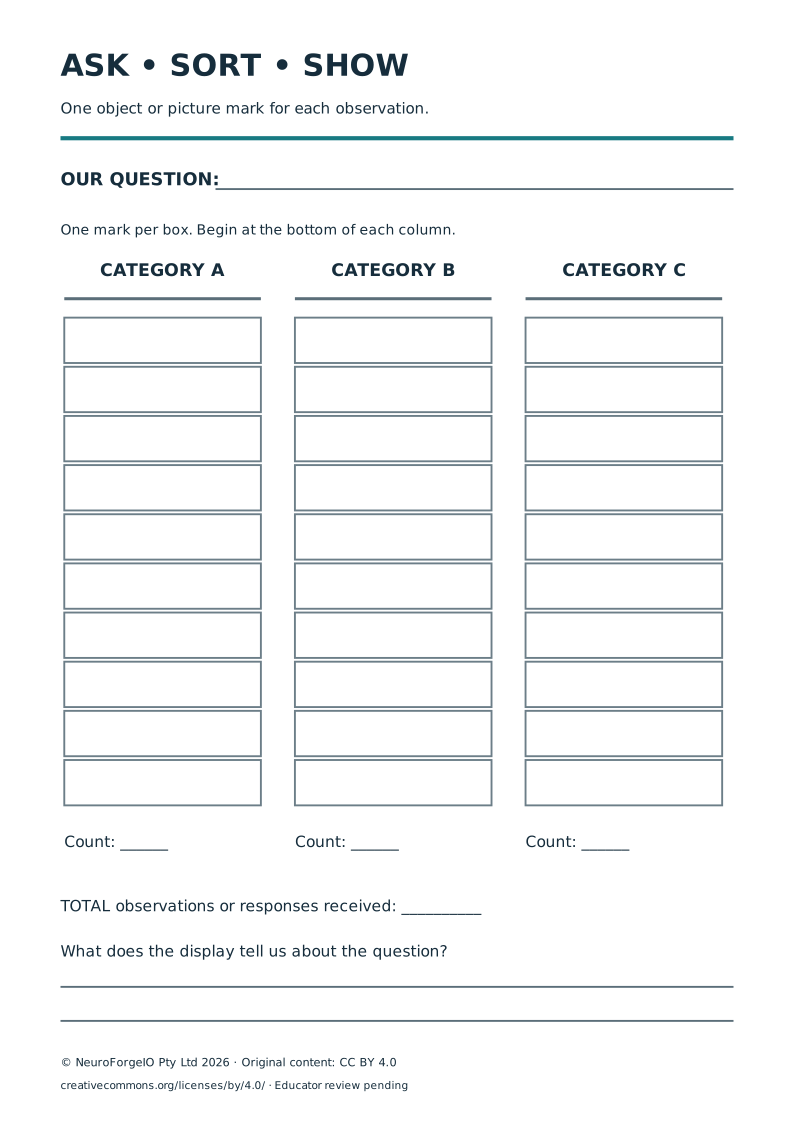
Prepare per pair: a bag containing D1 tokens: five cubes, four flat tiles and three arches, all large and safe; three labelled mats; data page. If physical pieces are unavailable, use the original word-and-shape cards in the aid.
- Retrieve, 3 min. Show three familiar building-piece types. Ask how a child could know which type appears most in a mixed bag. State the given question: “Which piece type appears most?”
- Model, 6 min. Draw one cube, name its category and place it on the cube mat. Draw one tile and place it on tile. Say, “One object gives one observation. I will not place the same object twice.” Point to the three category labels.
- Guided collection, 9 min. Partners draw the remaining ten objects one at a time, sort and then count each mat. Swap who draws and who checks. Compare the groups by count or pairing, not by how widely pieces spread.
- Fresh try, 4 min. Give a new small sample: three cubes, two tiles and one arch, mixed. “Collect and sort this sample; which appears most and how many altogether?” Do not name the result first.
- Check, 3 min. Return to D1's question. Key: D1 cube 5, tile 4, arch 3; cubes most, arches fewest, total 12. Fresh sample cube 3 most, total 6.
If an item is counted in two categories: Restate the deck's printed or tangible piece type, choose exactly one matching mat and recount. If a child claims the largest physical pieces are most, compare the number of pieces by one-to-one pairing.
Access and record: Use raised mat edges, hand-sized objects, large labels, spoken descriptions or directed adult placement. A child can point, sign or use AAC. Record the question, collection process, sort rule, three counts, comparison reason and cues.