25 minutes · AC9MFST01 (image data: collect, sort and compare); partial practice · educator review pending
Success: The child collects and sorts image cards into the stated categories, counts each and answers a familiar question from the data.
Prepare per pair: D2: six original book-symbol cards, four leaf-symbol cards and two cup-symbol cards, mixed; three labelled mats; data page. Simple teacher-drawn line symbols are enough; use tactile or word labels as needed.
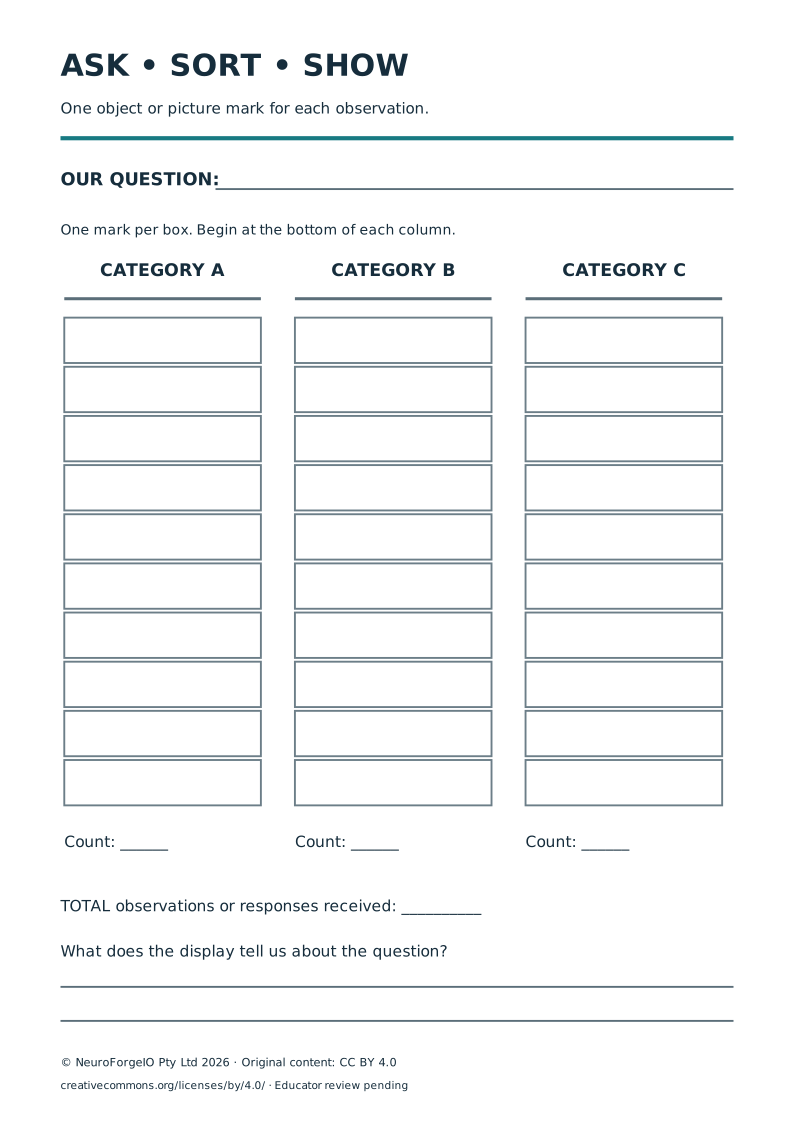
- Retrieve, 3 min. Ask what yesterday's D1 counts meant. Explain that today's observations are images, one card for one observation. Given question: “Which sign picture appears most in this set?”
- Model, 6 min. Draw a book card and place it on BOOK. Draw a leaf card and place it on LEAF. Say, “I use the picture or its accessible label as the sorting rule; I do not decide from colour or card size.”
- Guided collection, 9 min. Partners draw the remaining ten mixed cards, sort and count. Line up cards from the same starting edge. Ask “Which category has the most? Which has the fewest? How do the counts show it?”
- Fresh try, 4 min. Mix three book, one leaf and two cup cards. “Sort this new sample and tell me which appeared most.” Let the child recount to check.
- Check, 3 min. Return to the given question. Key: D2 book 6 most, leaf 4, cup 2 fewest, total 12. Fresh sample book 3 most; total 6.
If a child guesses from stack height: Re-align the stacks, then count or pair cards. If a symbol is unclear, use its printed word or object marker and note the access route; the maths check is sorting/counting, not visual acuity or reading an untaught word.
Access and record: Use large/raised symbol cards, plain-text labels, spoken descriptions, AAC or directed placement. Record category counts, one-card-one-observation sorting, comparison evidence and prompts.