25 minutes · AC9MFN01 (partial) · educator review pending
Success: Child records exactly one mark per object in a ten-counter collection and can move from the marks back to the total and numeral 10.
Prepare: ten counters, pencil or thick marker, text ten-frame or visual mat, T03/T09, a teacher example with eleven marks for ten counters. Use sticker or raised tokens where marking is inaccessible.
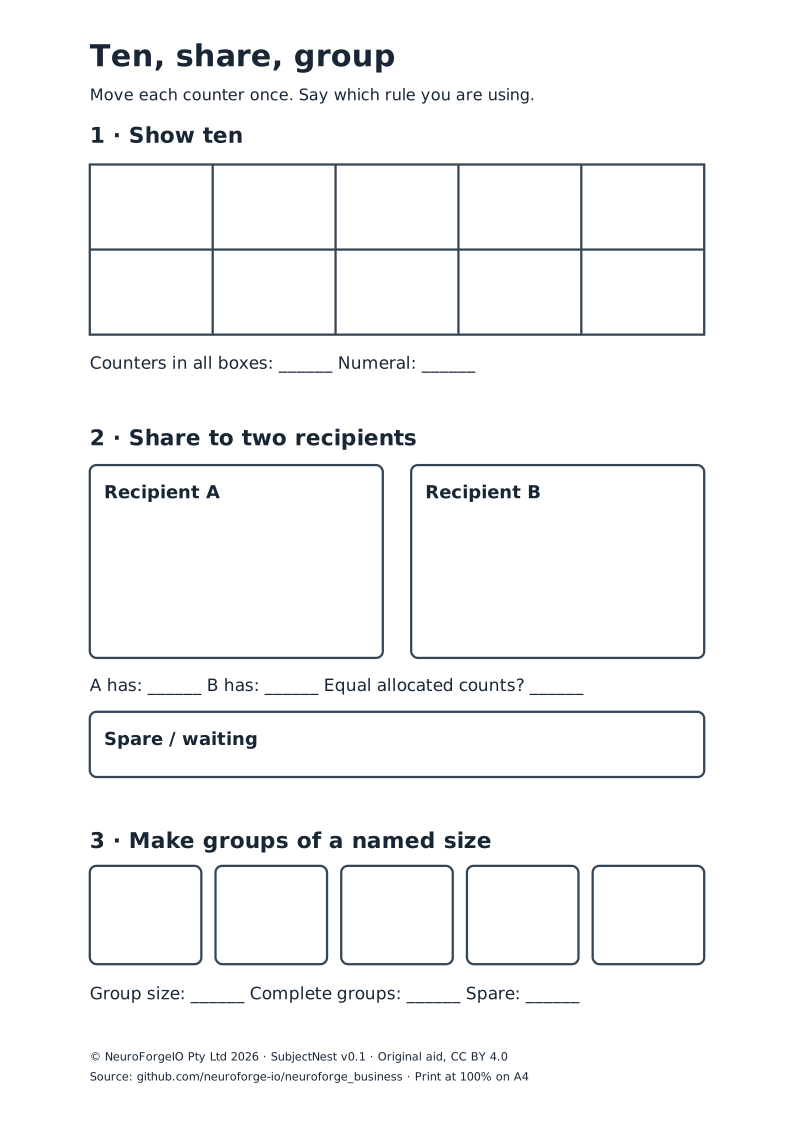
- Retrieve, 3 min. Display a full ten-frame and ask how many boxes hold a counter. Show
10; clear it. - Model, 5 min. Read T03. Move one label counter to a counted area and draw one short mark; repeat. Say, “This mark stands for this object. I will stop when no object is left unmarked.” Compare with a deliberately faulty eleven-mark example and find the repeated object.
- Make and swap, 10 min. Partners represent T03 garden labels and T09 route dots. One places ten objects; the other makes ten marks or matching tactile tokens, pairing each mark back to an object to audit. Swap makers. Teacher asks three focus learners which representation tells the same story and how they checked.
- Fresh check, 4 min. Give eight objects plus two more, mixed spatially. Child records ten marks and selects
10. Record a counted route if marks could not be made. - Close, 3 min. Ask, “What would an extra mark mean?” Key: T03/T09 and fresh check have ten objects and ten marks; eleven marks would claim an extra object.
If the child draws many decorative marks for one object: Use paired spaces: move one object, put one mark opposite it, then count the pairs. Decoration can be separate from the mathematical record. Access and record: Dictated marks, braille/tactile tokens or adult scribing under child direction are valid routes. Note whether one-to-one mapping was independent and which format was used.