25 minutes · AC9MFN03 (pairing and counting) · educator review pending
Success: Child pairs one A object with one B object, sees no unmatched object for equal sets, then counts both sets to name the quantity. Pairing establishes equality; the count names thirteen.
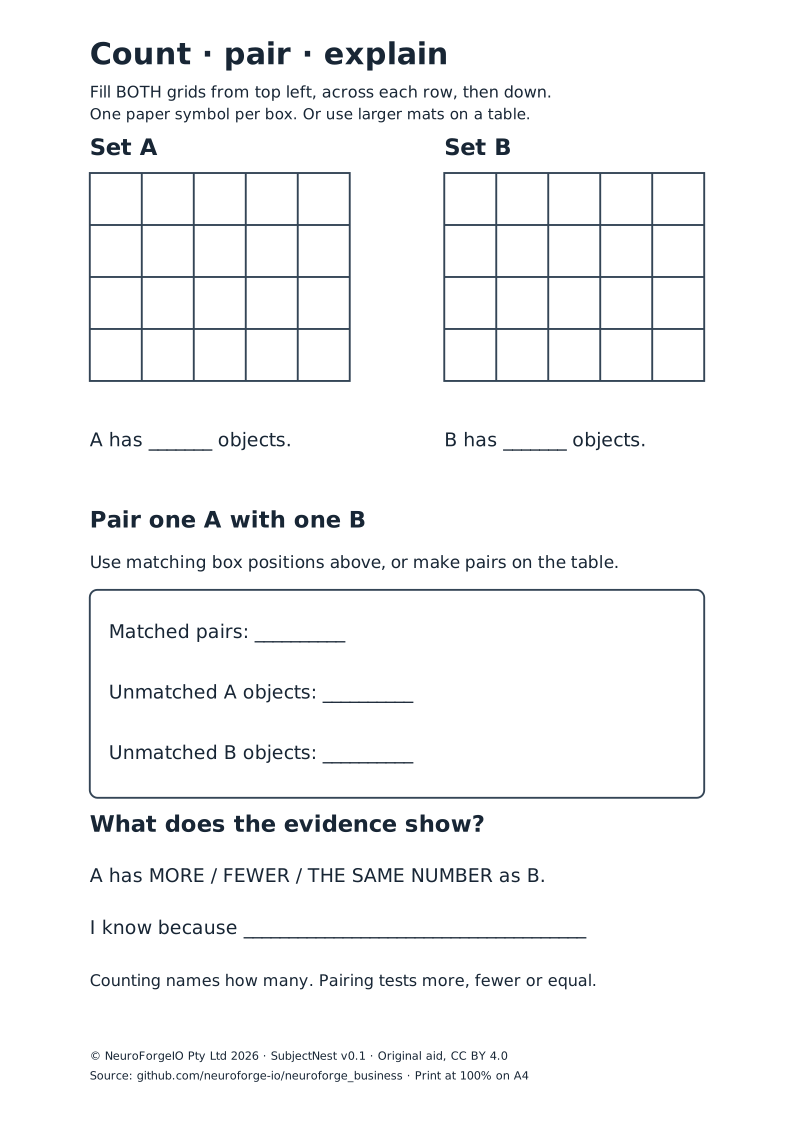
Prepare: 13 counters of each texture, C02, A/B trays, a clear pairing lane or comparison page. Spread B out so its row looks longer. New check: 15 of each, one set bunched.
- Retrieve, 3 min. Ask whether yesterday's count needed every object moved once. Show where counted pieces wait.
- Model, 5 min. Put a single A beside a single B, saying, “This is one pair. I will not use either object again.” Continue C02 until none remain. Say, “Every A has one B and every B has one A, so the sets are equal, even though B looked longer.” Count each set to confirm thirteen.
- Partner audit, 10 min. Children remake C02 and C07 (14/14) with different spacing. A partner checks one-to-one pairs and no hidden leftovers. Then each counts A and B. Teacher asks three focus learners what pairing told them before the count and what the count added.
- Fresh check, 4 min. Present 15/15 in unfamiliar mixed layout, with B bunched. Child pairs or directs pairing, says equal, then counts both as fifteen.
- Close, 3 min. Children contrast “same number” with “same shape/space.” Key: C02 13/13 equal; C07 14/14 equal; fresh 15/15 equal; zero unmatched objects in each.
If the child pairs one B twice: Slide completed pairs into a closed lane; keep unpaired objects in their original tray. Access and record: Raised pairing lanes or verbal “A first, B partner” under adult movement support the same one-to-one reasoning. Note equality decision separately from the exact count and any mathematical prompt.