25 minutes · AC9MFM01 (capacity focus, partial) · educator review pending
Success: Child identifies capacity as the usable amount a container holds to its line, helps direct a safe transfer between a teacher-pretested identical pair, and describes the observed equal outcome. Current water level is not the capacity.
Prepare: pretested Pair E from the pair register, clean water, shallow tray, towels, clear near-rim fill lines and capacity page. Adult pours. If the pretest was not equal, select a different verified pair before the lesson; do not force the key.
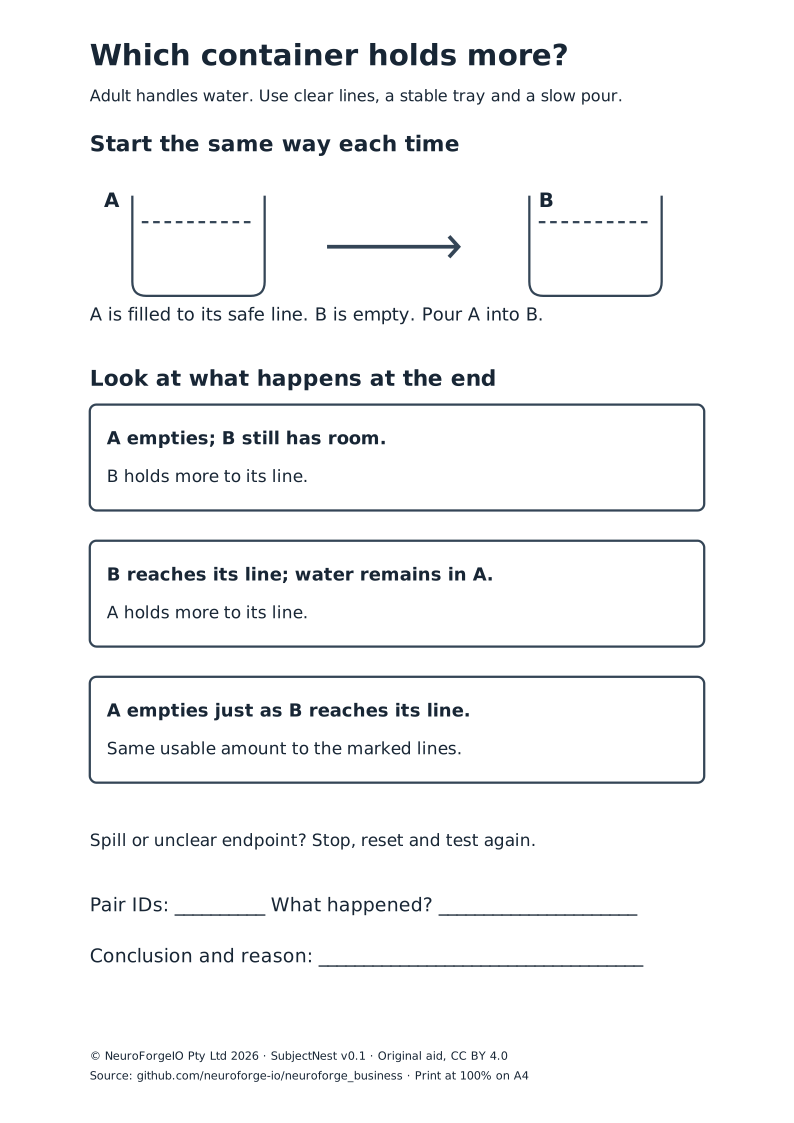
- Retrieve, 3 min. Show two empty identical containers. Ask, “What could we compare about these?” Name capacity as how much each can hold to the marked safe line.
- Model, 5 min. With A at its line and B empty in the tray, slowly pour A into B. Say, “A became empty as B reached its line. In this tested pair, they hold the same usable amount.” Point to R03. Do not count pours or claim a number of units.
- Direct and observe, 10 min. Reset. Partners take turns directing the adult: “B empty; A to line; pour slowly; stop and look.” They show same with words, pointing or AAC. Teacher closely observes three learners' choice of attribute and final evidence. The adult handles all water.
- Fresh process check, 4 min. Reverse the direction with the same verified pair: B starts full and A empty. Learner directs the sequence and explains why it again appears equal. Record this as a new direction with the same containers, not transfer to a new pair.
- Close, 3 min. Ask, “Did the amount held depend on whether the container happened to be empty at the start?” Key: verified Pair E is equal to marked usable lines in both directions; R03 same. If the observed run differs or spills, mark inconclusive and reset.
If the child says the filled container has more capacity solely because it currently has water: Empty both and ask which attribute the direct test checked; current amount and capacity are different. Access and record: Learner may observe at distance, feel dry container boundaries, direct the adult via sign/AAC or use a spoken readout of endpoint states. Only a visible or otherwise accessible actual transfer counts as direct-comparison evidence.