25 minutes · AC9MFM01 (capacity focus, partial) · educator review pending
Success: Child distinguishes how much water happens to be in a container now from how much it can hold to its safe line, then uses a direct test to compare capacity.
Prepare: verified Pair B, C07/C09 child prompts, tray and towels. Before children arrive, put some water in small A and only a shallow amount in larger B, so A's current level looks higher. Keep both below their lines. Empty both before testing. Have capacity page.
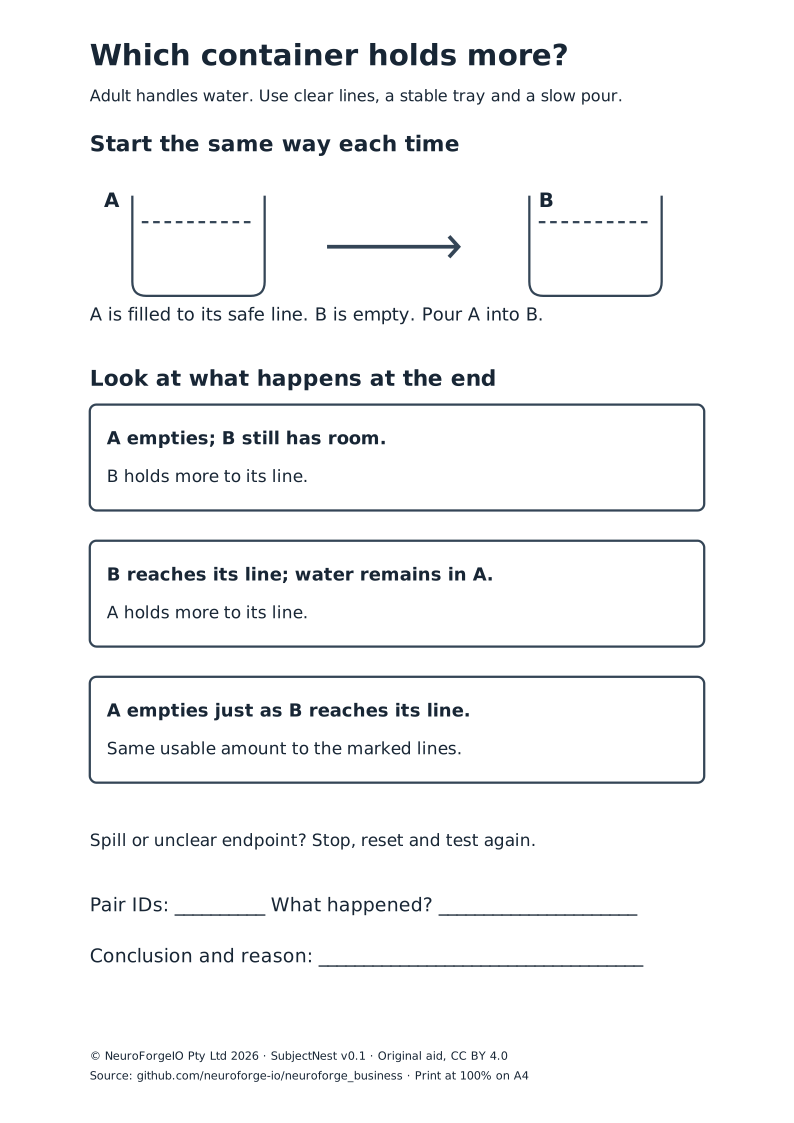
- Retrieve, 3 min. Show the partly filled pair. Ask, “Which one has a higher water level now? Does that prove which can hold more?” Accept a prediction but not an untested capacity claim.
- Model, 5 min. Say, “Current level tells me what is there now. Capacity asks what it can hold.” Adult empties both safely. Fill A to line, B empty; begin the direct A→B test. Pause before the endpoint and ask what to watch.
- Finish and explain, 10 min. Adult completes C07, then resets for C09. In verified Pair B, A empties and B still has room. Partners fill the observation record by dictation, mark, or pointing. Teacher asks three focus learners to separate the earlier level observation from the final capacity result.
- Fresh check, 4 min. Present dry Pair E (if available) or a second teacher-pretested pair with an intentionally uneven starting amount. Child first says why the starting level is not enough, then directs a reset and actual transfer. Record the second pair's verified result rather than guessing.
- Close, 3 min. Ask for the sentence that uses the test. Key: C07/C09 on Pair B: B holds more to line because A emptied and B had room. Starting water level alone has no capacity key. For second pair, use its recorded pretest and actual run; spill/unclear is inconclusive.
If the child reads the starting level as capacity: Draw or point to each container's safe line, empty both and test. Access and record: Adult does all pouring and reset; use high-contrast/tactile line labels, a quiet route, sign/AAC or a spoken account of endpoint states. Note which evidence the child used.