These descriptions carry the information in each SVG/PDF without relying on colour. Each PDF is selectable-text but untagged; use this ordered text and a locally prepared tactile or spoken route where needed. SVG contains a title and description, but its actual rendering and a child's assistive setup need local review. A teacher should print at 100% if using the paper-strip cutouts, verify the physical lengths and all card counts, then keep teacher-held assets away from practice until the named check. Use broad supervised pieces. No small seeds, pins or loose weights.
| Files | Complete information and operation | Tactile / alternate route |
|---|---|---|
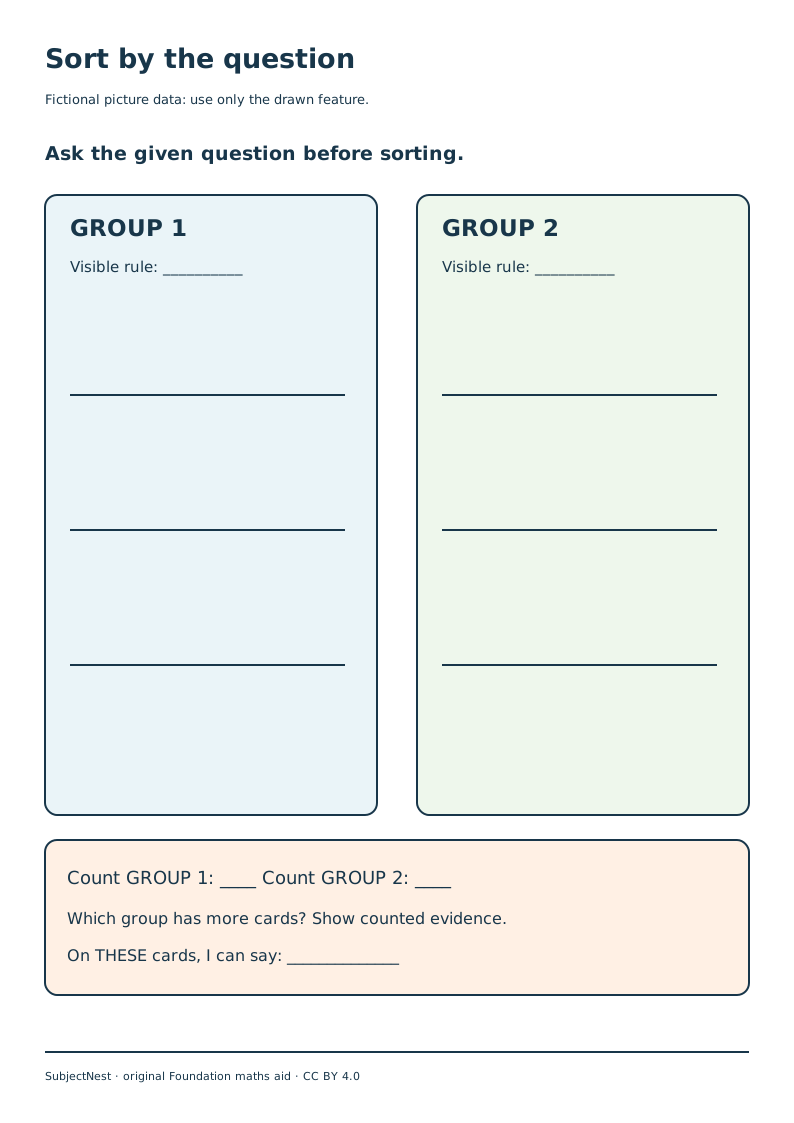
| feature-sort-mat.svg / PDF | Heading: “Sort by the question.” Two large empty columns, GROUP 1 and GROUP 2, each with “Visible rule” and three horizontal placement guides. Bottom: count each group, identify which has more cards, complete “On THESE cards, I can say…”. There are no pre-sorted answer cards. | Put two large trays side by side with raised full-word category labels. Child chooses where each card goes; an adult moves it only as directed. |
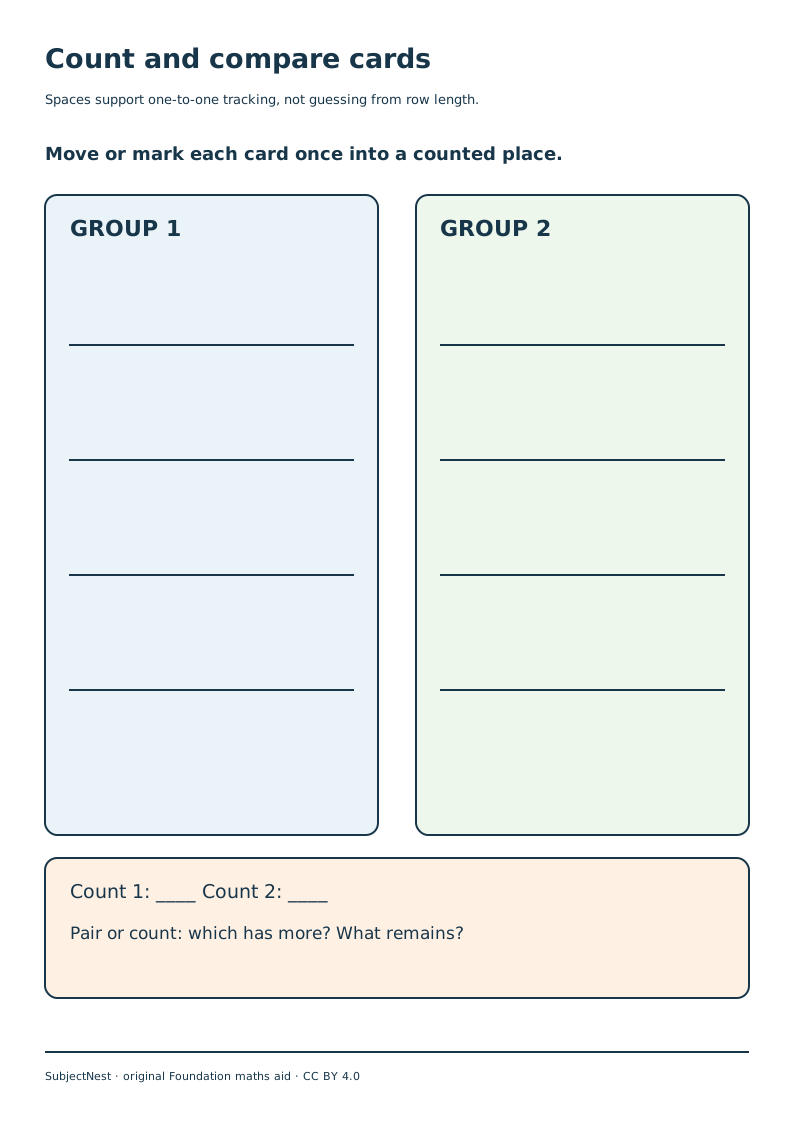
| count-compare-board.svg / PDF | Two large empty groups, four horizontal lines per group for one-to-one tracking. Bottom asks for both counts, pairing or counting evidence, and which has more. No quantities are prefilled. | Give two large tactile columns marked GROUP 1/GROUP 2 and one broad token per original picture card. Move each token exactly once. |
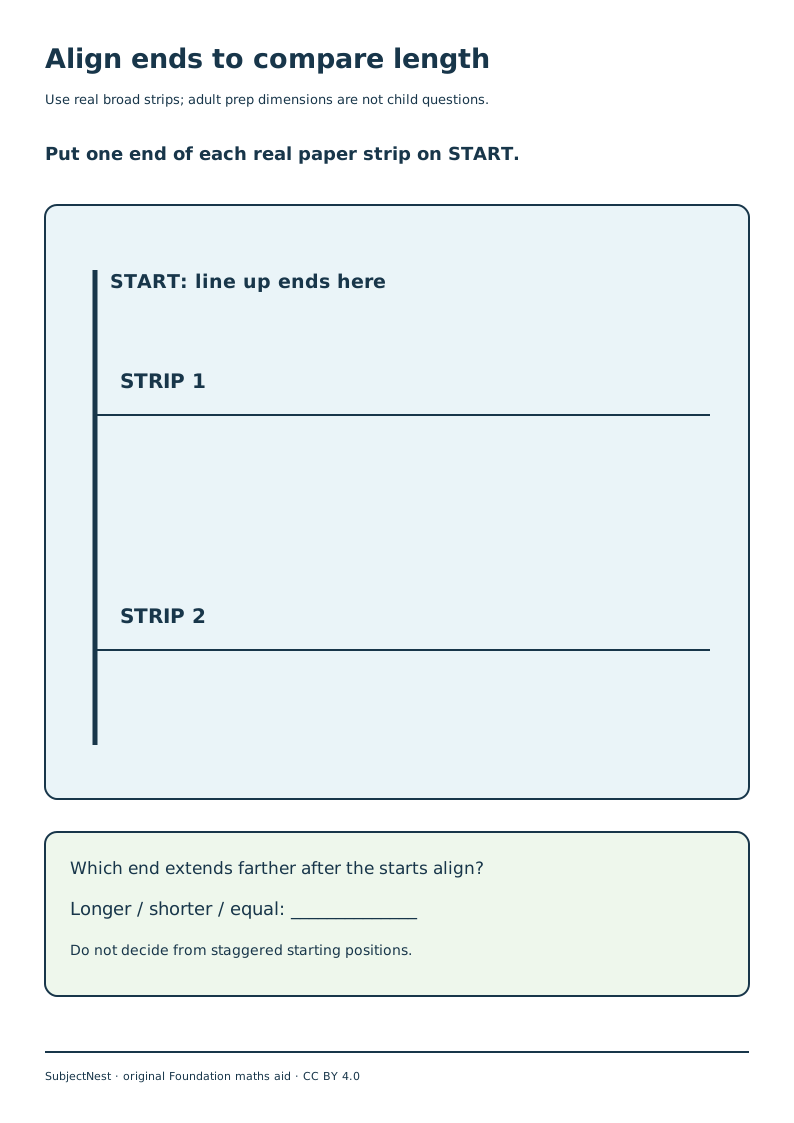
| align-ends-mat.svg / PDF | Large vertical START line at the left and two long placement lanes STRIP 1 and STRIP 2. Bottom asks which end extends farther after starts align and whether lengths are longer, shorter or equal. | Place a rigid raised straight edge as a shared start and two broad paper/felt strips beneath it; child/directing adult lines up one end physically. |
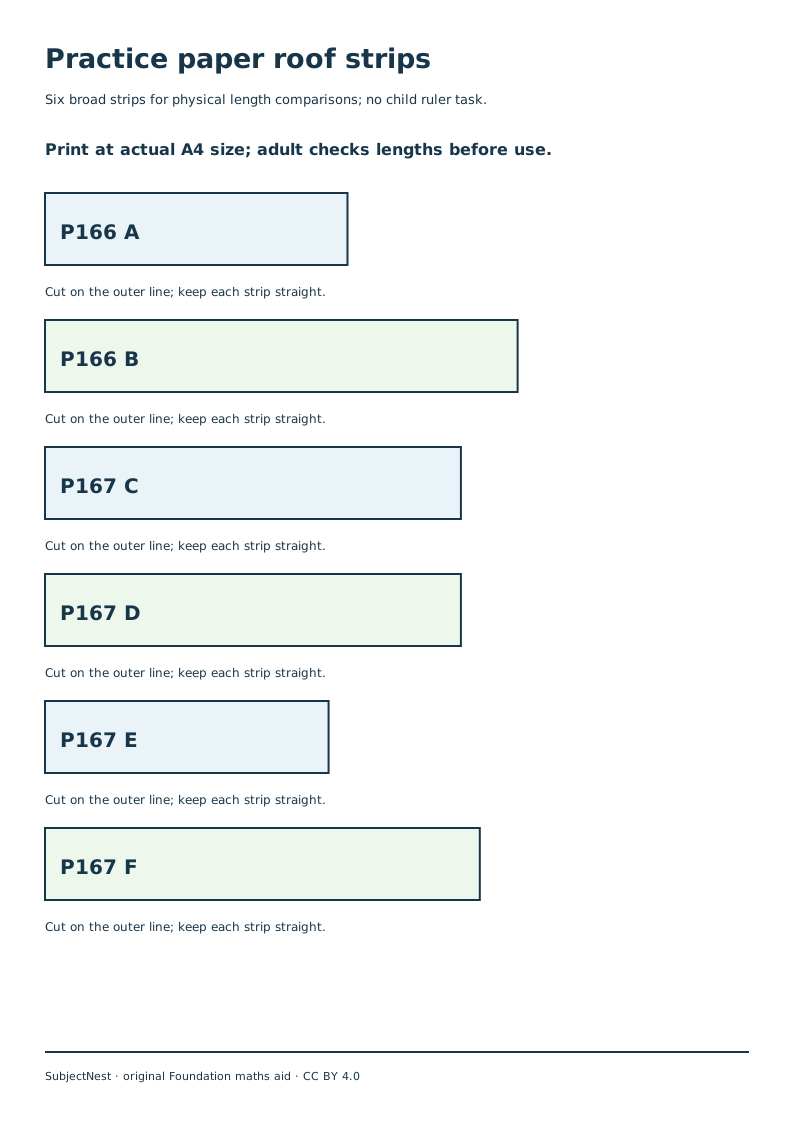
| practice-strips.svg / PDF | Six straight, same-width cutout rectangles with IDs P166 A/B and P167 C/D/E/F. Adult preparation lengths: A 80 mm, B 125 mm, C 110 mm, D 110 mm, E 75 mm, F 115 mm. Printed labels show IDs only; adult checks 100% physical output. Cut on outer lines. | Adult cuts/labels six broad strips at the stated lengths or uses equally verified local strips; child compares by aligning physical ends. Numeral units are not child target. |
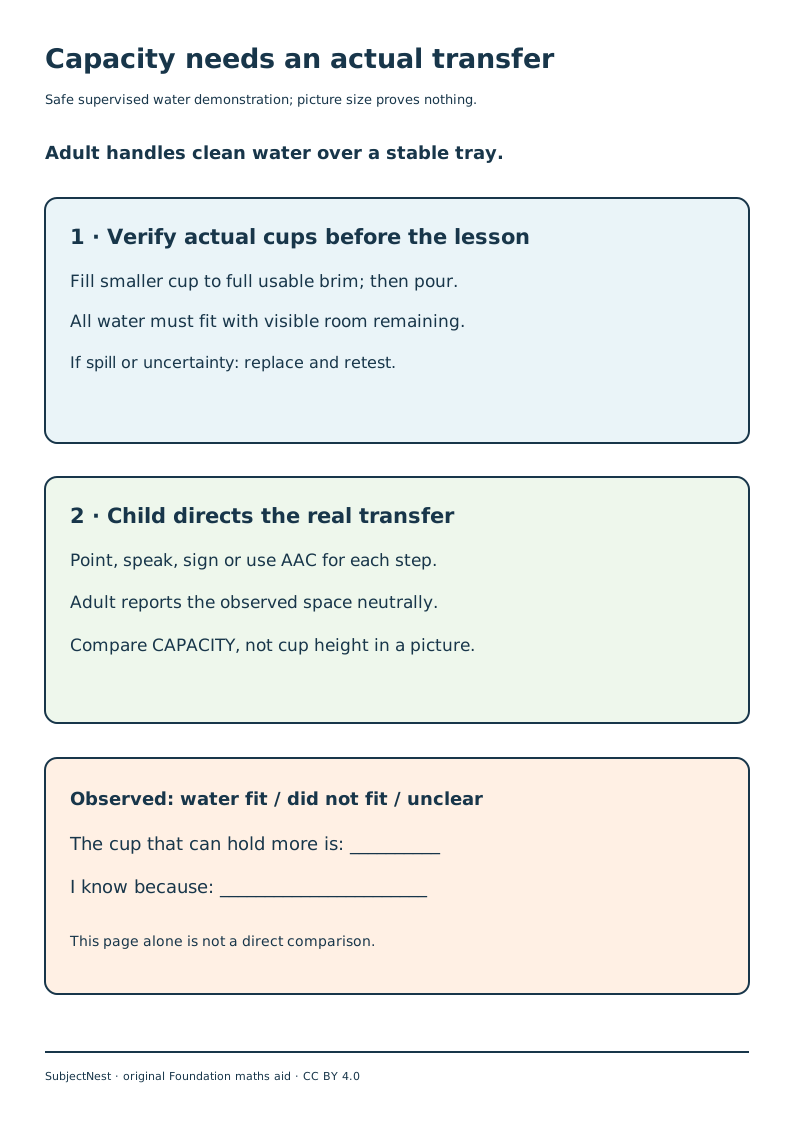
| transfer-station.svg / PDF | A three-box staff/child guide: adult privately verifies transfer from a fully filled usable brim of the smaller cup to a larger cup over a stable tray; child directs actual adult pour; bottom records water fit/not fit/unclear, which cup holds more, and reason. It says a drawing alone is not direct evidence. There is no drawing that proves either cup. | An adult describes the observed water level and spare space neutrally as they perform the child-directed pour. A text-only rehearsal can teach words, but defer direct-comparison evidence if actual safe transfer cannot occur. |
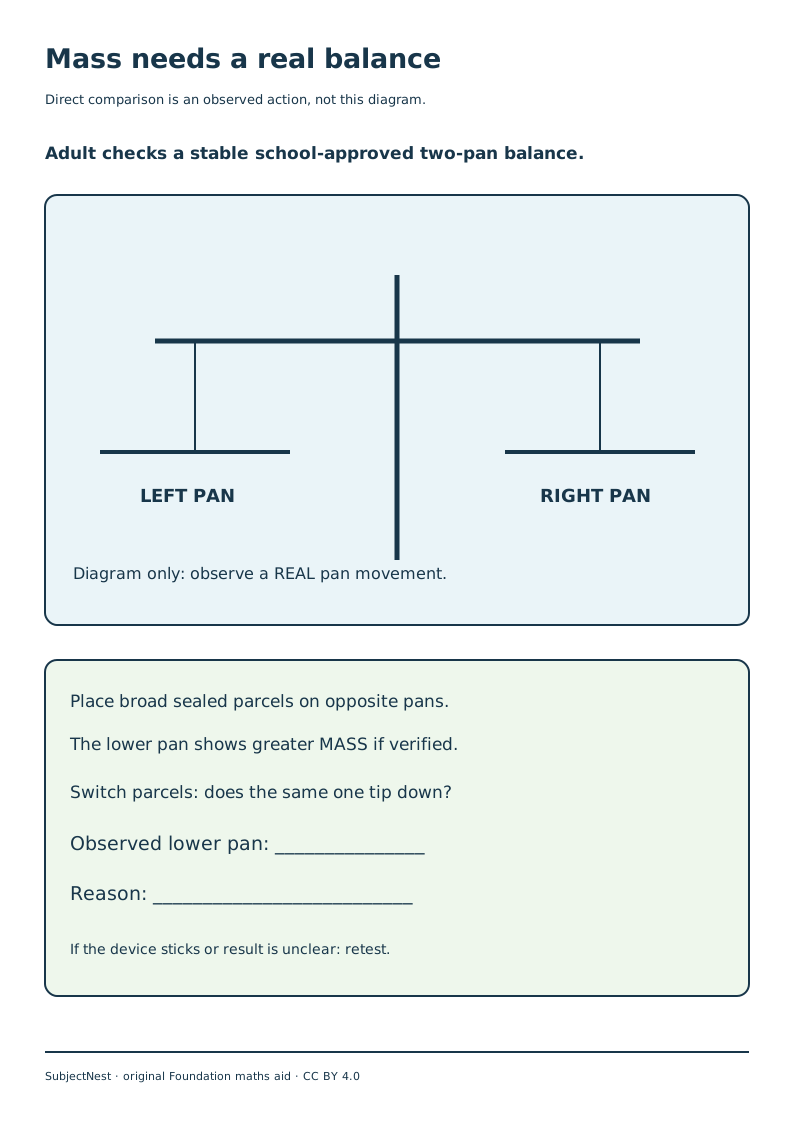
| balance-observation.svg / PDF | Schematic two-pan level balance labelled LEFT PAN and RIGHT PAN; instructions say use real broad sealed parcels, observe which pan drops, swap parcels, and record a reason. The schematic is deliberately level, so it gives no answer. | Adult operates a stable actual two-pan balance on the child's direction and neutrally describes or offers an accessible indicator of the actual lower pan. A picture/guess is not direct evidence. |
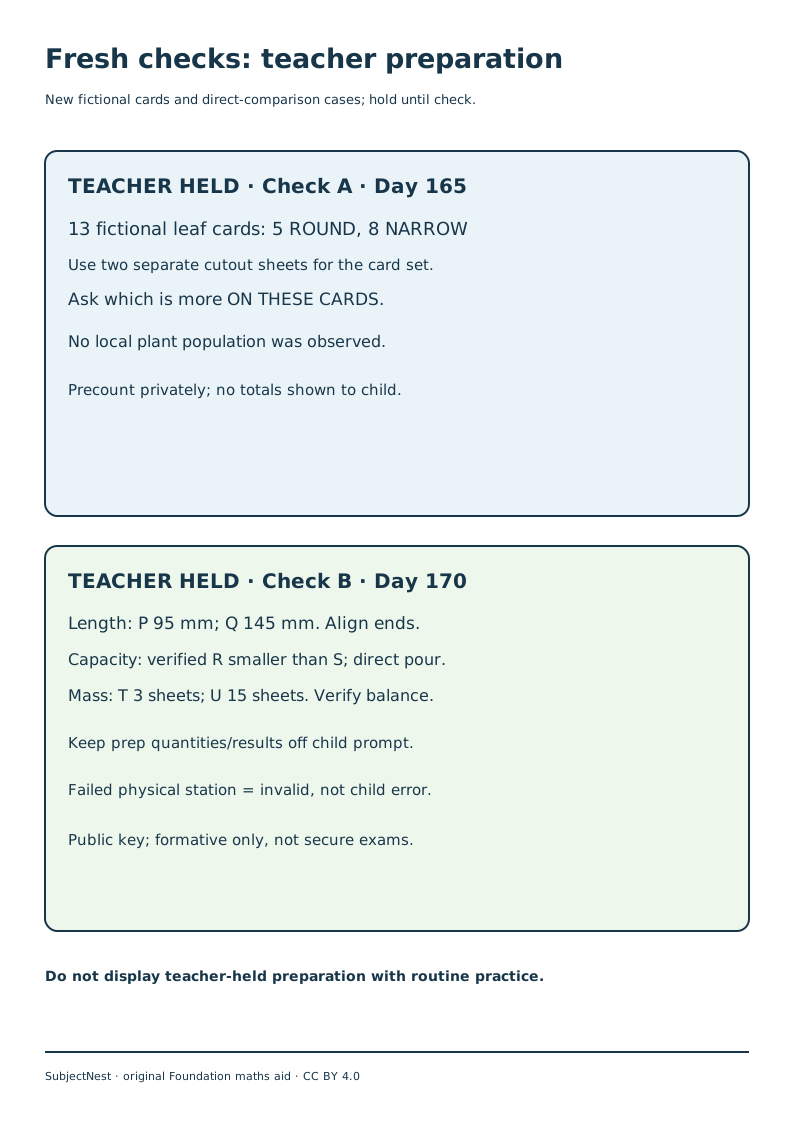
| teacher-held-checks.svg / PDF | Staff-only check preparation: Day 165 thirteen fictional leaf cards, five ROUND/eight NARROW, card-only question; Day 170 P 95 mm/Q 145 mm strips, verified cup R smaller/S larger, sealed T three-sheet/U fifteen-sheet parcels on verified balance. Explicitly says public formative checks and failed station invalid. | Staff keeps this page apart from the child prompt, reads/uses the exact private setup, and records first child-controlled decisions before feedback. No secure assessment claim. |
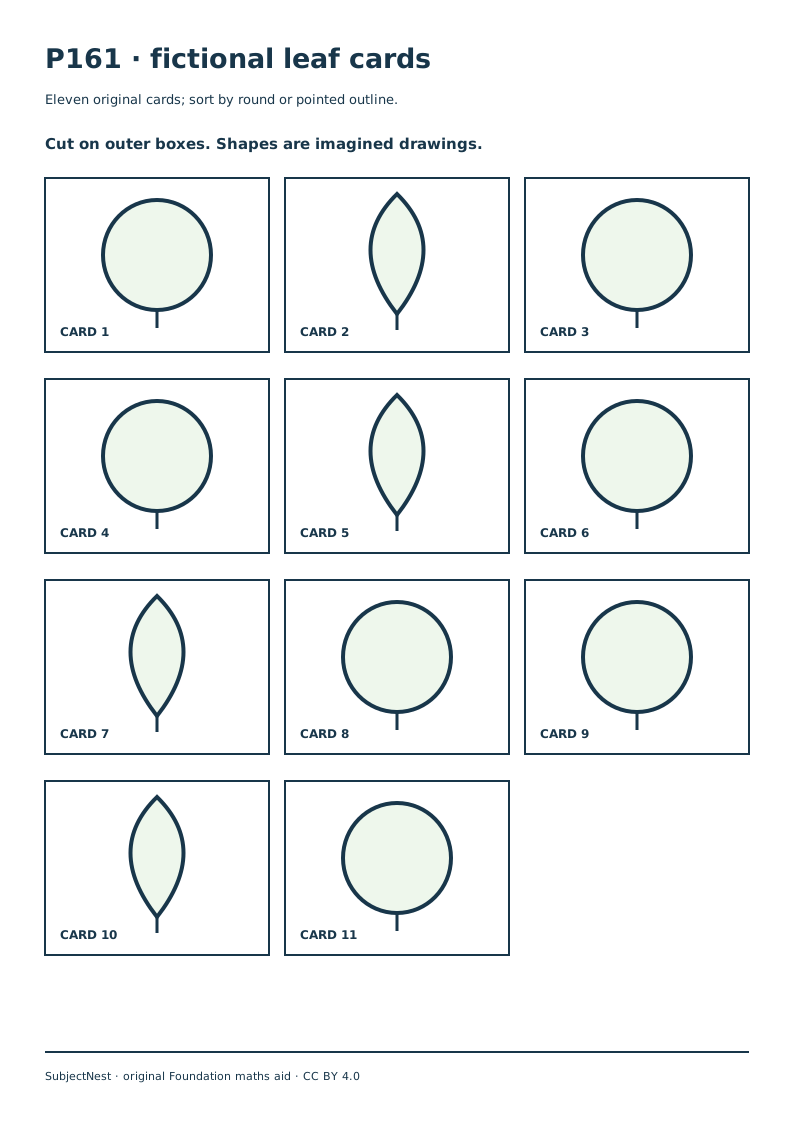
| practice-observation-161.svg / PDF | Eleven numbered broad fictional drawing cards in visible order: ROUND, POINTED, ROUND, ROUND, POINTED, ROUND, POINTED, ROUND, ROUND, POINTED, ROUND. Total seven round, four pointed. The circle and tapered pointed outline are line-drawn, not colour-coded. | Use seven broad raised circular leaf outlines and four broad raised pointed outlines, one card per shape, mixed before the sort. Staff numbering merely checks inventory. |
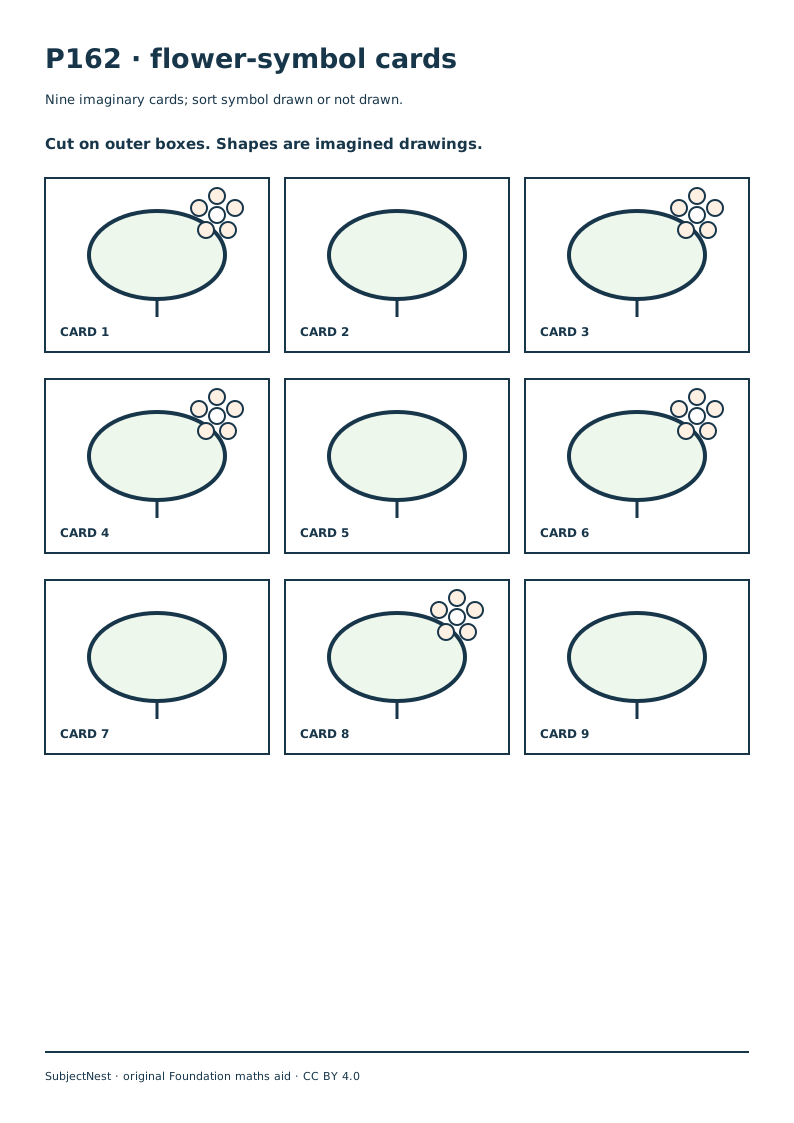
| practice-observation-162.svg / PDF | Nine numbered broad oval-leaf drawing cards. A small drawn flower symbol appears on cards 1, 3, 4, 6 and 8; it is not drawn on cards 2, 5, 7 and 9. Five shown, four not drawn. No real plant status follows. | Add a tactile full-word or raised flower marker to the five matching broad cards; leave the other four without a drawn/raised marker. Say “not shown on card” rather than “no flower exists”. |
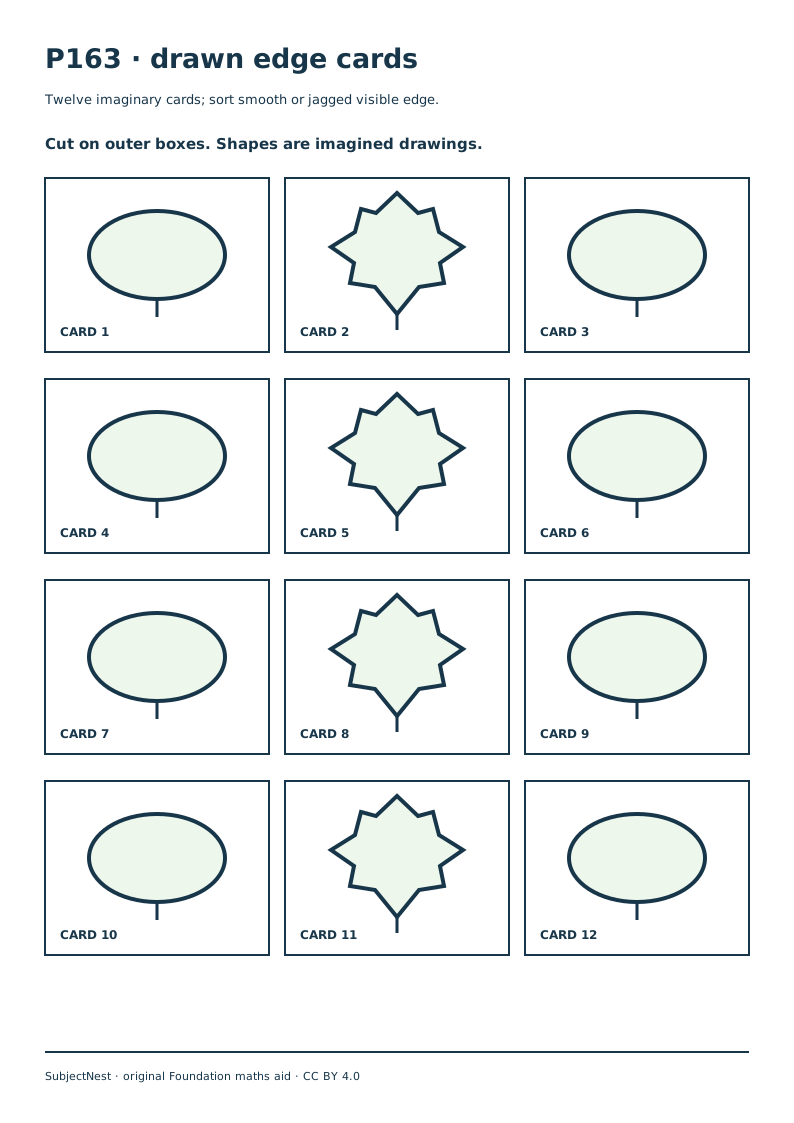
| practice-observation-163.svg / PDF | Twelve numbered broad fictional edge cards: SMOOTH on 1, 3, 4, 6, 7, 9, 10, 12; JAGGED on 2, 5, 8, 11. The smooth outline is oval; jagged has obvious corners. Eight smooth, four jagged. | Use eight continuous broad raised outlines and four distinctly jagged broad raised outlines; verify every tactile edge is identifiable before delivery. |
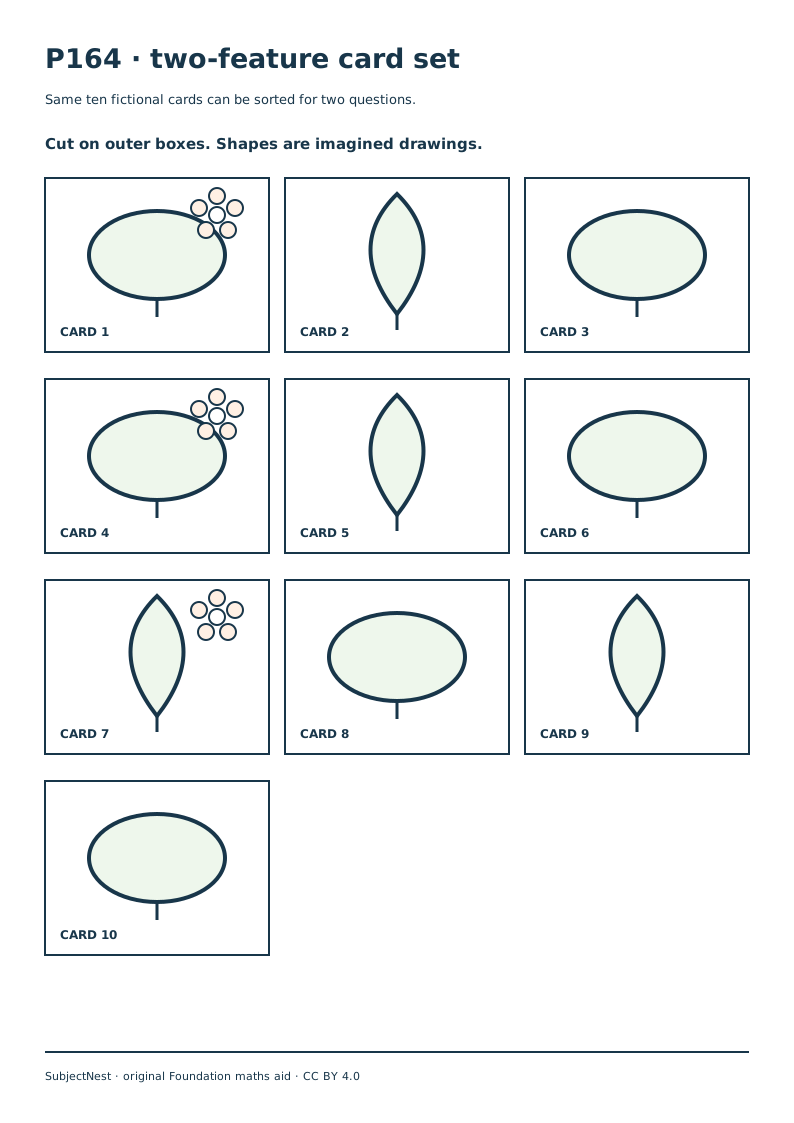
| practice-observation-164.svg / PDF | Ten numbered broad two-feature cards. OVAL + symbol: 1, 4; OVAL + no symbol drawn: 3, 6, 8, 10; SPEAR + symbol: 7; SPEAR + no symbol drawn: 2, 5, 9. Thus first sort oval six/spear four; second sort symbol shown three/not drawn seven. Same ten cards for both questions. | Use distinct raised oval/spear outlines and a small attached large safe raised flower patch on the three symbol cards. Reassemble all ten between questions; no small loose pieces. |
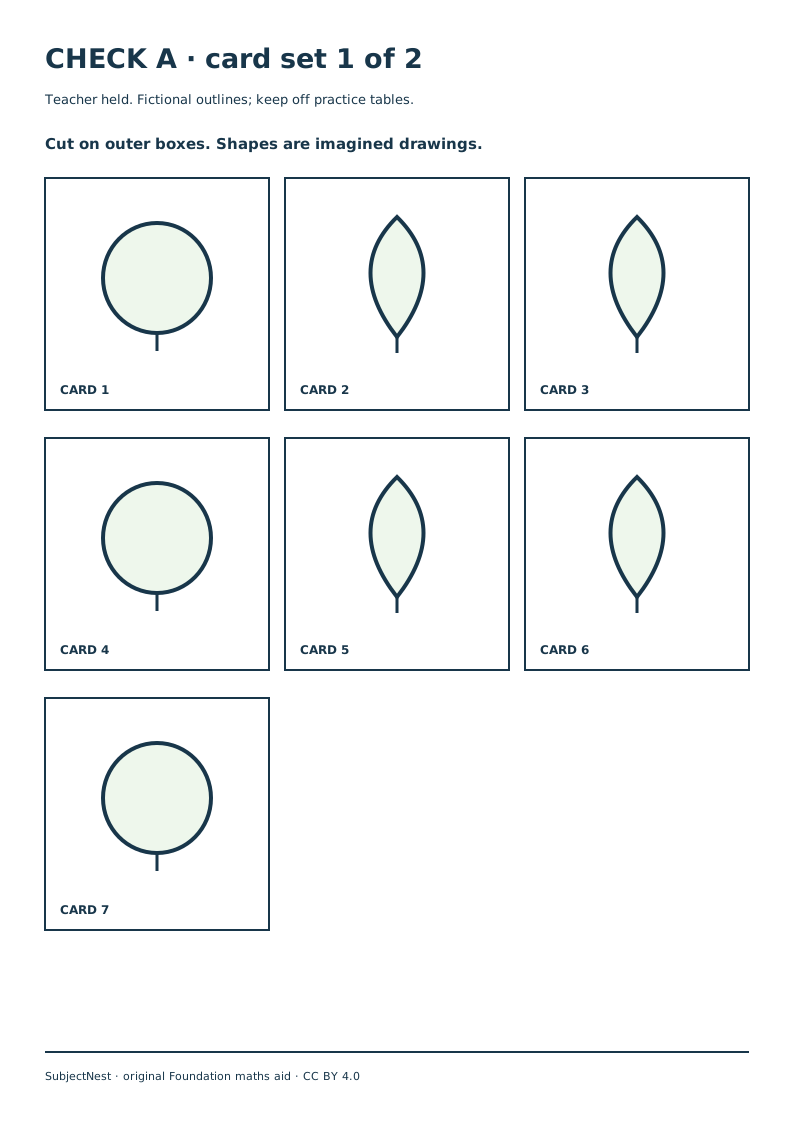
| fresh-observation-165-a.svg / PDF | Teacher-held Check A, sheet 1 of 2: seven numbered broad fictional cards: ROUND 1, 4, 7; NARROW 2, 3, 5, 6. Use only with sheet 2. | Prepare tactile circular versus narrow leaf outlines; do not disclose totals to child. |
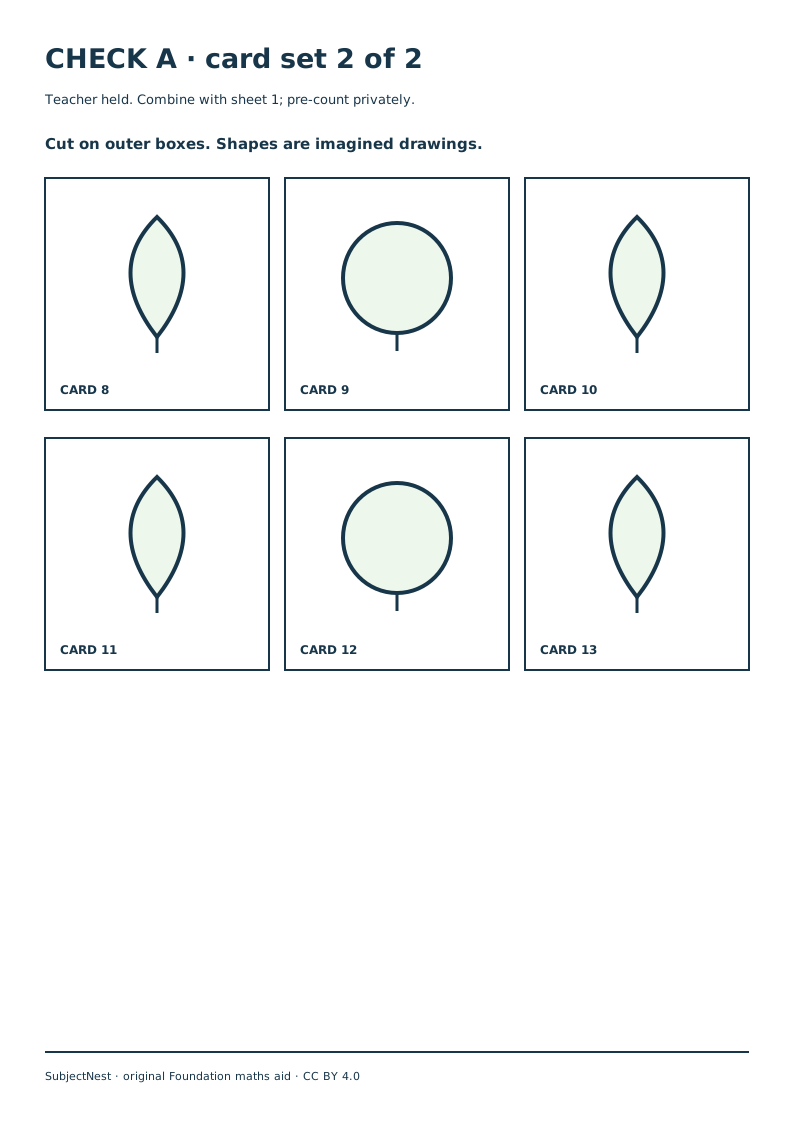
| fresh-observation-165-b.svg / PDF | Teacher-held Check A, sheet 2 of 2: six numbered broad fictional cards: NARROW 8, 10, 11, 13; ROUND 9, 12. Combined sheets yield thirteen cards, five round and eight narrow; staff privately verifies before use. | Keep both sheets/cards away from routine practice. Combine, mix, then invite child-controlled sorting and counting with accessible broad/raised outlines. |
Scope of access claim: These are designed alternatives, not validated Braille, screen-reader PDF tagging, individual AAC programming or a substitute for professional local adjustment. If a child cannot perceive or direct the physical comparison safely, teach the vocabulary and schedule a different accessible real direct-comparison opportunity rather than scoring a drawing as the original outcome.