The eight SVGs have embedded titles and descriptions. The PDFs have selectable words but are untagged; read this ordered text for screen reader, spoken or tactile preparation. Use broad supervised pieces. Raised shape outlines and full-word labels should be checked by the local educator and child; these directions are not certified Braille or an individual adjustment plan. Colour never carries a category by itself. The audio cue has its own exact transcript.
| Files | Everything conveyed by the page | Tactile or alternate action |
|---|---|---|
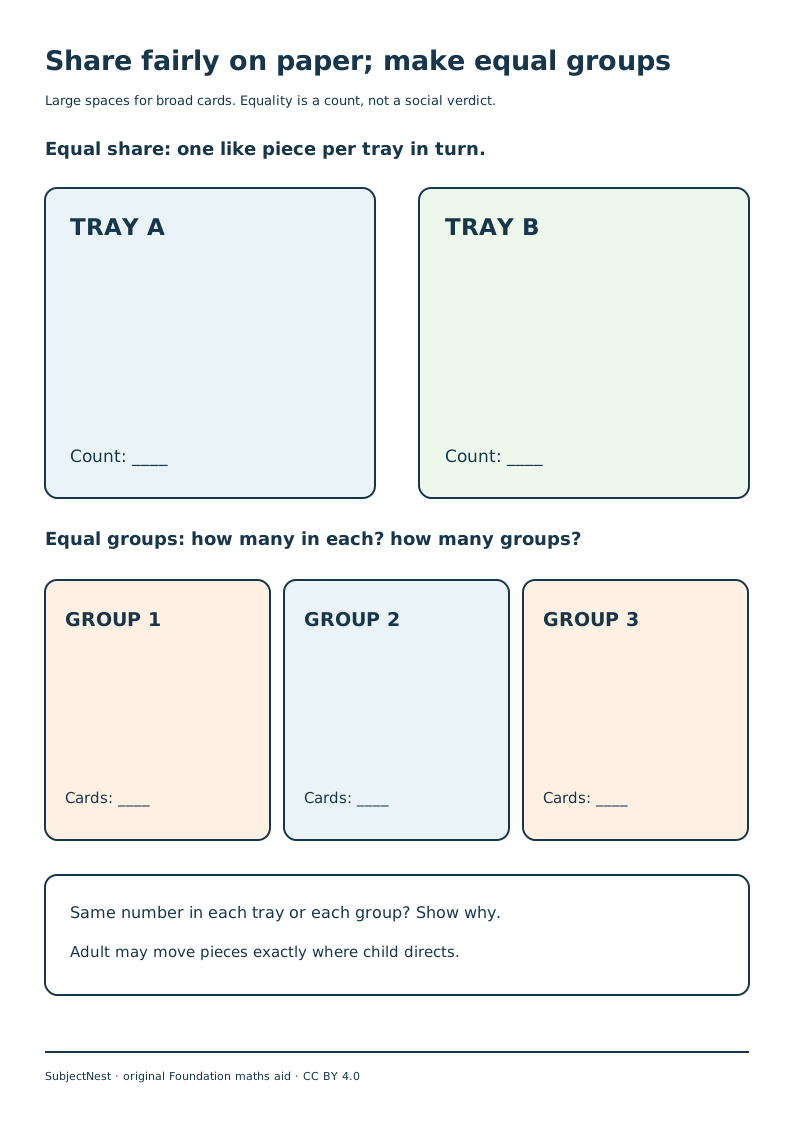
| share-and-group-mat.svg / PDF | Top: two empty broad recipient spaces TRAY A and TRAY B, each with a blank count. Bottom: three empty broad frames GROUP 1, GROUP 2, GROUP 3, each with a blank card count. Prompt asks whether groups have the same number and how to show it. No group is prefilled. | Use two large physical trays or raised labelled boxes for equal share; three widely separated trays for group making. Adult moves broad pieces only when directed. |
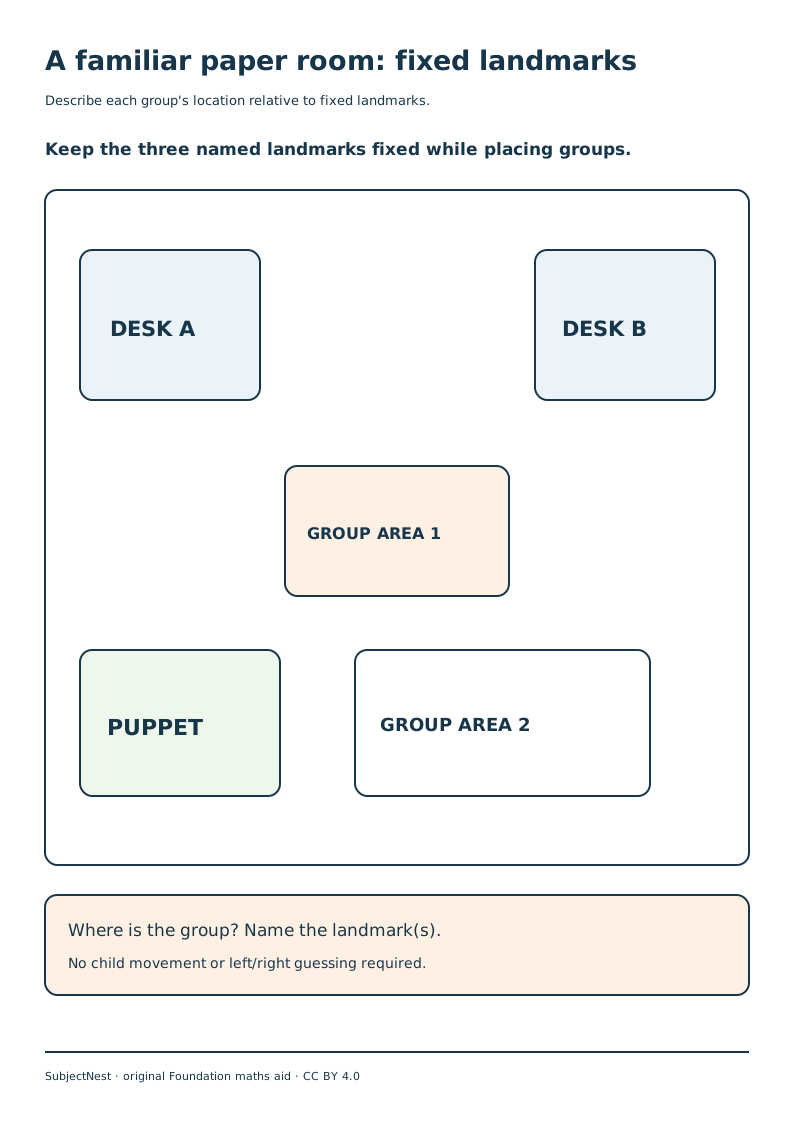
| room-location-mat.svg / PDF | Fixed paper-room landmarks: DESK A at upper left, DESK B at upper right, PUPPET at lower left, plus two blank GROUP AREA 1/2 spaces. The spaces do not give the location words; the child describes where a placed group is relative to named landmarks. Positions stay fixed; there is no perspective-dependent left/right score. | Use large raised full-word marker cards DESK A, DESK B, PUPPET. Leave a broad open space between desks and another beside puppet. Child directs location; no body movement needed. |
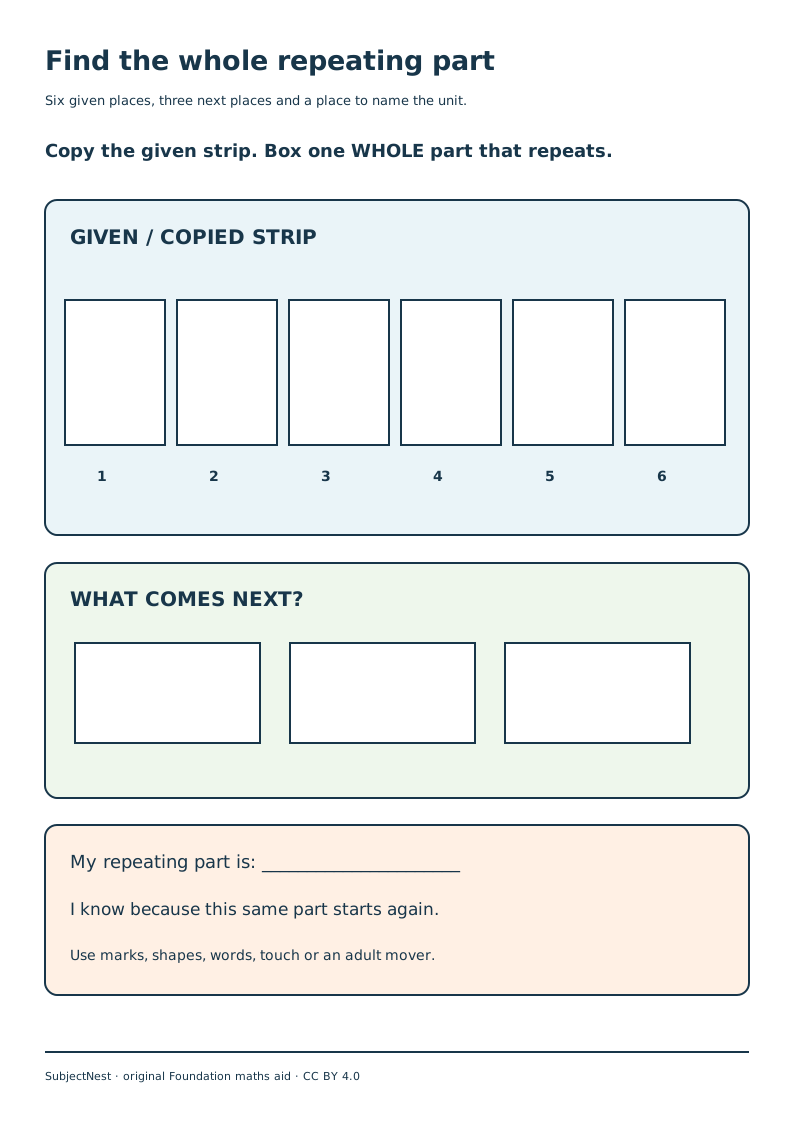
| repeat-unit-mat.svg / PDF | Six empty positions for GIVEN/COPIED STRIP, three empty positions for WHAT COMES NEXT, and lines “My repeating part is…” and “I know because this same part starts again.” It does not display an answer unit. | Lay out six broad shape/word cards in a row; add three broad empty places. Box or raise one full repeated part as the child identifies it. |
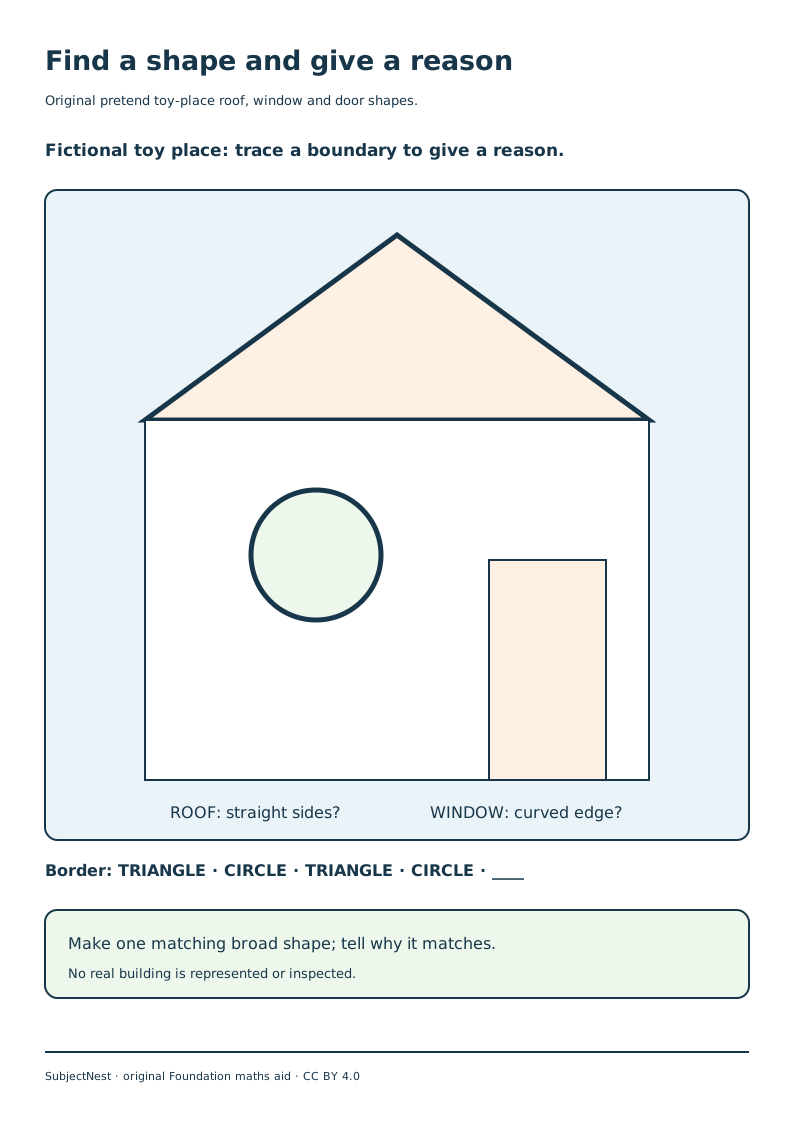
| shape-reason-cards.svg / PDF | Fictional toy place: large triangle roof with three straight edges/corners, circular window with one continuous curved boundary and no corners, oblong rectangle door with four straight sides/corners. Beneath: TRIANGLE, CIRCLE, TRIANGLE, CIRCLE, blank border. Prompt asks for a matching broad shape and a reason. No real building is depicted. | Provide separate large raised triangle, circle and rectangle outlines; child traces their boundaries and continues a broad tactile triangle–circle border. Do not score drawing polish. |
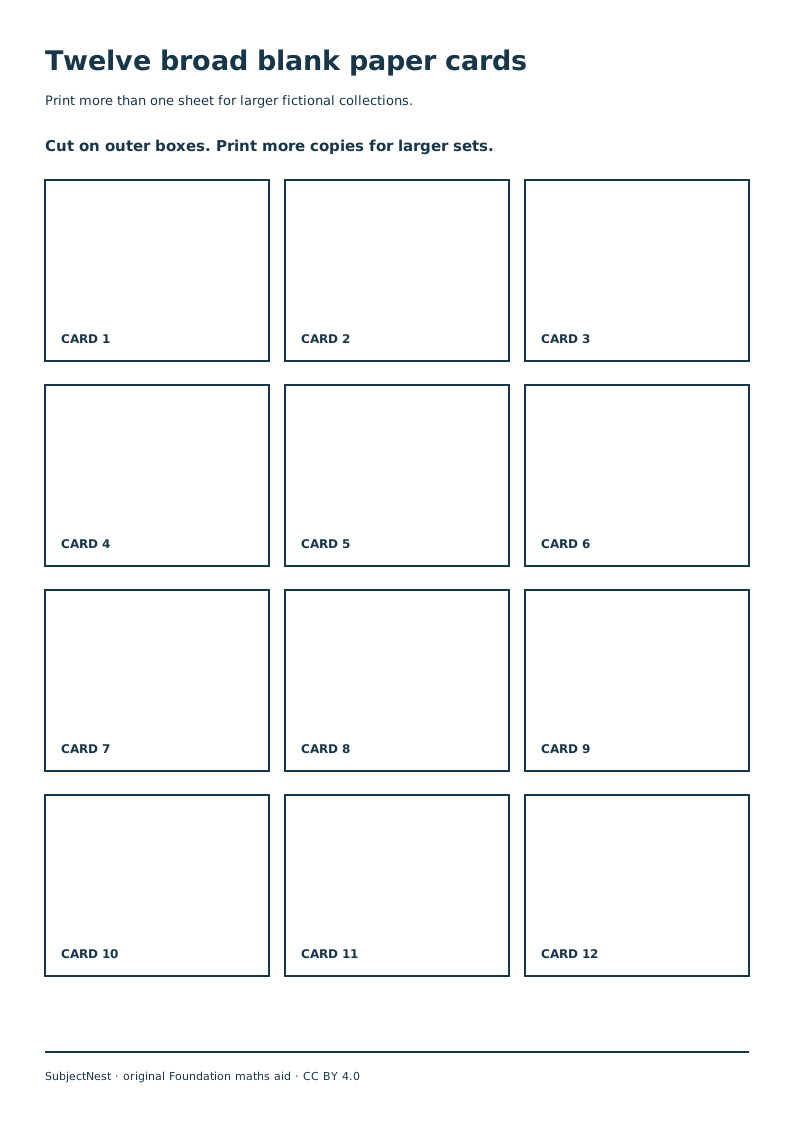
| blank-share-cards.svg / PDF | Twelve identical large empty rectangular cutout cards numbered CARD 1 through CARD 12 in a three-column, four-row grid. Numbers help staff check physical inventory, not a counting answer. Print additional sheets when a case needs more than twelve pieces. | Cut twelve broad identical tactile-safe rectangles; use large full-word labels only on recipient trays, not on each piece. Count each once. |
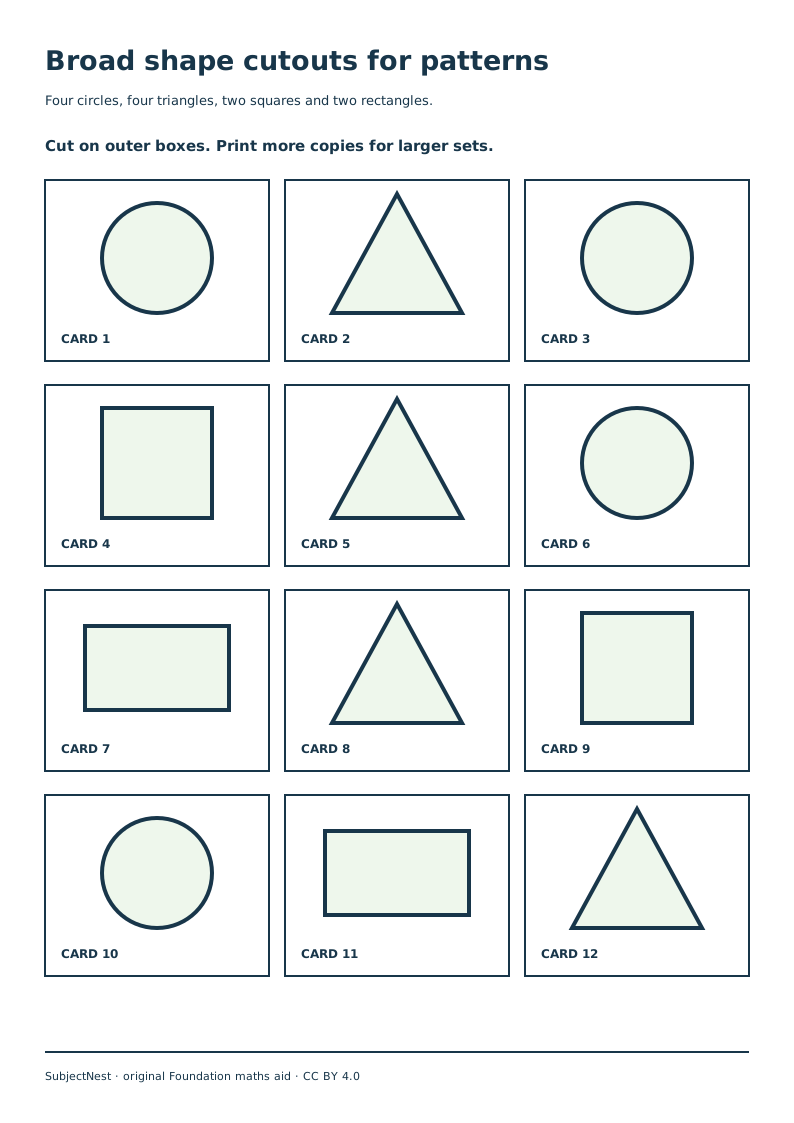
| practice-cutouts.svg / PDF | Twelve numbered broad geometric cutout cards. Order: CIRCLE, TRIANGLE, CIRCLE, SQUARE, TRIANGLE, CIRCLE, RECTANGLE, TRIANGLE, SQUARE, CIRCLE, RECTANGLE, TRIANGLE. Thus four circles, four triangles, two squares and two oblong rectangles. Shape geometry, not fill colour, distinguishes them. | Make four raised round outlines, four three-straight-side outlines, two equal-side square outlines and two oblong four-straight-side rectangles on broad cards. Keep shapes in a mixed loose set until the child chooses. |
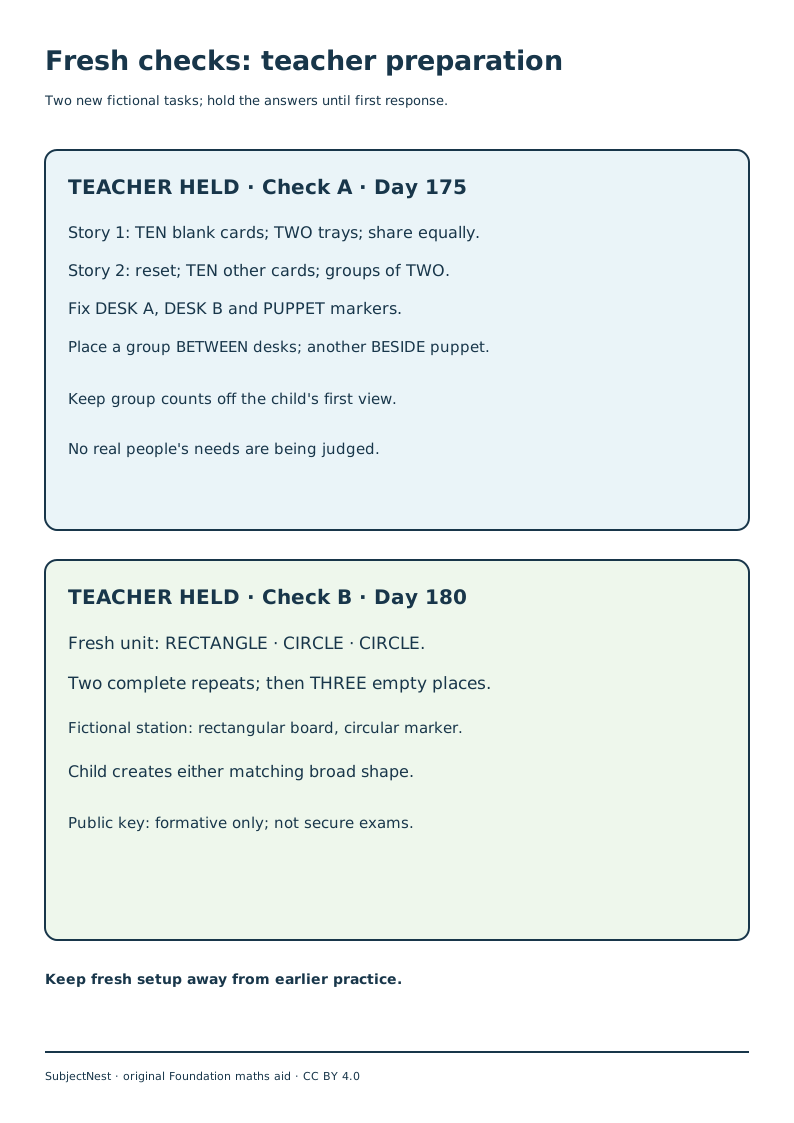
| teacher-held-checks.svg / PDF | Staff-only preparation. Check A: ten blank cards shared between two labelled trays; a separate ten-card set in groups of two; fixed DESK A, DESK B and PUPPET, with group placements between desks and beside puppet. Check B: RECTANGLE–CIRCLE–CIRCLE repeated twice, then three empty places; fictional station has rectangular board and circular marker; child creates either shape. Public formative key, not secure exams. | Keep this page away from routine tables until the named days. Prepare broad cards and raised landmarks; record the first child-controlled decision before feedback. The public worked key gives staff responses separately. |
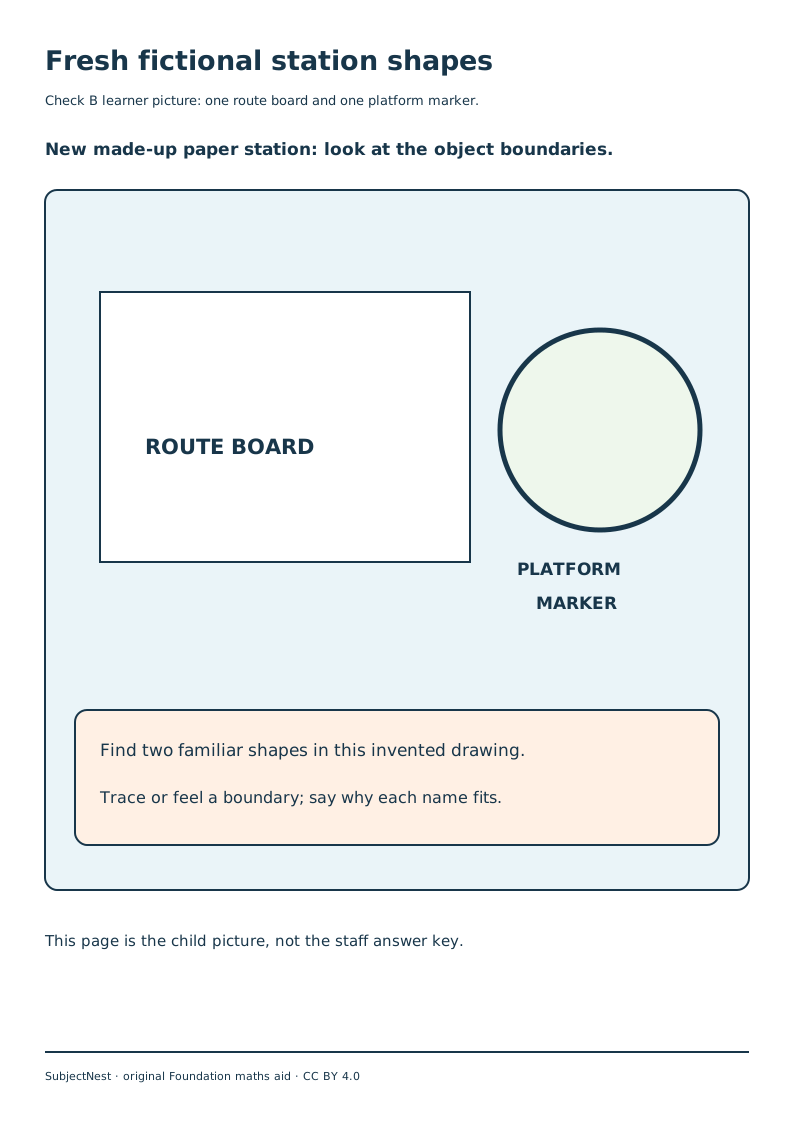
| fresh-station-drawing.svg / PDF | Child-facing Check B picture: a fictional paper station with an oblong four-straight-side ROUTE BOARD at left and a round curved-edge PLATFORM MARKER at right. It asks the child to find and justify two familiar shapes. The page does not print the shape names or worked answer. | Supply broad raised oblong rectangle and circular outlines labelled ROUTE BOARD and PLATFORM MARKER. Child traces/feels the boundary and names the shapes with a reason. |
Scope of access claim: Local educators must verify print size, cutout safety, tactile shape clarity, AAC labels and the child's real means of directing an adult. A screen reader can use this ordered text; the visual PDFs alone are not a tagged accessibility solution. If materials are wrong or missing, repair them before observing a child's mathematics.