Keep this page and separate key away from learners until their first independent response is captured. A public source description is here for teacher preparation, not a cue sheet for the child. Offer direct view, neutral attributed adult description, large print/tactile model, AAC/sign/point/drawing, private reply or pass. Write exact first response and prompt/access before coaching. For every actual source, preflight safety, date and provenance. If it is unavailable, write REAL OBSERVATION NOT AVAILABLE and use the paper fallback only for representation reasoning. Neither check certifies a whole-year standard.
Day 25 · new feature sources and a fresh rule
ACTUAL LOCAL SOURCE option: Before the check, adult preflights a new safe live plant C view not used on Days 21–24 and a safe distant live animal view if genuinely available. If not, a new school-approved rights-cleared animal photograph may be used with creator, source URL/file, licence and view date written down; label PHOTO and do not claim live-animal observation. Use a neutral adult description only with ADULT REPORT attribution. Log separate dates, broad locations/source identities and any blocked details. Do not prefill species names, features, or grouping answer; they depend on the real sources. If one source is missing, assess only the source(s) present and leave the missing living-feature opportunity open.
PAPER MODEL ONLY fallback, unseen original pair: Card R1 is labelled INVENTED MARKS, NOT A PLANT: one upright zigzag line with two curved lines above its top. Card R2 is labelled INVENTED MARKS, NOT AN ANIMAL: one horizontal thick line with one diamond outline at its left end and three angled ticks beneath. The cards show no actual organism, part, species, place, age or behaviour. Exact nonvisual/tactile: read those marks in order, or use large fixed raised lines and broad outlined diamond on separate cards labelled invented. Do not call any mark a stem, leaf, leg or beak.
Ask, in order, on a blank feature-source and group-rule page:
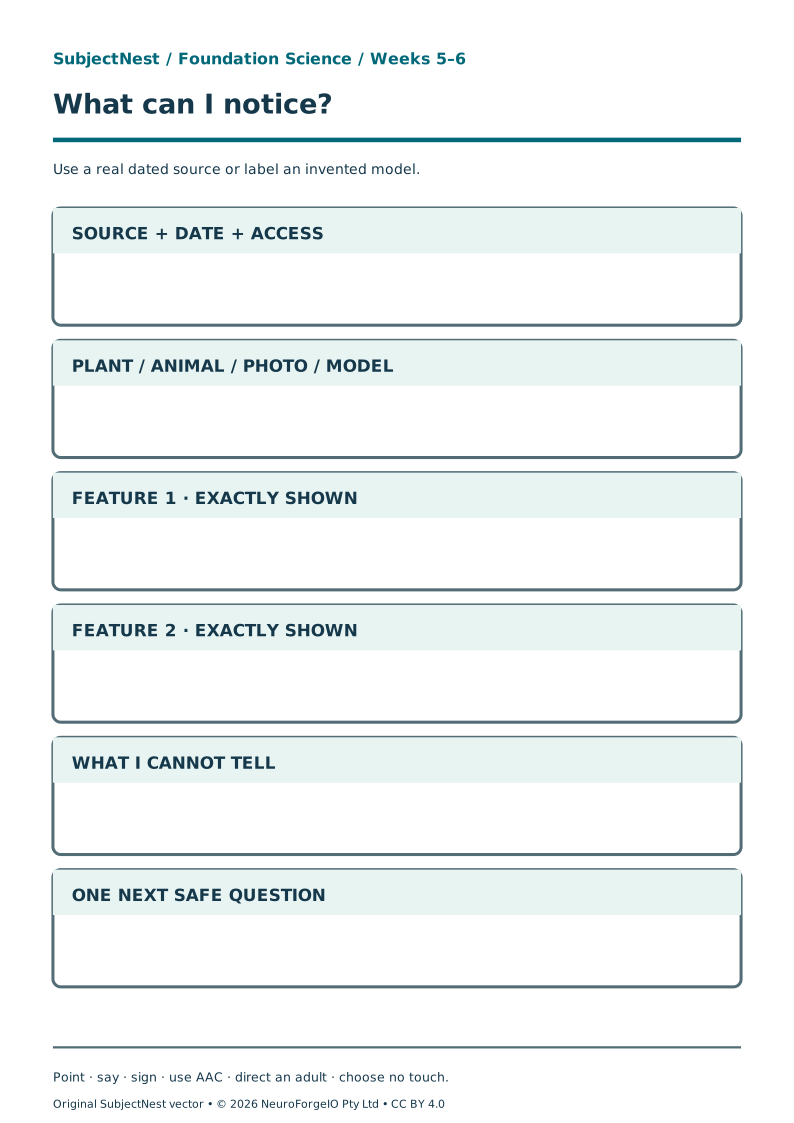
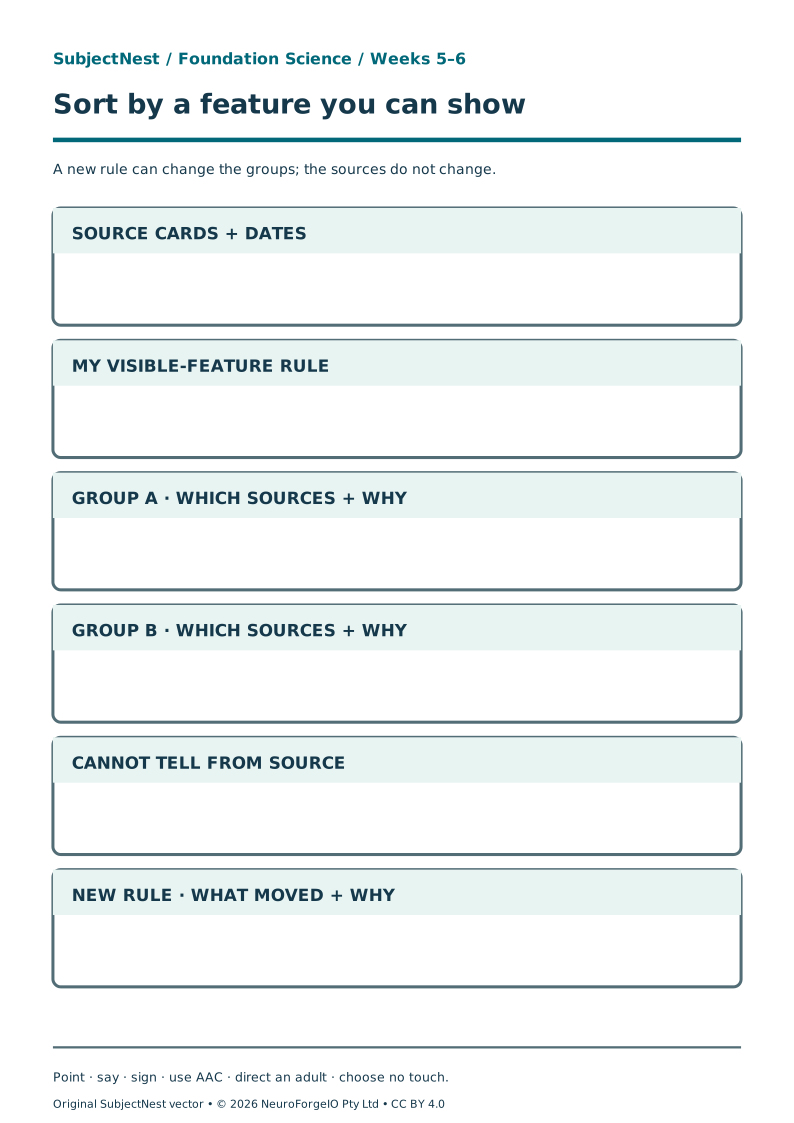
- “Which source do you have for each card or view: live thing, photograph, adult report, or invented drawing? What date/source can we write?” Today's use of R1/R2 is a model-use date, not a date of living observation.
- “Tell or show one feature actually visible in each source and one thing you cannot tell.” For model, accept marks only; for actual view/photo, accept only clearly shown external features without unverified species or behaviour.
- “Choose a visible-feature rule. Can you put these two source cards into a group or different groups using it? Show which visible evidence decides, or choose CANNOT TELL.” With only two actual sources, the rule may group together or apart; no prespecified correct grouping.
- “Ask one next question we could check safely using an approved real source.” Record a pass as a pass, not an error.
After first response: Use the key to plan one next observation, source attribution or rule practice. Day 25 learner-card practice is different from R1/R2.
Day 30 · new material views and a stated job
ACTUAL LOCAL SOURCE option: Before the check, adult selects two new broad intact teacher-held school-approved panels X and Y not used on Days 26–29, each with verified material label or UNKNOWN, smooth edges and no loose film. Use a new broad white card with a large dark filled chevron symbol rather than the teaching circle. Fix room lighting, background, marked panel/card/observer positions and safe adult handling as far as possible; document any differences in colour, thickness, glare or distance. The child predicts visibility through X and Y before the adult places each. Record exact actual view or attributed report for each, including CANNOT TELL. No outcome is prefilled.
PAPER MODEL ONLY fallback, unseen original pair: Two cards are labelled INVENTED FRAME DRAWINGS; NO REAL PANELS TESTED. Card S1: inside one tall outlined frame, a large filled chevron is drawn in full. Card S2: inside a second tall outlined frame, only the chevron's left diagonal stroke is drawn; a blank space follows. There is no real panel, verified material, light, observer, distance, date of test or physical transparency result. Exact nonvisual/tactile: read S1 then S2; a broad full chevron and one broad diagonal fixed inside separate large frames may serve as an explicitly invented tactile drawing. The partial drawing cannot prove a panel blocked part of a real symbol; an artist may simply have drawn it that way.
Ask on a blank layer-test page:
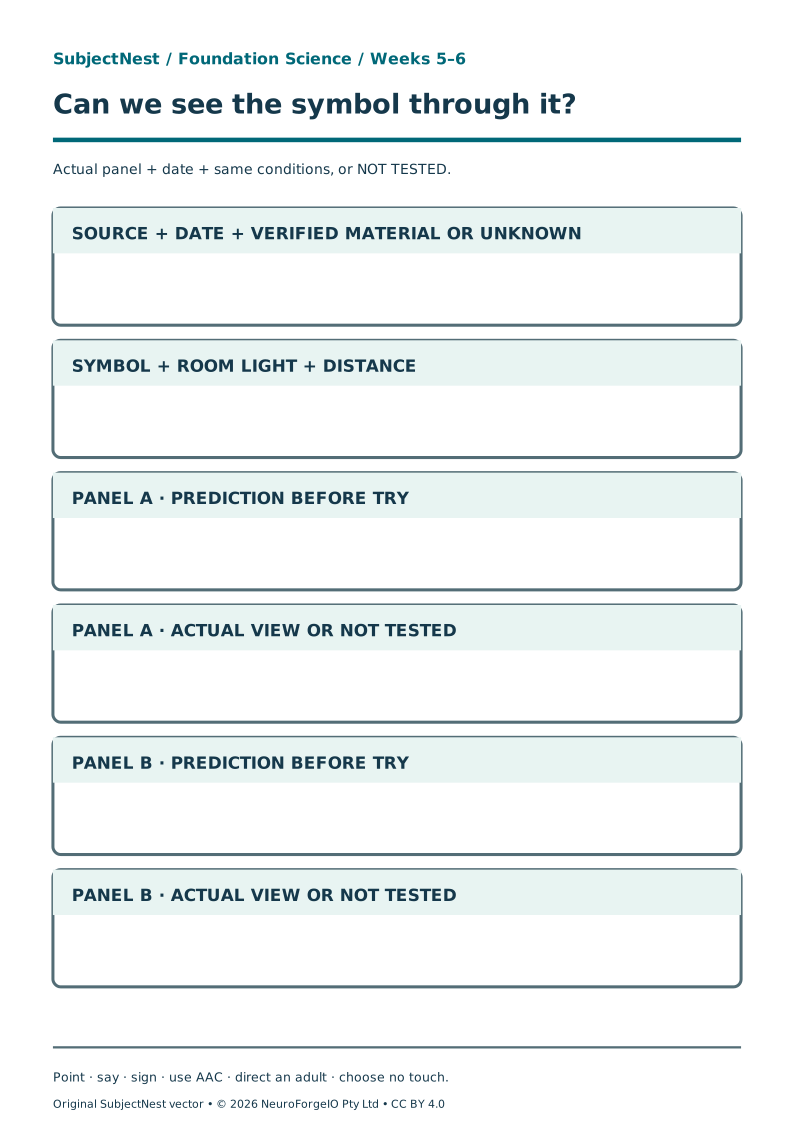
- “What is your source and date: real panel trial with direct view, adult report, or invented drawing? Which material labels are verified and which are UNKNOWN?”
- “Our fictional job is a public sign where we want the symbol to show. Predict what will happen with X and Y before any actual trial.” On paper-only path, future-test prediction is allowed, but fictional drawn marks are not actual results.
- For actual source, “What did you directly see or hear the adult report through each panel?” For paper, “What is drawn in S1 and S2? Do those marks prove what a real panel lets us see?”
- “Which actual tested panel, if any, would you choose for the stated job in these conditions? What stayed the same, what might also differ, and what remains unknown?” A model-only child may propose a future safe test, not an evidence-based real choice.
After first response: Use the key. Do not credit actual material-property/safe-investigation evidence from S1/S2. Original held cases © 2026 NeuroForgeIO Pty Ltd, CC BY 4.0.