Use the local source and safety protocol. Each day has six steps totalling 3 + 4 + 5 + 7 + 4 + 2 = 25 minutes and three same-target routes. A real living-thing or panel claim needs an approved, dated, actually accessed source. A photo is labelled PHOTO, an adult's description ADULT REPORT, and an invented drawing MODEL. With no safe real source write REAL OBSERVATION NOT AVAILABLE; the paper task then samples source reasoning only. The teacher-held checks must stay unseen until the first independent response is recorded.
Week 5 · Day 21 — What is a visible feature, and whose source is it?
Goal: distinguish one externally visible feature of an approved live plant from a guess and name the observation route. Proposed codes: AC9SFU01, AC9SFH01, AC9SFI01, AC9SFI02. Prepare: safe live plant A view, living-safe poster, feature log, Model J, Card 21.
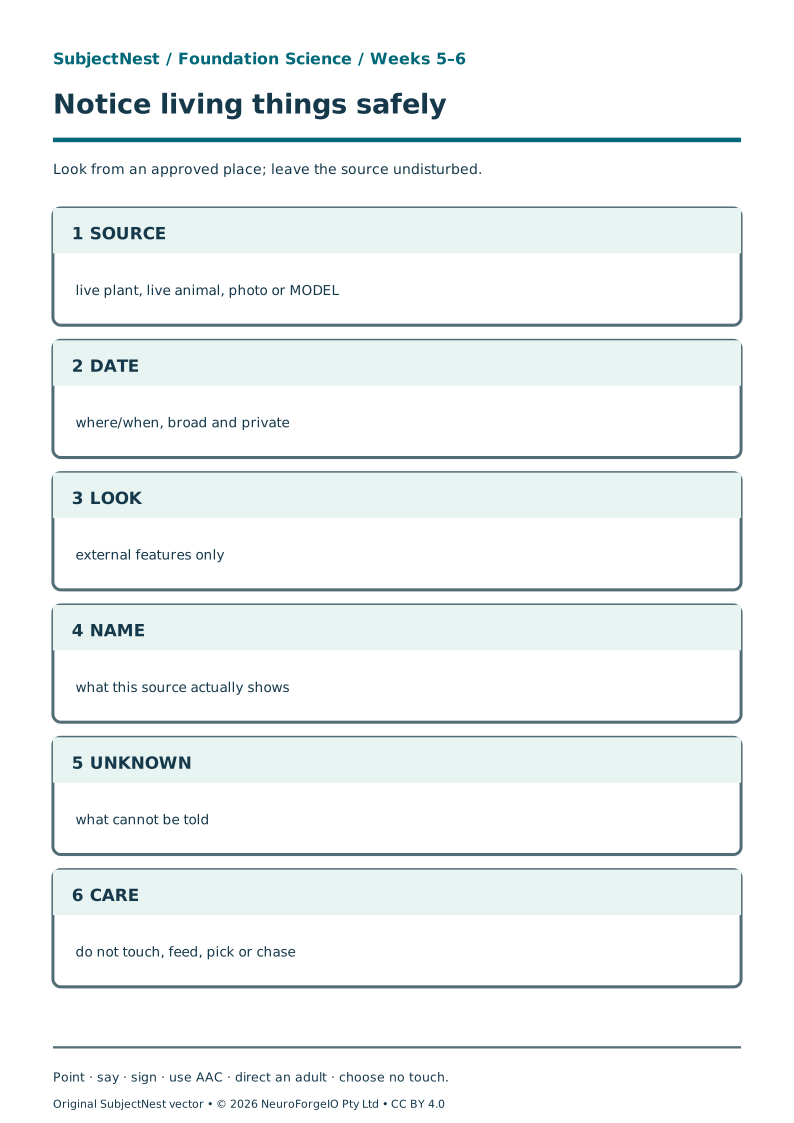
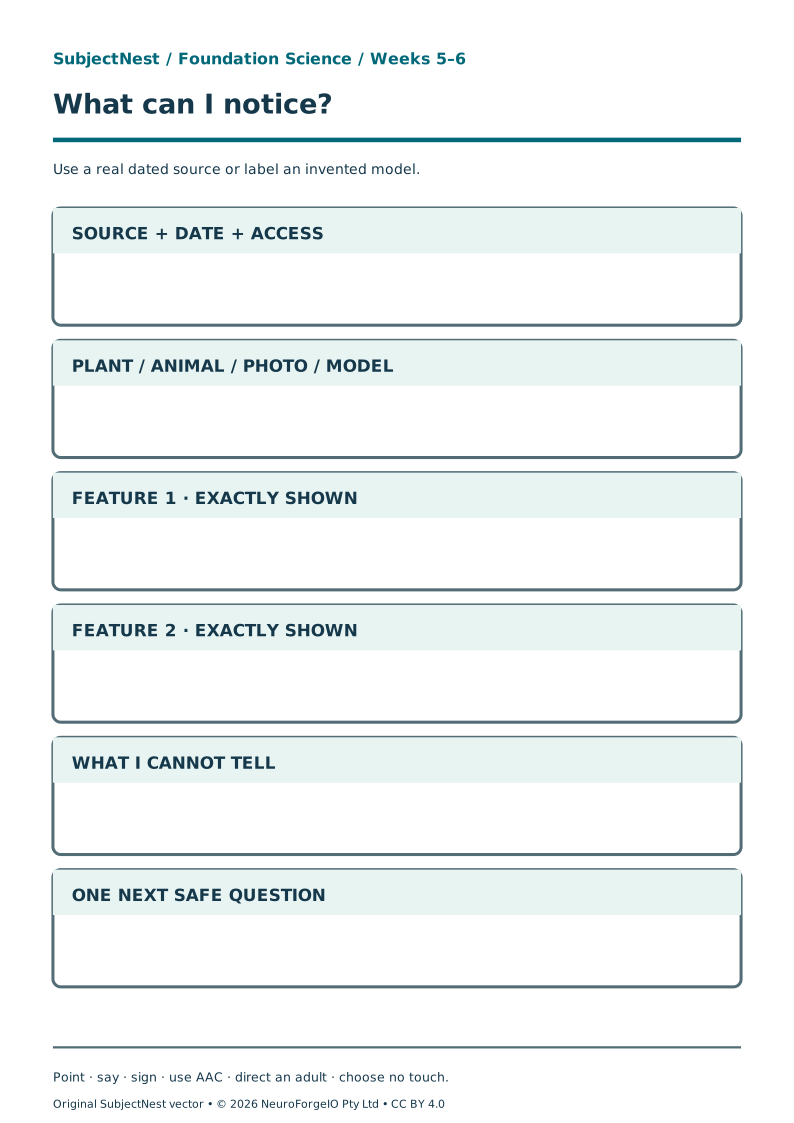
- Source gate · 3 min. Adult confirms a safe accessible view of live plant A, date and broad location. If unavailable, use Model F as MODEL ONLY and mark no real observation.
- Notice · 4 min. Child looks from an approved place or hears an exact attributed adult report. Ask about an externally visible part; no touching, picking or species guess.
- Model · 5 min. Teacher uses Model J to contrast “I saw”, “the adult described” and “the drawing has”, then names a real plant feature only if actually visible today. Roots under soil, age and health remain unknown.
- Child try · 7 min. Child chooses Card 21 route to give one exact visible feature and ask one new safe question; adult writes source/date/access and the child's words.
- Check · 4 min. Offer “This plant is happy because its leaf points up.” Child distinguishes the noticed leaf position from unsupported feeling; next evidence remains open.
- Exit · 2 min. Save a feature card for later grouping, or label the model feature as drawing-only.
Week 5 · Day 22 — Compare two live plant views without guessing
Goal: compare features actually available from two safe live plant sources and mark what remains unseen. Proposed codes: AC9SFU01, AC9SFI02, AC9SFI03. Prepare: distinct preflighted live plant B plus Day 21 A source/card, feature log, Card 22.
- Preflight · 3 min. Confirm A/B are two distinct safe living plants in accessible approved views; log each date/broad location and any different viewing distance.
- Look · 4 min. View B or hear attributed neutral description. Identify two externally visible details on B without touching or naming species by appearance.
- Model · 5 min. Put Day 21 A and today's B dated cards side by side. Teacher models “I can see a broad outline on this source; I cannot tell the hidden roots.” If an earlier feature was guessed, correct the card transparently.
- Child try · 7 min. Card 22 routes ask one same/different visible-feature comparison with each source cited. If A is unavailable, use actual B plus a clearly labelled photo/model and do not claim two live plant observations.
- Check · 4 min. Ask whether “plant B has fewer leaves” is justified if half its view is blocked. Child marks CANNOT TELL FROM THIS VIEW or narrows to “in the part I can see”.
- Exit · 2 min. Keep two source-labelled cards for Day 24; no universal plant claim.
Week 5 · Day 23 — What can an animal source actually show?
Goal: name two external features from an approved safe live animal view or licensed photograph and attribute the source accurately. Proposed codes: AC9SFU01, AC9SFH01, AC9SFI02, AC9SFI05. Prepare: safe live distance/window view if genuinely available; otherwise teacher-selected rights-cleared photograph with creator/licence/source; feature log, Card 23.
- Safety/source · 3 min. Confirm view without chase, feed, approach or touch. If using photo, name PHOTO and its source. If neither exists, use fictional Model F2 for marks-only practice.
- View · 4 min. Allow child to access the live animal or photo, or hear an exact attributed adult description. Record actual date and source type; don't infer species, sex, diet or feelings.
- Model · 5 min. Teacher says “The source shows [exact visible feature]” only if it does. Contrast F2's oval/triangle marks: that drawing does not establish a real animal or actual body part.
- Child try · 7 min. Card 23 asks two source-bounded features and one thing not shown. Adult scribes and labels LIVE / PHOTO / ADULT REPORT / MODEL.
- Check · 4 min. Offer “This animal must sleep in a tree because its outline has a pointed part.” Child identifies behaviour/home as unknown from the observed appearance.
- Exit · 2 min. Save the source card only with accurate provenance; leave a real-animal view open for later if absent.
Week 5 · Day 24 — Can a visible rule sort our sources?
Goal: group dated feature cards using a stated visible rule, change the rule and preserve uncertainty. Proposed codes: AC9SFU01, AC9SFI03, AC9SFI05. Prepare: Day 21–23 actual-source cards when available, group-rule mat, fictional Model G, Card 24.
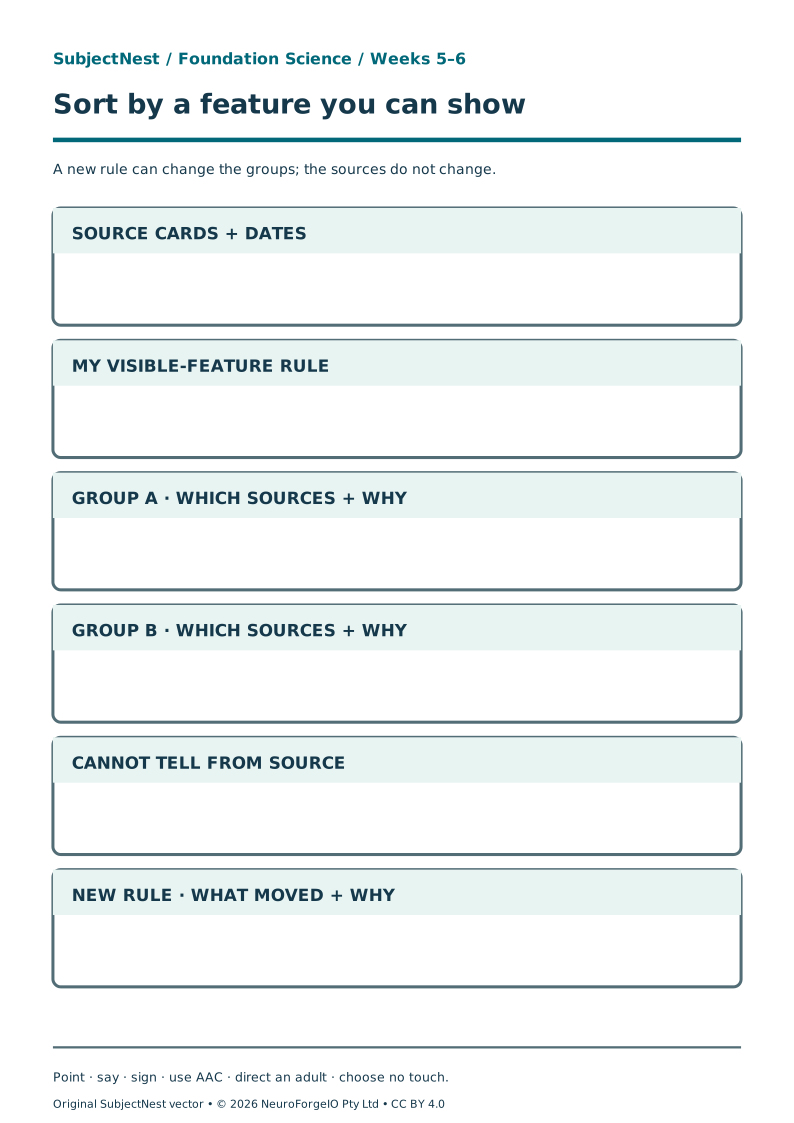
- Evidence gate · 3 min. Separate live plant, animal photo/live, adult report and MODEL cards. Do not treat Model G as local living-thing evidence.
- Read · 4 min. Review exact visible features for two plants and animal source if present. Put blocked/unseen feature cards in CANNOT TELL.
- Model · 5 min. Sort fictional Model G by “has broad oval mark”, then change to “has long line”; explain that the drawings did not change, only the rule did. Do not call them species.
- Child try · 7 min. Card 24 asks a child-chosen visible rule for actual source cards (or model-mark cards if real set incomplete), places each with a source reason, then changes one rule. Adult records placements and unknowns.
- Check · 4 min. Offer “this one belongs here because I like it”. Child identifies preference and chooses a visible feature if aiming for Science grouping; preference itself is welcome but separately labelled.
- Exit · 2 min. Child explains to teacher privately or consenting listener what changed in the sort, with actual response recorded.
Week 5 · Day 25 — Fresh living-feature source check
Goal: independently identify source type, an externally shown feature, an evidence-based group rule and an unknown. Proposed codes: AC9SFU01, AC9SFI01, AC9SFI02, AC9SFI03. Prepare: unseen Day 25 held sources, blank feature/group mats, Card 25 only after check.
- Welcome · 3 min. Explain the check chooses the next lesson. Offer safe live/photo/adult-report/model route or pass; no forced outdoor visit.
- Retrieve · 4 min. Revisit Model G's known rule-change only, without showing held features.
- Fresh sources · 5 min. Present the new approved plant and live animal/rights-cleared photo if available, or the distinct invented paper pair. Log date, source and access, not a guessed species.
- First independent response · 7 min. Child names exactly what each source shows, asks a safe next question, offers a visible grouping rule and marks one unknown. Save first response and prompt before feedback.
- Bound · 4 min. Child says whether evidence is live view, photo, adult report or drawing; paper-only path is REAL OBSERVATION NOT AVAILABLE for local living features.
- Close · 2 min. Use separate key for next teaching; then release Day 25 practice.
Week 6 · Day 26 — What property would help a privacy screen?
Goal: ask whether a specific approved layer lets a large symbol remain visible under stated conditions and predict before testing. Proposed codes: AC9SFU03, AC9SFI01, AC9SFI02. Prepare: large filled-circle card, one adult-preflighted broad rigid panel, stable desk, layer-test mat, Model H, Card 26.
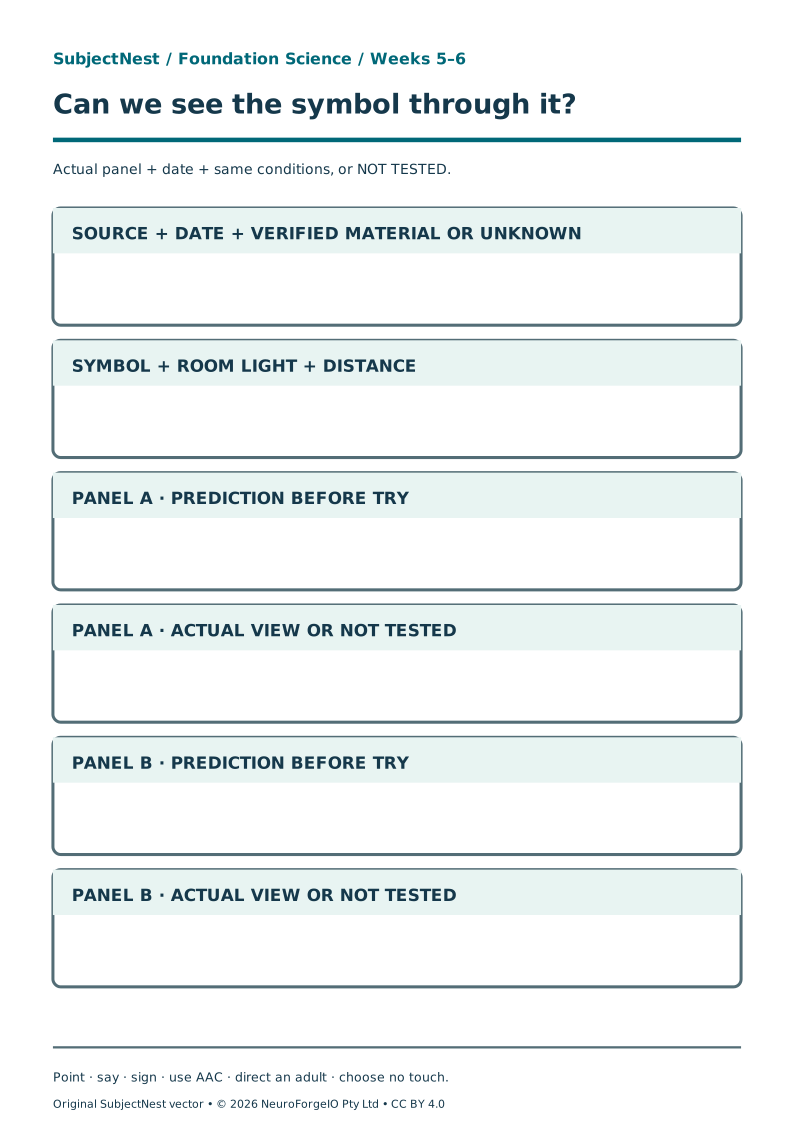
- Safety/source · 3 min. Check panel edges, verified material or UNKNOWN, same room light, distance and no face covering. No bright torch or Sun viewing.
- Purpose · 4 min. Explain a fictional classroom choice: should a sign be visible through a cover, or hidden for a guessing game? Both are purposes; no child privacy disclosure is requested.
- Model · 5 min. Read Model H1/H2: drawn circles and panel words do not prove real see-through properties. Teacher asks a testable question for the actual approved panel.
- Child try · 7 min. Child uses Card 26 to name exact source/material if verified, pose a visibility question and predict visible/not visible/unsure before an adult-held actual panel trial. Adult records the actual view or NOT TESTED.
- Compare · 4 min. Compare prediction with actual result only if the safe trial occurred; record vision access or ADULT REPORT without upgrading one to the other.
- Exit · 2 min. Name one condition such as distance or lighting that a next comparison should keep the same.
Week 6 · Day 27 — Test one layer, record a specific result
Goal: investigate visibility through one approved material sample and separate observable result from material label. Proposed codes: AC9SFU03, AC9SFI02, AC9SFI03, AC9SFI04. Prepare: preflighted large filled-circle card, panel A, marked stable desk, layer-test mat, Card 27.
- Preflight · 3 min. Adult verifies panel A's material source or UNKNOWN and positions symbol/panel/observer safely; log local date and conditions.
- Predict · 4 min. Child predicts whether the filled circle will be visible through this exact panel; record before placing it.
- Model · 5 min. Teacher leaves actual-result field blank while reading invented H3 “no symbol record”; H3 is missing data, not proof the layer hid the symbol.
- Child try · 7 min. Adult places panel A at marked position for a safe viewing trial; child reports direct view, or hears neutral ADULT REPORT; adult logs visible / not visible / cannot tell and any glare/position change. No trial means NOT TESTED.
- Check · 4 min. Child compares prediction/result if actual, then repairs “all panels of this material do this” to “this panel here today under these conditions”.
- Exit · 2 min. Save source/date/result for a second sample rather than claiming a material law.
Week 6 · Day 28 — Compare two layers and a possible composite
Goal: compare two actual safe panel views where possible and distinguish a composite layer arrangement from a single material. Proposed codes: AC9SFU03, AC9SFI01, AC9SFI02, AC9SFI03. Prepare: panel A record, distinct approved panel B with verified material or UNKNOWN, same card/desk/light/distance, Card 28.
- Match gate · 3 min. Check both broad intact panels and material labels, same symbol and marked positions. Note colour, thickness, surface or light differences; do not isolate material cause if they vary.
- Predict · 4 min. Child predicts view through B and, if safe, through A+B together; a prediction is not a result.
- Model · 5 min. Show Model H's drawn CLEAR/COVER labels as invented. Explain two panels together form a layered object with parts; the drawing cannot establish its actual property.
- Child try · 7 min. Adult tests B, then A+B if locally safe, with same filled-circle card and setup. Card 28 records exact direct view or attributed report for each; omit composite if glare/access makes it invalid.
- Compare · 4 min. Child names verified material parts and actual observed visibility in these tries, or UNKNOWN/NOT TESTED. Explain other differences that limit a causal claim.
- Exit · 2 min. Save which actual panel could serve a chosen visible/hidden purpose; no “best material for everything”.
Week 6 · Day 29 — Choose a material for a stated job
Goal: share a source-bounded material choice for a visible or hidden symbol and one limitation. Proposed codes: AC9SFU03, AC9SFH01, AC9SFI03, AC9SFI05. Prepare: dated Day 27/28 actual records if any, science-claim page, Card 29.
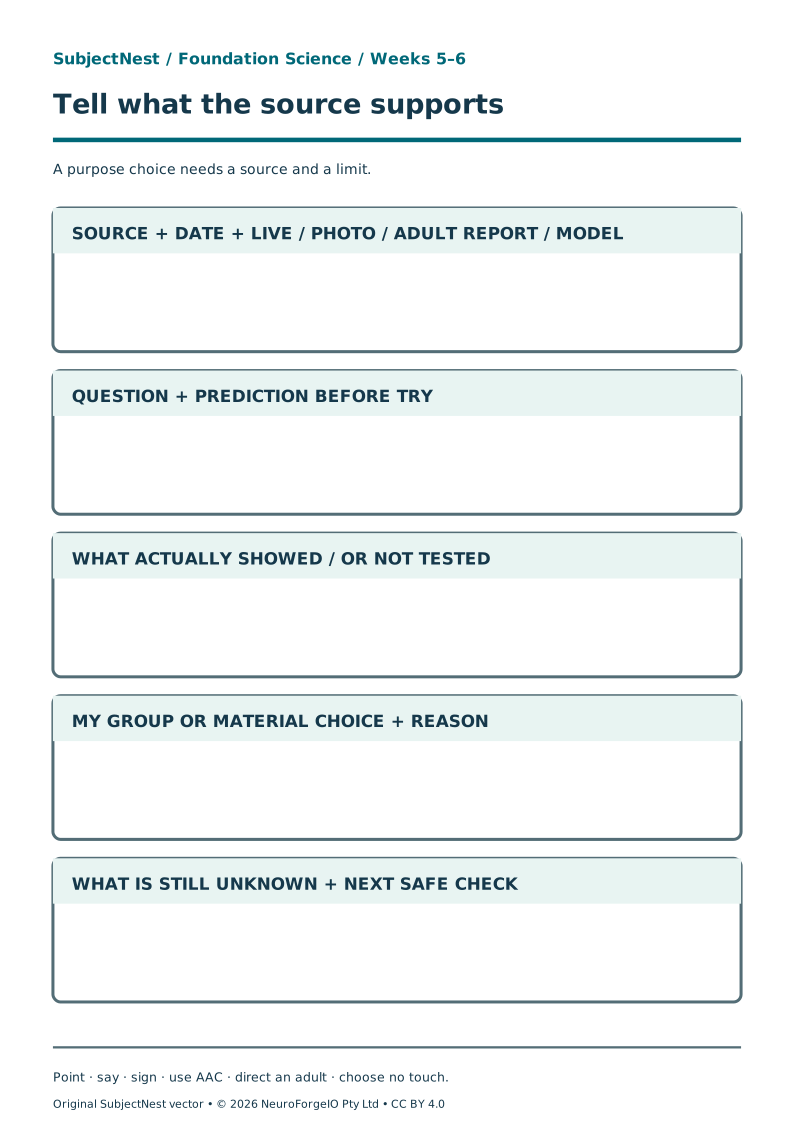
- Source gate · 3 min. Choose an actual tested panel log or label MODEL ONLY; do not fill result from the fictional H cards.
- Job · 4 min. Child chooses fictional public sign cover (symbol should be seen) or guessing-game screen (symbol should be hidden); no private sign or personal story needed.
- Model · 5 min. Teacher makes a fictional-model report: “H1 draws a circle, but I cannot claim that our rigid panel lets light through.” State missing actual source.
- Child try · 7 min. Card 29 routes invite source/date, verified material parts or UNKNOWN, actual view/NOT TESTED, choice for the chosen job, and an unknown. An actual listener may be teacher privately.
- Response · 4 min. If a real listener asks something, record their actual words and child's answer. Otherwise write NO ACTUAL LISTENER RESPONSE. Change a claim only in response to evidence that actually exists.
- Exit · 2 min. Ask what one condition to keep constant in a future test; no universal property claim.
Week 6 · Day 30 — Fresh material property check
Goal: independently predict, source, compare and bound two new panel records for a stated purpose. Proposed codes: AC9SFU03, AC9SFI01, AC9SFI02, AC9SFI03, AC9SFI04. Prepare: unseen Day 30 held check, blank layer-test mat, Card 30 only after check.
- Welcome · 3 min. Explain this formative check; offer direct/attributed report/model route and pass, with no unexpected touch.
- Retrieve · 4 min. Revisit known H3's missing-data distinction only, without previewing held symbol or panels.
- Fresh source · 5 min. Introduce new approved safe panels and symbol under fixed conditions, or the separate new invented two-record paper case. Record source/date/access.
- First independent response · 7 min. Child predicts before any real try, records each actual result or reads model marks, chooses a panel for stated visible/hidden job and names a limit. Save first words/prompt before feedback.
- Compare · 4 min. Prediction vs result only for actual trials; paper case remains NOT TESTED for local material evidence. Ask which condition was held the same or missing.
- Close · 2 min. Use separate key to decide next lesson. One check does not certify the whole Foundation Science year.
Original scripts © 2026 NeuroForgeIO Pty Ltd, CC BY 4.0.