Adult preparation and decision gate
The investigation is optional, not a reason to improvise apparatus. Ask the school to approve the exact accessible surface, equipment and supervision. An adult pretests a low, broad, rimmed tray with a catch lip, stable shallow tilt or fixed low support, and one large, clean, closed paper carton with no staples, loose tape, small pieces, unknown contents or sharp edges. The carton must remain inside the tray at all times. The adult places and releases it without a push from one start line. Mark one ordered midpoint and one stop line; these are positions, not centimetres. Compare the same carton with its broad face against the tray versus its narrow face against the tray; keep tray, tilt, start, release, carton, observer position and recording rule as steady as practical. If it tips, is caught or touches a rim early, mark INTERRUPTED; do not silently discard or count it as a valid motion result. Repeat only if safe. A difference cannot be assigned solely to face orientation if another condition changed. No child lifts the tray, stands on furniture, chases or catches the carton. No touch, hearing, eye contact or public performance is compulsory. Stop if access, noise, distress or safety makes the setup unsuitable.
For actual work, record school approval, local date, apparatus identity, starting orientation, adult action, prior child prediction if one was made, raw attempts including interruptions and who directly observed. If a child receives a description, write ADULT REPORT with the adult's exact neutral words. If there is no approved genuine run, write REAL OBSERVATION NOT AVAILABLE and use only the fully labelled fictional source below. A model can practise fair-test reasoning, not establish how a real carton moves, real material properties, a local phenomenon or AC9SFI02 actual investigation evidence. The printed marks are not results from our classroom. If using a previously collected genuine Science record in Week 20, verify its date, origin, consent and actual events; never invent the child's earlier prediction or change a mixed outcome into the paper model.
Complete fictional source M · the carton comparison
FICTIONAL MODEL M. Imagine an adult with one large closed paper carton and a low rimmed tray. The tray has labels START, MIDDLE, STOP in that order. The adult says the tray, shallow tilt, carton, start line and no-push release stayed the same. The only planned change was which face of the carton rested on the tray: BROAD FACE or NARROW FACE. This account is invented; no physical trial is supplied. A pretend learner's prediction, written before the pretend results, reads: “The narrow face might reach farther.”
The invented raw record says: broad face, try 1 = START; narrow face, try 1 = MIDDLE; broad face, try 2 = MIDDLE; narrow face, try 2 = MIDDLE. A fifth practice entry reads NARROW FACE, carton tipped and touched the rim: INTERRUPTED; do not count as a valid stop. There are two valid tries for each face. Three valid stops are at MIDDLE and one at START. No valid try reached STOP. The narrow-face results both reached MIDDLE; broad-face results differed. This limited paper record is consistent with the pretend prediction in some tries, but it does not establish that narrow-face always goes farther or that a real carton would do the same. The reason for the difference is unknown from this record. A further approved run with the same conditions could add evidence; it cannot promise an outcome.
This source is used for instruction only. Where a visual aid has blank fields, do not prefill M as an actual result. The exact text is above for read-aloud, braille transcription or secure large-print use; adults can create broad raised START/MIDDLE/STOP and BROAD/NARROW labels. All model labels remain attached.
Complete fictional source N · two evidence strips for Week 20
FICTIONAL MODEL N, strip 1: “At an invented school on an invented day, a paper record titled Carton face trial lists a question, a prediction written before results, two broad-face tries, two narrow-face tries and one interrupted entry. It has no real place, date, child or witness.” It refers to M and remains model evidence only.
FICTIONAL MODEL N, strip 2: “A second invented card reads: ‘The narrow face always wins because it looks thin.’ It has no source, date, attempt record or way to tell what ‘wins’ means.” This is an unsupported claim, not a result. A cautious explainer can use M to say what its four pretend valid stops show, then label the limits and ask how an approved actual setup could check a real question.
Adult feedback line for rehearsal only, not classroom feedback: “You named the four valid pretend stops. Point to the interrupted entry too, then tell me what a real dated run would still need.” Record real audience response only if a real listener actually gives it. An adult may give the child a private audience; no peer/public share is required.
Six A4 aids: exact text order and tactile equivalents
Use the SVG/PDF titles and these ordered labels to reproduce the same information in large print, braille or a secured broad tactile mat. Do not use loose counters. Leave spaces blank for genuine records, or write FICTIONAL MODEL across a practice copy. A flat verbal description is fully valid if touch is declined.
- Question and prediction: SOURCE + DATE / FICTIONAL MODEL; MY QUESTION; WHAT STAYS THE SAME; ONE PLANNED CHANGE; MY PREDICTION BEFORE ANY RESULT; HOW / WHEN RECORDED. Six top-to-bottom boxes. Use six raised broad horizontal borders and labelled braille/large-print strips.
- Safe setup and fair change: SCHOOL APPROVAL + ADULT SETUP; LARGE CLOSED CARTON + RIMMED TRAY; START / MIDDLE / STOP; BROAD FACE / NARROW FACE; SAME TRAY / START / RELEASE; STOP OR INTERRUPTED RULE. Six boxes. Orient a secured broad three-position strip left to right; orientation labels are words, not required touch of the carton.
- Four-run record: ACTUAL SOURCE + LOCAL DATE / FICTIONAL MODEL; PRIOR PREDICTION?; RUN 1 FACE + STOP / INTERRUPTED; RUN 2 FACE + STOP / INTERRUPTED; RUN 3 FACE + STOP / INTERRUPTED; RUN 4 FACE + STOP / INTERRUPTED. Six boxes. Each run can be dictated, signed, chosen with broad fixed cards or scribed; preserve raw order.
- Claim and limit: SOURCE TYPE + DATE; VALID / INTERRUPTED COUNTS; EXACT STOPS OBSERVED OR MODELLED; WHAT CHANGED / WHAT STAYED; CLAIM ABOUT THESE TRIES ONLY; UNKNOWN + NEXT SAFE CHECK. Six boxes. Use raised category borders or sequential audio/text; no result is supplied.
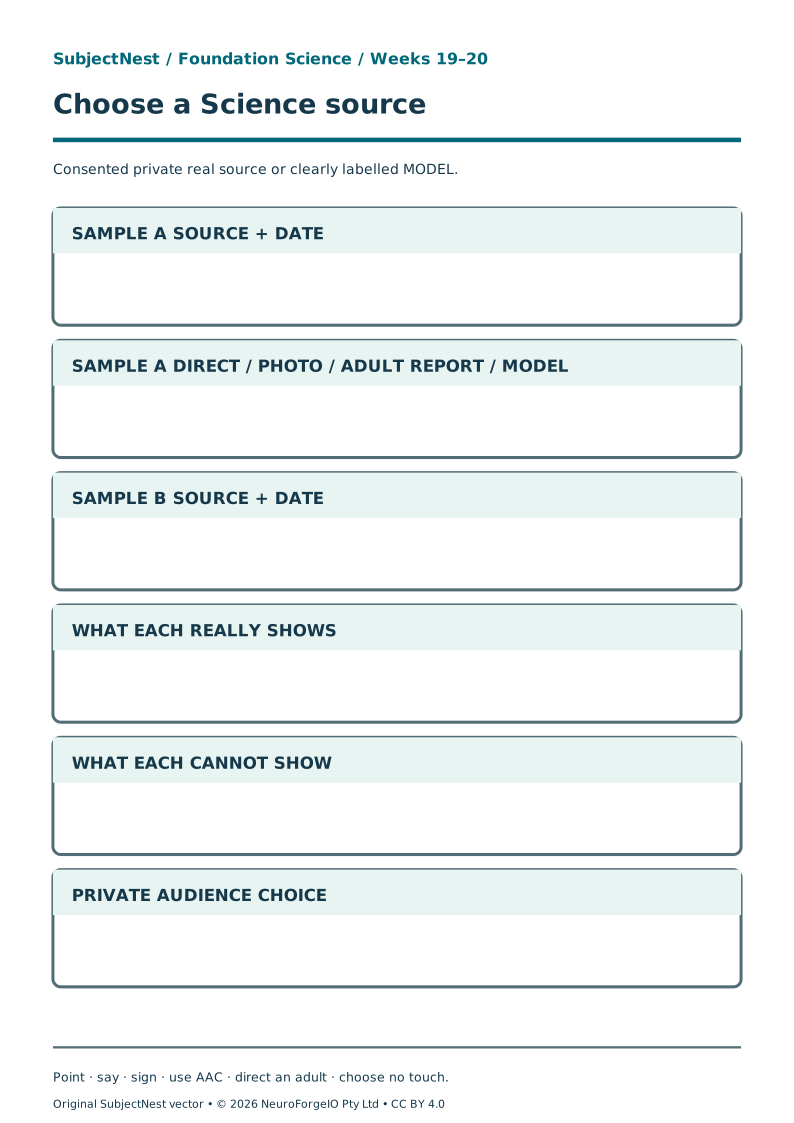
- Source portfolio: SAMPLE A SOURCE + DATE; SAMPLE A DIRECT / PHOTO / ADULT REPORT / MODEL; SAMPLE B SOURCE + DATE; WHAT EACH REALLY SHOWS; WHAT EACH CANNOT SHOW; PRIVATE AUDIENCE CHOICE. Six boxes. Two broad secured source strips labelled A/B; do not include child photos or names.
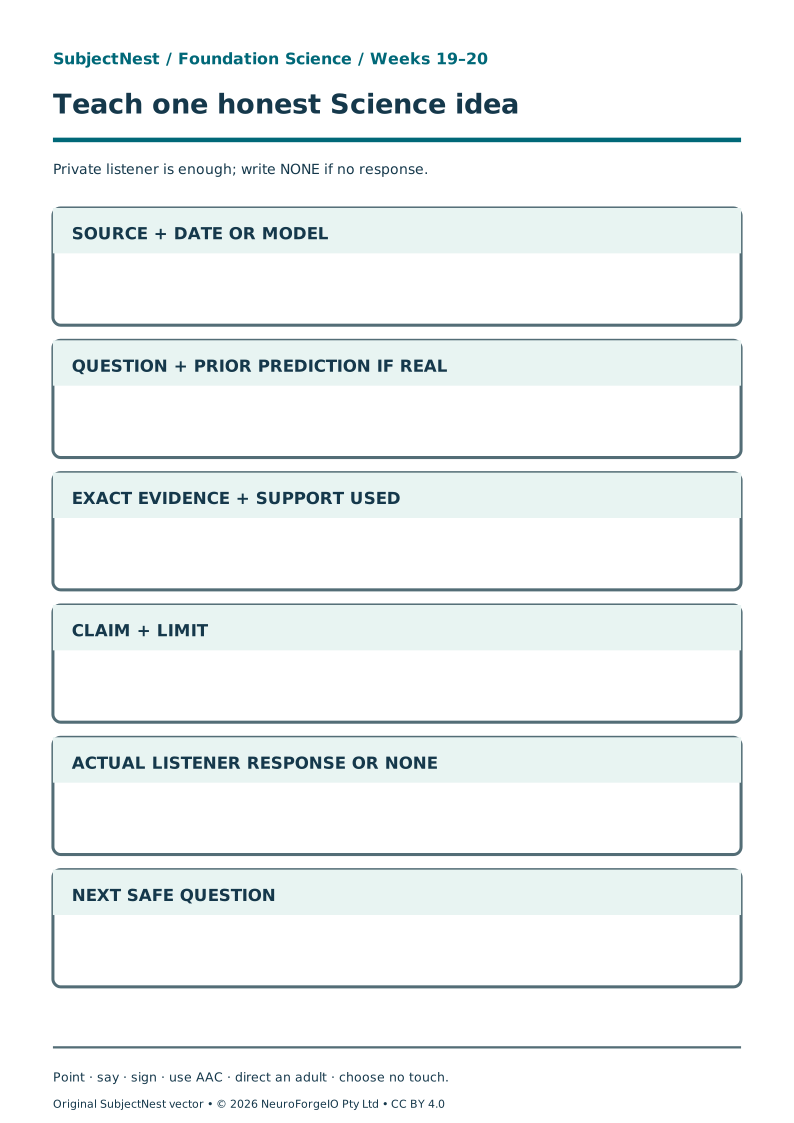
- Private handover: SOURCE + DATE OR MODEL; QUESTION + PRIOR PREDICTION IF REAL; EXACT EVIDENCE + SUPPORT USED; CLAIM + LIMIT; ACTUAL LISTENER RESPONSE OR NONE; NEXT SAFE QUESTION. Six boxes. Teacher can voice exact child-selected words; write NONE if no real listener responded.
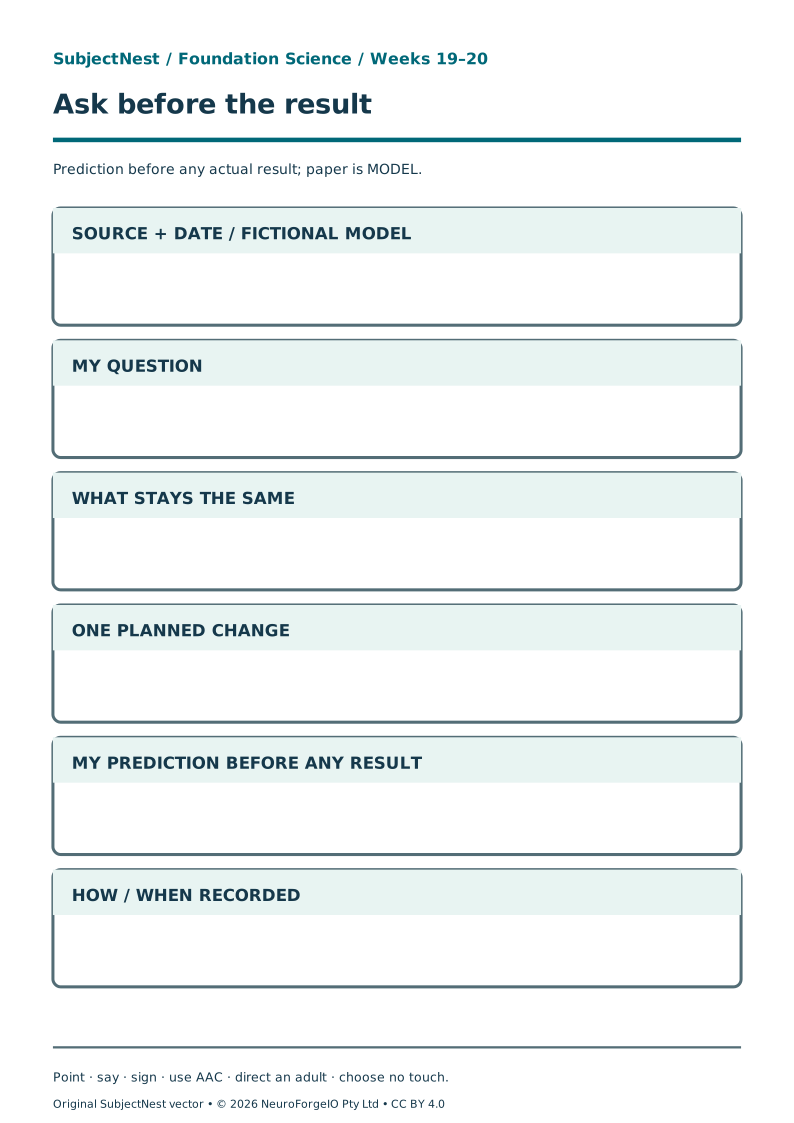
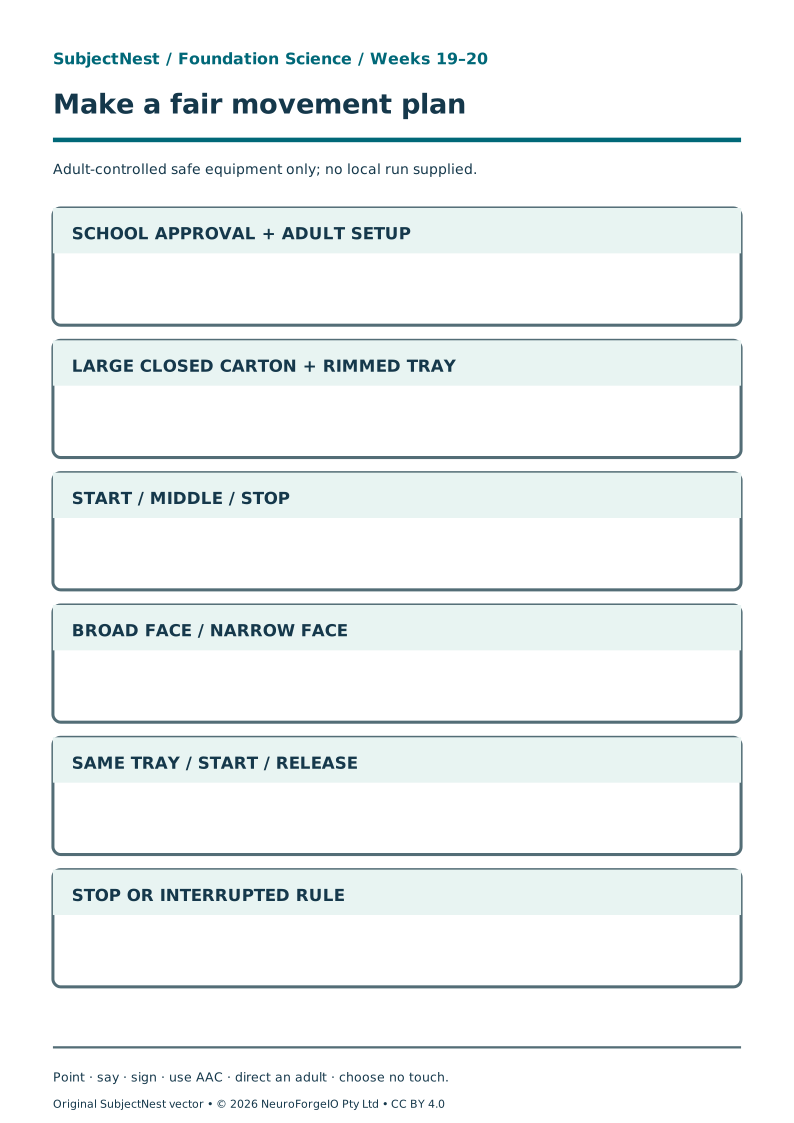
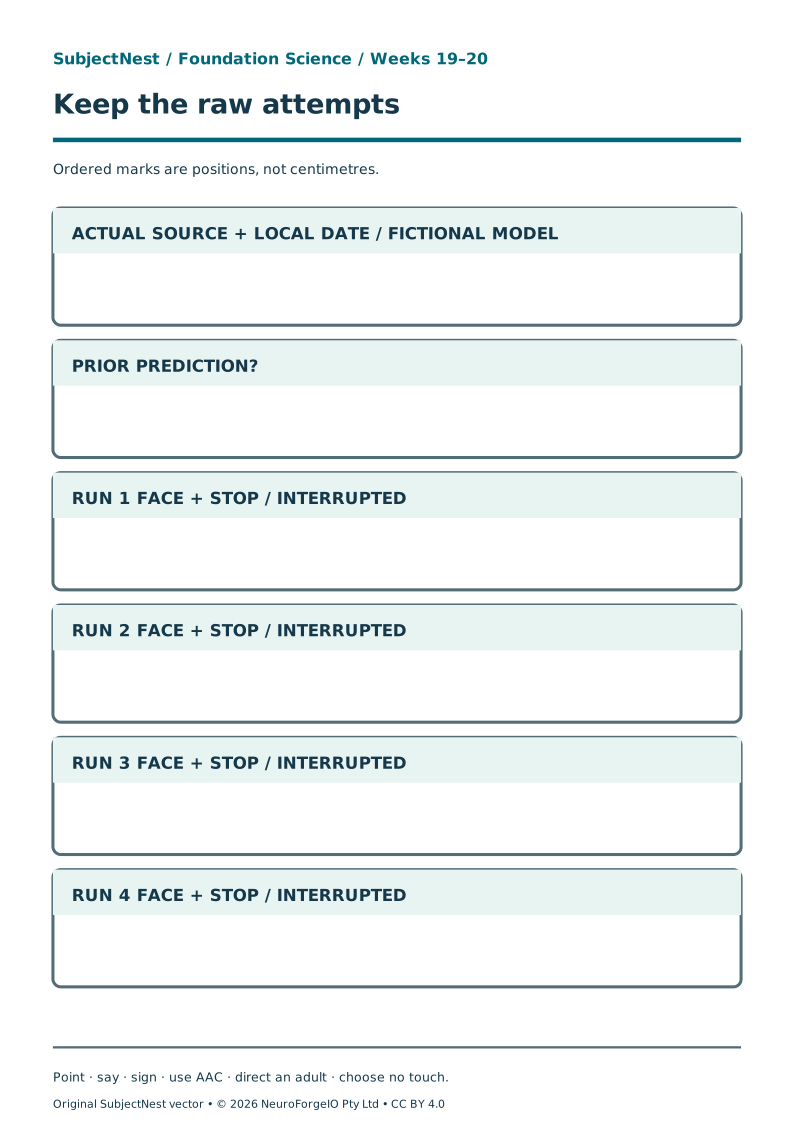
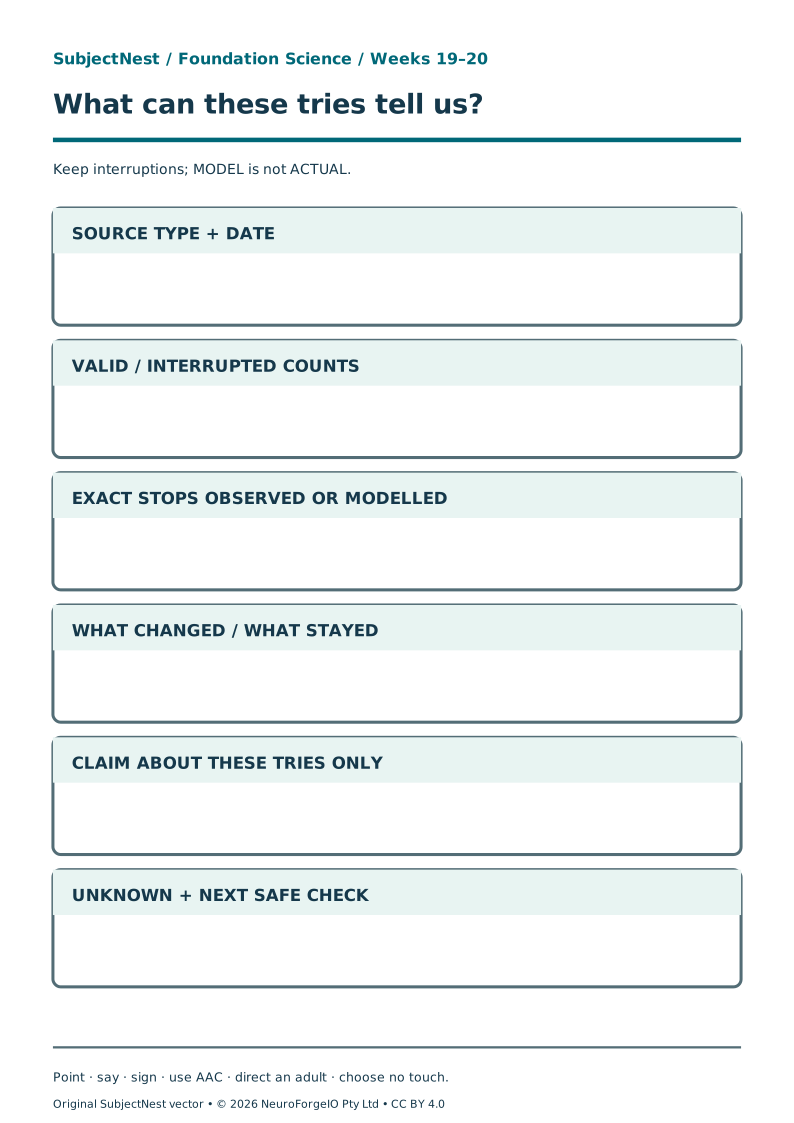
For visual print, there is no red/green-only code. For tactile access, add raised lines and fixed large labels; for nonvisual access read every word plus the left-to-right START/MIDDLE/STOP order. These are equivalent reasoning routes. They cannot turn paper data or an adult report into the child's own direct observation.