Use the same-name SVG or PDF: source-to-claim map (PDF), method-chain mat (PDF), and report-frame comparison (PDF). This page states every printed heading, example, prompt, blank and meaningful order. Colour separates numbered panels but carries no unique content. Enlarge, use screen-reader/selectable text, locally prepare Braille, direct a scribe or build the tactile versions. Confirm format with the actual learner; no assistive-technology certification is claimed. A reading aid supports comprehension, not independent print decoding.
Source to claim map
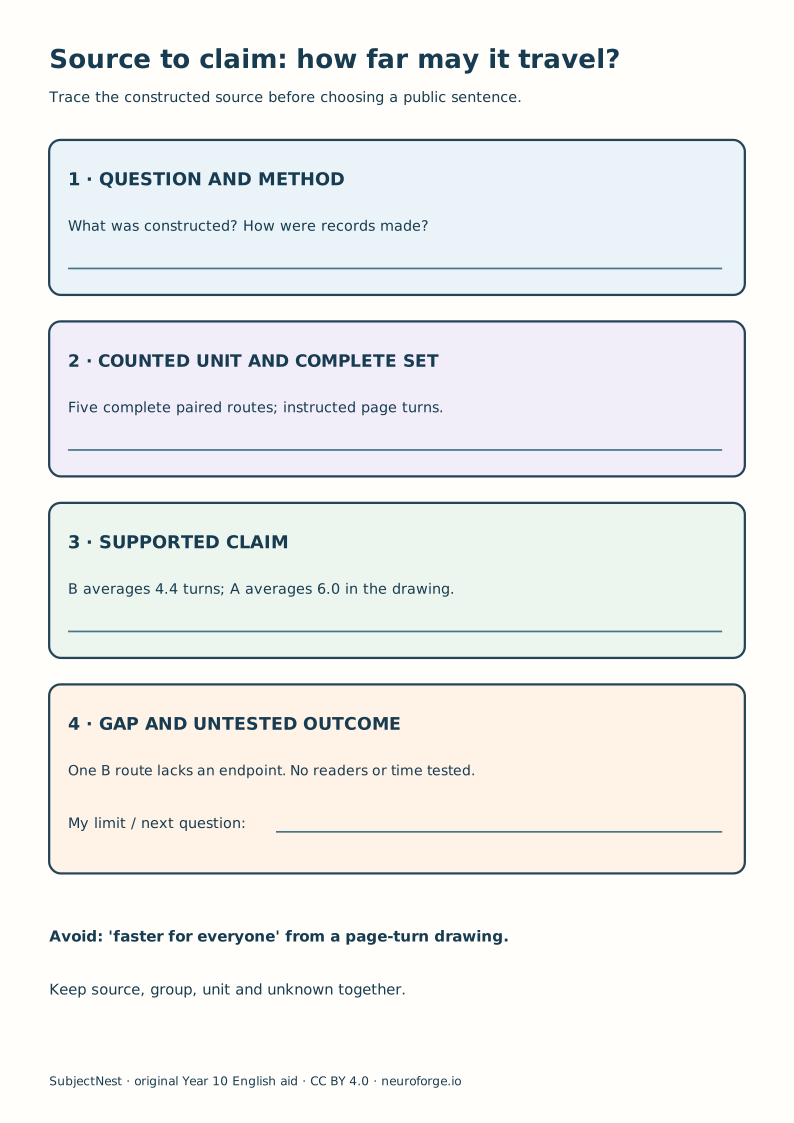
Title: Source to claim: how far may it travel? Instruction: Trace the constructed source before choosing a public sentence. Four numbered boxes run top to bottom.
- QUESTION AND METHOD: “What was constructed? How were records made?” A blank line follows for the learner's source-specific answer.
- COUNTED UNIT AND COMPLETE SET: “Five complete paired routes; instructed page turns.” A blank line follows for the learner to name their own unit and set.
- SUPPORTED CLAIM: “B averages 4.4 turns; A averages 6.0 in the drawing.” A blank line follows for a source-bound sentence.
- GAP AND UNTESTED OUTCOME: “One B route lacks an endpoint. No readers or time tested.” A blank line after “My limit / next question:” invites a limit and next question.
Footer: Avoid: ‘faster for everyone’ from a page-turn drawing. Keep source, group, unit and unknown together.
Tactile build: Put four large numbered cards in a vertical strip, with raised divider lines. Use separate QUESTION, CONSTRUCTED SOURCE, UNIT, COMPLETE GROUP, GAP and UNTESTED cards. The learner chooses which source details to place in each panel and may direct a partner. Do not fill the sixth missing count with a token marked zero; use a distinct NO RECORDED END card.
Method chain sequencing mat
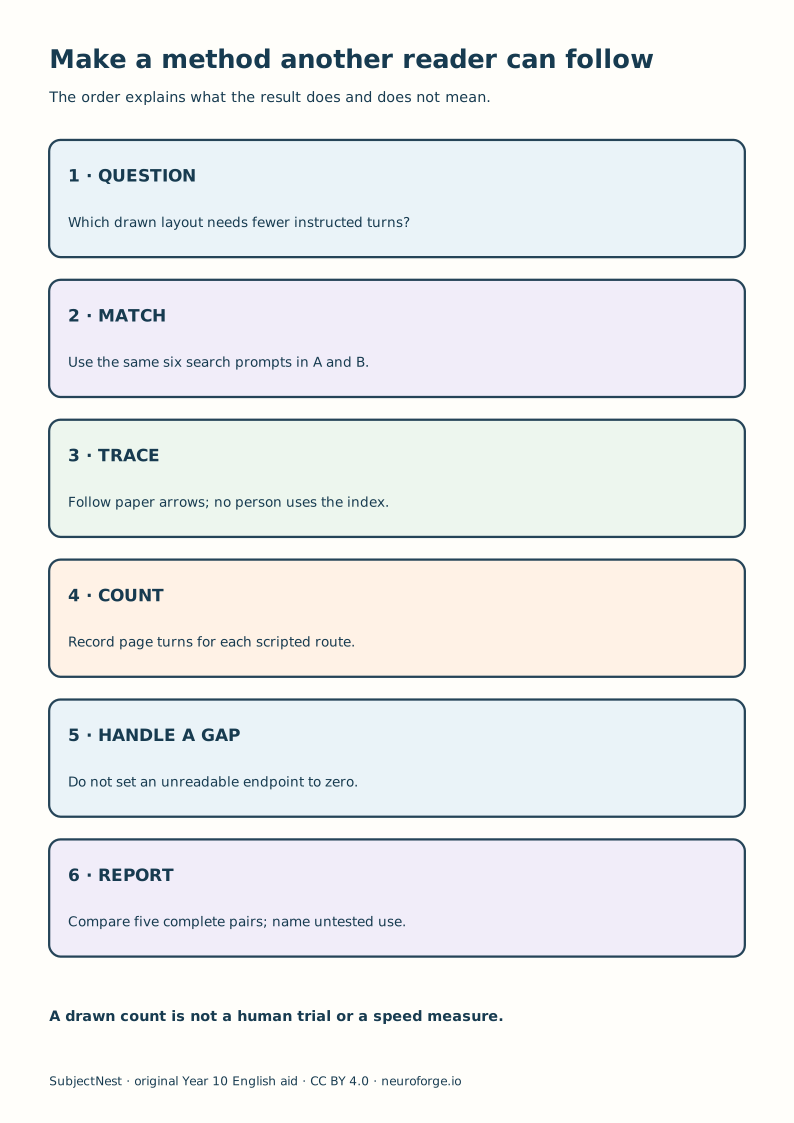
Title: Make a method another reader can follow. Instruction: The order explains what the result does and does not mean. Six numbered boxes run top to bottom:
- QUESTION: “Which drawn layout needs fewer instructed turns?”
- MATCH: “Use the same six search prompts in A and B.”
- TRACE: “Follow paper arrows; no person uses the index.”
- COUNT: “Record page turns for each scripted route.”
- HANDLE A GAP: “Do not set an unreadable endpoint to zero.”
- REPORT: “Compare five complete pairs; name untested use.”
Footer: A drawn count is not a human trial or a speed measure.
Tactile build: Make six separate large numbered and word-labelled cards. Mix them deliberately, then let the learner order them by the logic of the method and explain the links. A knotted/raised GAP card marks missing data; no physical icon alone conveys the meaning. To change context, the learner keeps the six functional headings but supplies new source wording.
Report frame comparison
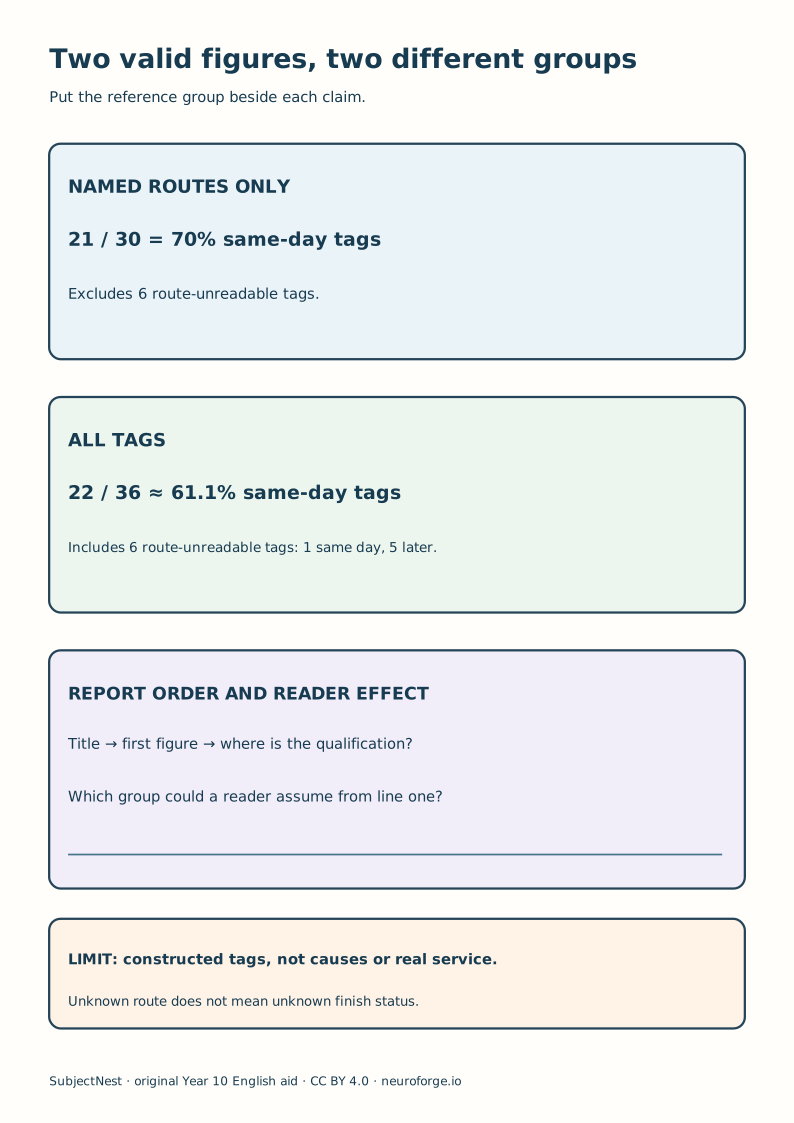
Title: Two valid figures, two different groups. Instruction: Put the reference group beside each claim. Four boxes run top to bottom:
- NAMED ROUTES ONLY:
21 / 30 = 70%same-day tags. Excludes 6 route-unreadable tags. - ALL TAGS:
22 / 36 ≈ 61.1%same-day tags. Includes 6 route-unreadable tags: 1 same day, 5 later. - REPORT ORDER AND READER EFFECT: “Title → first figure → where is the qualification?” and “Which group could a reader assume from line one?” A blank line follows for a response.
- LIMIT: “Constructed tags, not causes or real service. Unknown route does not mean unknown finish status.”
Tactile build: Prepare two wide fraction cards with tactile numerator/denominator slots, labelled NAMED ROUTES ONLY and ALL TAGS. Place six route-unreadable record tokens to the side of the first card, then within the second: one SAME DAY and five LATER. Keep route and finish-status labels physically separate. The learner dictates what a report should say first, then moves a LIMIT card to where a reader will encounter it. Use clear word labels as well as tactile boundaries.
Original resource rights: © NeuroForgeIO Pty Ltd 2026, SubjectNest, CC BY 4.0. Credit author, source, licence and changes. PDF font subsets retain separate rights.