The original inquiry-evidence (PDF), choice-safety (PDF) and creative-score (PDF) mats have the same content here in reading order. This is all printed information, including prompts, blank fields and the meaning of layout. Colour only separates labelled sections. Enlarge, read exactly, translate locally into Braille, use AAC or make the tactile routes; check the format with the actual learner. Neither colour nor sound is needed. No assistive-technology certification is claimed.
Inquiry evidence mat
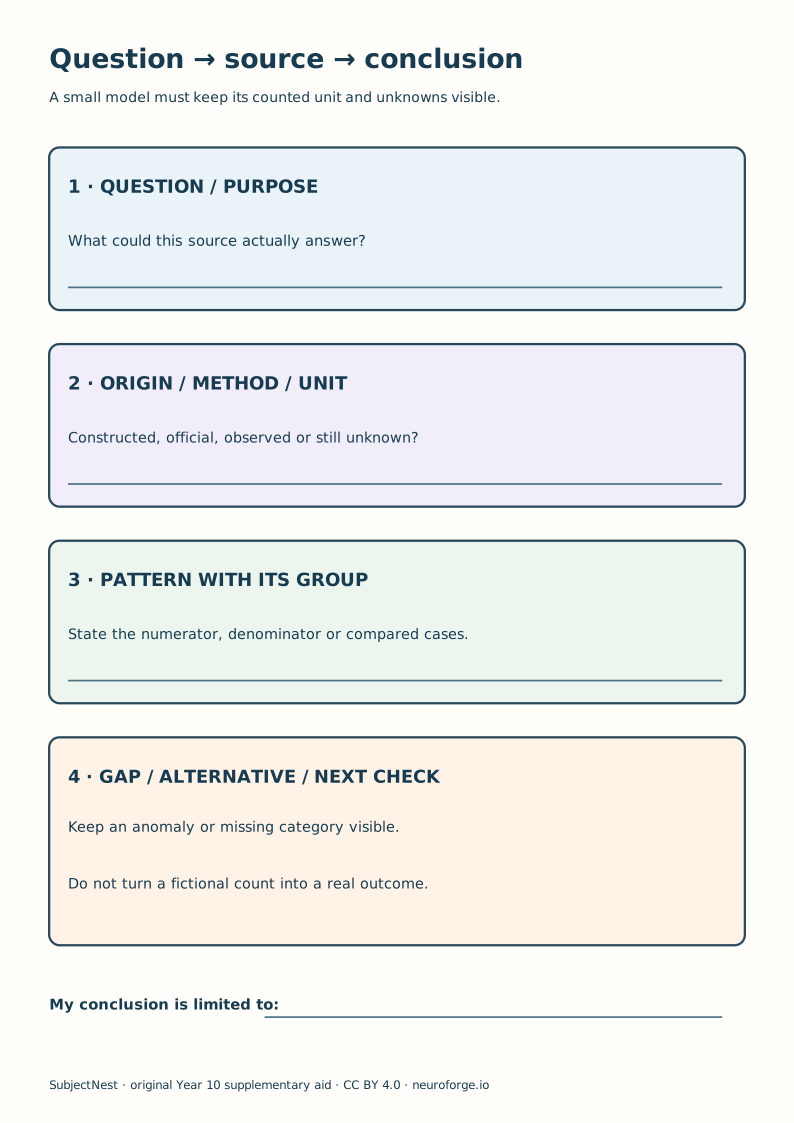
Title: Question → source → conclusion. Introduction: A small model must keep its counted unit and unknowns visible. Four numbered panels, each on its own row:
- QUESTION / PURPOSE: “What could this source actually answer?” Blank line for the learner's question.
- ORIGIN / METHOD / UNIT: “Constructed, official, observed or still unknown?” Blank line for the source status and unit.
- PATTERN WITH ITS GROUP: “State the numerator, denominator or compared cases.” Blank line for a scoped result.
- GAP / ALTERNATIVE / NEXT CHECK: “Keep an anomaly or missing category visible. Do not turn a fictional count into a real outcome.”
Final line: My conclusion is limited to: blank space. Tactile route: Four numbered/word-labelled cards in this vertical order. Add SOURCE, UNIT, GROUP and UNKNOWN tokens. Put a raised stop before CONCLUSION so the learner chooses whether the source supports the sentence. Use a separate MISSING token, never a zero token, for an absent value.
Choice safety mat
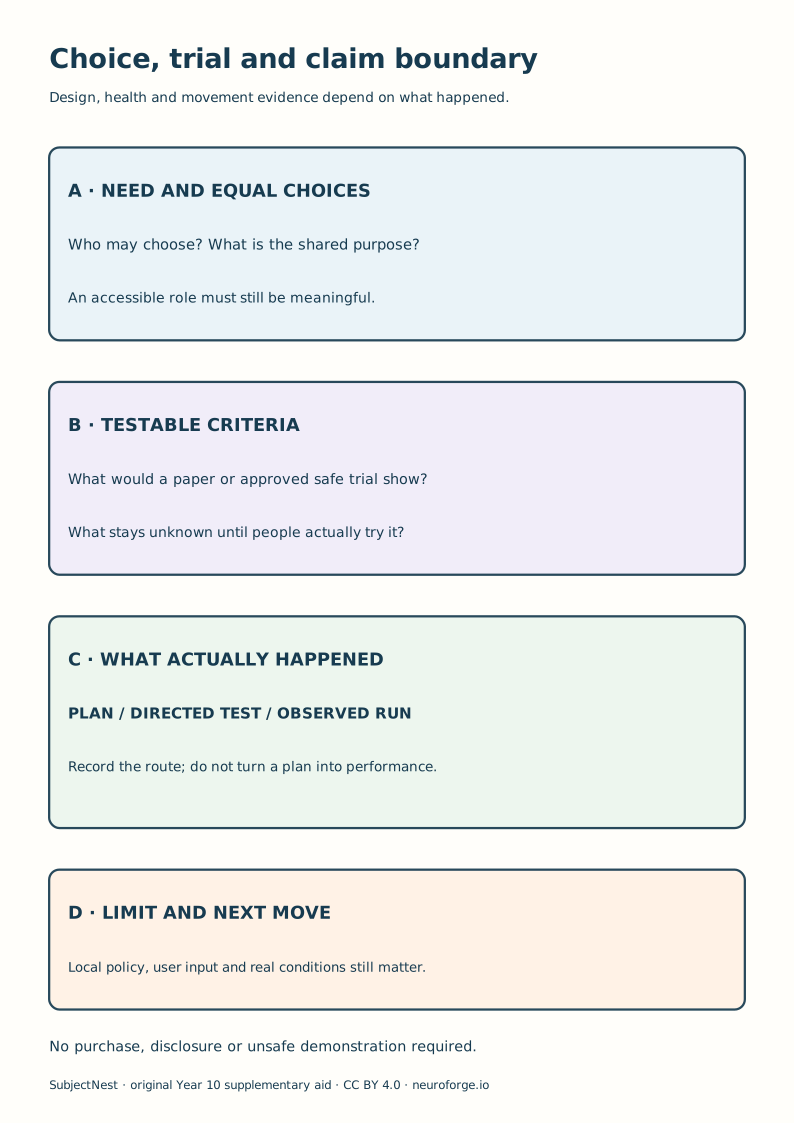
Title: Choice, trial and claim boundary. Introduction: Design, health and movement evidence depend on what happened. Four lettered panels:
- A · NEED AND EQUAL CHOICES: “Who may choose? What is the shared purpose? An accessible role must still be meaningful.”
- B · TESTABLE CRITERIA: “What would a paper or approved safe trial show? What stays unknown until people actually try it?”
- C · WHAT ACTUALLY HAPPENED: “PLAN / DIRECTED TEST / OBSERVED RUN. Record the route; do not turn a plan into performance.”
- D · LIMIT AND NEXT MOVE: “Local policy, user input and real conditions still matter.”
Footer: No purchase, disclosure or unsafe demonstration required. Tactile route: Use A/B/C/D cards and three distinct outcome tags PLAN, DIRECTED TEST, OBSERVED RUN. The learner physically places only the tag matching actual activity, then adds a LIMIT card. A paper plan can still be assessed for design/strategy reasoning.
Creative score mat
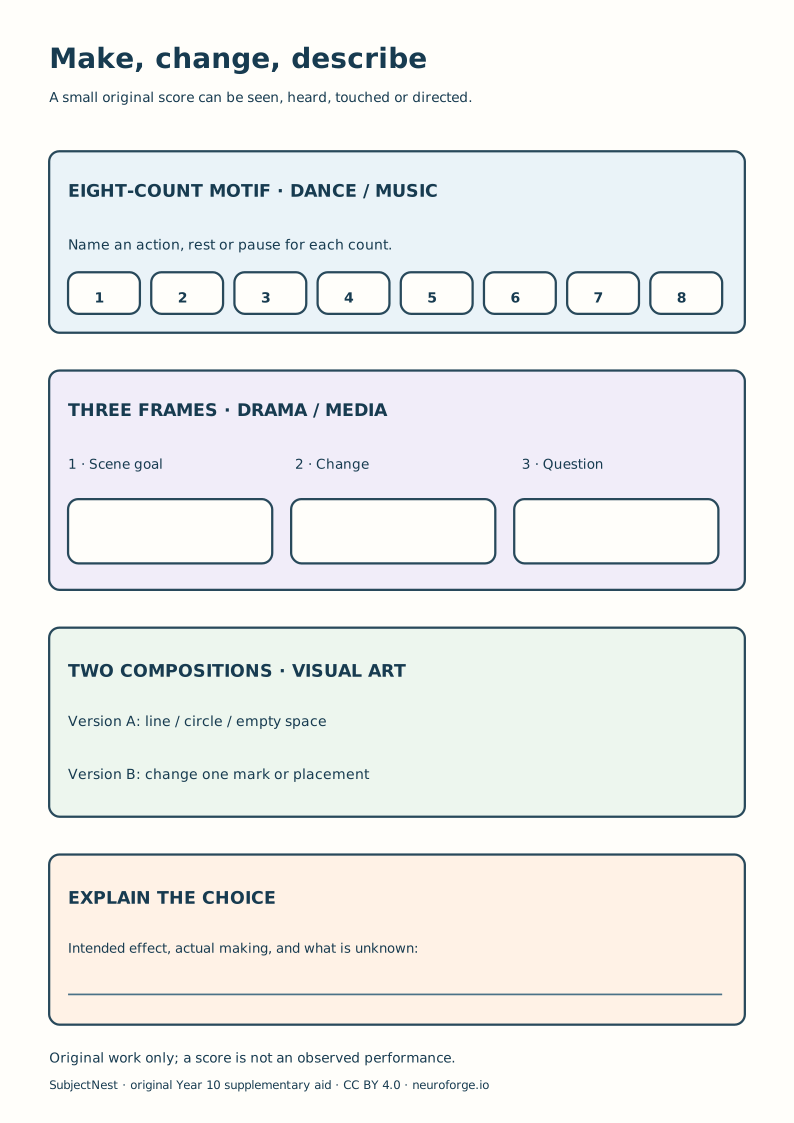
Title: Make, change, describe. Introduction: A small original score can be seen, heard, touched or directed. Three ordered making areas:
- EIGHT-COUNT MOTIF · DANCE / MUSIC: “Name an action, rest or pause for each count.” Eight empty boxes labelled 1, 2, 3, 4, 5, 6, 7, 8, in a left-to-right row.
- THREE FRAMES · DRAMA / MEDIA: “Frame 1 / scene goal; Frame 2 / change; Frame 3 / question.” Three empty side-by-side boxes in that order.
- TWO COMPOSITIONS · VISUAL ART: “Version A: line / circle / empty space. Version B: change one mark or placement.” This is a written comparison prompt, not two pre-drawn artworks.
- EXPLAIN THE CHOICE: “Intended effect, actual making, and what is unknown:” followed by a blank line.
Footer: Original work only; a score is not an observed performance. Tactile route: Make eight raised number boxes for timing; three large frame cards for goal/change/question; and two separate line/circle/blank-space trays. A learner directs placements and explains one revision. Record whether a work was made, performed, both or only planned. The original quiet audio aid has its own complete text score.
Original resource rights: © NeuroForgeIO Pty Ltd 2026, SubjectNest, CC BY 4.0. Credit author, source, licence and changes. Embedded PDF font rights are separate.