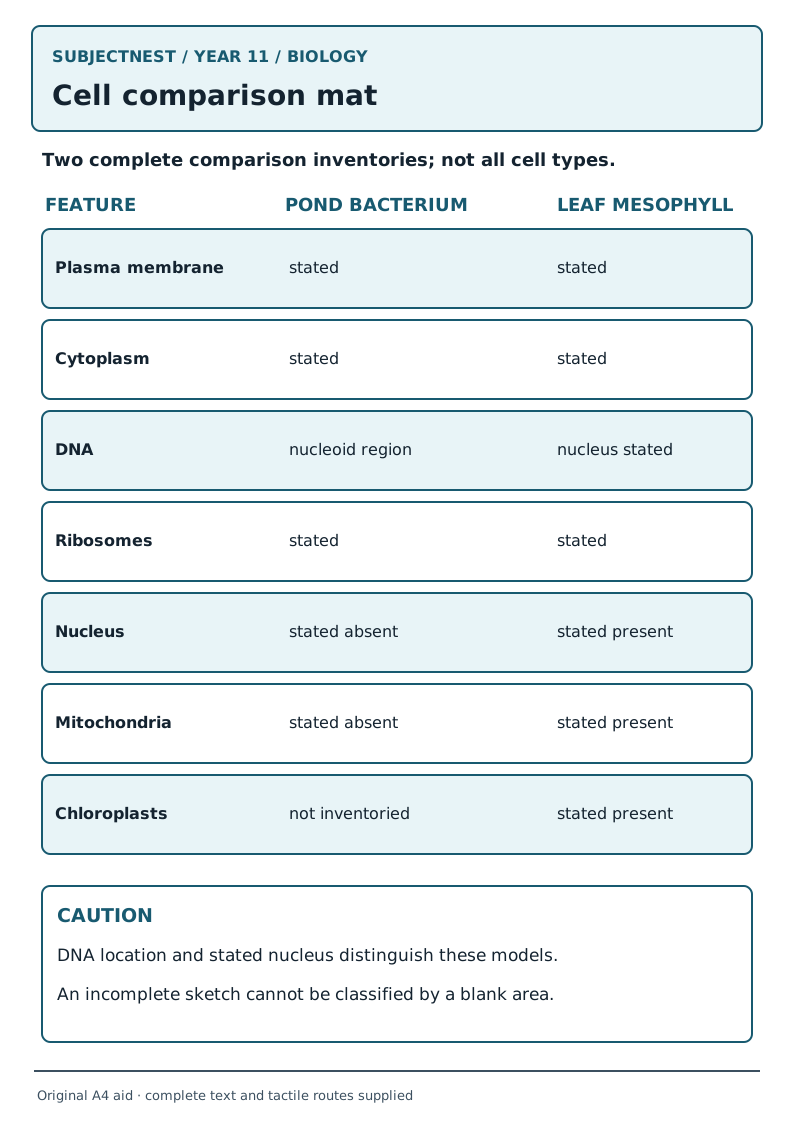
Target: locate membrane, cytoplasm, DNA and ribosomes in both complete teaching inventories without claiming every specialised mature cell has all four. Prepare: Cards A/B/D and comparison mat.
- Launch · 2 min. Ask whether a bacterium can make proteins without a nucleus; students choose yes/no with a reason to test.
- Model · 4 min. Point to ribosomes in the Pond bacterium and Leaf mesophyll models. Ribosomes assemble proteins but have no surrounding membrane; DNA need not sit in a nucleus.
- Guided reading · 5 min. Fill the four shared rows for those two model cards; separate plasma membrane from an optional cell wall. Name the mature red-cell nucleus exception only to prevent a universal rule.
- Practice route · 7 min. Choose Day 2 route; compare the two inventories on all four shared features and one location difference for DNA.
- Audit · 4 min. Peer asks “Is a ribosome membrane-bound?” and “Does shared DNA location mean shared organisation?” Repair both if needed.
- Exit · 3 min. “What structure in both models assembles protein?” Key: ribosome, with no requirement for a nucleus to be present.