These are short conceptual sessions, not a complete lesson timetable or laboratory practical. Each day is 2 + 4 + 5 + 7 + 4 + 3 = 25 minutes; use model cards, the clean learner page, daily access routes, original print aids and teacher key. A seven-minute response is an initial sample, not a speed criterion. Day 5/10 new cases are public formative checks; keep the public key out of the immediate prompt if first encounter matters. All card organisms/cell inventories are teaching models, not collected specimens.
Day 1 · What does a cell diagram prove?
Target: separate a labelled feature from an inference and a missing label from an absent structure. Prepare: Cards A/F and model boundary mat.
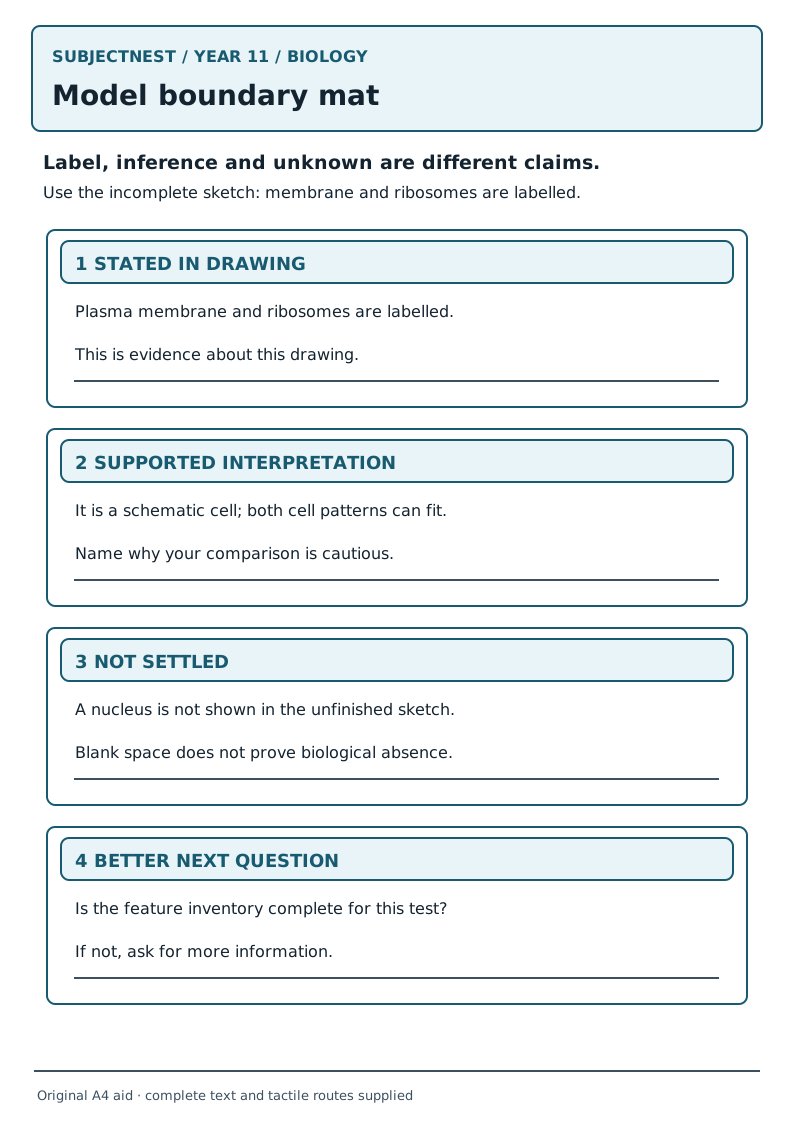
- Launch · 2 min. Show Card D's unfinished sketch with only membrane and ribosomes. Ask what is positively shown; defer classification.
- Model · 4 min. State the three layers:
labelled membraneis evidence about the drawing;probably a cellis an interpretation;no nucleus existsis unsupported because the sketch is incomplete. - Guided reading · 5 min. Compare an incomplete sketch with a complete inventory label. Underline what “complete only for this comparison” authorises and what it does not authorise about a real organism.
- Practice route · 7 min. Learners choose Day 1 route and write/direct/dictate a three-part claim for the unfinished sketch: one stated feature, one possible inference, one unavailable conclusion.
- Audit · 4 min. Partner replaces any “absent” based solely on blank drawing with “not shown”; teacher logs whether a prompt was given.
- Exit · 3 min. “Can we call the sketch prokaryotic yet?” Key: no; membrane/ribosomes alone fit both major patterns.
Day 2 · Features shared in canonical cell models
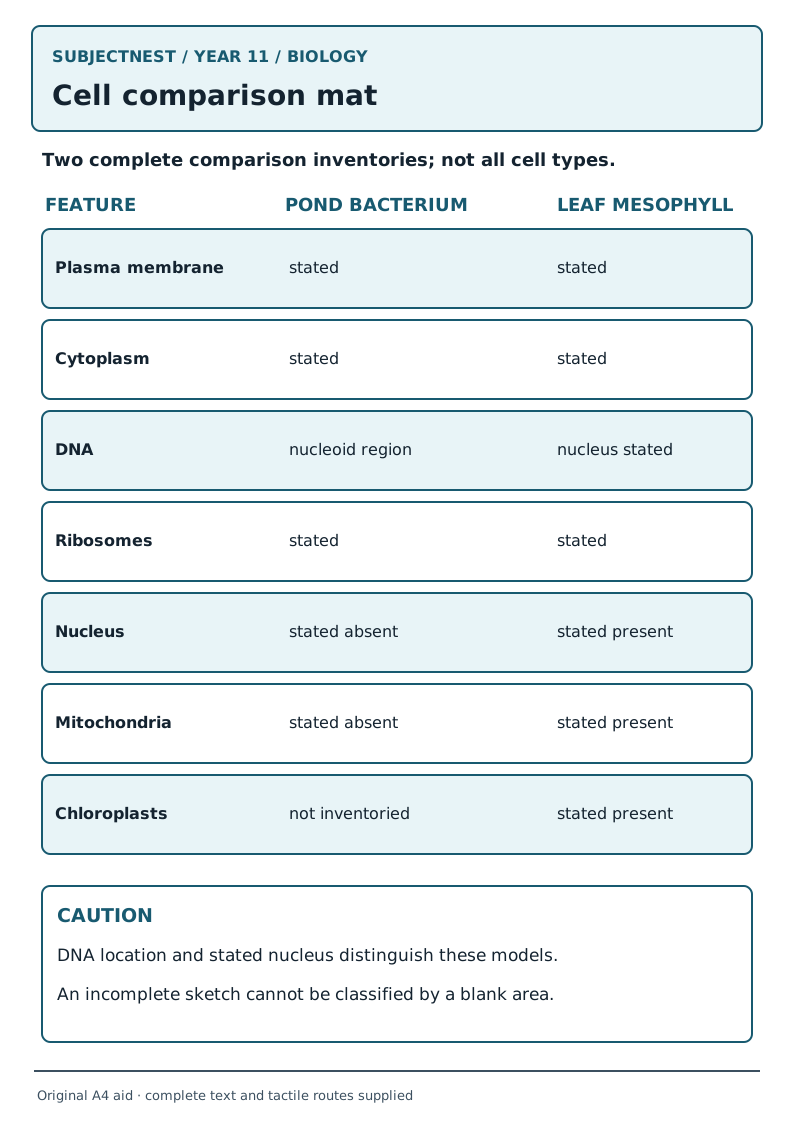
Target: locate membrane, cytoplasm, DNA and ribosomes in both complete teaching inventories without claiming every specialised mature cell has all four. Prepare: Cards A/B/D and comparison mat.
- Launch · 2 min. Ask whether a bacterium can make proteins without a nucleus; students choose yes/no with a reason to test.
- Model · 4 min. Point to ribosomes in the Pond bacterium and Leaf mesophyll models. Ribosomes assemble proteins but have no surrounding membrane; DNA need not sit in a nucleus.
- Guided reading · 5 min. Fill the four shared rows for those two model cards; separate plasma membrane from an optional cell wall. Name the mature red-cell nucleus exception only to prevent a universal rule.
- Practice route · 7 min. Choose Day 2 route; compare the two inventories on all four shared features and one location difference for DNA.
- Audit · 4 min. Peer asks “Is a ribosome membrane-bound?” and “Does shared DNA location mean shared organisation?” Repair both if needed.
- Exit · 3 min. “What structure in both models assembles protein?” Key: ribosome, with no requirement for a nucleus to be present.
Day 3 · A nucleus changes the comparison
Target: compare prokaryotic and typical eukaryotic organisation using DNA location and membrane-bound nucleus, not size or colour alone. Prepare: Cards B/D and comparison mat.
- Launch · 2 min. Give three words: nucleoid, nucleus, ribosome. Ask which names a membrane-bound DNA compartment.
- Model · 4 min. Use the complete Pond bacterium and Leaf mesophyll cards. Both have DNA/ribosomes; only the leaf model has a membrane-bound nucleus and mitochondria/chloroplasts. Say “typical model,” not “every mature cell.”
- Guided reading · 5 min. Compare the Human intestinal lining model as a second eukaryotic example. Identify a nucleus/mitochondria without inferring plant or animal from colour or outline.
- Practice route · 7 min. Choose Day 3 route; make a two-column comparison with one shared feature, one decisive organisational difference and one diagram limit.
- Audit · 4 min. A partner deliberately claims “the unfinished sketch lacks a nucleus.” Learner corrects the claim from its incomplete label.
- Exit · 3 min. “Does having ribosomes make a cell eukaryotic?” Key: no; both model categories have them.
Day 4 · One leaf cell is not every plant cell
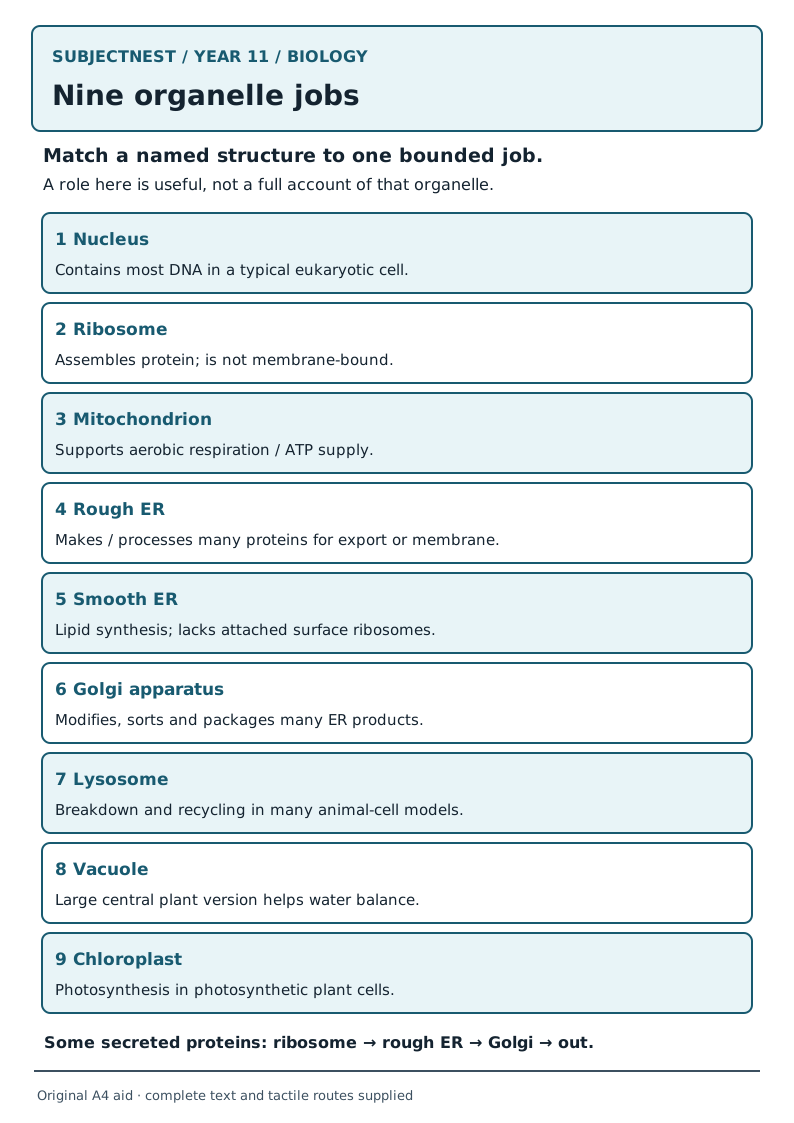
Target: match chloroplast and large vacuole functions to the photosynthetic leaf model, and avoid blanket claims about plants and animals. Prepare: Cards C/D and organelle jobs.
- Launch · 2 min. Show the fictional Leaf mesophyll inventory. Ask which listed structure connects to photosynthesis.
- Model · 4 min. Match chloroplast to photosynthesis and large central vacuole to water balance in many plant cells. Mitochondria are also on this plant card; plants do not lack them.
- Guided reading · 5 min. Contrast the Human intestinal lining model: no chloroplast appears in its complete comparison inventory, but nucleus, mitochondria and ribosomes do. Discuss why a root or other nonphotosynthetic plant cell need not have chloroplasts.
- Practice route · 7 min. Choose Day 4 route; write a corrected caption for the two card inventories using one plant-specific teaching example and two shared eukaryotic features.
- Audit · 4 min. Peer searches for “all plant cells” or “animals never have vacuoles” and narrows both claims.
- Exit · 3 min. “Do plant cells need mitochondria?” Key for these models: the photosynthetic leaf card has both chloroplasts and mitochondria; photosynthesis and respiration are different processes.
Day 5 · Public fresh check A: two new cell files
Target: transfer classification and diagram-limit reasoning to new Files J/K. These are publicly visible formative prompts, not a secure test. Prepare: new card and neutral comparison mat.
- Launch · 2 min. State task: compare two labelled cell files, classify only where the evidence allows and explain one unavailable conclusion.
- Source access · 4 min. Release J/K without the key; log read-aloud or other support.
- Independent plan · 5 min. Learner marks shared features, DNA location, complete versus incomplete inventory and one caution.
- Independent response · 7 min. Choose Day 5 route; capture first response with evidence and limit. Do not supply a model sentence with the answer.
- Self-audit · 4 min. Learner checks whether a blank/not-labelled item was treated as biologically absent.
- Submit · 3 min. Collect first response and support log; use public worked key for teaching next move.
Day 6 · Follow one exported protein route
Target: distinguish ribosome, rough ER and Golgi functions in one illustrative secretory-cell pathway. Prepare: Card C and organelle jobs.
- Launch · 2 min. Ask whether a Golgi apparatus assembles the amino-acid chain; retain ideas for checking.
- Model · 4 min. Show an original word sequence:
ribosome on rough ER → ER processing → Golgi modification/sorting → product leaves cell. Ribosomes assemble protein; the route represents some secreted proteins, not every protein. - Guided reading · 5 min. Compare rough ER and smooth ER: rough has attached ribosomes; smooth does not and participates in lipid synthesis/other cell-specific jobs. Point out that “rough” describes ribosome appearance, not texture a learner can feel.
- Practice route · 7 min. Choose Day 6 route; sequence four labelled job cards and give one function plus one pathway limit.
- Audit · 4 min. Partner swaps Golgi and ribosome; learner restores order and explains each role rather than relying on position.
- Exit · 3 min. “Which structure directly assembles the protein?” Key: ribosome; Golgi later modifies/sorts many products.
Day 7 · Cells organise and recycle differently
Target: contrast lysosome, vacuole and smooth ER roles without saying one organelle is exclusive to all plants or animals. Prepare: Card C and organelle jobs sheet.
- Launch · 2 min. Put “storage,” “water balance,” “recycling,” “lipid synthesis” on the board; ask if one word can explain every cell's internal compartments.
- Model · 4 min. Match a many-animal-cell lysosome to breakdown/recycling, a large plant central vacuole to water balance and smooth ER to lipid synthesis. Explain that roles vary by cell and plant lytic vacuoles can perform related breakdown.
- Guided reading · 5 min. Use a fictional plant storage-cell prompt and a fictional animal-cell prompt. Do not infer a clinical condition or a measured organelle count from the cartoons.
- Practice route · 7 min. Choose Day 7 route; sort three structure/function pairs and write one “not every cell” qualifier.
- Audit · 4 min. Peer tests “animal cells cannot have vacuoles” and “plant cells cannot recycle”; learner corrects both with Card C.
- Exit · 3 min. “Is smooth ER rough because it contains ribosomes?” Key: no; surface ribosomes characterise rough ER.
Day 8 · From one cell to a system
Target: use the cell→tissue→organ→system hierarchy as a contribution chain, not a claim that one tissue alone builds the organ. Prepare: Card E and hierarchy staircase.
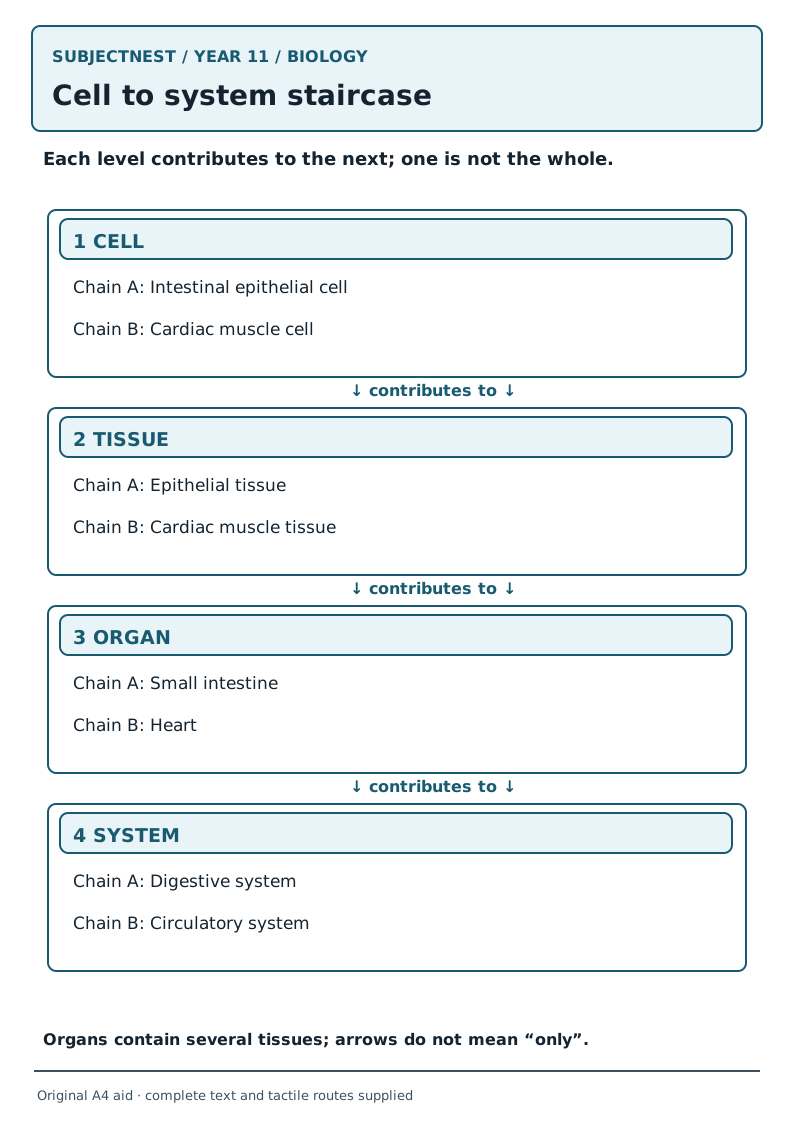
- Launch · 2 min. Ask whether a single intestinal epithelial cell is the small intestine; keep a yes/no reason.
- Model · 4 min. Read
intestinal epithelial cell → epithelial tissue → small intestine → digestive system. Each arrow means contributes to the next level; the organ contains other tissues. - Guided reading · 5 min. Build the independent cardiac chain from Card E and ask what the heart contributes to the circulatory system. Do not turn either chain into an illness lesson.
- Practice route · 7 min. Choose Day 8 route; arrange both chains and justify one arrow with the word “contributes.”
- Audit · 4 min. Peer inserts “only” into “epithelial tissue makes the intestine”; learner removes it and explains why.
- Exit · 3 min. “What level is the small intestine in this chain?” Key: organ, with multiple tissues.
Day 9 · Better claim, better model
Target: evaluate three overstatements using cards A–F, pairing each correction with the evidence it needs. Prepare: model boundary mat and comparison mat.
- Launch · 2 min. Read “No label, so no nucleus.” Ask which model label would decide whether this is warranted.
- Model · 4 min. Revise it to “In the incomplete sketch a nucleus is not shown, so classification needs more information.” Underline the difference between drawing evidence and cell evidence.
- Guided reading · 5 min. Test “Every plant cell contains chloroplasts” and “All proteins go through Golgi.” Use Card C's specific jobs and route limitation to narrow each.
- Practice route · 7 min. Choose Day 9 route; make a three-claim audit: original wording, correction, card detail and what remains open.
- Audit · 4 min. Partner checks if each correction still uses
all/never/onlywithout support; learner changes it if necessary. - Exit · 3 min. “Which one sentence would you put beside a teaching diagram?” Accept a source-backed limitation, not a claim that the picture is real microscopy.
Day 10 · Public fresh check B: two new role cards
Target: transfer organelle jobs and cell hierarchy to new Files L/M. Both check/key are public. Prepare: cards and neutral sheets, not a rehearsed answer.
- Launch · 2 min. State task: explain two organelle choices and a cell-to-system chain with one model limit.
- Source access · 4 min. Release L/M and log reading/support mode; do not reveal the key.
- Independent plan · 5 min. Learner marks organelle/function evidence, one shared feature and a hierarchy contribution.
- Independent response · 7 min. Choose Day 10 route and retain first answer before feedback; allow more time afterward if needed.
- Self-audit · 4 min. Check no organelle function is ascribed to every cell, and no invented model is called real tissue.
- Submit · 3 min. Collect first response and support log; use public worked key to target re-teaching. No QCAA unit mark follows.
SubjectNest original scripts © NeuroForgeIO Pty Ltd 2026, CC BY 4.0.