Target: compare neutral carbon-12/carbon-13 and chlorine-35/chlorine-37 by Z, A and neutron count. Prepare: Cards D/E and isotope/ion fork; give chlorine Z 17.
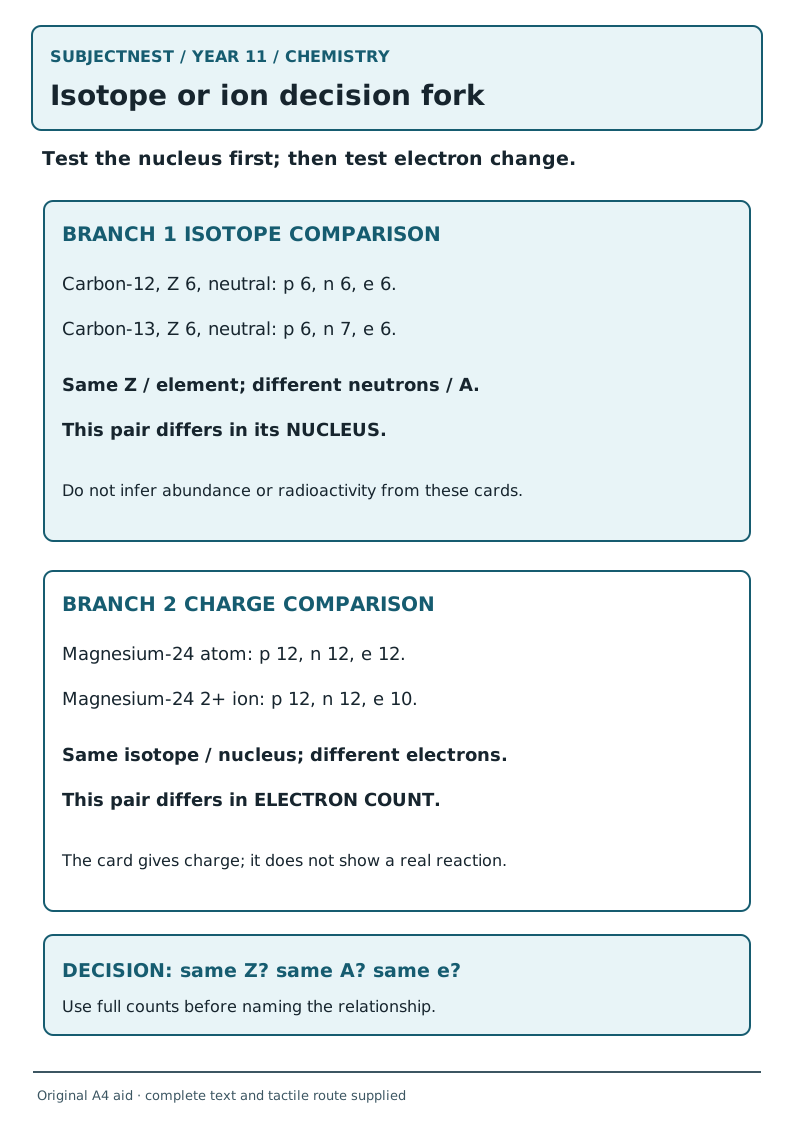
- Launch · 2 min. Ask whether carbon-13 must have more protons than carbon-12 because “13 is larger.”
- Model · 4 min. Same carbon Z 6 means six protons. Carbon-12 has 6 neutrons; carbon-13 has 7. Isotope difference is nuclear neutron count.
- Guided reading · 5 min. Contrast chlorine-35/37: both Z 17, neutrons 18/20. These are isotope names, not evidence of their natural abundance or chemical safety.
- Practice route · 7 min. Choose Day 4 route; compare both pairs using a shared-Z statement, two neutron calculations and a bounded conclusion.
- Audit · 4 min. Peer calls carbon-12 and magnesium-24 isotopes because both are “atoms”; learner repairs by testing Z.
- Exit · 3 min. “Which count differs within an isotope pair?” Key: neutron count (and A), while proton count/Z stays the same.