Target: Map File A’s four quarter-note onsets onto a steady four-beat pulse and explain how equal duration helps the phrase feel regular.
Prepare: A score, four small blank beat cards or fingers, exact text; optional A WAV.
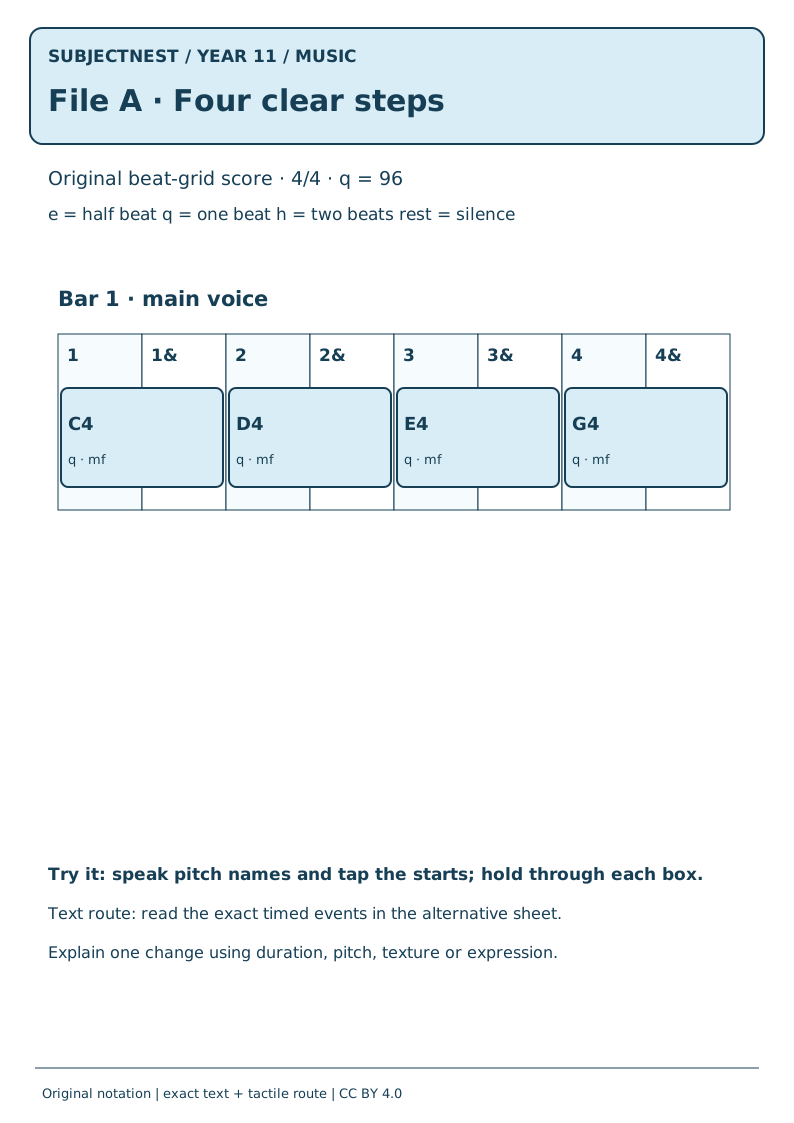
- Launch · 2 min. “Count 1–2–3–4 without speeding up. What is one beat?” Offer silent finger points.
- Model · 4 min. Point to A’s four event boxes; say “C4 on 1, D4 on 2, E4 on 3, G4 on 4.” Each box is two half-beat cells. Tap only starts, then hold each through the next count.
- Guided looking · 5 min. Students mark four onsets and test whether any box lasts longer. Ask why the higher last pitch is a pitch change rather than a tempo change.
- Practice route · 7 min. Learners trace, perform or direct a partner to realise A. They write/say: “The beat remains ___ because event ___ lasts ___.” If changing one onset, keep the original as a comparison.
- Audit · 4 min. Pair-check that starts fall on beats 1–4 and total duration equals four beats; separate “regular” as a reasoned reading from measurable timing.
- Exit · 3 min. Collect one correctly labelled beat grid and one evidence sentence. Next time the same rhythm will carry a different contour.