Use Files A–F, with fresh G/H only on their check days. Before each session, offer the three same-target routes. One clear musical claim needs a locatable pitch, beat, duration, rest, dynamic or voice as evidence. An interpretation such as “urgent” is a possible reading, never a property of the score. Use optional sound at comfortable volume; let students choose silent score reading or desk-level sound. No solo performance, special instrument or device is necessary.
Day 1 · Four beats, one pulse
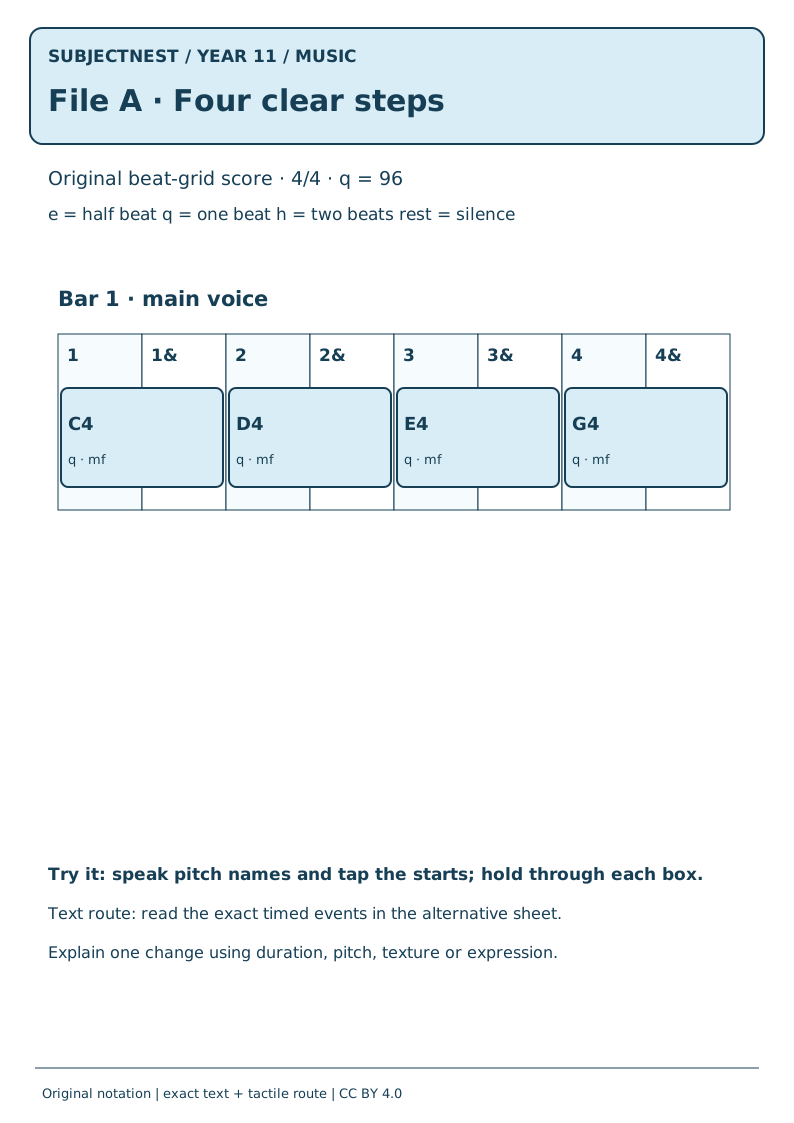
Target: Map File A’s four quarter-note onsets onto a steady four-beat pulse and explain how equal duration helps the phrase feel regular.
Prepare: A score, four small blank beat cards or fingers, exact text; optional A WAV.
- Launch · 2 min. “Count 1–2–3–4 without speeding up. What is one beat?” Offer silent finger points.
- Model · 4 min. Point to A’s four event boxes; say “C4 on 1, D4 on 2, E4 on 3, G4 on 4.” Each box is two half-beat cells. Tap only starts, then hold each through the next count.
- Guided looking · 5 min. Students mark four onsets and test whether any box lasts longer. Ask why the higher last pitch is a pitch change rather than a tempo change.
- Practice route · 7 min. Learners trace, perform or direct a partner to realise A. They write/say: “The beat remains ___ because event ___ lasts ___.” If changing one onset, keep the original as a comparison.
- Audit · 4 min. Pair-check that starts fall on beats 1–4 and total duration equals four beats; separate “regular” as a reasoned reading from measurable timing.
- Exit · 3 min. Collect one correctly labelled beat grid and one evidence sentence. Next time the same rhythm will carry a different contour.
Day 2 · Same timing, changed direction
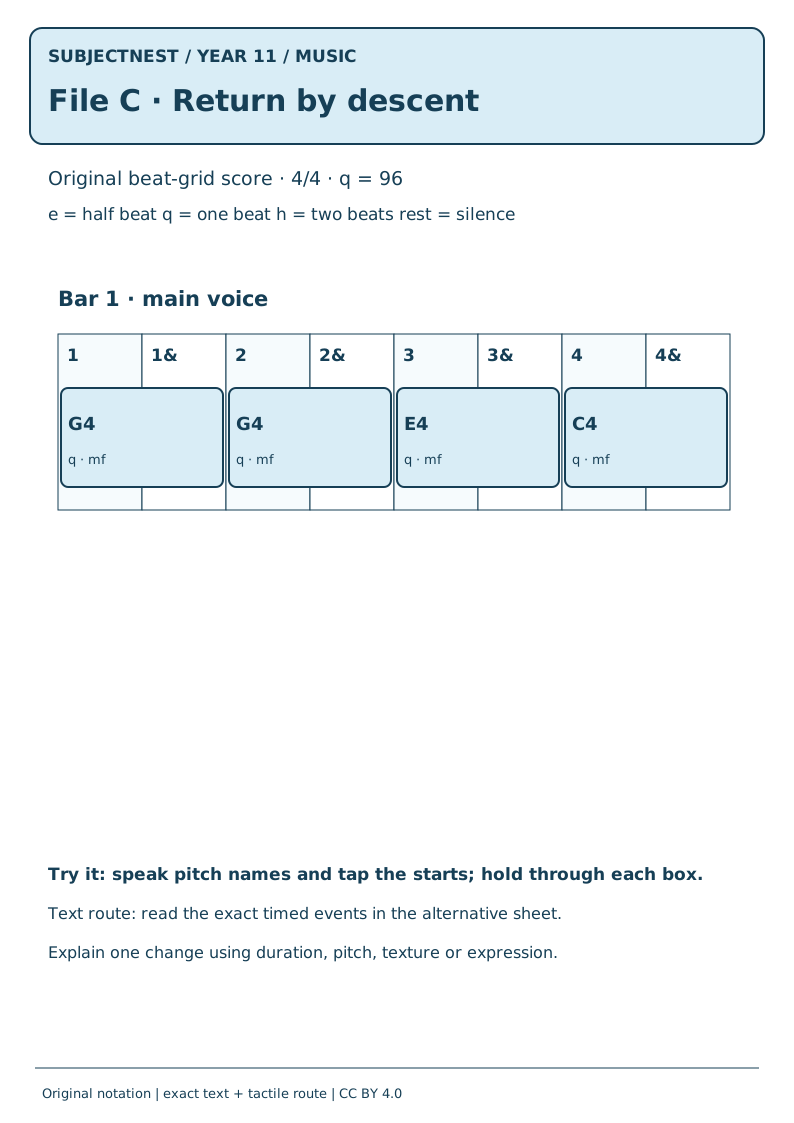
Target: Compare A’s upward contour with C’s descending return while showing that each note still lasts one beat.
Prepare: A, C, four moveable pitch-name cards.
- Launch · 2 min. Display A and C without sound. Ask what can be compared fairly when timing is identical.
- Model · 4 min. Trace A C4–D4–E4–G4 upward and C G4–G4–E4–C4 with repeated then descending motion; count four one-beat boxes in each.
- Guided looking · 5 min. Students mark the repeated G4 in C and the highest/lowest labelled pitches; they notice that “higher” here refers to pitch labels, not loudness.
- Practice route · 7 min. Learners voice, tap-plus-name or silently arrange both contours. They choose one as a closing gesture and defend it with two exact pitch transitions.
- Audit · 4 min. A partner checks the pitch order and that any felt “arrival” is labelled as a possible response. Do not infer a universal emotion.
- Exit · 3 min. Collect a two-arrow contour sketch and a sentence with evidence. Preview a deliberate gap.
Day 3 · Silence has a place
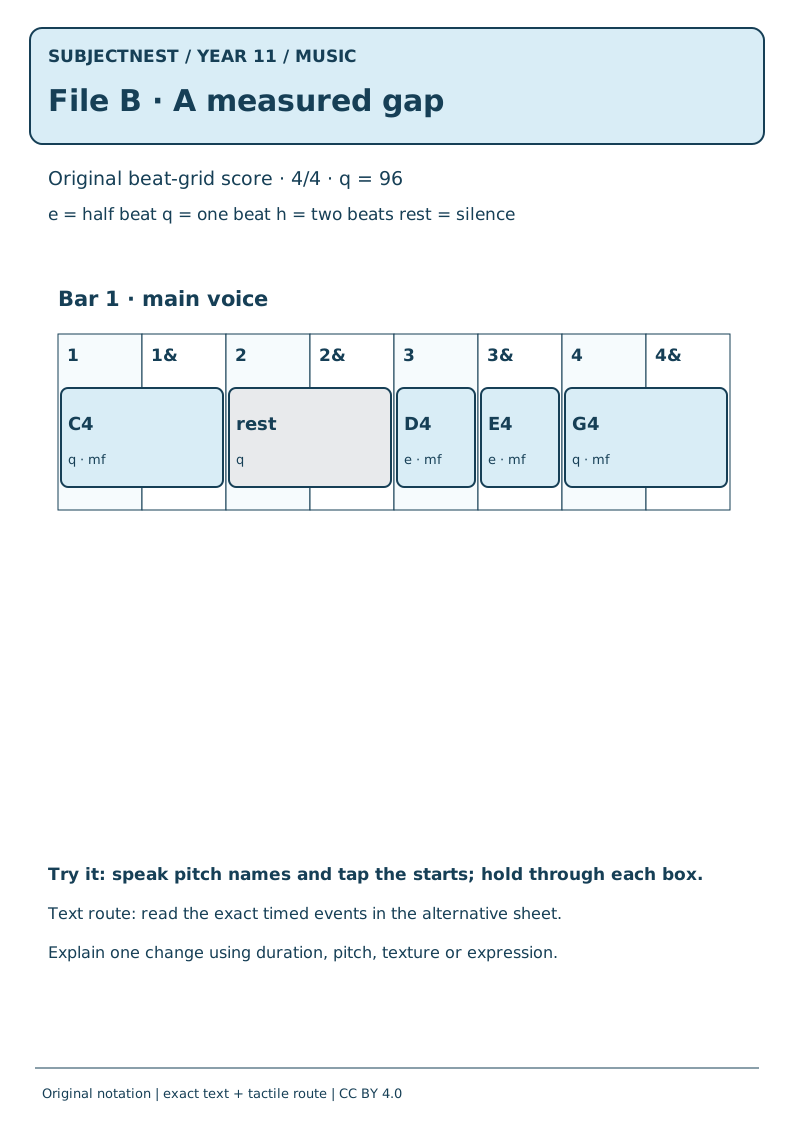
Target: Identify B’s one-beat rest and two half-beat notes, then evaluate how moving the rest could change the placement of attention without changing four total beats.
Prepare: B, eight half-beat cards including two labelled REST; optional B WAV.
- Launch · 2 min. Count four beats. A student may show silent counts rather than make sound.
- Model · 4 min. Locate C4 on 1, a silent full beat on 2, D4 on 3, E4 on 3&, G4 on 4. Explain that the rest occupies time and the two small boxes together fill beat 3.
- Guided looking · 5 min. Point to exact start cells; compare B with a version where the silent beat is on 4 and G4 moves to 2 while D4/E4 remain on 3/3&. Both fill four beats, but the ending differs.
- Practice route · 7 min. Learners perform, direct blocks or annotate one version, then state which gap makes the quick pair more noticeable and why.
- Audit · 4 min. Check that silence is not skipped in the count, there is no fifth beat, and the proposed effect cites the rest’s position.
- Exit · 3 min. Collect original and changed rest positions plus a bounded judgment.
Day 4 · Short start, long finish
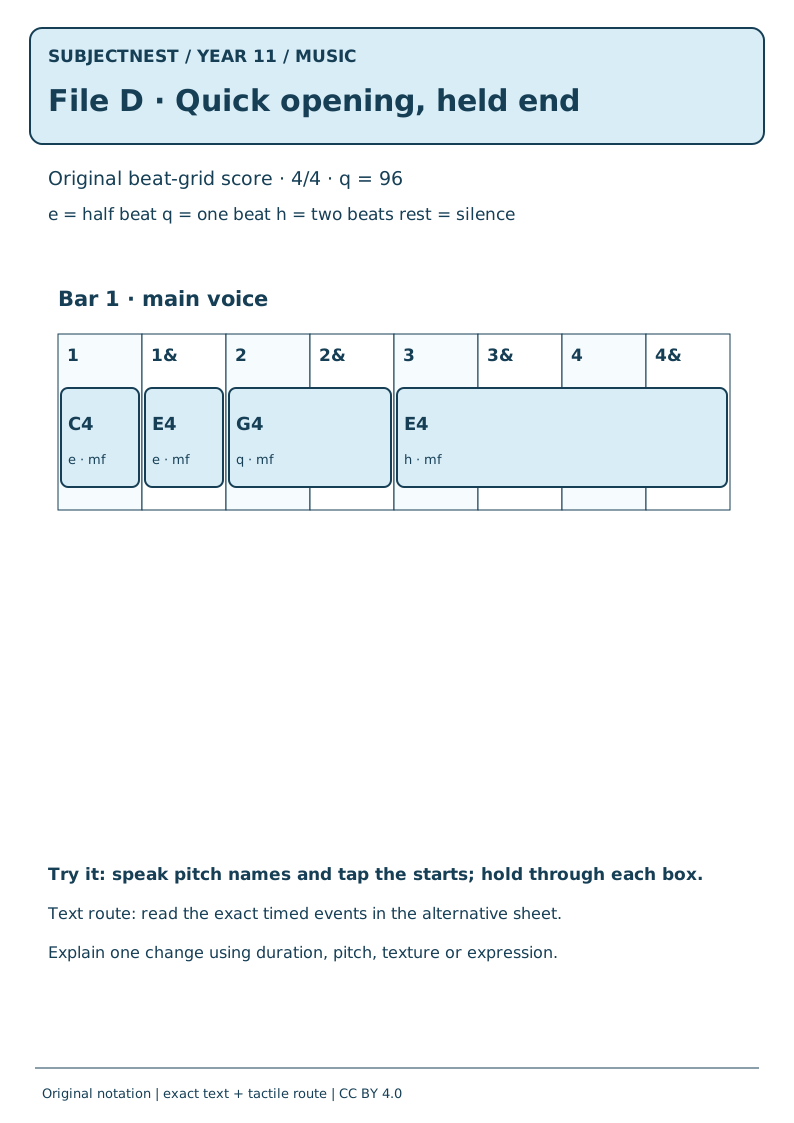
Target: Explain D’s ½ + ½ + 1 + 2 grouping and make one timing transformation that still fills four beats.
Prepare: D, eight half-beat cards; optional D WAV.
- Launch · 2 min. Ask what the symbols
e,q,hmean in this grid. - Model · 4 min. Say and point: C4 on 1 for half a beat, E4 on 1& for half, G4 on 2 for one, E4 on 3 through beat 4 for two. Hold, do not strike again on 4.
- Guided looking · 5 min. Compare the onset count (four notes) with the beat count (four beats). An onset is not a beat.
- Practice route · 7 min. Try replacing the final E4 h with two E4 q events on beats 3 and 4. Keep pitch but change articulation of time; explain a possible difference.
- Audit · 4 min. Recount both versions independently; partner checks the sustained original end versus two new starts.
- Exit · 3 min. Submit a four-beat grid and one precise claim about the ending.
Day 5 · Fresh G formative check
Target: Independently read a new four-beat score, preserve its timing in one variation and justify a possible effect with beat-level evidence.
Prepare: student Check A, fresh G sheet, blank eight-cell grid; withhold the worked key until the first response is saved.
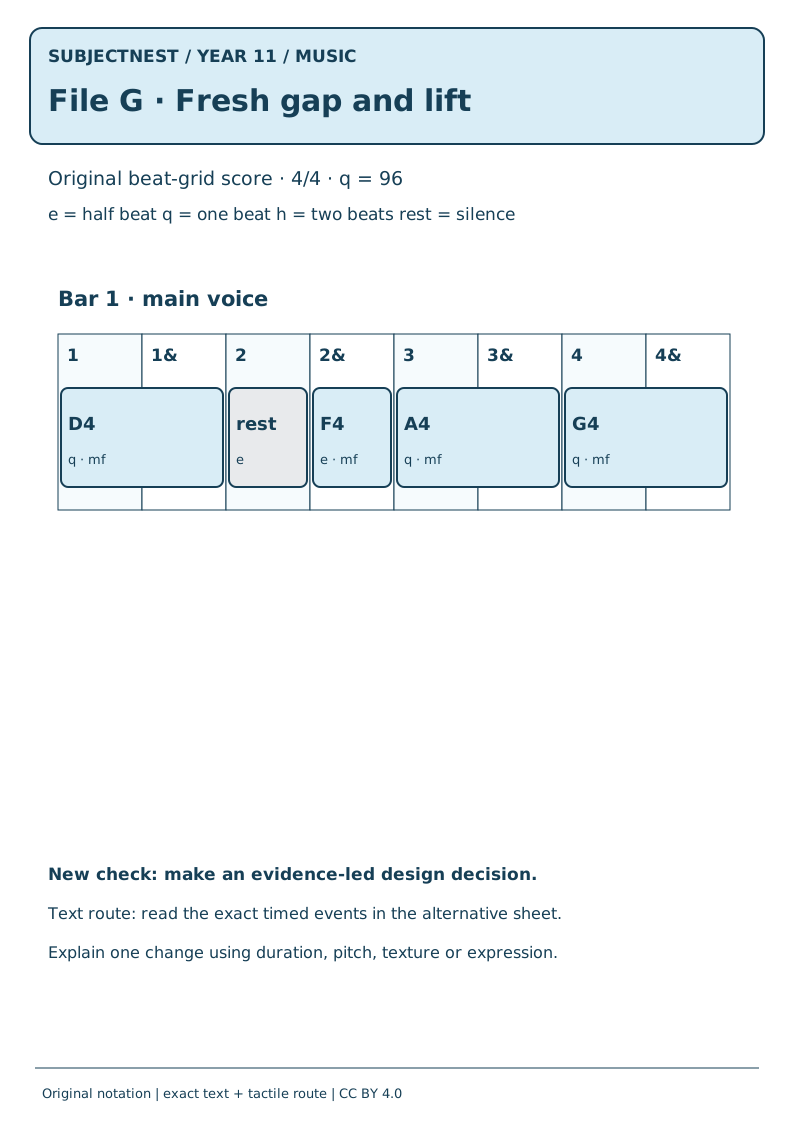
- Launch · 2 min. Remind learners that a rest occupies time and that they can use an audible, tactile or written route.
- Source access · 4 min. Read G’s exact labels neutrally or allow independent silent reading. Explain the notational legend, not the musical solution.
- Independent plan · 5 min. Learner identifies the event boundaries and selects one timing or pitch decision to change, keeping a four-beat bar.
- Independent response · 7 min. Learner makes a variation and explains one potential listener/reader effect with exact G evidence. A neutral scribe may place blocks but should not choose them.
- Self-audit · 4 min. Learner checks total beats, location of rest, and whether the claim is a possibility rather than a universal fact.
- Submit · 3 min. Save first response; then use the teacher feedback key. Extend time locally if the access route requires it.
Day 6 · Expression without changing notes
Target: Compare E’s quiet first half with moderately strong second half, then choose a dynamic design while keeping the pitch and duration sequence fixed.
Prepare: E; p/mf cards. The optional E WAV is a basic amplitude demonstration, not a nuanced performance.
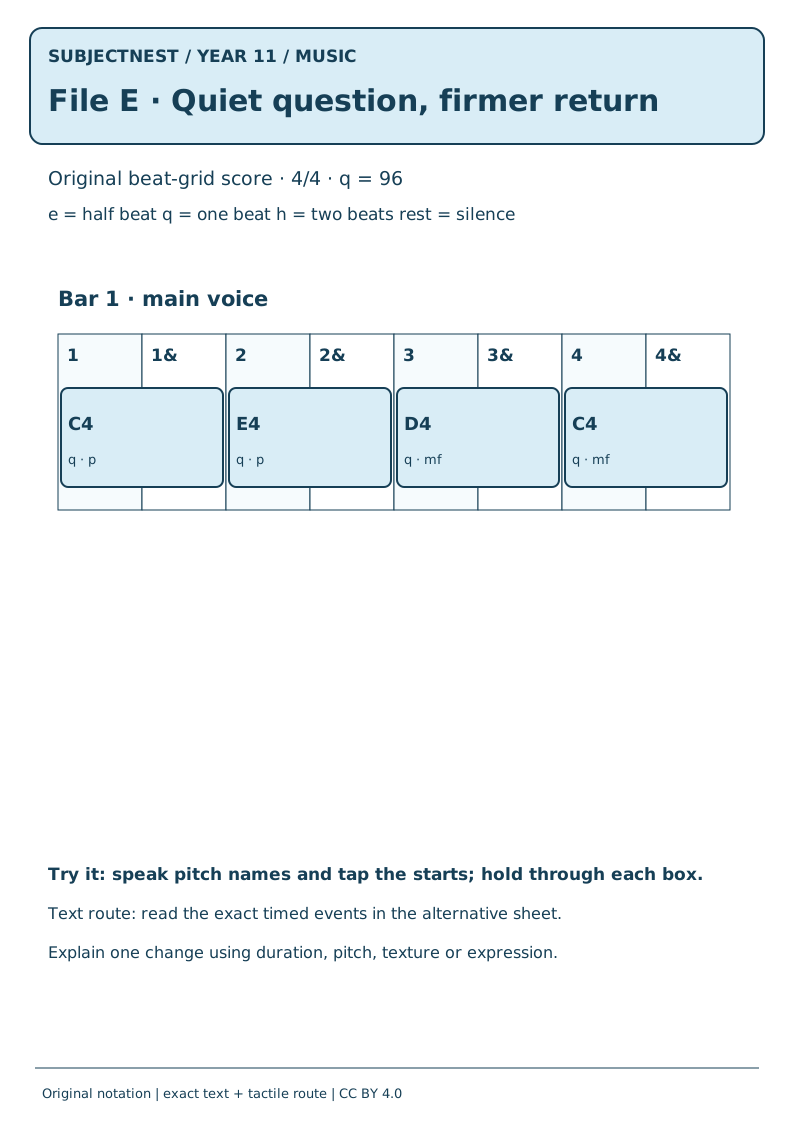
- Launch · 2 min. Define
pandmfas relative performance directions, not exact decibel values. - Model · 4 min. Read C4 q p, E4 q p, D4 q mf, C4 q mf. Tap four equal starts, then mark the dynamic change at beat 3.
- Guided looking · 5 min. Students compare E with an all-mf plan on the same four notes; point out what changed (level) and what stayed (pitch order and duration).
- Practice route · 7 min. Make a second p/mf plan, such as mf–mf–p–p. Perform quietly if comfortable, direct a partner or annotate; state which beat gains emphasis.
- Audit · 4 min. Check that no pitch or duration quietly changed. A claim such as “beat 1 may feel like an opening call” needs the marked level as evidence.
- Exit · 3 min. Submit both dynamic maps and one comparison sentence.
Day 7 · One strand, two strands
Target: Explain how F’s lower half-note line overlaps its upper quarter-note line, and compare the texture with upper voice alone.
Prepare: F, two rows of eight tactile or paper cells; optional F WAV.
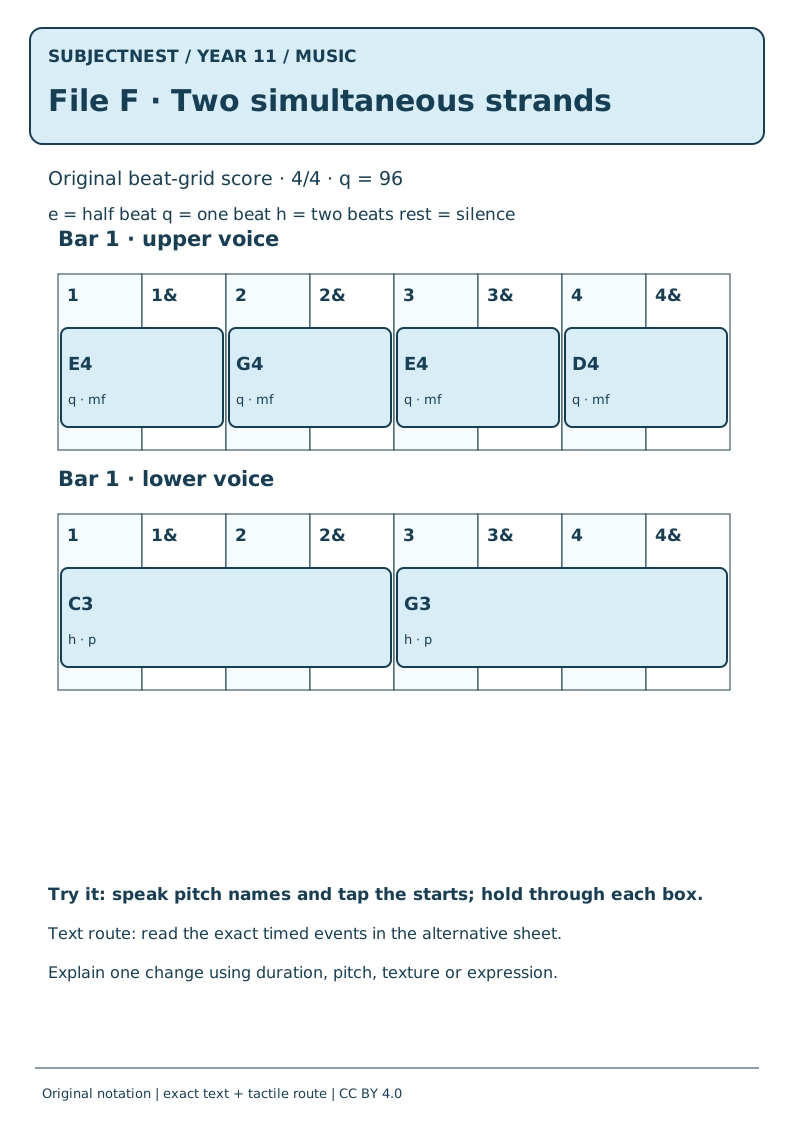
- Launch · 2 min. Ask whether “two notes written vertically” means they occur one after another or together. Point to matching starts.
- Model · 4 min. Read upper E4, G4, E4, D4 on beats 1–4; lower C3 holds beats 1–2 and G3 holds beats 3–4. The lower line is quieter in the score.
- Guided looking · 5 min. Mark simultaneous events at beat 1 and beat 3. Compare two distinct lines with one lone line; avoid attaching a genre label.
- Practice route · 7 min. Realise or represent F, then remove the lower row. Identify one event that is no longer sounding and explain how that alters the evidence for thickness/texture.
- Audit · 4 min. Confirm both voices independently fill four beats and that a learner did not sum them into eight sequential beats.
- Exit · 3 min. Collect a two-row timeline and a “with/without lower voice” evidence statement.
Day 8 · Repeat or answer
Target: Compare a two-bar A→A order with A→C, identifying repetition, contrast and one pitch-based reason for the chosen order.
Prepare: A, C, two blank bar cards. Optional WAV playback can be replaced with score tracing.
- Launch · 2 min. Lay down two A cards, then A and C. Both options last eight beats.
- Model · 4 min. Speak the pitch names across each order while counting two bars. A→A repeats all four events; A→C begins again on G4 and then descends.
- Guided looking · 5 min. Ask what is literally repeated and what is changed; check the claim at the boundary between bars.
- Practice route · 7 min. Learner chooses an order for a short four-beat-per-bar greeting signal, a movement cue, or an abstract study, without claiming any universal use. They mark two exact notes as evidence.
- Audit · 4 min. Verify both bars are four beats, then challenge “the second sounds final” with “which pitch motion supports that possible hearing?”
- Exit · 3 min. Collect an eight-beat layout and supported preference.
Day 9 · Keep a design trail
Target: Create a two-bar original design by transforming one A–F feature, recording what stayed, what changed and why.
Prepare: A–F score cards, two blank eight-cell grids; point to the source ledger to distinguish original examples from later researched repertoire.
- Launch · 2 min. Pick one source miniature. State its letter and one exact original event.
- Model · 4 min. Demonstrate A as bar 1, then C as bar 2: the beat durations stay q/q/q/q while pitch contour changes. Label this a simple transformation, not a genre/style claim.
- Guided looking · 5 min. Students locate a feature worth retaining in their chosen source: rest placement, short pair, dynamic pattern, contour or overlapping voice.
- Practice route · 7 min. Draft two four-beat bars. Mark at least one retained and one deliberately changed feature and record a predicted audience effect. Sound is optional; a written score is enough for this provisional planning task.
- Audit · 4 min. Peer/teacher checks each voice totals four beats per bar, asks for a specific evidence citation, and flags any borrowed tune as out of scope.
- Exit · 3 min. Save the first draft and one next experiment. The full course must later analyse varied, properly sourced repertoire.
Day 10 · Fresh H formative check
Target: Analyse a new two-bar design, transform one feature while preserving metre, and evaluate an evidence-led intention and its limit.
Prepare: student Check B, fresh H sheet, blank two-bar grid. Do not show the worked key first.
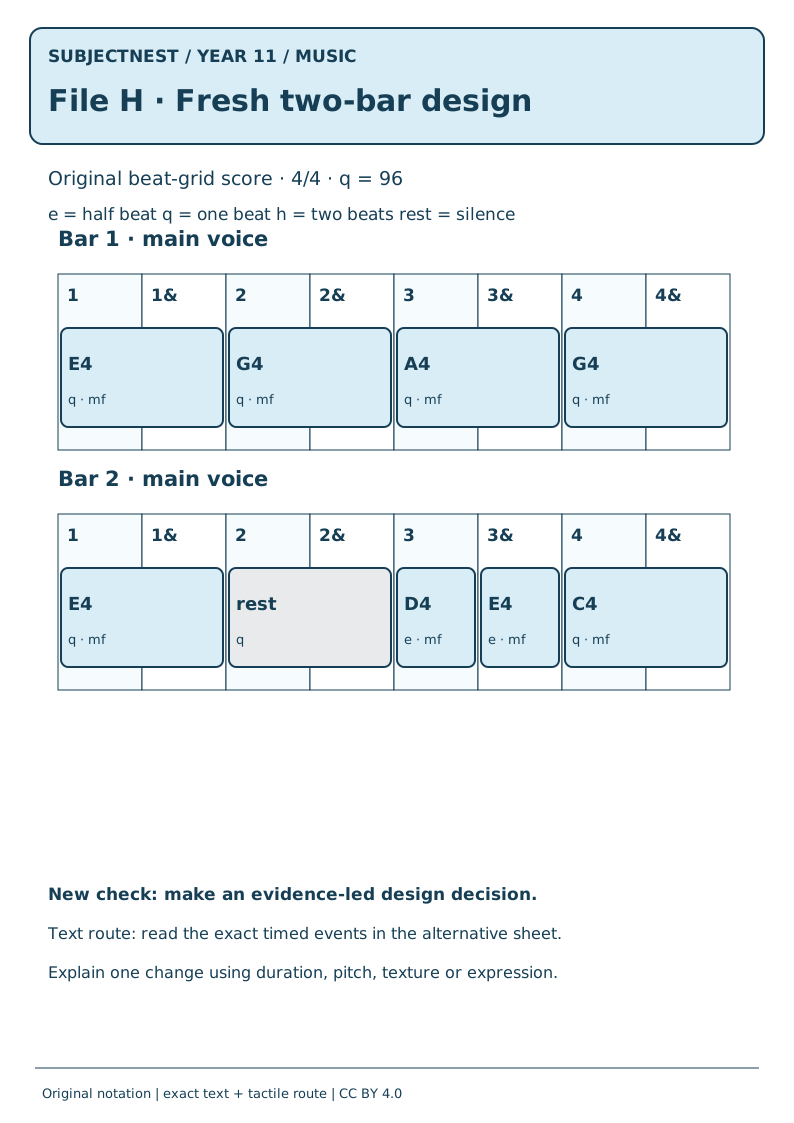
- Launch · 2 min. Review how to count a new bar from 1 again and how to label a possible effect.
- Source access · 4 min. Offer the exact sheet, text or raised-cell construction. Clarify notation only.
- Independent plan · 5 min. Learner finds H’s repeated/changed features across two bars and plans one safe, original transformation.
- Independent response · 7 min. Learner writes, directs or performs a revised two-bar pattern and a short evidence-led evaluation. No public recording is requested.
- Self-audit · 4 min. Check four beats in each bar, an exact cited event, a bounded interpretation, and source/rights separation.
- Submit · 3 min. Save first response, then discuss the separate teacher worked key and choose a next experiment. This public check cannot award a QCAA unit result.