These people and this event are invented for class. You can work from these texts without talking about your own job, finances, disability, family or travel. Ask for a readable, large-print, audio-read or digital copy if useful. Your teacher records when a text was read aloud for an independent-reading task.
Text A — a public notice
Source: fictional Lantern Yard organising team, writing on its own website for people considering crew roles.
A shift that fits your week
The Lantern Yard team is planning a two-day neighbourhood light festival. We need paid crew to set up displays and guide visitors. In this teaching scenario the listed base is $24 for each paid hour. A Saturday crew hour is listed at 1.25 times that base. A five-hour weekday shift and a four-hour Saturday shift therefore each show $120 before any unlisted deductions or additions.
Our poster says “same pay, more ways to take part.” Some roles need standing; others involve planning or writing. Ask us about duties and access before choosing a role. The notice does not set out break rules, travel support, every possible shift, the actual contract or a guaranteed place. It is a planning sketch, not an offer of employment.
Text B — a private draft
Source: diary-style draft by fictional student crew member Mira, written for herself after reading Text A. It is an invented voice, not a survey.
I circled same pay first. Four hours on Saturday looked easier to fit around classes than five on Thursday. Then I drew two boxes in my notebook: one for hours on site, one for the whole day. I do not know the travel time for either shift, or whether the work I can do is available on both days. The poster offered “more ways”; that phrase gave me room to imagine a choice, but it did not answer mine. I want the team to say what each role actually involves before I plan the week.
Text C — an editor's request
Source: fictional community newsletter editor, writing to a student author.
Write 130–180 words for readers considering Lantern Yard. Compare the notice and Mira's diary without claiming either speaks for everyone. Show the calculation behind the two $120 amounts, but explain one thing the figures cannot answer. Quote at most six words from each text. Name the original writer or type of source. Keep the tone curious and fair; give readers one question to ask the organisers.
Annotation space
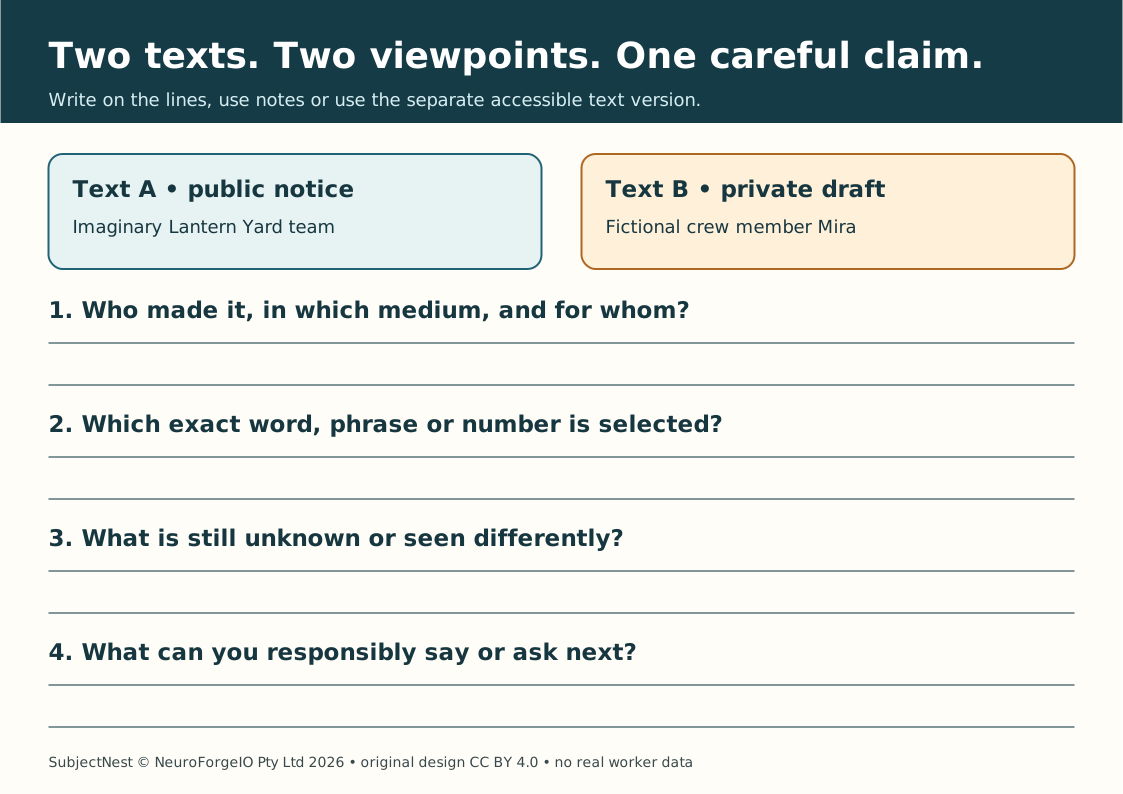
For each text, record maker / audience / exact words or numbers / what is left open / likely effect / a question. You can write, type, mark the perspective map, use its text version, or give an agreed spoken or AAC response. Use a sentence such as “The notice says …; this supports … but does not tell us …”.
Stop here before an independent check. Your teacher supplies the Day 5 or Day 10 card at the right time. This learner sheet contains no answer key.
Rights: Original fictional texts and learner prompts © NeuroForgeIO Pty Ltd 2026, SubjectNest, CC BY 4.0; credit, link and indicate changes.