Use: Two genuinely different short sessions in each of Dance, Drama, Media Arts, Music and Visual Arts. Each is notice 2 + make 7 + share 3 minutes, a supplement rather than sustained arts study. Give only the learner card and original choice–revision mat or text equivalent; hold criteria and next moves separately. A private share to teacher or chosen partner is enough. Do not copy a song, logo, character, cultural motif or community-held design. First Nations art forms require actual works, authority, ICIP and local relationships; none is fabricated here.
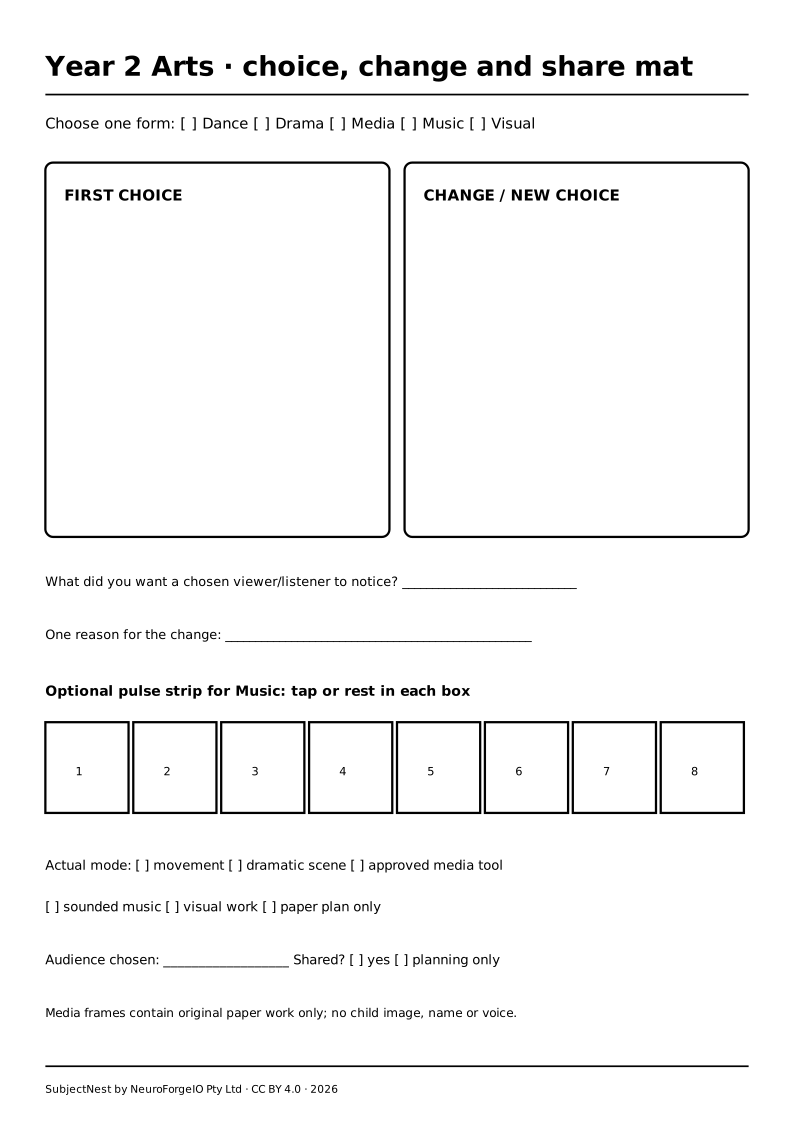
Week 1 domains: paper-fold movement, an imaginary service kiosk, a three-frame tool-return message, a sorting rhythm and a tool-library label. Week 2 domains: a movement meeting, two dramatic viewpoints, camera framing of paper objects, rhythm response and a privately shared drawing. Offer seated, standing, rolling, hand/eye or paper-token movement; record actual bodily dance separately from planned pathways. Offer low-volume sound, visual beat cards and a quiet route; silent composition does not prove listening or performance. Media Arts codes require a school-approved offline media technology actually used to capture/organise original shapes or text. Paper frames are preparatory, with no media-tech code evidence. No child's image, name, voice or personal story is captured, and nothing is uploaded. Accept sign, AAC, tactile marks, large shapes and child-directed adult assistance. Map codes precisely using the crosswalk.
Day 1 — Dance: fold and open in space
Codes: AC9ADA2D01, AC9ADA2C01 with actual accessible movement. Prepare: clear space or tabletop arrow mat.
- Notice · 2 min. Show a flat paper square and a fold, then say, “How could a movement phrase show close → open without pretending to be a particular cultural dance?”
- Make · 7 min. Learner chooses three safe actions: begin small, change direction or level, finish open. Try standing, seated, rolling, hand or eye movement if safe; a paper token plans the path. Pause between actions so sequence is visible.
- Share · 3 min. Child shows or describes the order and one expressive choice. Mark choreography/action only in the mode actually used.
Home/low-material: Trace the path on paper; no large room or public performance.
Day 2 — Drama: a missing ticket at the kiosk
Codes: AC9ADR2D01, AC9ADR2C01. Prepare: original paper characters Sen and Lux, blank ticket.
- Notice · 2 min. Set a fictional kiosk: Sen has a repair ticket; Lux cannot find theirs. Ask what each role might want, without casting a child as “bad.”
- Make · 7 min. Pairs or solo learner with an adult puppet improvise two possible next actions: search together or ask the kiosk worker for a new number. Use role, imagined place, voice, gesture or AAC; change one action and see how the scene changes.
- Share · 3 min. Child identifies role, problem and chosen action. Do not grade confidence or vocal volume.
Home/low-material: Two pencil circles as puppets and one scrap ticket.
Day 3 — Media Arts: a three-frame return message
Codes: AC9AMA2D01, AC9AMA2C01 only with actual approved media-tool use. Prepare: three blank frames, original paper tool/book symbols and offline school-managed camera or slide editor.
- Notice · 2 min. Show three empty frames. Ask which order would help a viewer understand a tool returning to a shelf.
- Make · 7 min. Child arranges original paper symbols into take → use → return, then directs/captures each frame with an approved offline tool; crop only the paper work. If no tool is approved, make the storyboard and label it paper preparation, not a media-technology outcome.
- Share · 3 min. Child names intended audience and one framing/order choice. Teacher records exactly which technology, if any, was used.
Home/low-material: Paper storyboard is a valid making activity; no family device/account is expected.
Day 4 — Music: a six-pulse sorting cue
Codes: AC9AMU2D01, AC9AMU2C01 with listening/sound evidence. Prepare: six blank pulse boxes and a soft tapping surface.
- Notice · 2 min. Teacher makes an original gentle example: tap – tap – rest – tap – rest – tap. Display six matching marks; allow a silent visual route.
- Make · 7 min. Learner chooses a different six-pulse pattern of taps/rests and repeats it, then changes one place. Invite comparison of the two patterns by listening, touch or visual sequence; note the actual mode.
- Share · 3 min. Child points to the changed pulse and, if willing, sounds it privately. Silent composition is recorded as composition/planning, not listening or playing evidence.
Home/low-material: Six pencil boxes; no instrument, recording or forced sound.
Day 5 — Visual Arts: a tool-library label
Codes: AC9AVA2D01, AC9AVA2C01. Prepare: blank rectangle, thick pencil or tactile line materials.
- Notice · 2 min. Ask, “How can line, size and spacing help a viewer find a tool-return label?” Show only original marks, never an existing brand sign.
- Make · 7 min. Child creates two tiny drafts using one bold shape, one line and a short word or symbol. Change the position or scale of one mark to guide attention. An adult may make the selected mark under the child's direction.
- Share · 3 min. Child chooses one draft and explains the intended visual path. Assess deliberate choice, not neatness.
Home/low-material: Reused paper and pencil; no paint or printer.
Day 6 — Dance: two pathways meet
Codes: AC9ADA2C01, AC9ADA2P01 with an actual accessible movement phrase shared informally. Prepare: two large path arrows and clear approved space.
- Notice · 2 min. Revisit Day 1's close/open idea. Ask how two paths can meet without bodies touching or blocking a route.
- Make · 7 min. Child composes start apart → curve toward → stop with space, changing tempo or size at one point. Try it in a safe body mode or plan on paper. An optional partner follows a parallel path with mutual agreement.
- Share · 3 min. Child performs an accessible phrase privately or shows the paper plan. Only performed movement supports the dance-sharing code; no public audience is required.
Home/low-material: Two pencil arrows are enough for planning; movement is optional.
Day 7 — Drama: change whose problem we see
Codes: AC9ADR2C01, AC9ADR2P01 when the created drama is shared. Prepare: Sen/Lux puppets and a blank ticket.
- Notice · 2 min. Ask, “What does Lux know that Sen does not yet know?” State that the kiosk story remains fictional.
- Make · 7 min. Child makes a short scene first from Sen's view, then changes one line/action to show Lux's view. Keep the imagined place and problem recognisable; an adult can voice a puppet from the child's choices.
- Share · 3 min. Child privately shows both versions and names the changed viewpoint. A script alone is preparatory until a dramatic scene is actually shared.
Home/low-material: Two paper circles and spoken/AAC lines.
Day 8 — Media Arts: near and far paper frames
Codes: AC9AMA2D01, AC9AMA2C01, AC9AMA2P01 only with actual approved media technology and an informal share. Prepare: original paper rectangle/circle and offline school-managed camera or slide editor.
- Notice · 2 min. Show the same paper symbol at two sizes in a frame. Ask which gives a viewer more detail, without implying either is always better.
- Make · 7 min. Child captures or arranges near detail and whole scene views of the paper-only tool-return story, then selects an order for the viewer. No face, name, voice, school layout or upload. Without approved technology, make labelled paper frames as a storyboard only.
- Share · 3 min. Child shares the media work privately and states why one frame comes first. Record actual tool and audience; a paper-only route does not meet the media codes.
Home/low-material: Two paper frames; a family device is never required.
Day 9 — Music: answer a four-pulse call
Codes: AC9AMU2C01, AC9AMU2P01; AC9AMU2D01 when listening/playing is observed. Prepare: eight pulse boxes, soft sound option.
- Notice · 2 min. Teacher offers original four-pulse call tap – rest – tap – tap at gentle volume, plus a visual card. Pause for a response.
- Make · 7 min. Child selects a different four-pulse answer and combines call + answer. Practise with soft sound or visual/tactile beats; let the learner change one answer pulse for a new effect.
- Share · 3 min. Child sings/plays or shows the sequence to a chosen informal audience. Claim music performance only if sounded by voice or instrument; silent cards show composition reasoning.
Home/low-material: Eight marks on paper; no song, instrument or recording.
Day 10 — Visual Arts: a useful drawing for one viewer
Codes: AC9AVA2C01, AC9AVA2P01. Prepare: new blank card, one fictional viewer question and key.
- Notice · 2 min. Offer a fresh fictional purpose: help someone find the return tray at the invented kiosk. Ask how a visual mark could guide the eye; do not show a ready answer.
- Make · 7 min. Child independently chooses line, shape, scale and spacing for a drawing, then revises one part after a neutral viewer question such as “Where do I look first?” No copied logo or public sign.
- Share · 3 min. Child shares first/revised version privately with teacher or chosen partner, states intended viewer and one reason for change. Do not rank beauty.
Home/low-material: One folded scrap sheet; adult asks a neutral question and records the child's change.
Original SubjectNest scripts, rhythm patterns, characters and marks © NeuroForgeIO Pty Ltd 2026, CC BY 4.0.