Use: These blocks extend the existing Year 2 paper inquiry with new questions about physical changes and a second strand on sound and vibration. They are short supplements, not ten complete science investigations. Each runs notice 2, try 7, show 3 minutes. Give a learner card and the original prediction–evidence mat or text equivalent; keep the key and next moves teacher-side. Codes are partial Year 2 links in the crosswalk.
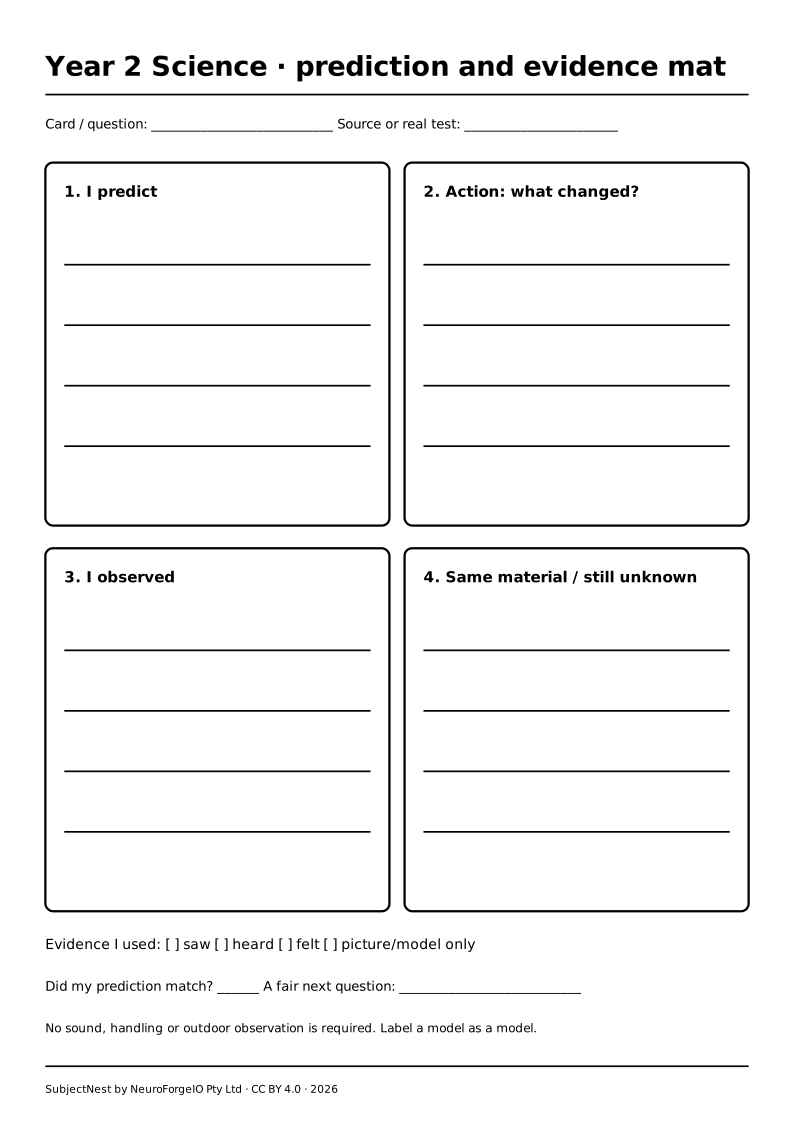
Week 1 domains: folded parcel sleeve, paper label, classroom organiser and paper offcuts. Week 2 domains: gentle paper signal, desk-top sound source, book-cover tap and a sound-free model. Use clean scrap paper and blunt pre-cut pieces; no sharp tools, thrown pieces, near-ear sound, amplification, forced touch or demand to make sound. Ask before any real sound. A quiet visual model is a valid access route, but it cannot supply observed sound/vibration evidence. Children may point, sign, use AAC, draw, type or direct adult manipulation. Record prediction, exact action, what was seen/heard/felt, support and next move separately. Do not imply that all materials respond like paper.
Day 1 — Can a folded parcel sleeve still be paper?
Codes: AC9S2U03, AC9S2I01. Prepare: two equal scrap-paper rectangles and Card 1.
- Notice · 2 min. Hold one flat rectangle and one folded into a sleeve. Ask, “What changed? What stayed the same? What might happen if I open the fold?” Write one prediction without correcting it.
- Try · 7 min. Children fold and open their own rectangle, or direct an adult. Compare shape before/after; label action: fold and material: paper. Do not claim every crease disappears.
- Show · 3 min. Each child states one shape change and one material that stayed the same. Note who confuses object form with what it is made of.
Home/low-material: Fold any spare paper; a drawing of flat/folded paper works as a prediction task only.
Day 2 — Twist a label; control what changes
Codes: AC9S2U03, AC9S2I02, AC9S2I03. Prepare: two same-size paper strips, no scissors during the block.
- Notice · 2 min. Ask whether twisting one strip will change its length appearance or its material. Clarify that the strips start the same size.
- Try · 7 min. Leave strip A flat; gently twist strip B once. Lay them beside one another without pulling. Children record flat/twisted, and what they can actually see. If a child needs motor support, they direct the twist.
- Show · 3 min. Ask, “Which single action differed? What would make this comparison fairer?” Accept “same paper and size” with a reason.
Home/low-material: One strip before/after with a line drawing; no purchase or household material survey.
Day 3 — Sort actions, not just pictures
Codes: AC9S2U03, AC9S2I04. Prepare: Card 3's four original action descriptions.
- Notice · 2 min. Say, “A caption can name an action even when we did not see it happen. Which word in folded paper tells us the action?”
- Try · 7 min. Children sort folded, twisted, torn into two and untouched into shape changed or no action shown, then sort the changed cards again by action. Remind them that tearing paper leaves paper pieces; it does not make a new material.
- Show · 3 min. Child chooses one card and gives the evidence word in its caption. Record an action-based explanation, not speed.
Home/low-material: Read four captions and sort spoken words into two hand positions; no tearing is needed.
Day 4 — A paper pocket has limits
Codes: AC9S2U03, AC9S2I05, AC9S2I06. Prepare: folded paper pocket model and a flat paper square of the same sheet type.
- Notice · 2 min. Show a folded pocket for holding a paper note. Ask if a fold changed its usefulness and whether the paper became a different material.
- Try · 7 min. Children test whether a single light paper note sits in the pocket; observe only this arrangement. Compare the same note on flat paper. Do not extrapolate to heavy objects or claim a pocket always holds.
- Show · 3 min. Complete “The fold changed ; it was still ; this test does not show __.” Collect one question for a second trial.
Home/low-material: Sketch a pocket and note; mark the hold result unknown unless actually tested.
Day 5 — Fresh physical-change check
Codes: AC9S2U03, AC9S2I01, AC9S2I03, AC9S2I05. Prepare: a new rectangular paper band, Card 5, teacher check.
- Notice · 2 min. Ask for a prediction: “If this band is bent into a loop, what changes and what stays paper?” Do not model the answer.
- Try · 7 min. Child bends or directs bending, records before/after shape and one observation, then compares the prediction. Offer tactile/large paper or an adult-led manipulation under the child's instruction.
- Show · 3 min. Collect the first explanation before feedback. A drawing-only route is recorded as reasoning about a model, not actual observation.
Home/low-material: Paper strip and pencil; if no paper, use the supplied pictured band and label outcome a prediction.
Day 6 — What makes a gentle paper sound?
Codes: AC9S2U02, AC9S2I01. Prepare: a loose paper flap fixed to a teacher-held card, Card 6; ask for sound consent.
- Notice · 2 min. Show the still flap. Ask, “What might change if I gently flick it once?” Offer a quiet observation or silent teacher diagram.
- Try · 7 min. Teacher flicks once at a comfortable volume; children watch the flap move and, if they choose, listen. Repeat once with the flap held still. Compare movement and sound without insisting everyone heard the same thing.
- Show · 3 min. Child links the action to a visible vibration or says which evidence was unavailable. Avoid “every movement makes audible sound.”
Home/low-material: Adult may move a paper corner once softly; a silent diagram supports prediction, not an observed sound claim.
Day 7 — Tap and rub, one paper source
Codes: AC9S2U02, AC9S2I02, AC9S2I03. Prepare: one clean paper card; school-approved soft volume.
- Notice · 2 min. Ask for two actions that may make different sounds with the same paper: gentle tap and gentle rub. Record a prediction as may, not will.
- Try · 7 min. Teacher/learner tests tap then rub on the same card and same safe surface; child records heard/seen/touch evidence and can mark not heard. Stop on request. Do not rank children's hearing or require ear proximity.
- Show · 3 min. Ask what was held the same and what action changed. Record a fair-comparison idea even when the child used a silent route.
Home/low-material: Two spoken action cards and a paper drawing; optional gentle trial only with agreement.
Day 8 — Put sound evidence in a table
Codes: AC9S2U02, AC9S2I04. Prepare: Card 8's invented observation notes, clearly labelled invented practice data.
- Notice · 2 min. Read three notes: flap moved and a rustle was heard, card stayed still and no sound was reported, card moved but the listener marked not heard. Ask what each note actually reports.
- Try · 7 min. Children put notes in a two-column movement seen / sound reported table, retaining not heard rather than changing it to silent. Ask which note invites a second observation.
- Show · 3 min. Child makes one limited pattern statement from the supplied notes and one question. These notes are a reasoning model, not a real class result.
Home/low-material: Draw the two columns or sort labels verbally; no sound generation.
Day 9 — How could a signal help?
Codes: AC9S2U02, AC9S2H01, AC9S2I05. Prepare: optional gentle paper signal and Card 9.
- Notice · 2 min. Give an invented library task: a worker wants to signal that books are ready without shouting. Ask what a paper sound might do and who might not hear it.
- Try · 7 min. Revisit one labelled Day 7 observation, or Day 8's invented practice note if no real observation exists. Children use that limited pattern to predict whether a quiet paper action might be noticed, add a visible raised card, and name what evidence would be needed to say either signal worked. If an approved test occurs, keep it private and voluntary; no child is a test of hearing.
- Show · 3 min. Child names the prior source, chooses an accessible signal pair and says why one channel alone could fail. Mark untested usefulness as a prediction.
Home/low-material: Draw one visible and one optional sound signal; no device or loud demonstration.
Day 10 — Fresh sound-and-vibration explanation
Codes: AC9S2U02, AC9S2I03, AC9S2I05, AC9S2I06. Prepare: a new paper cover loosely resting on an empty box; Card 10 and key.
- Notice · 2 min. Ask, “What might happen if the cover is tapped gently?” Leave prediction visible. A box is optional; the teacher can use an approved alternative paper surface.
- Try · 7 min. With consent, tap gently once, observe paper movement and record any sound report. Compare with the prediction and name a fair next question. A silent model can be used without falsely scoring sound observation.
- Show · 3 min. Collect a supported claim: action, observed vibration, any sound and one limit. Keep exact response mode on the teacher record.
Home/low-material: Fold paper over a drawn box and predict; real observation is optional and separately labelled.
Original SubjectNest prose and cards © NeuroForgeIO Pty Ltd 2026, CC BY 4.0. No imported diagrams or recordings.