Codes: AC9E2LA03, AC9E2LY03, AC9E2LY05. Goal: identify purpose, audience and the role of headings/list/directions in Text B. Prepare: Information text B, two equal sheets; no test result required in English time.
- Invite · 2 min. Ask: “If someone wants to try a paper-span test, would Story A alone tell them all the steps?” Accept a reason.
- Read · 5 min. Read Text B aloud, showing headings. Say: “It gives a question, materials, steps and a think-again question. It speaks to a person doing the test.”
- Navigate · 6 min. Point to
You needand ask which items belong there. Point toTry itand ask where the directions begin. Contrast the story's characters and events with this text's directions. Ask where a reader would return to check the gap instruction. - Partner route · 7 min. Children use purpose mat to sort heading cards to
question / materials / steps / thinking. Partners explain to whom the text is helpful. A teacher reads headings aloud for anyone who needs it. - Check safety and limits · 3 min. Ask: “Does the text promise that one fold always works?” Reread “One try is a clue.” Clarify that an adult checks the space and small paper token.
- Check · 2 min. Everyone points to the heading that helps them find equipment and says who might use this text. Focus learners give a reason. If headings and content are confused, model navigation again with a grocery list.
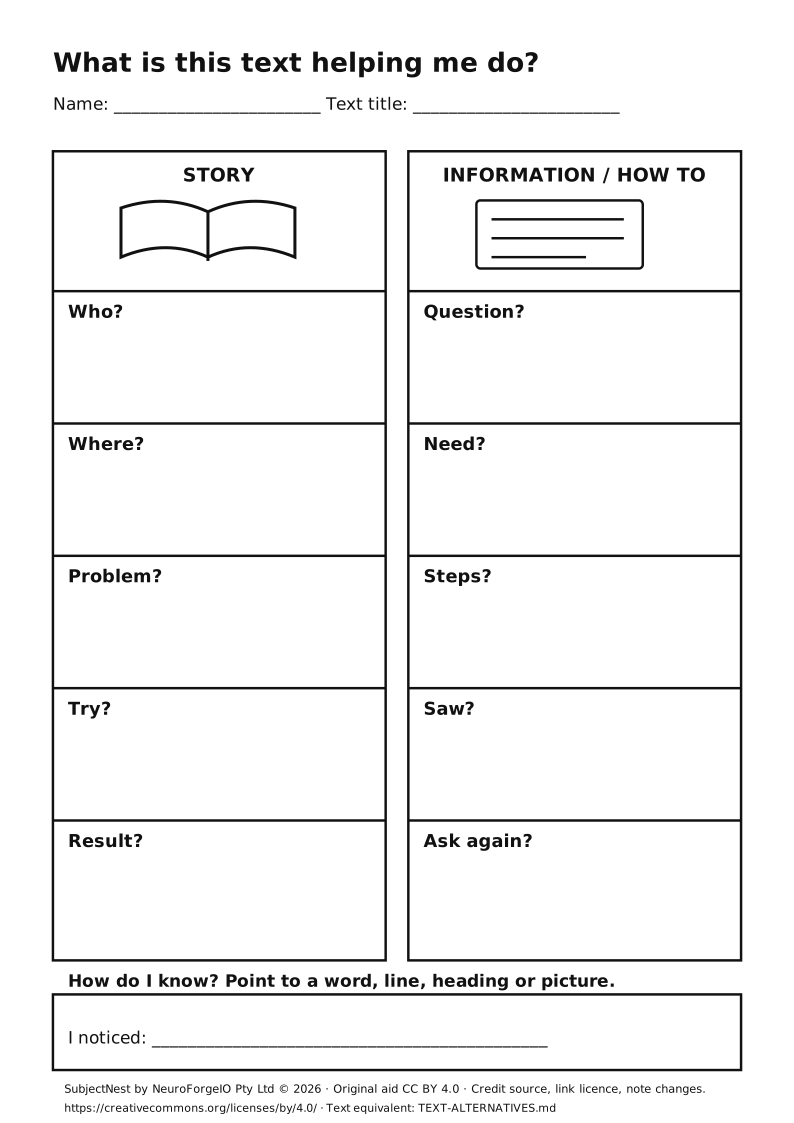
Access: raised/tactile four-section mat, printed heading labels, adult read-aloud, AAC/pointing. The independent reading claim belongs only to text read without voice help.