The garden SVG/PDF and stock SVG/PDF use words and shapes, never colour alone. Use this text with a screen reader, large print, a braille label maker where available, paper squares, raised tape, bottle tops or a spoken grid. A person may decline touch; let them choose. These are fictional learning models, not outdoor route or real inventory instructions.
Garden route mat: exact reading order
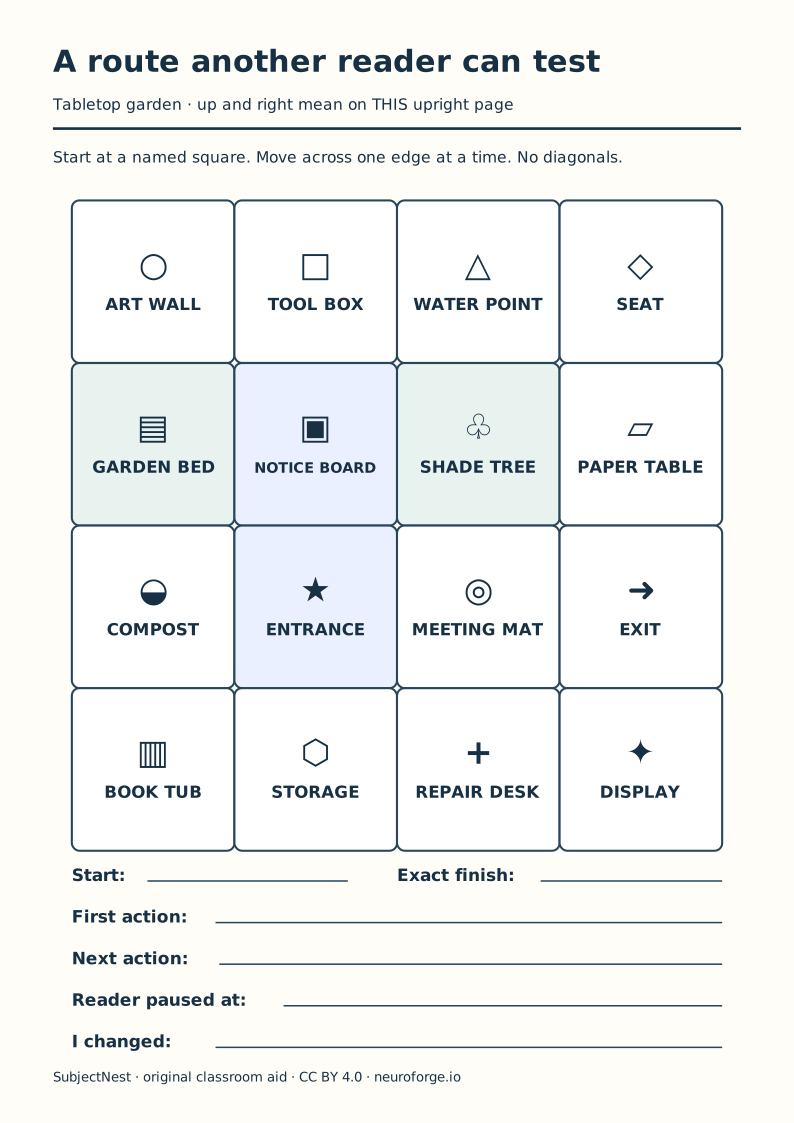
The page shows a four-column, four-row grid. The top row from left to right is ART WALL, TOOL BOX, WATER POINT, SEAT. The second row is GARDEN BED, NOTICE BOARD, SHADE TREE, PAPER TABLE. The third row is COMPOST, ENTRANCE, MEETING MAT, EXIT. The bottom row is BOOK TUB, STORAGE, REPAIR DESK, DISPLAY. Each cell is a square with a written name and distinct simple mark. The top edge of the page is “up”. One move crosses one shared edge, never a diagonal.
Core story route: put a token at ENTRANCE (third row, second column). Move one square up on the page to NOTICE BOARD (second row, second column). Move one square right on the page to SHADE TREE (second row, third column). GARDEN BED lies one square left of the notice board. This shows why “green shape” can be unclear if two places fit. The mat is used to test words, not to prove all real routes safe or accessible.
Tactile build: make sixteen equal squares in a 4×4 table using raised tape or folded paper dividers. Mark the page's top edge with two bumps. Place large-print/braille or spoken row–column labels; avoid replacing place names with touch-only codes unless you keep a complete key. Put a token at row 3, column 2. Explain that “up/down/left/right” refer to the page held upright. For a child unable to move the token, an adult moves it only after the child selects the next square. Record that access choice.
No-print route card: Start: ____ First action on this page: ____ Landmark: ____ Next action: ____ Exact finish: ____ Reader paused at: ____ I changed: ____. Keep both versions.
Stock explanation planner: exact reading order
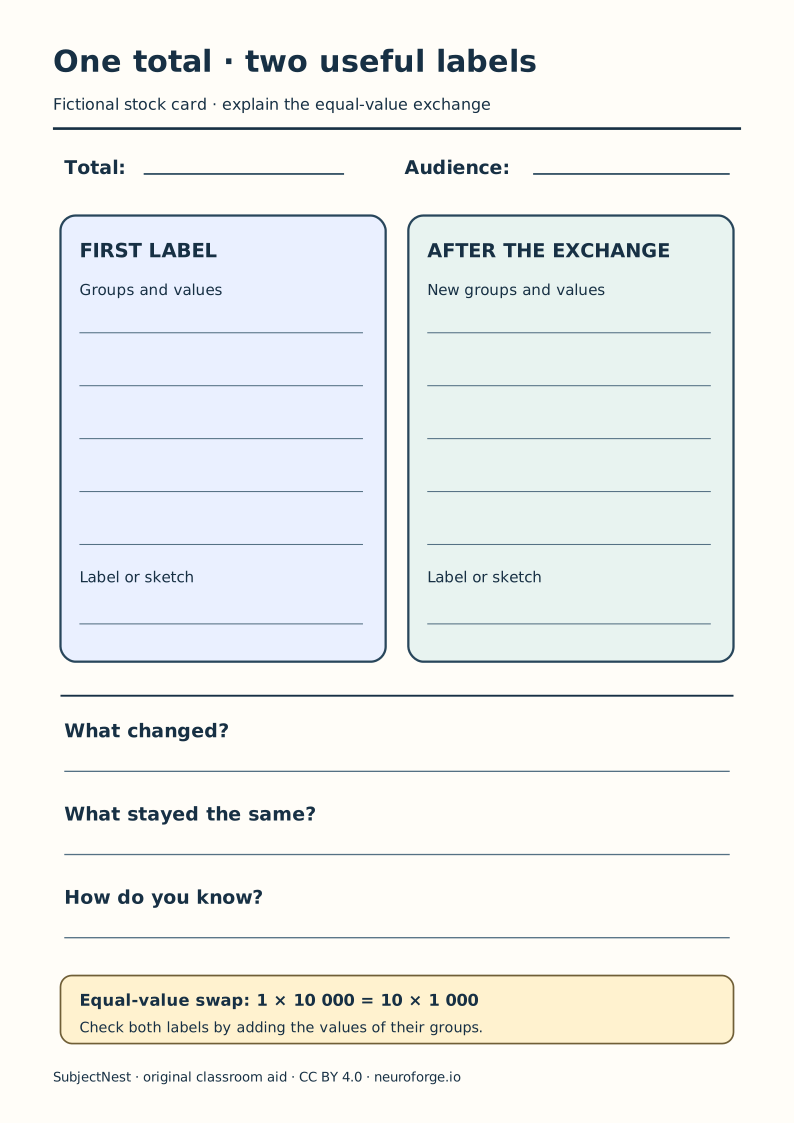
The page begins with Total: ____ and Audience: ____. Then two equal-size writing areas appear left to right:
First label: value/groups and a small labelled drawing or spoken/tactile model.New label after equal-value exchange: value/groups and a second labelled model.
Below both areas are three questions: What changed? ____ What stayed the same? ____ How do you know? ____. The footer reminder reads: One ten-thousand = ten thousands. Check both labels by adding group values. This reminder is a teacher-approved model, not a substitute for a child's explanation. The exact practice text uses fictional 24 306; the planner itself can be reused for a smaller true equal-value exchange.
Tactile build: use two trays or paper rectangles. Give each a labelled total card and place-value cards worth 10 000, 1 000, 100, 10 and 1. Swap one 10 000 card for ten 1 000 cards in view of the learner; count equivalent values before and after. A child can dictate or select groups changed and total stayed the same. Never ask children to handle thousands of real objects.
No-print explanation frame: The card starts with ____ . We changed ____ into ____ . The value of those groups is the same because ____ . Both labels total ____ . Invite a child to reorder, shorten or replace the frame if their own explanation is clear.
Original resource rights: © NeuroForgeIO Pty Ltd 2026, SubjectNest, CC BY 4.0. Credit, link and indicate changes. Fonts embedded in PDFs have separate terms in font rights.