Codes: AC9E3LA03, AC9E3LA05, AC9E3LY03, AC9E3LY05. Aim: navigate headings, identify purpose and separate observation from inference. Bring: Information text B and evidence board.
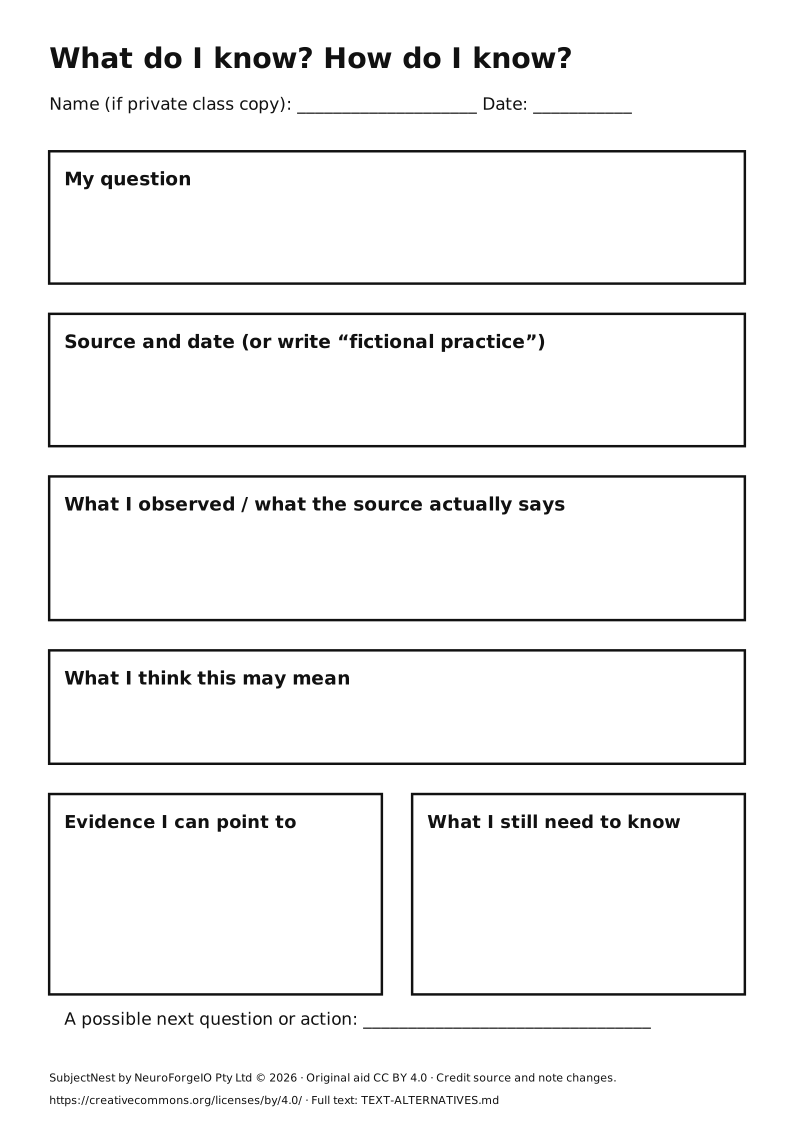
- Question · 2 min. Ask: “If we wanted to compare two closed samples, would Story A give us the steps?” Ask for a reason, then show Text B.
- Shared read · 5 min. Read Text B aloud and point to each heading. Say: “This writer tells a reader how to observe safely, then asks them to compare. It does not claim to know our result before we look.”
- Navigate · 6 min. Ask children to find where to learn
what to look for,what not to do, andwhat we still cannot tell. They point to phrases; teacher checks each choice in the text. - Sort two claims · 7 min. Put on board
sample A looks darkerandsample A will grow better plants. Ask which could be observed from the containers and which needs other evidence. No claim about actual sample A is made until the class has a real record. - Audience · 3 min. Ask who could use this text (a class about to compare samples) and what they would do with it. Contrast a reader enjoying Story A; both may be useful for different purposes.
- Check · 2 min. Everyone points to the section that warns against a broad conclusion and says why. Focus learners' answer is recorded as listening/navigation if teacher read the text.
Access: headings in large/tactile cards, read-aloud, screen reader or AAC pointing. Do not call teacher-assisted reading an independent fluency sample.