These are full equivalents to the original partial-products mat and estimate–exact–decision mat, not image-only labels. Use linear text, large print, school-prepared Braille, AAC, speech, or a raised-line/tactile layout. Colours are never the only cue. Check the final format with the learner; do not infer mathematical understanding from fine-motor speed.
Partial-products mat · linear reading order
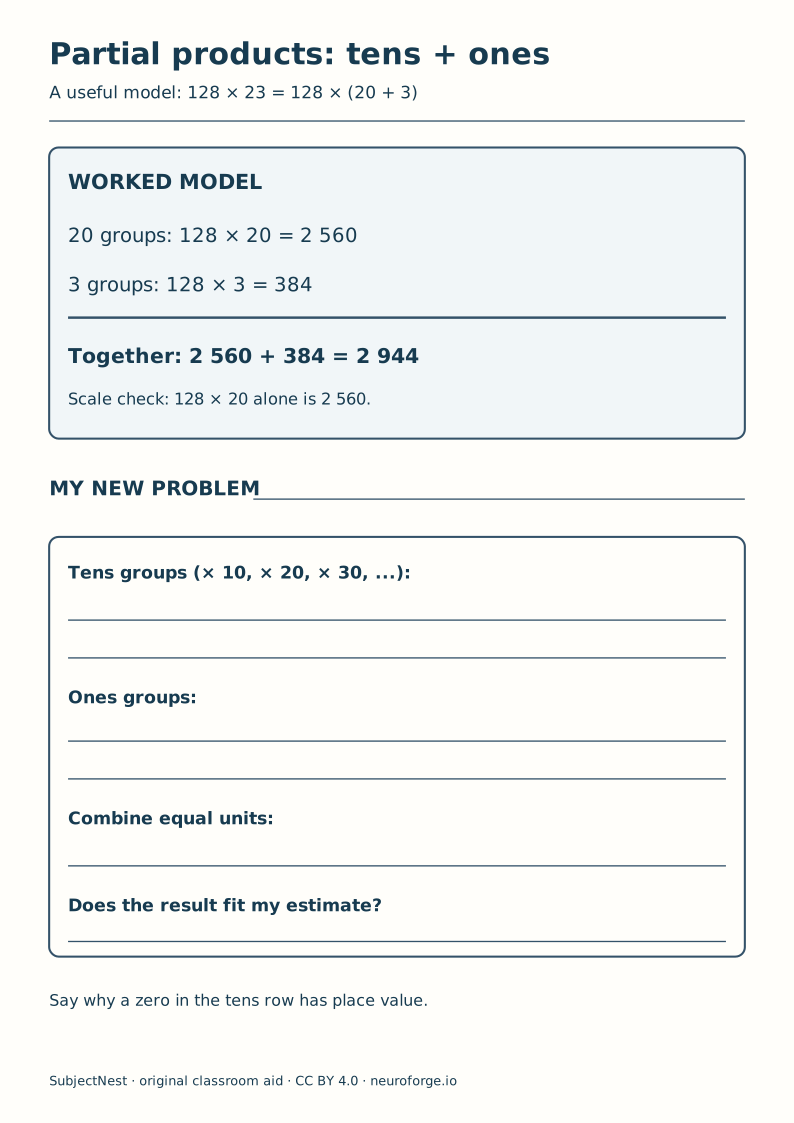
Title: Partial products: tens + ones. Model: 128 × 23 = 128 × (20 + 3).
Worked model: Twenty groups: 128 × 20 = 2 560. Three groups: 128 × 3 = 384. Together: 2 560 + 384 = 2 944. Scale check: 128 × 20 alone is 2 560, so an exact answer below it is impossible when adding three positive groups.
New problem fields, in order: (1) My new problem [blank]. (2) Tens groups, such as ×10, ×20 or ×30 [two blank lines]. (3) Ones groups [two blank lines]. (4) Combine equal units [blank]. (5) Does the result fit my estimate? [blank]. Final prompt: “Say why a zero in the tens row has place value.”
Tactile build: Put a thick cord down the centre of a tray as a divider. On the left, a card labelled TENS GROUPS with a raised ×20; on the right, ONES GROUPS with ×3. Use separate numbered cards 2 560 and 384, then move both under a tactile SUM label to form 2 944. Put a third ESTIMATE card before the sum. The teacher reads labels aloud or uses school-approved Braille. A child may direct a partner to move pieces. The spatial format is optional; the number/value relationship is the target.
Estimate–exact–decide mat · linear reading order
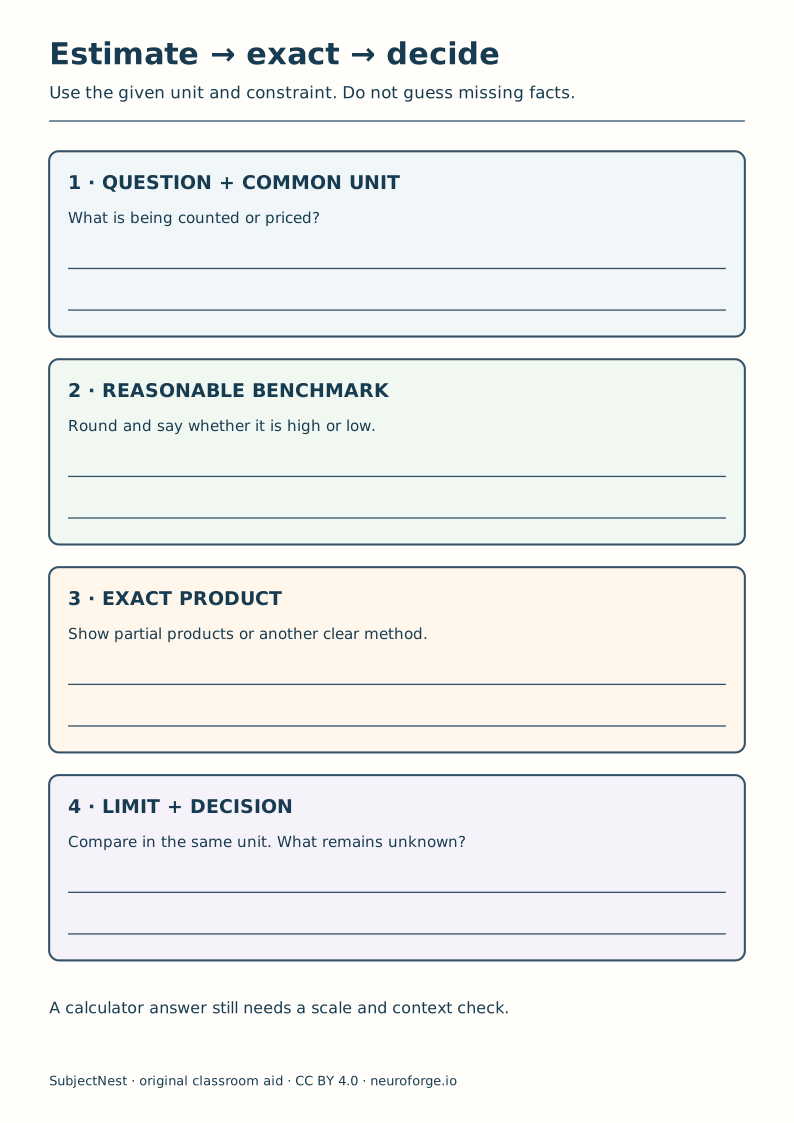
Title: Estimate → exact → decide. Instruction: “Use the given unit and constraint. Do not guess missing facts.” Four numbered boxes each have two blank response lines.
- QUESTION + COMMON UNIT: What is being counted or priced? [blank].
- REASONABLE BENCHMARK: Round and say whether the estimate is high or low. [blank].
- EXACT PRODUCT: Show partial products or another clear method. [blank].
- LIMIT + DECISION: Compare in the same unit. What remains unknown? [blank].
Footer reminder: “A calculator answer still needs a scale and context check.”
Tactile build: Line up four shallow trays or textured rectangles with raised numerals/word labels 1 QUESTION, 2 ESTIMATE, 3 EXACT, 4 DECISION. Place unit tokens (cards, dollars, packs) beside tray 1 and repeat the same unit on tray 4. A child moves number/equation cards through the row, leaving both estimate and exact visible for comparison. Provide an equally usable verbal/AAC list for anyone who does not use touch or sight. No device, printing or purchase is necessary.
Original resource rights: © NeuroForgeIO Pty Ltd 2026, SubjectNest, CC BY 4.0. Credit, link and indicate changes. See font rights for the PDF's separate embedded font licence.