The editable originals are claim and source reach, paragraph path and number and meaning, each with a same-name PDF. This page gives every prompt, label, value and important spatial relation. A teacher can read it exactly, enlarge it, make raised labels locally, prepare Braille or offer AAC. Colour adds grouping but carries no exclusive meaning. Ask each learner whether the prepared format works; these alternatives have not been validated with every assistive technology.
Claim and source-reach mat
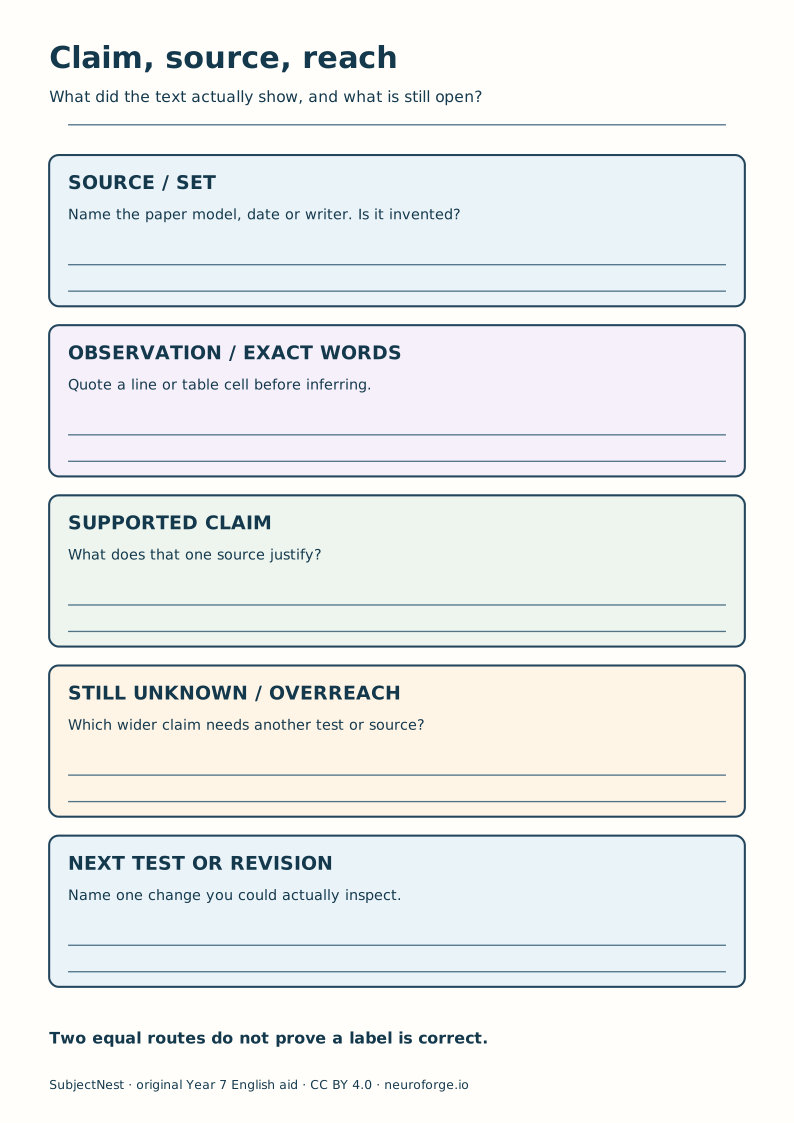
Title: Claim, source, reach. Instruction: What did the text actually show, and what is still open? Five numbered fields run vertically from top to bottom, each with two blank response lines:
- SOURCE / SET: Name the paper model, date or writer. Is it invented?
- OBSERVATION / EXACT WORDS: Quote a line or table cell before inferring.
- SUPPORTED CLAIM: What does that one source justify?
- STILL UNKNOWN / OVERREACH: Which wider claim needs another test or source?
- NEXT TEST OR REVISION: Name one change you could actually inspect.
Footer: Two equal routes do not prove a label is correct. Use this to separate repeatability from identity, not as a claim that repeatability is unimportant.
Tactile build: Place five large word cards vertically with raised numbers 1–5 or distinct corner notches. Put the exact source quote on a movable strip next to field 2. Use a separate token labelled MODEL. A learner can direct a scribe or move source/claim/unknown cards; preserve the learner's words.
Paragraph-path aid
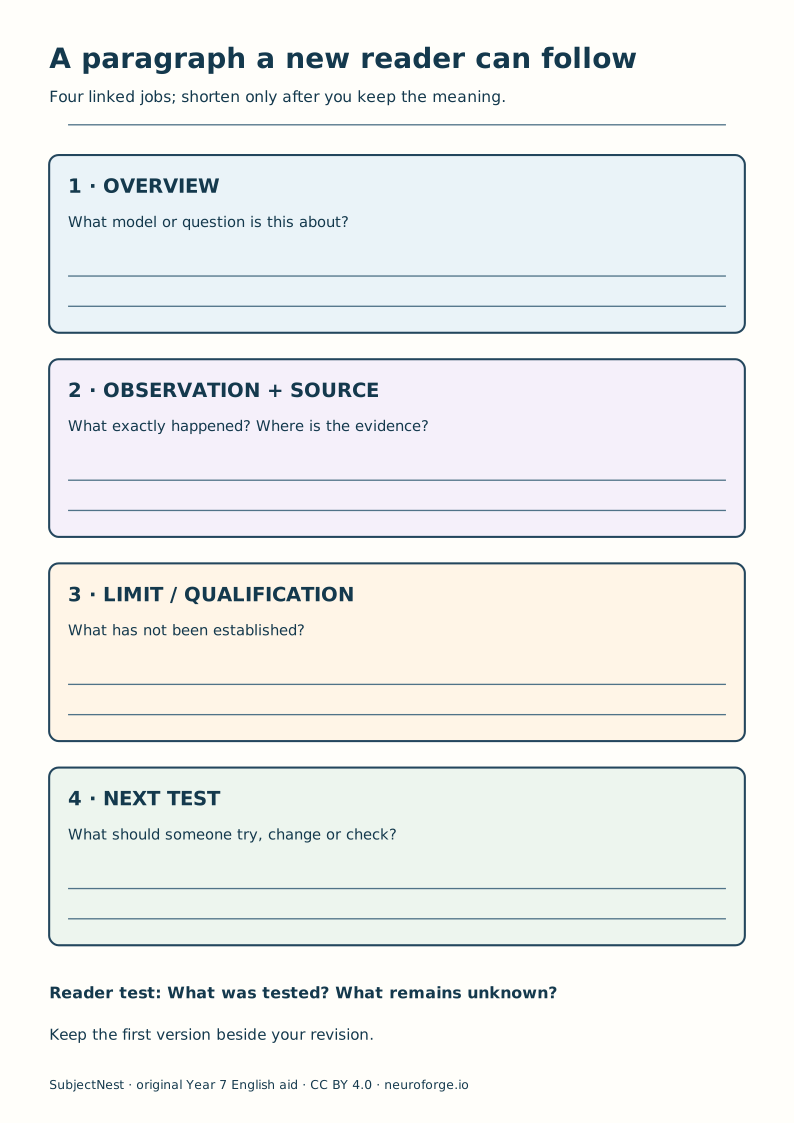
Title: A paragraph a new reader can follow. Instruction: Four linked jobs; shorten only after you keep the meaning. Four numbered boxes run top to bottom, each with two blank response lines:
- OVERVIEW: What model or question is this about?
- OBSERVATION + SOURCE: What exactly happened? Where is the evidence?
- LIMIT / QUALIFICATION: What has not been established?
- NEXT TEST: What should someone try, change or check?
Final reader questions: What was tested? What remains unknown? Footer: Keep the first version beside your revision. No fixed connective is required; the author chooses the phrase that correctly signals the relationship.
Tactile build: Four large cards in order, with one to four raised dots in the upper corner. Let a learner move a sentence strip between cards and add a spoken/AAC connective. The teacher can read the complete paragraph back exactly so the learner checks cohesion.
Number-and-meaning map
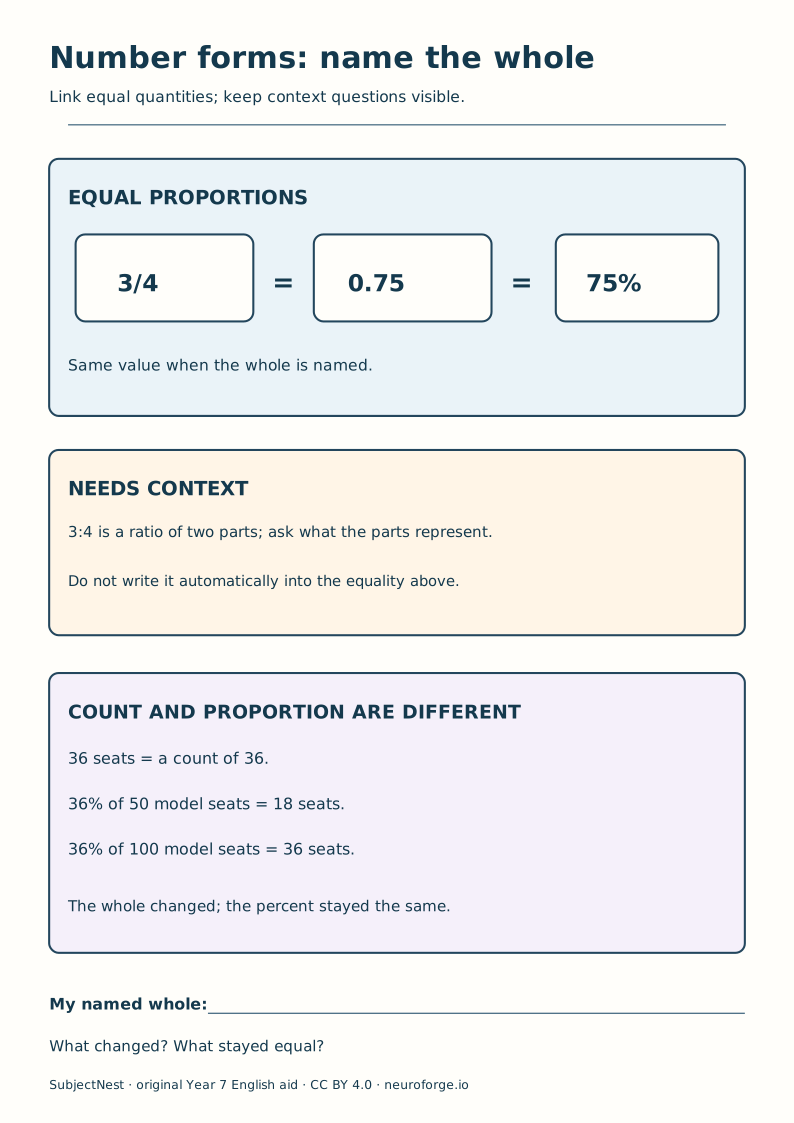
Title: Number forms: name the whole. Instruction: Link equal quantities; keep context questions visible. The page has three distinct sections from top to bottom:
- EQUAL PROPORTIONS: Three boxes in a row read
3/4,0.75,75%, with equal signs between them:3/4 = 0.75 = 75%. Caption: Same value when the whole is named. - NEEDS CONTEXT: The line
3:4is outside and below the equality boxes. It is a ratio of two parts; ask what the parts represent. Instruction: Do not write it automatically into the equality above. A ratio can relate to fractions in a specified situation, but this notation alone does not identify3/4of one whole. - COUNT AND PROPORTION ARE DIFFERENT: Lines read 36 seats = a count of 36; 36% of 50 model seats = 18 seats; 36% of 100 model seats = 36 seats. Caption: The whole changed; the percent stayed the same. The bottom has a blank field My named whole and two questions: What changed? What stayed equal?
The equal signs and the separate ratio section matter more than the colours or positions. The 50- and 100-seat examples are invented number models, not real capacity data.
Tactile build: Set out three large cards 3/4, 0.75, 75% with two raised equal-sign bars between them. Place 3:4 outside the equality chain with a word card NEEDS CONTEXT. Put a COUNT card and a PROPORTION card on separate rows; use ten or twenty identical counters to model a whole locally if helpful, without claiming that a small counter set itself demonstrates 50 or 100 seats. Read both named wholes aloud. If calculations are hard, verify arithmetic separately so English source interpretation is not confused with number fluency.
Original resource rights: © NeuroForgeIO Pty Ltd 2026, SubjectNest, CC BY 4.0. Credit, source, licence and changes. PDFs use separately licensed embedded font subsets.